SEEU Marks the 24th Anniversary with a Solemn Ceremony: Broad Participation and Messages of Vision for the Future
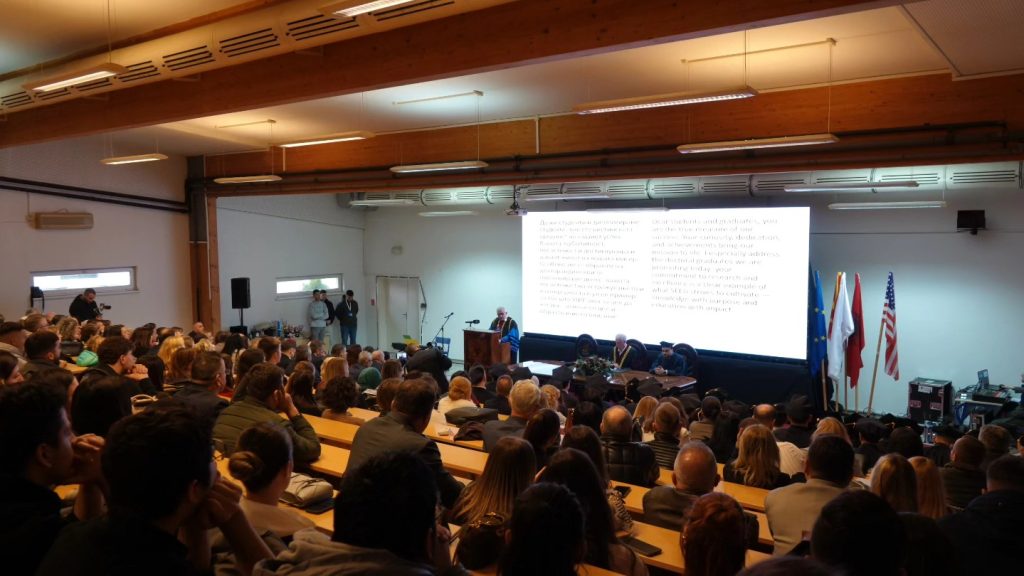
The South East European University today held the central ceremony marking the 24th anniversary of its establishment, a solemn event that brought together rectors of public universities from the country and the region, representatives of the diplomatic corps, the business community, accreditation and quality assurance bodies in education, as well as many other distinguished guests. SEEU Rector, Prof. Dr. Sadudin Ibraimi, addressed the attendees, emphasizing the historical importance of the University’s founding date and the key role SEEU plays in advancing education, innovation, and inclusion. He highlighted the development of the seven faculties, including the two newest ones — the Faculty of Technical Sciences and the Faculty of Health Sciences — as clear evidence of the institution’s dynamism and strategic vision. Rector Ibraimi also spoke about some of the year’s most significant achievements, such as the launch of the Preparatory Year for international students, the innovative initiative “AI at SEEU”, and SEEU’s active participation in the European Alliance “ChallengeEU”, where the university is recognized as one of the driving forces of the project. The Chairman of the University Board, Prof. Dr. Klaus Tochterman, offered a symbolic perspective on the number 24, connecting it with continuity, stability, and achievement — values that, according to him, have defined SEEU since its creation. He expressed special gratitude to the PhD candidates, university staff, and international partners whose contributions have helped shape SEEU into a modern, resilient, and socially impactful institution. As part of the anniversary, SEEU promoted its PhD candidates, while staff members with 20 and 10 years of service were awarded recognitions and gifts for their long-term contribution to the institution’s development. The artistic program of the ceremony featured performances by the well-known opera artist from Tetovo, Besarta Murtezani, pianist Shkelzen Baftiari, and the Tetovo Choir led by maestro Jeton Pustina, giving the event a refined cultural atmosphere. The ceremony was masterfully moderated by Arbra Sulejmani. In conclusion, the ceremony served as a moment of reflection and return to the University’s core values — inclusion, innovation, and integrity — reaffirming SEEU’s commitment to its mission of educating and empowering future generations.
LBTU: From Idea to Prototype: LBTU Launches First Innovation Grant Program for Students
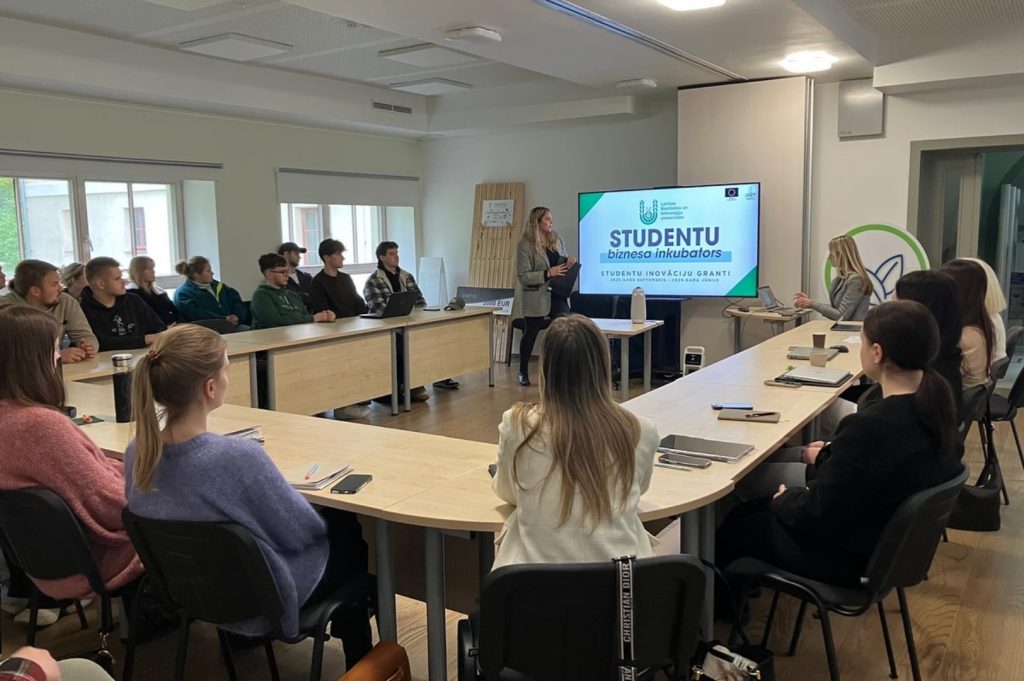
The Latvia University of Life Sciences and Technologies (LBTU) has launched the first cycle of the program “LBTU Innovation Grants for Students“. The initiative aims to foster the development of innovative student ideas by providing financial support, practical training, mentorship, and collaboration opportunities with industry professionals. The program offers students access to the knowledge and tools needed to create prototypes, test ideas in practice, and prepare for further development and commercialization. A total of 15 student teams have been admitted to this cycle, each working on diverse and socially meaningful solutions – ranging from digital platforms and neuro games to sustainable beverages, biotechnologies, and smart devices. Every team is supported in their daily work by experienced supervisors who provide guidance and advice throughout the project development process. Student Teams, Ideas, and Supervisors Program participants will take part in workshops, training sessions, and networking events designed to enhance their skills in project management, communication, entrepreneurship, and specialized technical areas. These events are also accessible to other students and academic staff, fostering knowledge sharing, collaboration, and a vibrant learning community. The first training session already took place on November 24 at the LBTU Technology and Knowledge Transfer Centre (TEPEK) with the main topic “Practical Problem-Solving: Behavior, Structure, and Decision-Making Under Stress Conditions.“ Participants learned how stress may affect quality of decision making, explored practical applications of the CATWOE method, 5 Whys, RCA, CPS, and the Pareto principle, and developed structured thinking and teamwork strategies for complex situations. To contribute as a mentor or stay updated on upcoming activities, events, and opportunities, you are invited to join the LBTU Student Business Incubator community. Interested individuals can fill out the form available at this link.
Holiday Traditions Across the ChallengeEU Alliance

The ChallengeEU Alliance brings together nine universities from nine different countries. Members of our community are happy to share their cultures with one another – including the traditions that shape them. We invite you to explore a short guide to customs associated with the Christmas and New Year holiday season. From candlelit processions and Christmas markets to family feasts, carols, and small acts of kindness, the weeks around the end of the year look a little different in every country – yet they share a common spirit of togetherness. Below, our partner universities take you on a festive journey through their local traditions, favourite flavours, and the unique ways their campuses celebrate the season. Latvia: Candlelit Ziemassvētki, Nine Dishes and the Magic of Riga’s Christmas Market Christmas in Latvia is a blend of Christian tradition and deep-rooted pagan customs that honour light, nature, and renewal. The season begins with Advent, when homes glow with candles and the aroma of piparkūkas – spiced gingerbread – fills the air. On December 24th, Ziemassvētki, families gather for a warm and peaceful celebration. Many still observe the old custom of eating nine symbolic dishes, believed to bring strength and luck, e.g. grey peas with bacon for prosperity. The Christmas tree also has special significance here: Latvia is one of the first places in Europe where the decorated tree tradition was recorded, dating back to the 16th century. Instead of folk songs and ķekatas, many visitors today experience the festive atmosphere at the Riga Christmas Market, one of the most charming and celebrated markets in the world. Set in the heart of the Old Town, it glows with wooden stalls, handmade crafts, mulled wine, local delicacies, and traditional music. Tourists and locals gather around the towering Christmas tree in Doma Square, creating a warm, bustling contrast to the crisp winter air. Christmas in Latvia remains slow, candlelit, and deeply rooted in tradition – yet beautifully complemented by the magical charm of Riga’s world-famous market. Latvia University of Life Sciences and Technologies has its own special Christmas traditions. One of the most elegant and anticipated events in the country is the Christmas Ball held in Jelgava Palace, bringing together students, staff, and guests for an evening of music, dancing, and rich historical atmosphere. Each year, LBTU also hosts a Christmas market organized by students and university employees, offering handmade gifts, festive treats, and a warm sense of community. Another cherished tradition is the LBTU Winter Solstice greeting, which highlights the university’s connection to Latvian seasonal heritage. Among the most significant traditions is the formal session of the LBTU Convent, a ceremonial gathering that reflects the university’s academic spirit and long–standing cultural identity. Spain: Twelve Grapes, the Christmas Lottery and Three Kings In Spain, Christmas celebrations are deeply rooted in tradition. Families and close friends gather on Christmas Eve and Christmas Day to share festive meals and joyful moments. New Year’s Eve is equally special: people flock to the main square of their city or village, holding twelve grapes to eat in rhythm with the twelve chimes of midnight. Finishing all twelve grapes before the last chime is believed to bring good luck in the year ahead. Another highlight of the season occurs on December 22, when the entire country tunes in to watch the National Christmas Lottery. Known as the largest lottery in the world, it boasts a prize pool of €2.7 billion, with more than 70% of Spaniards participating. Finally, on January 6, Spain celebrates the arrival of the Three Wise Kings. Traditionally, Spanish children receive their gifts from the Reyes Magos rather than from Father Christmas. During the holidays, Christmas music echoes everywhere. Alongside global favorites like All I Want for Christmas Is You, traditional Spanish carols can be heard in Christmas markets, bustling streets, and department stores, adding a uniquely local charm to the festivities. Christmas in Spain is also a feast for the senses. Families enjoy dishes such as turkey, seafood, and comforting meatball soup, accompanied by classic sweets like nougat and polvorones. On January 6, the celebration continues with the Roscón de Reyes, a special cake hiding a bean inside. Whoever finds it is crowned “King” for the day, adding a playful tradition to the holiday table. At Universidad Europea de Valencia, the festive spirit fills every corner. Buildings are beautifully decorated with Christmas ornaments and a grand tree, creating a warm and joyful atmosphere. The university also partners with Fundación Mi Aportación to fulfill the wishes of underprivileged individuals who have written heartfelt letters. In addition, student clubs – ranging from sports to cultural groups – organize special activities to celebrate the season together. North Macedonia: Holiday Songs, Flavours, Buzmi and Badnik Traditions In North Macedonia, winter holidays are celebrated across communities through a mix of shared practices and distinct cultural traditions shaped by the country’s multiconfessional character. New Year’s Eve (31 December) is widely observed as a family celebration, marked by festive meals, visits, and gifts for children. Among Albanians, the holiday season carries an additional cultural layer rooted in the ancient traditions of Buzmi and Kërshëndellat – pre-Christian solstice rituals symbolizing renewal and the rebirth of light. The burning of the buzmi log expresses hopes for prosperity and good fortune, while Kërshëndellat are understood as të këndellunit e ditës së re – the awakening of the new day. Macedonian families observe Badnik on 6 January and Orthodox Christmas on 7 January. Across the country, all communities welcome the season with warm hospitality, family gatherings, and traditions that blend spiritual meaning with elements of older symbolism. Most families decorate Christmas trees as part of the New Year festivities. End-of-year celebrations also fill schools with laughter and excitement, as children present songs, dramas, and poems during festive concerts. During the winter holidays in North Macedonia, music reflects the country’s cultural diversity. Among Albanians, children often sing “Drenushat vrapojnë” (“The Does Are Running”), a playful winter song – similar in melody to Jingle Bells – that is especially popular around New Year.
Public Engagement and Volunteer Fair: applied science and civic participation
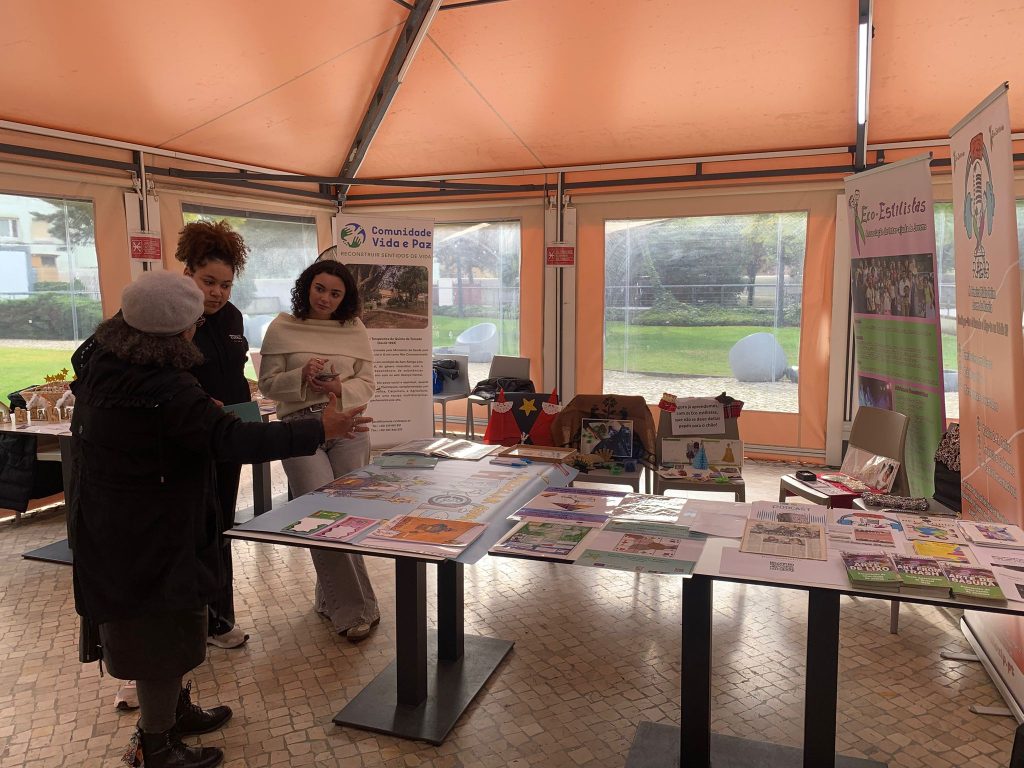
On 4th December, at the Universidade Europeia de Lisboa was held Public Engagement and Volunteer Fair event. Throughout the day, around 100 people moved through the university’s common space on the Carnide campus, engaging with stands, student‑led activities, and volunteer networks. The occasion included the launch of the Universidade Europeia’s Volunteer Scholarship and spotlighted the scientific poster presentation of results from the ODEI TRAINING COURSE – a pilot held from 23 to 27 June 2025. The poster was presented by Professor Rebeca Rocha and Dr. Rita Freitas, Chief Implementation Officer of Universidade Europeia in the ChallengeEU alliance. Universidade Europeia is the lead university for the ODEI theme and has been working in this area with the eight other universities that make up ChallengeEU. In the presentation of the poster “DEI Awareness – A Pilot Course Assessment,” Universidade Europeia placed applied science at the heart of the conversation, offering a clear, rigorous account of a pilot that is already transforming practice. The ODEI (Openness, Diversity, Equity & Inclusion) training has evolved into an annual offering for students and staff across the nine universities in the alliance. The poster succinctly and coherently outlined the course’s pedagogical architecture: six modules delivered over 12 hours, blending theoretical framing with practical applications and reflective activities. The modules cover the essential spectrum of DEI capacity‑building – Introduction to DEI, Self‑Awareness & Unconscious Bias, Intersectionality & Inclusion, Inclusive Communication, Neurodiversity & Accessibility, and From Awareness to Action – aligning concepts, skills, and transfer to real‑world contexts. The hybrid format (in‑person and online), with group/project work, was highlighted as a driver of accessibility and engagement, enabling 46 participants (staff and students) from partner institutions to experience the content in diverse, collaborative settings. “As a journalist specialized in scientific communication, I underscore the care taken with the learning objectives, clearly mapped to observable outcomes: understanding key concepts (such as unconscious bias, intersectionality, and neurodiversity), critically reflecting on personal bias and its impact on professional practice, demonstrating inclusive communication practices, and designing actionable strategies to strengthen institutional DEI. This taxonomy of objectives reveals a course aimed at behavioral and organizational change, moving beyond awareness into implementation,” says Dr. Rita Freitas. In the evaluation section, the poster presented a bar chart across six dimensions – Relevance, Engagement, Materials, Knowledge, Methods, and Overall – showing consistently high participant satisfaction in all metrics. While explicit numerical values were not displayed, the consistently high profile of the results suggests robust perceived quality and coherence between pedagogical design and classroom experience. This is a crucial indicator for decisions on scaling and institutionalization. Scientific rigor was equally evident in the continuous improvement section. Based on pilot data, the ChallengeEU DEI team – comprising the nine universities and led by Universidade Europeia – introduced specific adaptations: in Module 1, a stronger focus on key definitions to consolidate a shared language; in Module 2, the inclusion of more real cases, bringing content closer to everyday challenges; in Module 3, additional support materials to diversify learning strategies; in Module 4, adjustments to neurodiversity content for greater precision and breadth; in Module 5, the removal of the gender‑sensitive language topic – a technical decision reflecting careful scope curation; and, in Module 6, changes to activity duration to optimize the balance between practice and synthesis. Notes on timing (such as setting 1h30–2h for Module 1 and revising Module 2 from 3h to 2h30) reinforce that the course is iterative, attentive to cognitive load and the optimal learning pace. In summary, the poster’s narrative delivered what one expects from effective scientific communication: clarity of exposition, methodological transparency, evidence of results, and plans for improvement. By transforming a pilot into an annual program, Universidade Europeia and ChallengeEU signal a vision of ODEI as a practical competence – to learn, apply, measure, and improve – and offer a replicable model that brings knowledge and action closer together, both on campus and beyond. For those who attended the poster presentation, the takeaway was clear: ODEI Training is not just a course; it is an evidence‑based instrument of change, ready to impact people, teams, and institutions.