ChallengeEU Ambassadors: The Alliance Integrates European Students
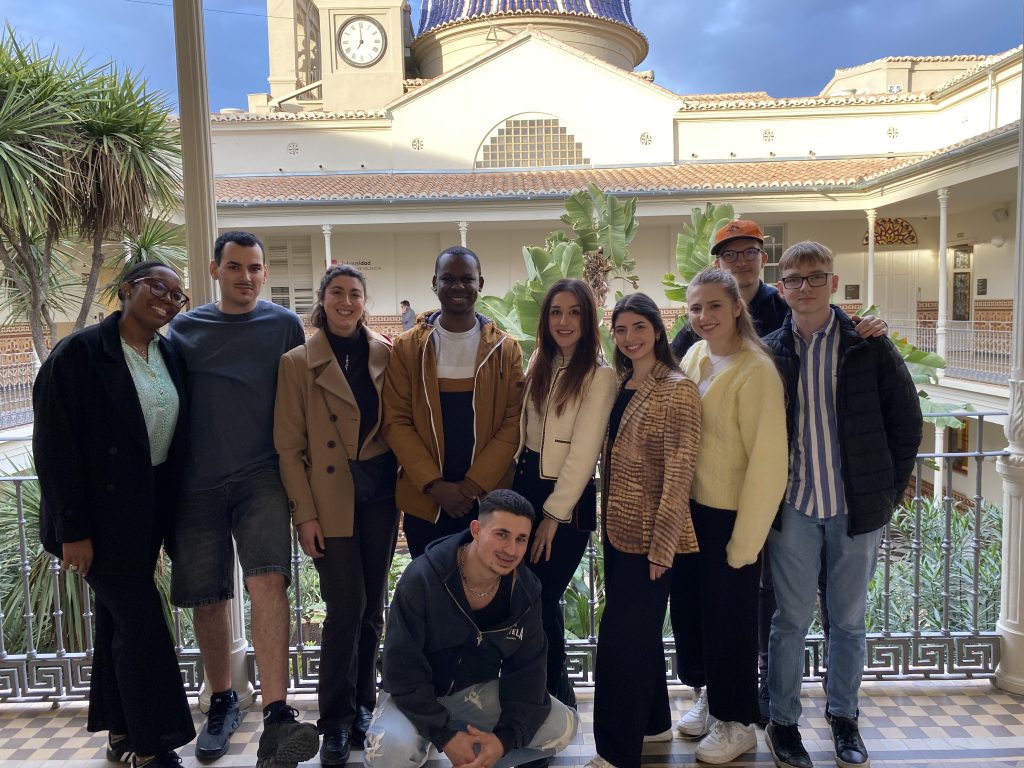
From February 9–13, the ChallengeEU Ambassadors Week took place at Universidad Europea de Valencia, a university that co-creates the ChallengeEU alliance. Students participated in workshops and other educational activities, became familiar with the university and its campus, and had the opportunity to immerse themselves in Spanish culture. Julia Wysocka and Temitope Francis share their impressions of the trip and their experience serving as ambassadors of the alliance. What memories did you bring back from your trip to Valencia? Julia Wysocka (J.W.): It was one of the best trips of my life, largely thanks to the weather (laughs), but speaking seriously, the most valuable part was meeting the other ambassadors. Already during our visit to Hochschule Offenburg last December [in Germany, at the leader of the ChallengeEU alliance – editor’s note], I was surprised by how quickly we bonded. Even though we come from so many different countries, speak many languages, and follow different religions, we formed a close-knit group. That’s why, for me, the most important lesson from such trips is that if we remain open, no borders will exist. Temitope Francis (T.F.): For me, it was also very important that I could meet people from all over the world. It broadened my horizons and opened my eyes to the fact that no matter where we come from, we are all the same, because we are all human. I am also very glad that I had the chance to meet students studying fields other than journalism — it was a very interesting experience for me. Temi, at the university in Valencia you gave a presentation on how the war in Ukraine is portrayed in Polish media compared to Western media coverage. What kind of reception did you receive? T.F.: I’m glad I had that opportunity and I’m satisfied, especially since the students were very interested in the topic, as shown by the many questions I received after the presentation. For example, they were curious about where reliable and up-to-date information on the war in Ukraine can be found. And for you, Julia, what was the most instructive among all the activities you took part in? J.W.: I really enjoyed all the workshops and training sessions. They convinced me that practice is more important than theory. This became especially clear during the workshops where we talked about openness, diversity, equality, inclusivity, and different cultures. There was a presentation followed by a discussion, but what mattered most to me was that we could also share our own experiences and reflections. For example, it turned out that we do not always fully understand the limitations faced by people with disabilities — if we do not experience similar challenges ourselves, we simply do not notice them. That is why it is important to keep our eyes wide open. Were you asked questions about Poland and the University of Warmia and Mazury? J.W.: Yes, we were asked about Poland many times. Already during the first workshop devoted to Spanish culture and the Spanish language, we shared linguistic and cultural differences. However, the topic came up most strongly during a meeting with students who had decided to participate in the Erasmus program and were going to Poland or were still choosing — for example, between Germany and Poland. Rafał [Pirsztuk — UWM ambassador in the ChallengeEU alliance — editor’s note] and I shared the Polish perspective, while Temi and Georden [Shaw — UWM ambassador in the alliance — editor’s note] talked about what it is like to be an international student at the University of Warmia and Mazury. I’m glad that others are curious about our country, our culture, and what studying here is like, and I must admit I haven’t heard any stereotypes about Polish people. T.F.: We all spoke very positively about the University of Warmia and Mazury — truthfully so, because if we felt otherwise, we would not be studying here, although each of us has a slightly different perspective. I think it was an excellent opportunity to promote our university, which we did. I would also like to add that for us, international students, being able to study here is something wonderful. I have also studied at other universities, including in Greece and Romania, so I also have experience from different places around Europe. It is worth emphasizing that no other university has a campus like Kortowo — not even Universidad Europea de Valencia (laughs). As for Poland, we see only two downsides: the Polish language, because it is very difficult, and the weather, because it is too cold (laughs). How do you find yourselves in the role of UWM ambassadors in the ChallengeEU alliance? J.W.: At first, I wasn’t sure what to expect, but it turned out to be a fantastic experience. And it’s not even about the opportunity to travel to other universities — the most valuable part, which I would like to emphasize once again, is meeting the other ambassadors. We have grown very close and remain in constant contact. If it weren’t for ChallengeEU, we probably would not have had the chance to meet, and even if we had, we wouldn’t have had something that connects us so strongly. Moreover, thanks to this role, we learn many interesting and useful things, for example how to apply for various European programs, and we have the opportunity to take part in valuable training sessions. Every day I am grateful that my application to become a ChallengeEU ambassador was accepted. T.F.: For me, as a student from another continent, being an ambassador of the ChallengeEU alliance has opened me up to Europe — its advantages, problems, and challenges. It is an honor to serve in this role and to participate in all these meetings, which are based on the ideas of openness, diversity, and inclusivity. It shows that Poland is very open and attentive to what people of other nationalities have to say, and the fact that the alliance’s ambassadors come from different continents demonstrates that even if we are