Art as dialogue: ChallengeEU at Hochschule Offenburg’s end-of-semester Werkschau
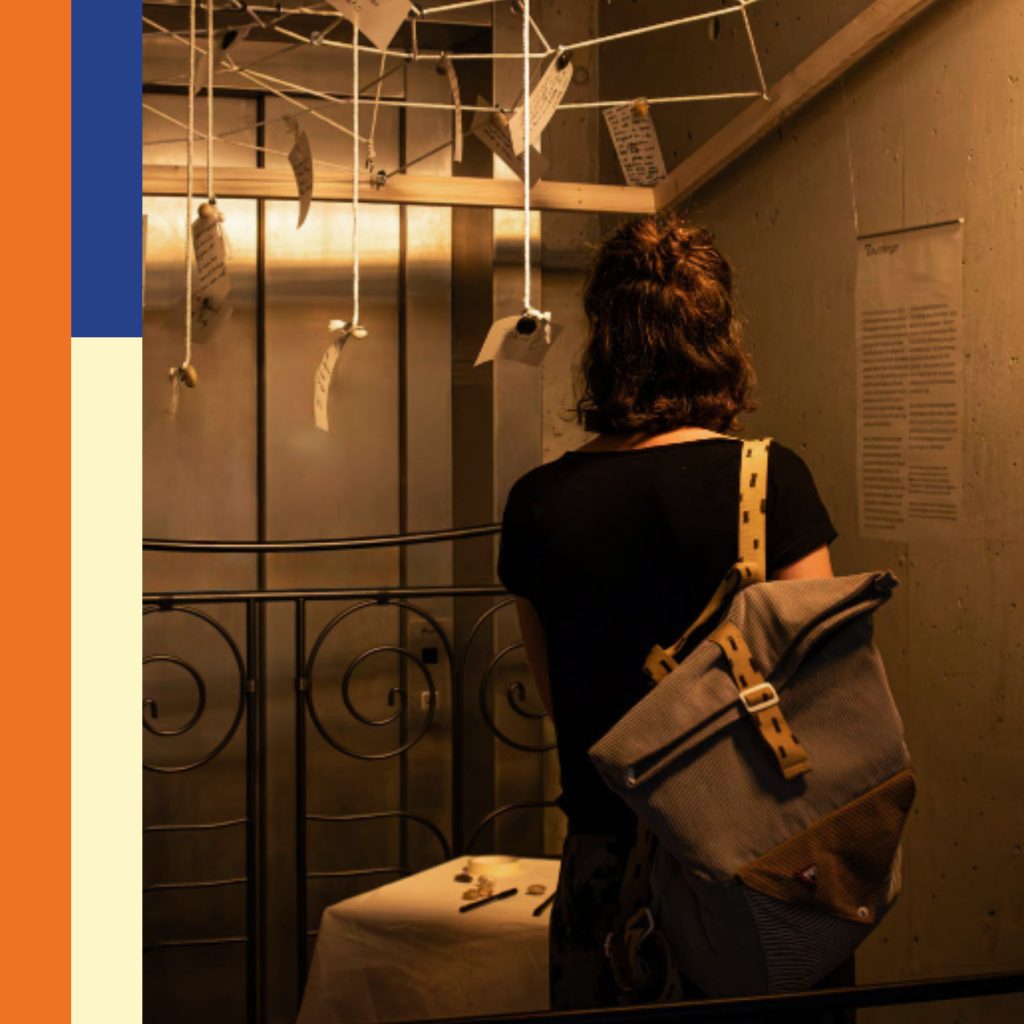
How can students bring academic, artistic and personal perspectives into public dialogue? An exhibition organised by the Faculty of Media at Hochschule Offenburg offered one possible answer through Leonie Faller’s bachelor’s thesis. In her project, ‘A scenographic exploration of the theme of dreams – scenography as a narrative form between emotion and information’, the student examines how dreams can be made tangible in a spatial context. Through an installation made of fabric, stone and foil, she translates memories, emotions and the transitions between sleep and wakefulness into a sensory exhibition experience. The project exemplifies how students can act as active co-creators: they develop their own research questions, combine design methods with psychological perspectives and personal experiences, and make their findings accessible to the public. The exhibition provides an important platform for this process, fostering dialogue between the university, the arts and the wider public. For visitors, the installation becomes a space for encounter and reflection. Rather than offering a definitive explanation of dreams, it invites them to contribute their own memories, feelings and interpretations. This combination of creative experimentation, public exchange and visual presentation aligns with ChallengeEU’s aim of opening up spaces for learning and experience beyond the traditional university context. Leonie Faller’s semester abroad at Mid Sweden University also underscores the Alliance’s European ethos. International learning experiences broaden creative perspectives and strengthen students’ ability to incorporate insights from different cultural and academic contexts into their projects. The bachelor’s thesis was written at the Faculty of Media at Hochschule Offenburg under the supervision of Prof. Dipl.-Ing. Daniel Fetzner.