Strengthening Communication and Collaboration: UWM Delegation Visits SEEU
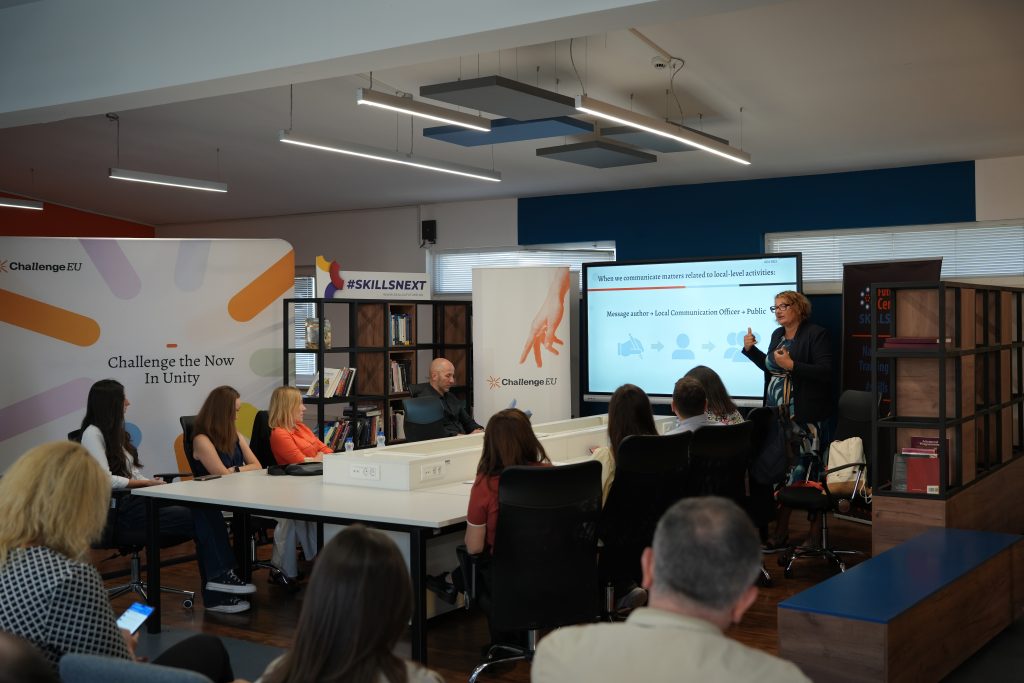
On 7 October, South East European University (SEEU) hosted a training session on internal communication and dissemination during a visit by a delegation from the University of Warmia and Mazury (UWM). The visit, coordinated by the Max van der Stoel Institute (MVDSI), included institutional meetings, academic and administrative exchanges, as well as training sessions on internal and intercultural communication. The UWM delegation also met with Prof. Dr. Besa Arifi, Advisor for Community and International Relations, Prof. Dr. Florije Ismaili, Advisor for Academic Planning and Digitalization, and Prof. Dr. Veli Kreci, Director of the Max van der Stoel Institute and Vice President of the SEEU University Board. Strengthening communication across the Alliance The training focused on improving communication and coordination among partner universities, strengthening student engagement, and fostering effective collaboration across the Alliance. Led by Marta Śliwa from UWM, who leads ChallengeEU Work Package 6 (WP6), the training brought together SEEU staff involved in ChallengeEU activities, members of the visiting delegation, student ambassadors, and the Checkmate team. The session addressed key aspects of internal communication within the Alliance, including information flow between partner universities, coordination among different work packages, and the effective use of communication channels and tools. Particular attention was paid to the importance of timely and consistent information sharing, as well as improving communication practices to support the implementation of joint activities and initiatives across ChallengeEU. As part of the programme, SEEU ChallengeEU Student Ambassadors Ela Ismaili and Luisa Residi delivered a presentation highlighting their roles within the Alliance, their ongoing engagement activities, and their plans to strengthen student participation. They also shared their approaches to promoting ChallengeEU opportunities, improving communication with students, and increasing the visibility of the Alliance within the university community. Their presentation emphasised the important role of student ambassadors in connecting students with the activities and opportunities offered through ChallengeEU. Understanding intercultural communication In the afternoon, a separate training session entitled “Introduction to Intercultural Communication Parameters” was delivered by Dr Czesław Kiński, a researcher at UWM’s Institute of Linguistics and a member of ChallengeEU Work Package 3 (WP3). The session explored how cultural differences influence communication and collaboration in international academic environments. Participants were introduced to the Culture Iceberg Model, which distinguishes between visible and less visible aspects of culture. The training also addressed differences between high-context and low-context communication, as well as energetic and calm communication styles. The discussions highlighted the importance of cultural awareness and adaptability in preventing misunderstandings, improving interpersonal communication, and facilitating cooperation among colleagues from different cultural backgrounds. Exploring digital tools for collaboration The visit also provided an opportunity to explore digital tools and initiatives supporting collaboration. Hamit Kamberi, Software Engineer at the Max van der Stoel Institute (MVDSI), presented the Impact Lab concept and platform, while Hakan Rexhepi, also a Software Engineer at MVDSI, introduced a newly developed project management tool. The programme included an exchange of experiences and discussions among participants, providing an opportunity to reflect on communication practices and identify ways to further improve collaboration within the Alliance. The visit contributed to ChallengeEU’s broader objectives by strengthening internal communication, encouraging active student participation, fostering intercultural understanding, and supporting effective cooperation among partner universities.
A Joint Initiative for Digital Civic Education through Microcredentials
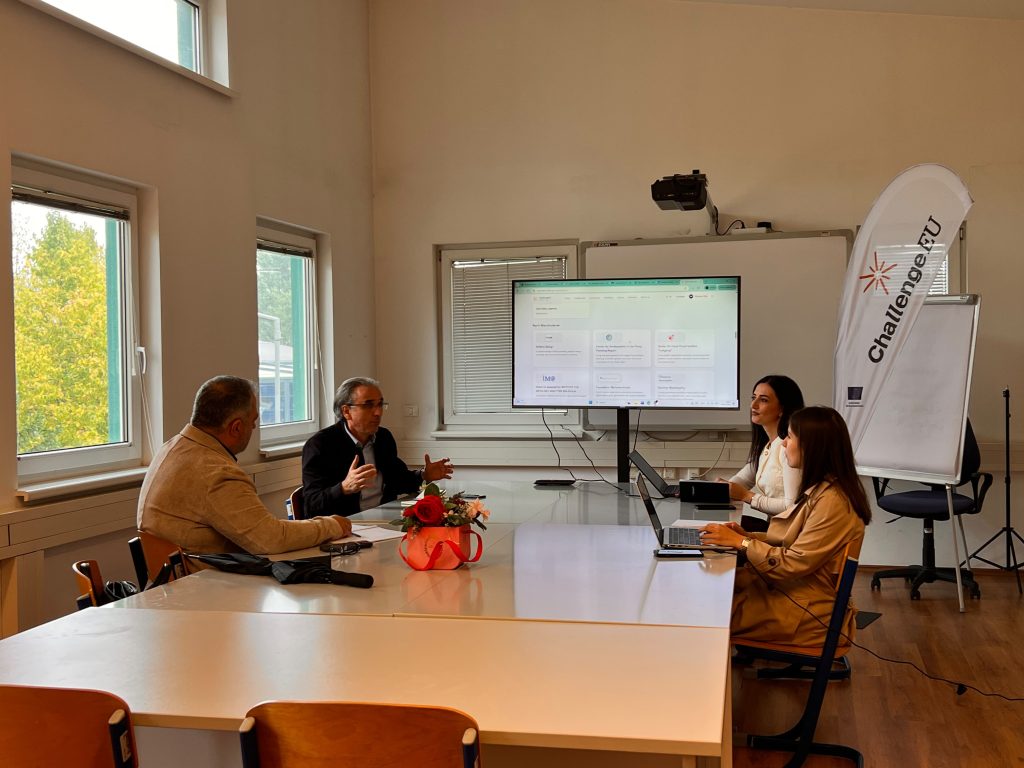
Within the framework of the ChallengeEU European University Alliance, South East European University (SEEU) is strengthening its cooperation with the Metamorphosis Foundation, an Associated Partner of the Alliance, to expand innovative learning opportunities through microcredentials. The meeting was attended by SEEU representatives Prof. Dr. Veli Kreci, Director of the Max van der Stoel Institute (MVDSI); Shpresa Alija, Market Officer; and Lejla Ademi-Shaqiri, researcher at MVDSI. They welcomed Bardhyl Jashari, Executive Director of the Metamorphosis Foundation. A key outcome of the meeting was the launch of a joint initiative to develop a Civic Education in the Digital Era programme for inclusion in the ChallengeEU Course Catalogue as a microcredential. The programme will cover topics such as civic participation, digital literacy, online engagement, and responsible participation in the digital environment. Developed as part of SEEU’s activities within ChallengeEU Work Package 4 (WP4), the initiative aims to expand flexible and accessible learning opportunities for students across ChallengeEU partner universities. It will also explore ways for Associated Partners to contribute to the development of microcredential programmes. This cooperation reflects SEEU’s commitment to expanding the ChallengeEU Course Catalogue, promoting innovative learning formats, and strengthening collaboration with Associated Partners to create educational opportunities that respond to society’s evolving needs.