One Sound, Many Perspectives. ChallengeEU Art & Science Day at UWM
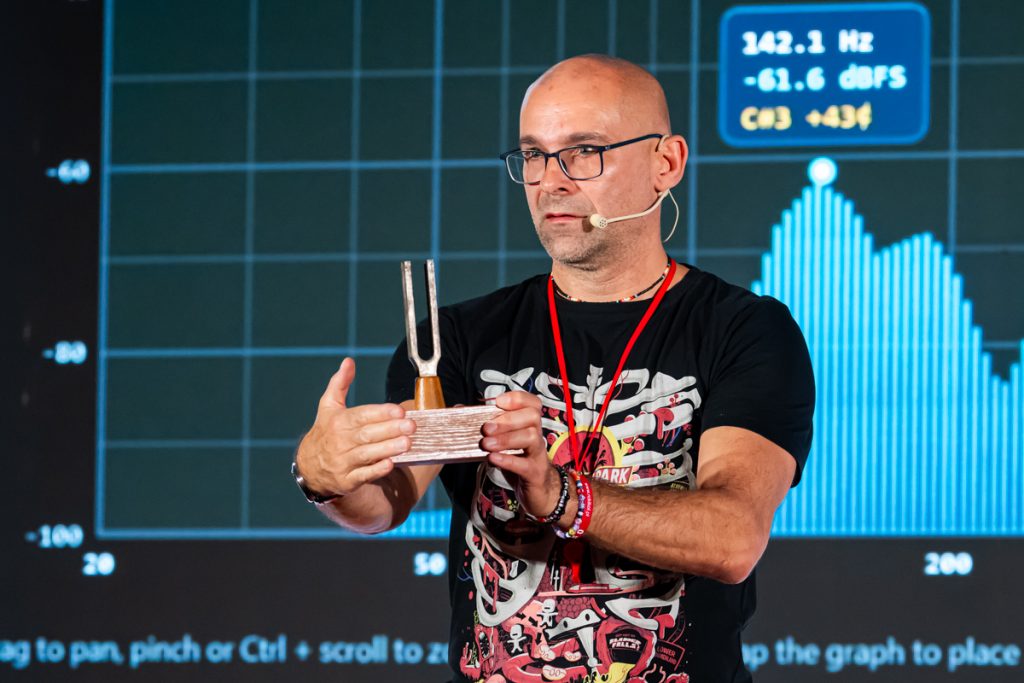
For some, sound is a physical phenomenon; for others, a medium of artistic expression. For most of us, it is simply part of everyday life. But how much do we really know about it? On 15 October, the first ChallengeEU Art & Science Day at the University of Warmia and Mazury in Olsztyn invited participants to explore sound from different perspectives, bringing science and art together. Although we often long for silence, we actually find it difficult to endure. The evidence? Spending just a few dozen minutes in an anechoic chamber proved to be a highly uncomfortable experience for most people. They reported that, cut off from even the faintest sounds, they began to hear the noises made by their own bodies – from their beating hearts to the blood flowing through their veins. This caused considerable anxiety. But, of course, it is not just about the absence of silence. Sound is part of the natural world around us and a medium of artistic expression, while art, as we know, has the power to make our lives better. It was precisely these different perspectives on sound that were explored during the first edition of ChallengeEU Art & Science Day. The event was hosted by the University of Warmia and Mazury in Olsztyn and took place during Erasmus Days. Thanks to the live stream, members of the academic communities of all universities within the alliance were able to participate. Science and art complement each other Sławomir Kulesza, Associate Professor at UWM, from the Faculty of Technical Sciences, invited us to look at sound from a physicist’s perspective. “My presentation focused on some of the physical aspects of sound. I showed how sound is produced, how it travels, how it is reflected and how it can be absorbed by different materials,” he explained in an interview with Wiadomości Uniwersyteckie. The researcher demonstrated several experiments that made some members of the audience realise just how fascinating physics can be. “This is more interesting than anything we were taught about it at school!” viewers wrote in the comments during the live stream. The second speaker was Marcin Piotrowicz, PhD, from the Faculty of Arts. “My presentation focused on the visualisation of sound – from sound, through image, to printmaking and laser performance. I spoke about everything that underpins my work as a musician and as an artist involved in printmaking,” explained Dr Piotrowicz. He also prepared a surprise: he sang a song while accompanying himself on a lute he had made by hand, and during his performance the audience could watch on screen how the image of sound was changing. Participants in the event were also able to view an exhibition of the artist’s works. The third speaker in the series of open lectures streamed online was Agnieszka Jaszczak, Associate Professor at UWM, from the Faculty of Agriculture and Forestry. She reminded the audience that the sounds surrounding us in a given space influence how we perceive and experience it. She pointed out that exposure to noise (such as the hustle and bustle of a large city) can cause sleep problems, increase stress levels and even affect our metabolism and the brain’s cognitive functions. She also explained why certain sounds (such as flowing water and birdsong) have a positive effect on our wellbeing. Art as a universal language According to Dr Czesław Kiński, who not only moderated the open lectures but also led workshops for Art & Science Day participants, art can create a new, shared space for understanding. “Dr Czesław Kiński encouraged participants in the ‘Building Your Cultural Sixpack’ workshop to engage in discussion and look at art from a different perspective. We began by discussing five questions about culture, art and lifestyle, and then interpreted interpersonal relationships through well-known works of art and created stories inspired by music and images. We also talked about how our experiences influence our interpretation of art, why we choose particular works and what role music and art play in the curriculum,” said Bożena Sumara, a student at the Faculty of Humanities and a ChallengeEU Student Ambassador, describing the workshop. Meet a creative entrepreneur An important part of the Art & Science Day programme was an event organised as part of the M.A.R.K.E.T. Activity (Multi-Actor Research & Knowledge Exchange Teams). University studies provide opportunities to acquire knowledge and skills, but students rarely get the chance to gain a behind-the-scenes look at how innovative companies operate and how personal interests can be transformed into commercially successful products. UWM students visited the headquarters of Polyend, a company that proves how a great passion can grow into an equally great business. Study visits of this kind are particularly important for regional innovation ecosystems, where strengthening connections between universities, students and local businesses can foster entrepreneurship and help retain talented graduates in the region. “At our company, we primarily create innovative devices for creative musicians. We try to identify niches and bring our own ideas to life – designing things that we would like to use ourselves and that reflect our interests,” explained Piotr Raczyński, the company’s founder, who has been passionate about music since childhood. “Over time, I started composing my own music, but only for myself. I followed the work of my favourite artists and took an interest in the equipment they used. I went to Frankfurt Musikmesse, a music trade fair in Frankfurt that is no longer held. That was a turning point. I thought to myself: this is my world, and I want to keep doing this!” Devices manufactured in Olsztyn are used by many world-class musicians, including members of bands such as Coldplay, Radiohead and Nine Inch Nails. Equipment from Warmia was also used in the creation of music for the Oscar-winning film Joker. During the visit, students learned about the company’s origins, its approach to identifying market niches, and the process of developing products for musicians and music producers. They also had the opportunity to ask questions and speak directly with company employees, gaining
FHNW Rover Team Wins Award for Creative Rover Engineering
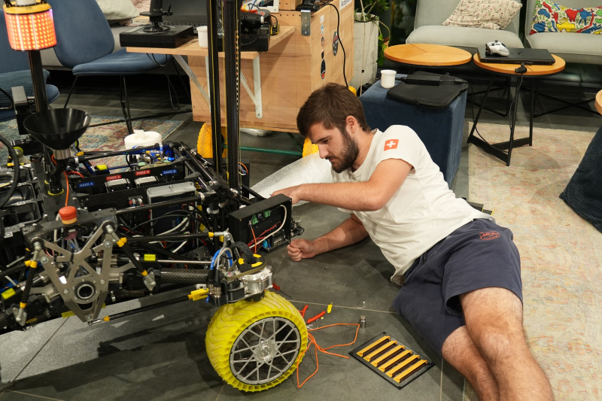
The FHNW Rover Team, consisting of students from the FHNW School of Engineering and Environment and the FHNW School of Computer Science, won 1st place in the “Creativity in Rover Design” category at the European Rover Challenge (ERC) 2026. The award, presented by Honda Research Institute Europe, recognizes innovative engineering solutions that make a tangible contribution to mission performance. Competing against international student teams with self-developed Mars rovers, the FHNW team impressed the jury with its creative technical concepts. The team is an interdisciplinary student project in which participants spend two semesters developing a Mars rover capable of navigating rough terrain, conducting scientific experiments, and carrying out technical maintenance tasks. The project brings together expertise from engineering, computer science, robotics, electronics, and software development. In the overall competition, the team narrowly missed the podium, finishing in 4th place after a technical issue with its drone camera affected its performance. Despite this setback, the students demonstrated strong engineering skills, creativity, and resilience, highlighting FHNW’s strength in hands-on, project-based learning. More information (in German): https://www.fhnw.ch/de/technik-umwelt/studium/rund-ums-studium/rover-team