ChallengeEU Students Join the First FHNW Exploration Week

Students from UWM, UEV, HSO and FHNW took part in the ChallengeEU module “Team Collaboration – Working Together Efficiently”, organised as part of the first FHNW Exploration Week. The one-week programme in Switzerland combined Challenge-Based Learning, intercultural exchange and teamwork focused on a real-world regional challenge. The first FHNW Exploration Week, held from 31 August to 4 September 2026, was launched as a pilot initiative marking the 20th anniversary of FHNW. It brought together more than 400 participants across 22 modules and four events, creating a new interdisciplinary learning format focused on collaboration, exchange and future-oriented skills. The programme explored FHNW’s key future fields: New Work, Zero Emission and Future Health, and offered students, lecturers and staff the opportunity to work across schools, disciplines and perspectives. As part of the FHNW Exploration Week 2026, the ChallengeEU module “Team Collaboration – Working Together Efficiently” brought together students from University of Warmia and Mazury, Universidad Europea de Valencia, Hochschule Offenburg and FHNW for a one-week international learning experience in Switzerland. The week also welcomed teaching staff from ChallengeEU partner university, who took part in short-term mobility activities and contributed to the broader exchange of knowledge, perspectives and good practices. The module, hosted by FHNW within Exploration Week, applied a Challenge-Based Learning (CBL) approach, enabling students to work in interdisciplinary and international teams on a real-world challenge. Throughout the week, participants explored topics such as team formation, effective collaboration, diversity in teams, conflict management, feedback culture, project organisation and self-reflection. Working alongside students from different academic and cultural backgrounds, they developed practical solutions to a challenge set by a regional gardening company, focusing on the attractiveness of vocational education for young people. At the end of the week, the students presented their ideas to an expert jury. Beyond the academic programme, the mobility fostered intercultural exchange through social and cultural activities, including a Swiss yodelling workshop, joint excursions and collaborative team-building exercises. The module was co-funded by MovetiaExploration Week was co-funded by the Swiss Federal Office for the Environment
Building Bridges Through Mobility: FHNW Representative Visits UEV
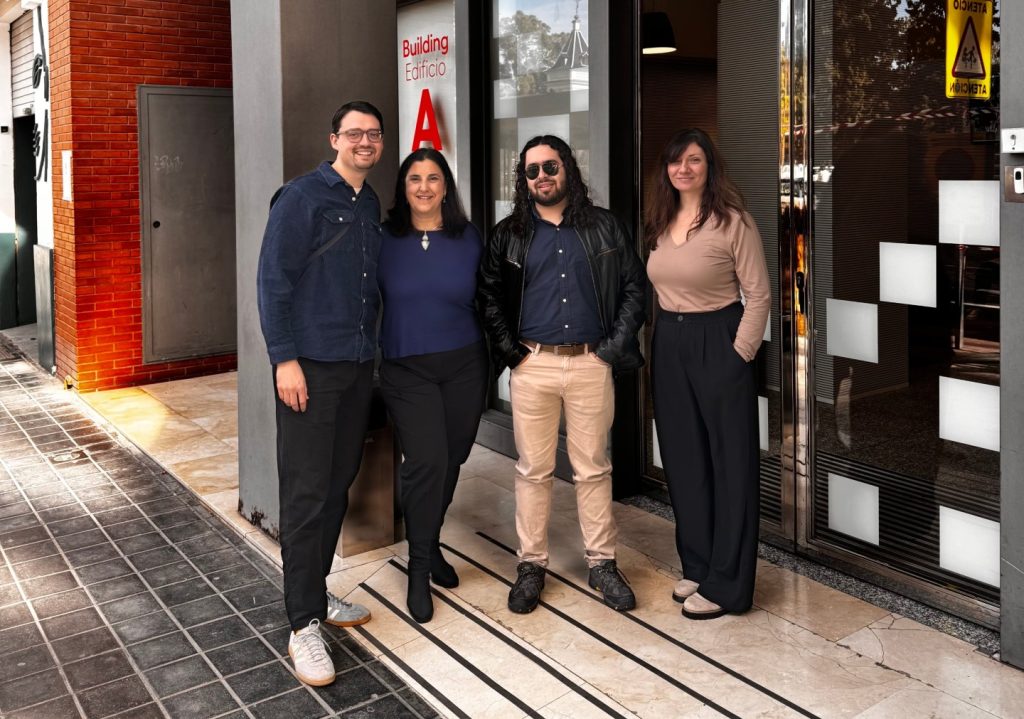
Luca Niederhauser from Fachhochschule Nordwestschweiz (FHNW) visited university in Valencia as part of the Mobility Program Visit at Universidad Europea de Valencia (UEV). The visit provided an opportunity to strengthen institutional ties, exchange best practices, and explore new avenues for academic cooperation between the partner universities. Mr. Niederhauser represents Hochschule für Angewandte Psychologie, specifically the Zentrum für Ausbildung. This visit is part of a mobility initiative linked to Work Package 3 (WP3) of the European university alliance ChallengeEU, in which both FHNW and UEV are active partners. During his stay in Valencia, Mr. Niederhauser participated in a comprehensive program designed to strengthen inter-institutional collaboration and promote the exchange of best practices. His visit included a series of academic, administrative, and cultural activities, such as: a guided tour and in-depth explanation of the Alameda Campus; job shadowing in the area of innovation and the development of new academic programmes with Ana Ferrer, Dulce Gómez, and Alberto Garcés; and a presentation on the ChallengeEU network delivered by Laura Bertolin (WP4 Officer) and Emmanuël Hazé (ChallengeEU, CIO). Professional exchange with Luz Barradas focusing on quality management, a guided tour and detailed presentation of the Turia Campus, a discussion with Ana Povoa on the Psychology degree programme, an exchange with Christian Garzoni on the admissions process, and a visit to a Psychology class to observe teaching practices. Beyond the academic agenda, Mr. Niederhauser also had the opportunity to discover the rich culture, traditions, and gastronomy of the city of Valencia, gaining a deeper appreciation of its local identity. These exchanges not only enrich the experience of visiting staff, but also strengthen the relationships between partner universities within the ChallengeEU alliance, fostering trust and mutual understanding. They also open the door to new avenues of academic collaboration, from program development to joint initiatives that contribute to the internationalisation of higher education. The European University of Valencia extends its warmest thanks to Mr. Niederhauser for his visit and looks forward to future cooperation with FHNW within the ChallengeEU framework.
ChallengeEU Meets with Partners at FHNW
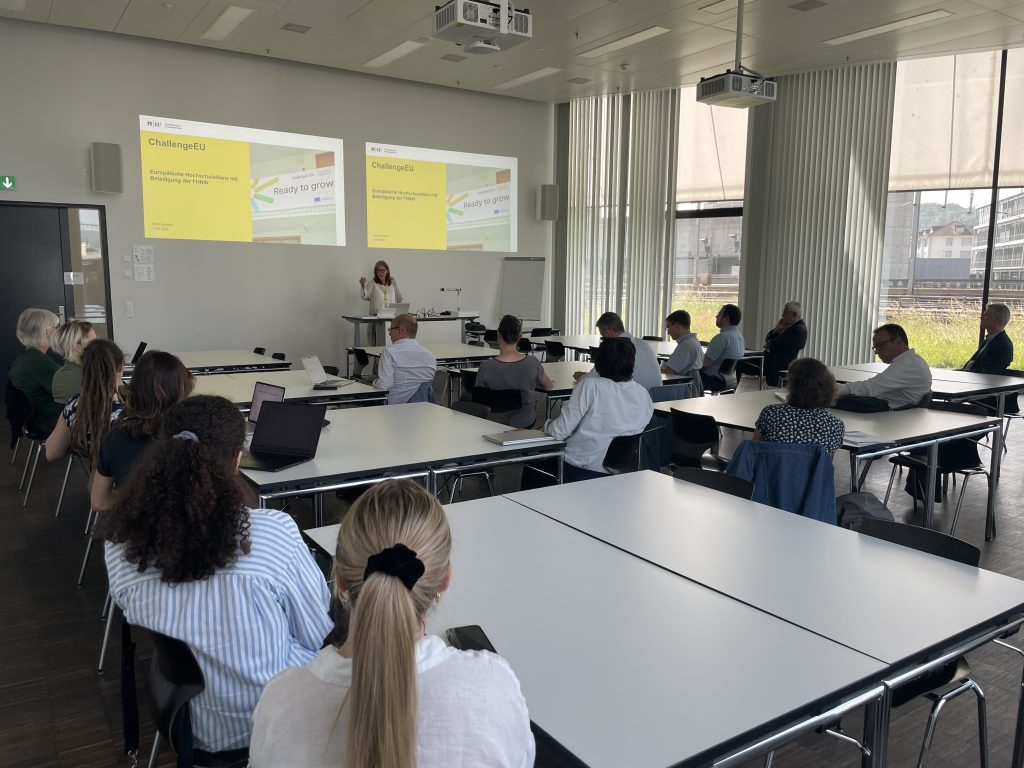
Strengthening regional partnerships is one of the key ways the ChallengeEU Alliance ensures that its work creates tangible impact in local communities across Europe. These partnerships bring the Alliance’s mission closer to reality by connecting higher education institutions with the people, institutions, and industries that shape their surrounding ecosystems. In June, this commitment took a meaningful step forward during a special meeting at Fachhochschule Nordwestschweiz (FHNW) in Switzerland. The ChallengeEU team, together with FHNW President Prof. Crispino Bergamaschi, had the pleasure of presenting the Alliance’s current initiatives to a group of associated partners from the Northwestern Switzerland region. The meeting sparked engaging discussions and laid the foundation for exciting future collaborations. Topics ranged from the evolving needs of students and early-career professionals, to major challenges and opportunities in digitalisation, robotics, artificial intelligence, and diversity. A particularly meaningful part of the exchange focused on the topic of neurodiversity and how schools and employers can better support individuals with diverse cognitive profiles. Initial ideas for joint projects and synergies are already emerging, and all participants shared a strong interest in shaping initiatives that are creative, sustainable, and truly future-oriented. This meeting clearly demonstrated the added value of close cooperation between universities and their regional environments — a core principle of the ChallengeEU Alliance. We are excited to continue these conversations and turn them into concrete, impactful action.