ChallengeEU 1st Annual Conference 2026- Streaming
Before you access the video recording, we’d like to ask you to take a moment to fill out a short form. It will only take a minute, and your answers will help us get to know our audience better – who you are, what brings you here, and what matters to you. This insight is incredibly valuable to us. It allows us to shape future events around the people who actually attend them, so that each conference becomes more relevant, more useful, and more enjoyable than the last. Once you’ve completed the form, you’ll get full access to the video. Thank you for helping us make our next event even better. We truly appreciate it.
ChallengeEU 1st Annual Conference 2026 in Olsztyn
Bridging Regions – Connecting Universities
Erasmus+ Teaching Mobility at Universidade Europeia

As part of the Erasmus+ Teaching Mobility Programme, Sandra Stallmann participated in the International Week at the Universidade Europeia in Lisbon, and she has also taught classes as a guest lecturer for students attending the Bachelor in Hotel Management programme. Prof. Sandra Stallmann delivered a lecture on “English in the Business Environment and Tourism” focusing on the importance of professional communication skills in the hospitality industry. The session addressed topics such as professional communication with customers, formal language use in a hospitality environment, and language use in business situations within tourism and hospitality. The class participated actively in discussions and practical exercises based on real-life situations. The guest lecturers also provided an exchange with academic staff at the university in Lisbon, getting to know their background, their teaching experiences and their insights. Students actively participated in discussion rounds after the lectures, showing interest in international relations, cultural differences, living and studying abroad, and the exchange of international experiences. In addition to her guest lectures, she also attended the International Week at the Universidade Europeia. This included for instance an academic workshop led by Prof. Rodrigo Morais (WP5) on “CBL: Designing, Implementing & Assessing Challenge-Based Learning”, which focused on innovative teaching methodologies and the application of Challenge-Based Learning in higher education, and required an interactive participation of all candidates. In general the international week provided an opportunity for academic exchange and networking with international lecturers and university staff besides from the experience as a guest lecturer.
Student Voices Shaping ChallengeEU: Meet Our Student Council
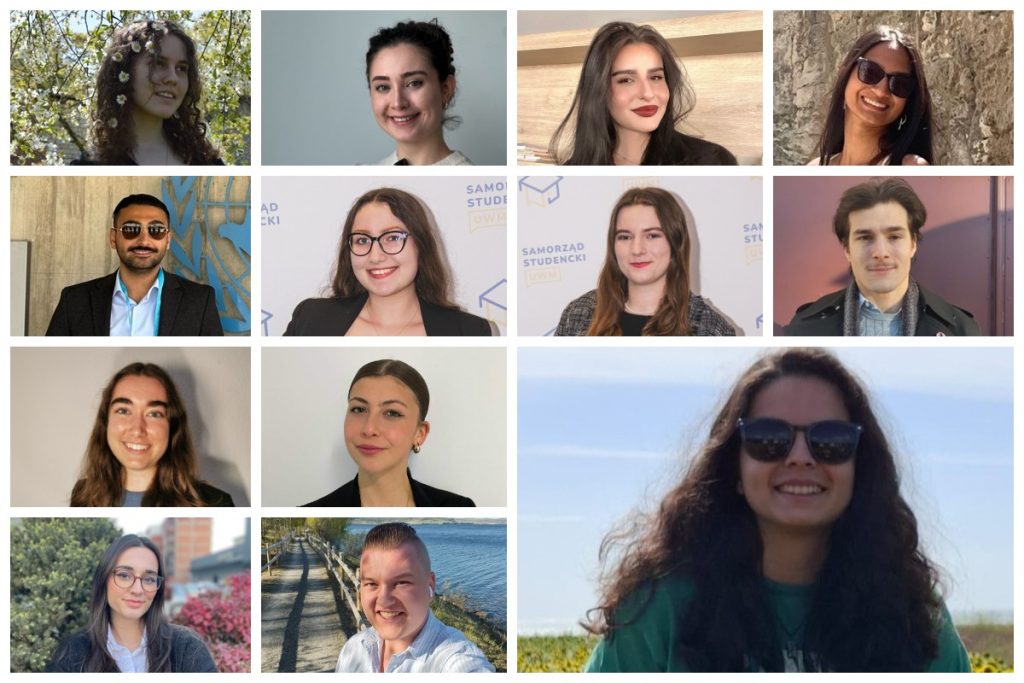
As the calendar year is coming to an end, we will soon say goodbye to the first composition of the Student Council (SCS). We would like to introduce the people who, over the past several months, have supported our Alliance and helped ensure that the student voice was clearly heard. With their student experience and positive energy, they have added one brick after another to the shared project we are building together: ChallengeEU. We are taking this opportunity to thank them for all their work so far. ChallengeEU Student Council (CSC) is the body where students will have the opportunity to shape the Alliance. In particular, the CSC will elaborate and represent students’ ideas, perspectives and feedback about the Alliance’s future development. Each partner university appoints two student representatives. Members are elected for one-year terms through the student associations of their home institutions and may be re-elected for a maximum of two terms. By simple majority, the members elect a President and a Vice-President for the duration of one term. The ChallengeEU Student Council (CSC) meets four times per year. In its decision-making, the Council strives to reach consensus. Where consensus cannot be achieved, decisions are taken by simple majority. The CSC also elects its representatives to the Alliance governance bodies: three representatives to the Strategy Board, two to the Management Board, and two to the ChallengeEU Academic Council. Rebecca Fernandes Paes Pinto Rocha, President CSC As an international PhD student that has studied in 3 different european universities up to my masters degree, ChallengeEU resonates with me and my experiences. That’s why getting involved in the Alliance was an obvious decision for me, specially as a student representative. As the president of the Student Council for the year 2025, I was challenged and able to grow alongside all students representatives. Together we set the base and started shaping the Student Council while working with boards, councils and staff of the Alliance to make the voice of students heard in all spheres. Iwona Pająk, Vice-President CSC I am a 5th-year psychology student at the University of Warmia and Mazury in Olsztyn. I have been actively involved in university life for many years, and I am currently the president of my student council – and I’m happy about it. In my free time, I enjoy reading books and traveling. Alketa Mustafi, representative SCS on the Management Board I’m a first-semester Master’s student in Finance, and I’ve always been curious about how things work – from numbers and strategies to people and ideas. Within ChallengeEU, I’m one of the two student representatives from the Student Council on the Management Board, which means I get to bring the student perspective into big decisions and make sure our voices actually shape the alliance. Beyond titles and roles, I’m someone who learns by doing, asking questions, and turning ideas into something real. I get energized by collaboration, new challenges, and being around people who think differently than me. ChallengeEU gives me the chance to do all of that – connect with amazing people, experiment, and see how far we can actually take an idea. And honestly? I’m here to push boundaries, make student voices matter, and have a little fun while doing it. Fabian Grönvik, Member of CSC I’m in my third year of social sciences studies, focusing on sociology. I believe ChallengeEU is a very impressive project of European integration with huge potential. We have a lot to learn from each other, both as academic knowledge and through cultural exchange. I’m proud to be part of the CSC to along with the others ensure that the student perspective is constantly present. Linda Priede, representative SCS on the Board Academic Council I have been actively involved in student life and the LBTU Student Council since the first year of my bachelor’s degree. Currently, I am studying for my second master’s degree in Project Management. With over six years of experience representing students’ opinions, I am still passionate about sharing the student perspective. That is why I continue to participate in student representation — this time as part of the ChallengeEU Student Council, serving on the Academic Council. It is a great experience to engage in discussions not only with students from different universities and countries but also with other university staff members. Gustav Månsson, Member of CSC I’m 21 years old, study business & economics and my inrest for party is almost as big as my intrest for educational policy. Keshini Nistar, representative SCS on the Strategy Board I’m a 4th-year Mechatronics Engineering student at ECAM LaSalle in Lyon France (Energy & Environmental Engineering track). I have joined the ChallengeEU alliance with the keen interest of contributing to cultural and international exchange in higher education. Being part of the student council and the Strategy Board, I am grateful and delighted to represent our students’ voices, ensuring they are at the heart of this alliance. I am indeed proud to represent ECAM LaSalle and to work with an amazing team of reps as well, ensuring that everyone has an opportunity to grow thanks to this wonderful initiative. I look forward to further participating and engaging with everyone is this alliance. Marija Kosovljanovic, Member of CSC I’m a full-time Business Administration student in my third semester, studying in Olten, Switzerland. I’m part of the Student Council and also a ChallengeEU Student Ambassador. I joined the Student Council because I wanted to get more involved in student life and help represent the voices of my fellow students. I enjoy working with others, supporting new ideas, and helping make our study environment a bit better for everyone. ChallengeEU is important to me because it connects students from different countries and backgrounds to work on real and meaningful challenges. I love the international exchange, the creative teamwork, and the chance to learn new perspectives. For me, it’s an opportunity to grow personally and academically while contributing to something that matters. Tina Adili, representative SCS on the Academic Council The internal
Two Weeks of M.A.R.K.E.T. Officer Impact: Transforming Collaboration in the Polog Region
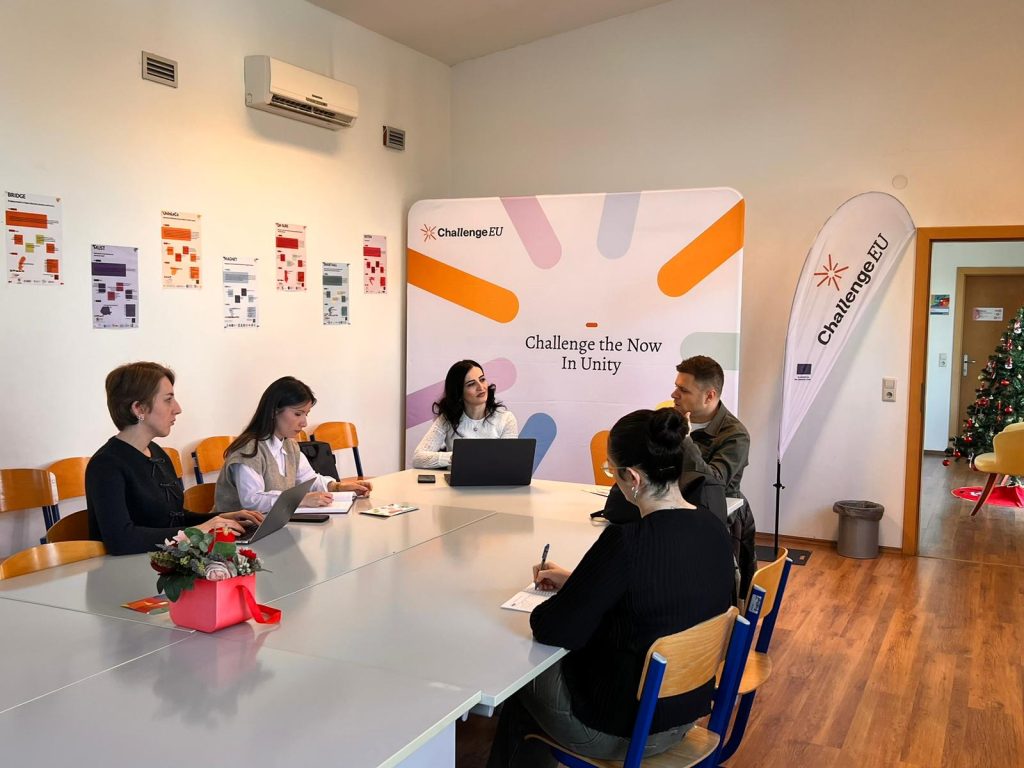
Over the past two weeks, M.A.R.K.E.T. Officer Shpresa Alija, together with team members of working package 4, has been engaged in a series of meaningful M.A.R.K.E.T. Pop-Up Meetings, strengthening cooperation between SEEU and key partners across the public sector, private industry, and civil society — all within the ChallengeEU framework. These engagements brought together a diverse set of partners who play a crucial role in shaping regional development across several key themes: Local Governance, Digital Transition & Youth Engagement A constructive meeting with the Municipality of Gostivar focused on identifying community challenges and exploring how SEEU students can contribute through digital transition projects, internships, and MakerHathon activities. Regional Planning, Sustainability & Applied Learning Discussions with the Center for Development of the Polog Planning Region (CDPPR) emphasized involving students from Architecture, Environment, Energy, and Economy in hands-on regional development and GIS-based projects, strengthening applied learning experiences. Agri-Food Innovation & Industry–Academia Collaboration Ongoing cooperation with Vezë Sharri continues through digital innovation initiatives, logistics improvements, and applied student engagement within the agri-food sector. Creative Industries, Visual Communication & Project-Based Learning Collaboration with Arberia Design, a leading graphic design and printing company, focused on student internships and project-based learning in graphic design, digital communication, and creative content development. Cold Chain Logistics, Digitalization & Workforce Development Engagement with UniFrigo, a manufacturing company of a cold-chain refrigeration, identified concrete opportunities for internships and digital transformation initiatives aligned with real industry needs. Civil Society Engagement, Well-being & Social Awareness Meeting with Mollëkuqja, a civil society organization, highlighted the need on communication initiatives, awareness campaigns, mental health guest lectures in high schools, and creative student involvement. All of these meetings have been very important in terms of ChallengeEU core mission and contribute to strengthening regional partnerships, creating real-world learning opportunities for students, supporting innovation across sectors, Connecting academia with industry and public institutions “It has been inspiring to see how each partner is eager to collaborate and open new opportunities for our students. These meetings mark an important step towards impactful regional cooperation”, said Shpresa Alija, M.A.R.K.E.T. Officer, SEEU. Thanks to this kind of initiatives SEEU students now have expanded access to meaningful, impactful engagements e.g. MakerHathon preparations with high schools, mental health educational activities, internship pathways and digital transformation projects.
The Quadruple Helix in Practice: M.A.R.K.E.T. at SEEU
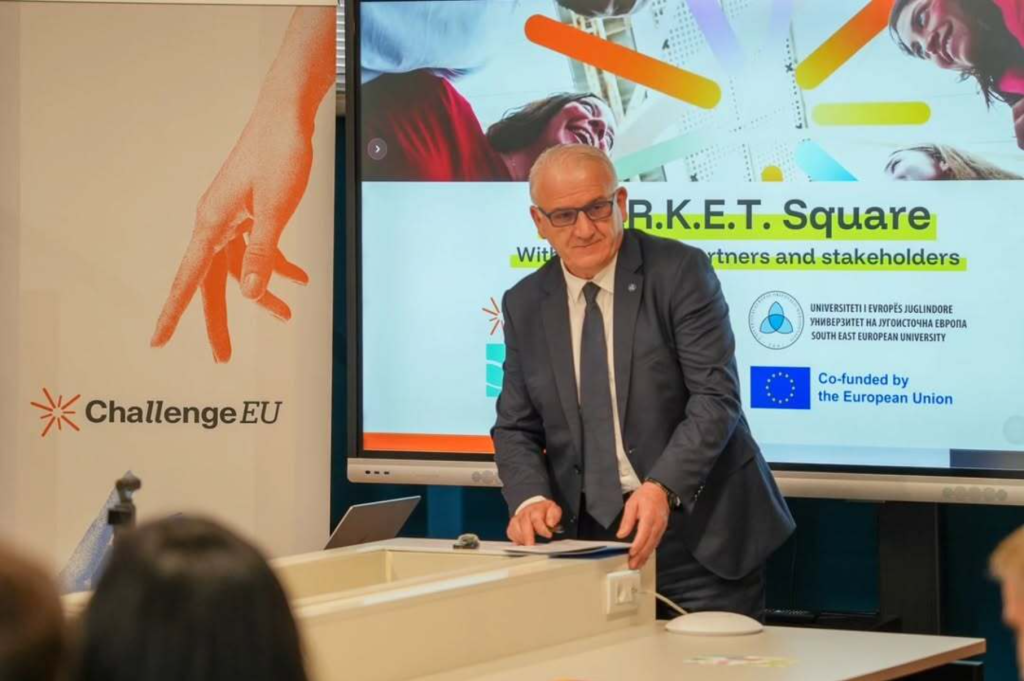
South East European University (SEEU) convened the forum “Connecting Education and the Labor Market” under the ChallengeEU umbrella, a milestone event reflecting the alliance’s ambition to shape its immediate environment and co-create its future. The meeting advanced cooperation among universities, industry, public institutions, and civil society in the spirit of the quadruple-helix model. We believe regional development and academic excellence go hand in hand. In his opening, SEEU Rector Prof. Dr. Sadudin Ibraimi highlighted the University’s commitment to creating tangible opportunities for students and partners through innovative, collaborative platforms. Acad. Prof. Dr. Abdylmenaf Bexheti followed with a motivational address on how the quadruple helix strengthens links between education, industry, government, and the community. Prof. Dr. Veli Kreci presented the ChallengeEU initiative, while Shpresa Alija outlined her responsibilities as M.A.R.K.E.T. Officer. Hamit Kamberi introduced the M.A.R.K.E.T. Digital Center, showcasing its features and partner benefits. The forum closed with an open discussion and networking reception, where participants exchanged ideas and explored avenues for future cooperation. Attendees included representatives of associated partners and key stakeholders. M.A.R.K.E.T. (Mapping, Awareness Raising, Knowledge Exchange, and Training) is a digital hub and collaboration platform developed by SEEU within ChallengeEU to connect the University with businesses, public institutions, and civil society organizations.
ODEI Programme in Action
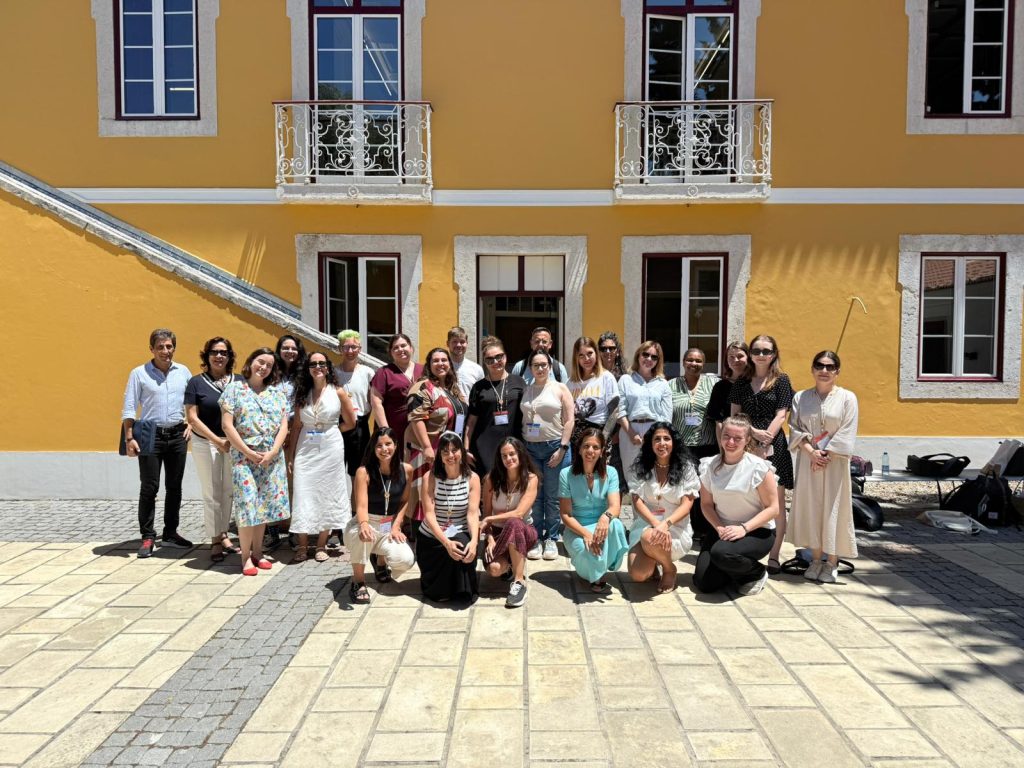
From June 20 to 30, members of Work Package 5 from the ChallengeEU Alliance conducted an innovative pilot training on Openness, Diversity, Equity, and Inclusion. The immersive Blended Intensive Programme (BIP), hosted by Universidade Europeia, brought together participants from all partner universities, offering a unique opportunity to develop and refine their teaching skills on key ODEI topics. After several weeks of in-depth preparation, the training provided a dynamic platform to put their knowledge into practice. The training was structured into six interactive modules, each addressing key aspects of ODEI: A standout feature of the training was the ODEI simulation, where participants engaged in experiential learning by observing actors role-playing real-life scenarios involving discrimination and microaggressions. This powerful exercise sparked deep discussions, allowing attendees to analyze these situations and collaboratively explore solutions. While the opening and closing sessions were held online, the core of the training took place in a hybrid format, combining virtual participation with an in-person gathering in Lisbon, Portugal. This blended approach not only made the program accessible to a wider audience but also provided an invaluable opportunity for participants to network, exchange ideas, and strengthen cross-university partnerships. The training employed diverse, interactive methods – including experiential learning, Mentimeter polls, group discussions, and brainstorming sessions – to ensure active participation. The final evaluations reflected high satisfaction with the content, materials, and facilitation methods, demonstrating the program’s effectiveness in deepening ODEI competencies. Building on this successful pilot, the next phase will involve rolling out the training to students and staff across all ChallengeEU universities. This expansion will further embed ODEI principles into institutional cultures, empowering more individuals to champion inclusivity and equity in their communities. This initiative marks a significant step forward in creating more inclusive, aware, and collaborative academic environments – a testament to the power of shared learning and collective action.