After the ChallengeEU meeting in Brussels: we’re ready for the next steps!

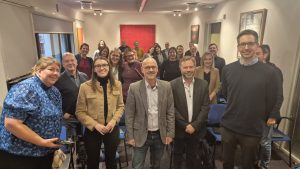
ChallengeEU team at work meeting in Brussels. People are standing in the meeting room.

First at the headquarters of the Fundación Comunidad Valenciana – Región Europea, and then at the Representation Office of the State of Baden-Württemberg in Brussels, members of the ChallengeEU team took part in a three-day working meeting (27-29 October). The aim was to strengthen collaboration between Work Packages, refine the delivery timetable, and align milestones for the months ahead. Work was carried out both in plenary and in dedicated working groups. This setup enabled joint strategic decisions and detailed task work within teams responsible for specific areas (including mobility, digitalisation, ChallengeEU Academy, ODEI, and communication & dissemination). Among the key topics addressed were a summary of activities undertaken in 2025 and planning for the next year of cooperation. The main priorities and expected results were also discussed. The session “How Do We Align Quality Processes” focused on standardising quality processes and document workflows. Day one also included a WP6 training on branding, communication, and dissemination – a practical module that clarified standards for content preparation, EU funding acknowledgements, brandbook compliance, and reporting of communication activities. It’s also worth adding that an opportunity to continue improving our internal communication will be the team workshops taking place on 3–4 November. Significant attention was devoted to mobility, the ChallengeEU Academy, the course catalogue, and the ODEI initiative. The teams worked on mobility frameworks, the educational offer, and solutions supporting inclusiveness (e.g., a virtual ODEI office and mentoring pathways). A crucial point of the agenda was an open Q&A with Daniel Hubner, the EACEA Project Officer, during which issues such as project activity reporting, formal expectations, and preparation for the mid-term report were discussed. Participants emphasised that such a meeting will help better align internal procedures with programme requirements and reduce the risk of inconsistencies in documentation. A valuable experience was also the meeting with Maria-Valerie Schegk from the YUFE Alliance, who shared with participants the good practices developed within the alliance she represents. She highlighted, among other things, the importance of documenting the alliance’s impact. The balance between group work and plenary discussions made it easier for teams to translate strategic decisions into day-to-day work plans. Further actions were agreed in the areas of: refining the shared infrastructure for events and stakeholder collaboration tools; streamlining approval and publication pathways for official alliance channels; and preparing for the mid-term report along with a review of indicators. The meeting concluded with a discussion on the alliance’s future and the announcement of initial plans for the ChallengeEU conference, which will take place in May in Olsztyn. The event will summarise the results achieved to date, strengthen cooperation with stakeholders, and showcase the impact of the alliance’s initiatives on regions and academic communities. A symbolic moment of the Brussels meeting was a minute of silence in tribute to the victims of the flood that struck Valencia a year ago. Although it was spontaneous and not part of the official programme, it was the best proof that the alliance is not only about creating joint study programmes or exchanging knowledge and experience. Above all, it is about building a community.

ChallengeEU delegation attended ECAM LaSalle’s anniversary

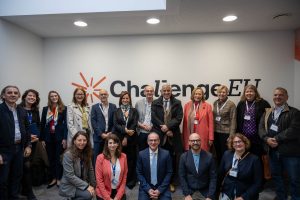
Group photo of the ChallengeEU delegation standing in front of a wall with the ChallengeEU logo at ECAM LaSalle

A 14-member delegation from the ChallengeEU Alliance visited ECAM LaSalle in Lyon to mark the university’s 125th anniversary, combining celebrations with working discussions. The group, led by five rectors, included representatives from Fachhochschule Nordwestschweiz (FHNW), Hochschule Offenburg, Latvia University of Life Sciences and Technologies, Mid Sweden University, South East European University (SEEU), Universidad Europea de Valencia, Universidade Europeia, and the University of Warmia and Mazury in Olsztyn. Beyond the official celebrations, the visit provided an opportunity for strategic discussions on research collaboration, sustainability, and European perspectives for academic cooperation. Participants exchanged experiences from across the Alliance and identified areas for future joint initiatives. The delegation also explored ECAM LaSalle’s educational facilities and met students involved in technical clubs, including the ECAM Formula Student Team (EFST), H2 Eco’Innov, and the #WorldSkills team. The presentations showcased a range of innovative student projects and underlined the strong potential of emerging European talent. The programme concluded with a visit to the Basilica of Fourvière. ECAM LaSalle reaffirmed its commitment to globally open, future-oriented engineering education. Representatives of ChallengeEU extend congratulations to ECAM LaSalle on this milestone and wish the university continued success in the years ahead. About ECAM LaSalle: In September 1900, the first class of the Jean Baptiste de La Salle School of Arts and Crafts in Reims began the school year under the guidance of the Brothers of the Christian Schools. For over a century, ECAM LaSalle trains generations of responsible and creative engineers, who use their scientific expertise to serve a sustainable and ethic future. University has continued to adapt to the needs of companies and to the expectations of young people and their families. A pioneer in its field, its notable innovations are: the establishment of one of the first Engineering Apprenticeship programmes; the first factory-school dedicated to Lean Management (INEXO: Institute of Operational Excellence) and the first 5 year Engineering Program in English in France (ECAM Engineering).
ChallengeEU Strategy Board Meeting in Switzerland 

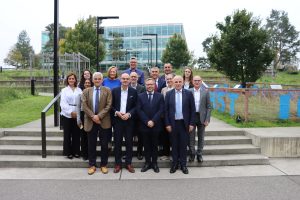
Strategy Board gathered at Fachhochschule Nordwestschweiz FHNW for two inspiring days (8–9 Oct) of exchange and strategic dialogue between rectors and student representatives. Participants also had the pleasure of touring the FHNW campus in Windisch. They were hosted by, among others, FHNW President Crispino Bergamaschi, with Arne Wahlen, Peter Flohr, Rico Travella, Guido McCombie, and Brandon Panos sharing insights into their respective schools: ChallengeEU has been accepted into the circle of ‘European University Alliances’ and will be funded by the European Commission from 2025 to 2028 as part of this flagship initiative of the European higher education strategy. As a Swiss partner, FHNW is funded by Movetia as part of the Swiss European Mobility Programme (SEMP).
Shaping ChallengeEU’s Digital Future in Offenburg

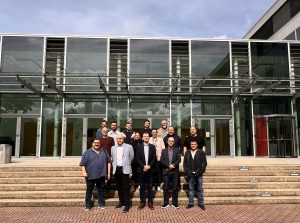
Group photo of WP2 representatives standing on the steps in front of a glass building at Hochschule Offenburg. About 15 people are posing together, smiling at the camera.

As part of the ChallengeEU university alliance, representatives from nine European universities, primarily IT leads involved in Work Package 2 (WP2), met at Hochschule Offenburg (Offenburg University of Applied Sciences) to advance discussions on the alliance’s digital infrastructure. WP2 plays a key role in creating the digital backbone of ChallengeEU, enabling collaboration, mobility, and data exchange across partner institutions. The meeting focused on shaping the platform’s architecture and core functionalities that will steer the alliance over the coming three to four years. Among the priorities are the development of a joint course and mobility catalogue, the launch of the DigitalHub (known as the Digital M.A.R.K.E.T Space) and the integration of AI-powered features. All modules will align with major European digital initiatives, including eduGAIN, Erasmus Without Papers (EWP), ECTS, and the European Student Card. WP2 is coordinated by South East European University (SEEU), led by Prof. Dr. Mennan Selimi, with co-leadership from Mid Sweden University under Prof. Dr. Niklas Brinkfeldt. SEEU’s IT team — Shefik Osmani, Ahmed Abdullai, and Hamit Kamberi — joined the Offenburg meeting to contribute their expertise to the design of ChallengeEU’s digital platform.

For Better Communication: Internal Training at SEEU

Participants of internal training at SEEU

Effective internal communication is key to the success of any international alliance — and the ChallengeEU Alliance is no exception. With this in mind, the Work Package 6 (WP6) team, which leads communication and dissemination efforts across the Alliance, organized a dedicated internal training session at South East European University (SEEU) on 2 July. The training, titled “Internal Communication Tools and Effective Collaboration”, aimed to strengthen coordination among different teams involved in the ChallengeEU project at SEEU and to establish a more unified and effective communication culture across all university departments engaged in the initiative. The session was led by Edlira Palloshi Disha, communication specialist and researcher at the Max van der Stoel Institute (MVDSI), who introduced key tools, techniques, and principles for impactful communication within a complex, multi-stakeholder environment. Drawing from practical experience, Nerodia Selimi from SEEU’s Public Relations Office shared valuable best practices and examples from the university’s communication strategy. The training brought together a diverse group of participants representing all SEEU work packages involved in ChallengeEU, including colleagues from Participants included representatives from the International Relations Office, Career Center, the Pro-Rector for Digitalization, Business Innovation Center, MVDSI’s Project Coordination Unit, deans, and other academic staff and administrative offices across the university. This broad participation created a dynamic environment for knowledge-sharing and collective reflection. One of the session’s main objectives was to initiate a more standardized internal communication framework across SEEU’s project teams, ensuring smoother collaboration, clearer messaging, and improved responsiveness. Participants actively engaged in discussions on: The training session laid the groundwork for more efficient collaboration within SEEU and, by extension, within the broader ChallengeEU Alliance. By aligning internal communication practices, the university is taking a critical step toward ensuring that the Alliance functions as a truly integrated and collaborative ecosystem. This event highlights how internal capacity building can directly contribute to the success of international cooperation — reinforcing ChallengeEU’s core mission to bring European universities together to tackle shared challenges through joint innovation, research, and education
ChallengeEU Meets with Partners at FHNW

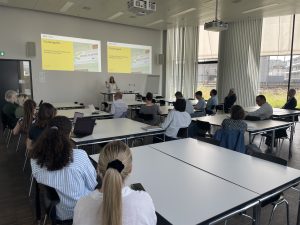
Strengthening regional partnerships is one of the key ways the ChallengeEU Alliance ensures that its work creates tangible impact in local communities across Europe. These partnerships bring the Alliance’s mission closer to reality by connecting higher education institutions with the people, institutions, and industries that shape their surrounding ecosystems. In June, this commitment took a meaningful step forward during a special meeting at Fachhochschule Nordwestschweiz (FHNW) in Switzerland. The ChallengeEU team, together with FHNW President Prof. Crispino Bergamaschi, had the pleasure of presenting the Alliance’s current initiatives to a group of associated partners from the Northwestern Switzerland region. The meeting sparked engaging discussions and laid the foundation for exciting future collaborations. Topics ranged from the evolving needs of students and early-career professionals, to major challenges and opportunities in digitalisation, robotics, artificial intelligence, and diversity. A particularly meaningful part of the exchange focused on the topic of neurodiversity and how schools and employers can better support individuals with diverse cognitive profiles. Initial ideas for joint projects and synergies are already emerging, and all participants shared a strong interest in shaping initiatives that are creative, sustainable, and truly future-oriented. This meeting clearly demonstrated the added value of close cooperation between universities and their regional environments — a core principle of the ChallengeEU Alliance. We are excited to continue these conversations and turn them into concrete, impactful action.
International Experience in Sustainable Gastronomy

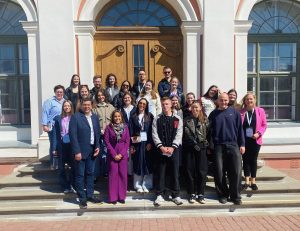
Participants the course "Sustainable Restaurant Service"

From May 13–17, the Latvia University of Life Sciences and Technologies (LBTU) hosted the Erasmus+ Blended Intensive Programme (BIP) course “Sustainable Restaurant Service”, bringing together students and academic staff from Latvia, Croatia, Portugal, Poland, and Bulgaria. This international course was a valuable opportunity to exchange knowledge and best practices in the field of sustainable gastronomy. The event was made even more impactful thanks to the active involvement of ChallengeEU alliance partners – Universidade Europeia and the University of Warmia and Mazury in Olsztyn, whose participation reinforced the spirit of international collaboration and innovation. The course was especially valuable thanks to the participation of the ChallengeEU partners – Universidade Europeia (Portugal) and Uniwersytet Warmińsko-Mazurski w Olsztynie (Poland) – strengthening international cooperation in sustainable gastronomy. Before arriving in Latvia, participants joined virtual sessions to explore sustainability in restaurant operations, AI solutions, and cross-border teamwork. During the on-site week, students explored:Sustainable restaurant managementGastronomic tourism & local cuisineStudy visits to producers & Michelin Guide restaurantsInspiring talks with chefs & hospitality professionals The course concluded with a practical workshop and a festive lunch showcasing sustainable food service. All participants received certificates — and a shared commitment to future collaboration in sustainable gastronomy. The organizers extend their congratulations to all partners, students, and lecturers who contributed to the success of this event.

This site uses cookies. Visit our cookies policy page or click the link in footer for more information and to change your preferences.