Student Journal: “ChallengeEU did more than connect universities”
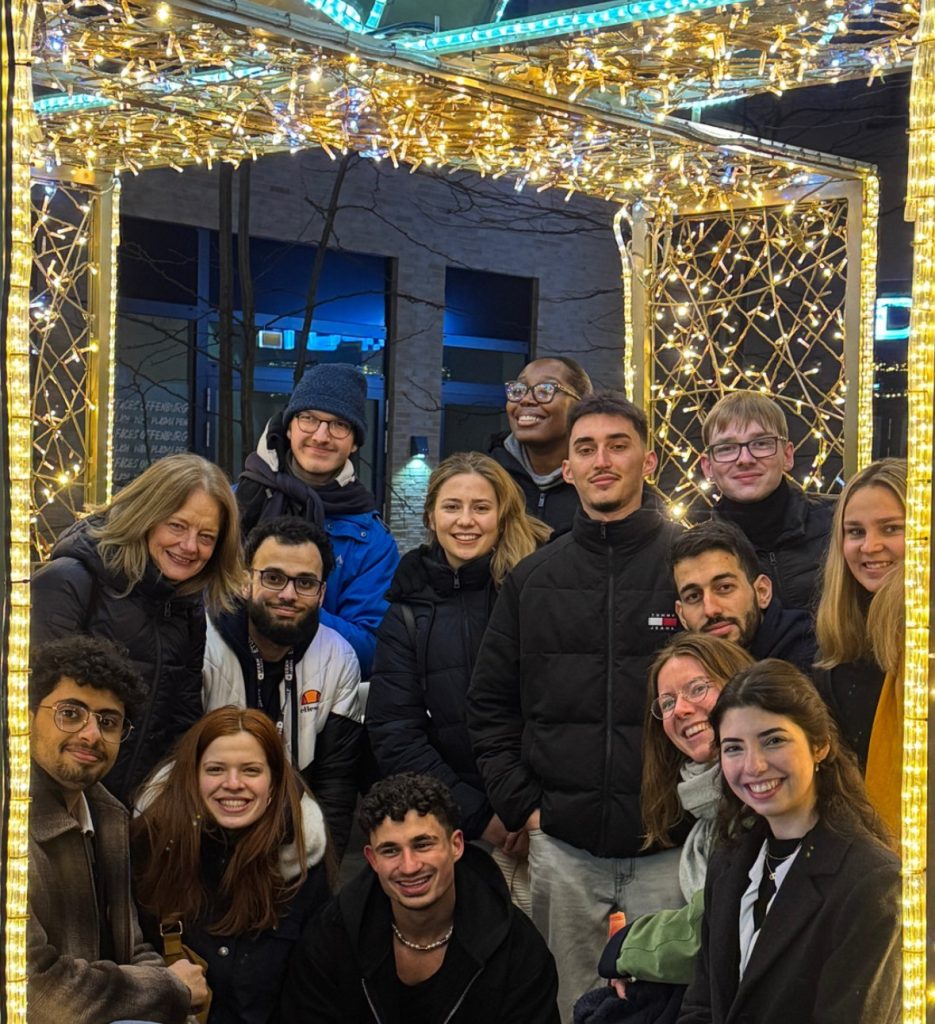
“Being part of this journey changed the way I see Europe” – writes Gajur Memeti from South East European University in North Macedonia, a member of the Student Ambassadors Team. Representing South East European University as a Student Ambassador for ChallengeEU honestly started as something that simply made me proud. I remember when I first got the role. It felt big. Not just because it was connected to Europe, but because I knew I was carrying the name of my university with me. That realization alone made it feel important. At the beginning, everything was online. We met through screens, squares with names and faces from different countries. Even though it was virtual, there was still this shared excitement. I would sit at my desk listening to students from different parts of Europe speaking about their ideas, their universities, and their expectations. It was strange in a good way, realizing how different we all were, but also how similar our goals sounded. Still, online meetings can only go so far. You connect, but it stays limited. Then December 2025 came, and we finally met in person in Offenburg. That is when everything felt real. Traveling there was not just about attending a meeting. It felt like stepping into something bigger. We had workshops on content creation, photography, and intercultural communication, and those sessions were genuinely useful. I learned practical things. How to communicate better. How to represent something visually. How to think more carefully about the way I share stories. But if I am being honest, the most important part was not inside the workshop rooms. It was the conversations in between. The small talks that slowly turned into deeper discussions. Sharing meals, laughing about cultural differences, explaining traditions, talking about our studies and our ambitions. In just a few days, the dynamic completely changed. We stopped feeling like representatives of nine separate universities and started feeling like one team. What surprised me the most was how fast the connections felt real. We arrived as ambassadors with a title. We left feeling like we had built something personal. Looking back now, I realize that ChallengeEU did more than connect universities. It connected perspectives. It challenged the way I think about borders, collaboration, and leadership. It showed me that real impact does not begin with institutions. It begins with people who are willing to listen, to share, and to grow together. Being part of this journey changed the way I see Europe. It is no longer just a map or a concept discussed in classrooms. It is people, conversations, shared goals, and mutual respect. What started as an honor became something deeper. A responsibility I carry with pride. A reminder that when young people come together with openness and purpose, the future does not feel uncertain. It feels ours to shape. Gajur Memeti
Smart Turn-Assist: Inclusive Innovation from an FHNW Student
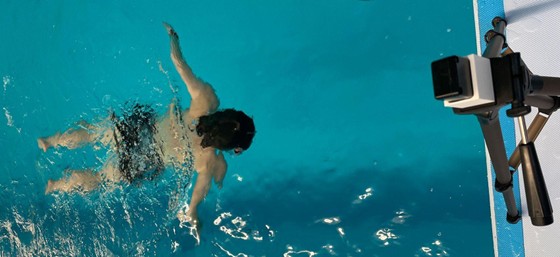
How can swimming become more independent and safe for people with visual impairments? This question inspired Selina Przyjemski, graduate in Electrical and Information Technology. She developed a smart turn-assist system that helps blind and visually impaired swimmers orient themselves in the pool without needing a guide at the poolside. Her work has now been awarded the prize for Best Bachelor Thesis at the FHNW School of Engineering and School of Computer Science and is nominated for the Siemens Excellence Award 2026. For many visually impaired swimmers, reaching the end of the lane is a moment of uncertainty. Traditional support requires another person to signal when to turn. Professor Hanspeter Schmid from the Institute of Sensors and Electronics had long wondered whether technology could offer more autonomy and invited students to explore the idea. Selina Przyjemski took on the challenge. “I loved that the project was meaningful and that I could build something entirely new,” she says. Finding a reliable way to measure distance in water turned out to be tough. Cameras failed due to reflections and privacy issues; ultrasound and radar also proved unreliable. The breakthrough came with Ultra-Wideband (UWB) radio technology, normally used in indoor logistics to track goods. Przyjemski adapted UWB for use near water and achieved the precise distance measurements needed for swimmers. Her system works with: From gentle pulses over five metres away to continuous vibration under two metres: The system clearly signals when it’s time to turn. Trials with a blind test swimmer showed how easy the system is to use. More importantly, it increases autonomy and safety, supporting everything from relaxed training to competitive swimming. Program Director Prof. Sebastian Gaulocher praises the achievement: “What looks simple at the end is usually hard to achieve. Selina developed a user-friendly, practical tool grounded in complex technology and she pushed through every challenge with impressive perseverance.” More information (in German): Smart Turn-Assist