Positive Impact Challenge in Freiburg
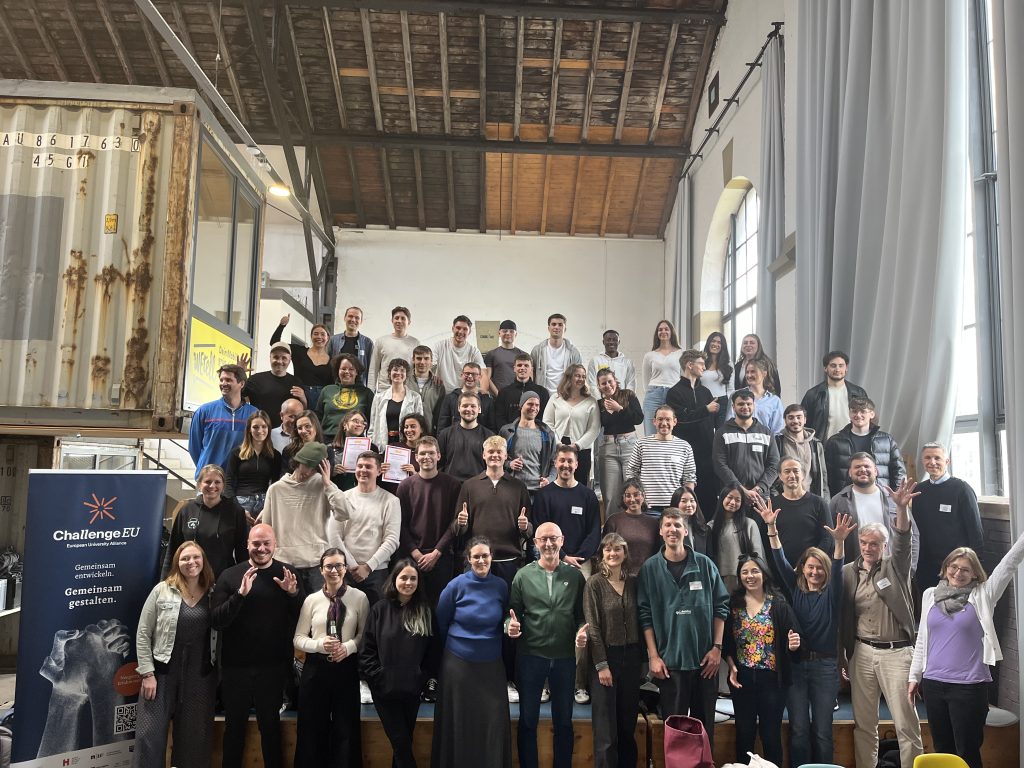
Hochschule Offenburg just concluded three inspiring days at the Positive Impact Challenge in Freiburg—an experience that reflects the core of ChallengeEU’s mission to drive challenge-based, impact-oriented education across Europe. The programme began with an onboarding Design Sprint, equipping students with design thinking tools to engage in collaborative, solution-driven processes from the outset. Building on this, teams developed social impact projects addressing real societal challenges—ranging from digital community engagement to inclusive everyday systems—demonstrating how student-led initiatives can contribute to regional innovation ecosystems. Throughout the challenge, participants were supported by our Seekers, whose expertise helped translate ideas into sustainable, scalable solutions with long-term impact. This mentorship process embodies ChallengeEU’s approach to fostering open innovation and knowledge exchange between academia and society. What stood out most was not only the diversity of project outcomes, but also the process itself: teams applied user-centred, emotionally intelligent methods, reflecting the shift towards challenge-based learning as a driver of societal transformation. In doing so, students actively became agents of change, contributing to more inclusive and responsive innovation practices. The collaborative environment—bringing together local and international perspectives—highlighted the strength of transnational cooperation within the ChallengeEU Alliance. It is through these shared experiences that we build a connected European learning community capable of addressing complex challenges beyond institutional and national boundaries. This activity is more than a standalone event—it is part of a broader ambition to reshape higher education towards impact, participation, and social innovation, strengthening Europe’s capacity to respond to the triple transition and future societal needs. As we close this chapter, we carry forward the momentum generated in Freiburg, looking ahead to the continued development and real-world implementation of these ideas. Stay tuned for the final project launches on June 24.
Hochschule Offenburg Represents ChallengeEU at the University Alliances Coordinators Meeting in Brussels
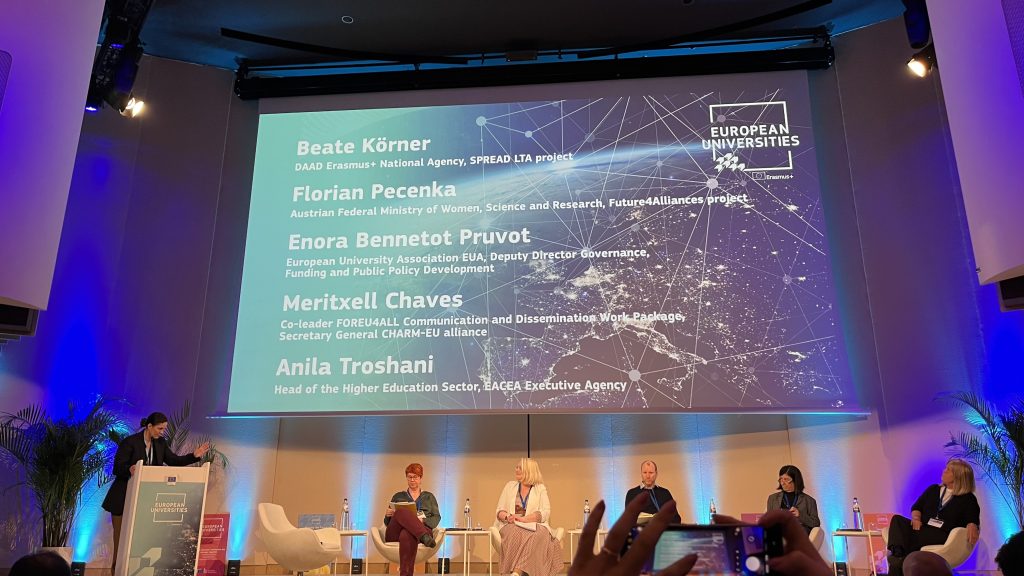
As part of the ChallengeEU Alliance’s continuous commitment to sustained transnational cooperation and impact-oriented governance, Hochschule Offenburg participated in a high-level Alliance Coordination Meeting in Brussels, represented by Vice Rector for Internationalisation and Managing Director, Prof. Dr. Tobias Hagen. Joined by other European University Alliances, the meeting outlined an array of strategic objectives set by Erasmus+ partners, with particular attention given to the long-term financial and structural roadmap for the alliances under the future Erasmus+ programming period. The programme emphasis was placed on the role of alliances within strategic sectors for European competitiveness, as well as their contribution to strengthening and completing the European Research Area. ChallengeEU was actively involved in the University Alliances Coordinators’ “Working Retreat” in Brussels on 14 April 2026, organised by the European Commission. Prof. Dr. Tobias Hagen participated alongside coordinators from all University Alliances and high-level representatives of the European Commission and Erasmus+ national agencies. Discussions centred on the future of University Alliances, including a shift towards long-term funding models rather than project-based funding as an integral part of Erasmus+ in the next Multiannual Financial Framework (MFF), the role of alliances as a model for the European higher education system, and their contribution to the Union of Skills and Europe’s competitiveness. Further exchanges shed light on the optimisation of reporting and review processes to enhance overall efficiency and measurable impact, reinforcing the importance of streamlined governance and performance monitoring across alliances. The meeting concluded with a plenary session reflecting on the consolidation of alliance structures, contributing to a more resilient and integrated European research and education landscape. Discussions between the Commission and Alliance representatives will continue at a rectors’ meeting on 10 June. Prof. Dr. Tobias Hagen further stated: “The Commission clearly recognises the importance of alliances and acknowledges the drawbacks of the current four- or two-year funding periods. We also had excellent networking opportunities with other alliances. All in all, it was a day full of information and opportunities to actively contribute to the future of European University Alliances.”