Science for the Social Environment: UWM Co-organises the Day of Dignity of Persons with Intellectual Disabilities
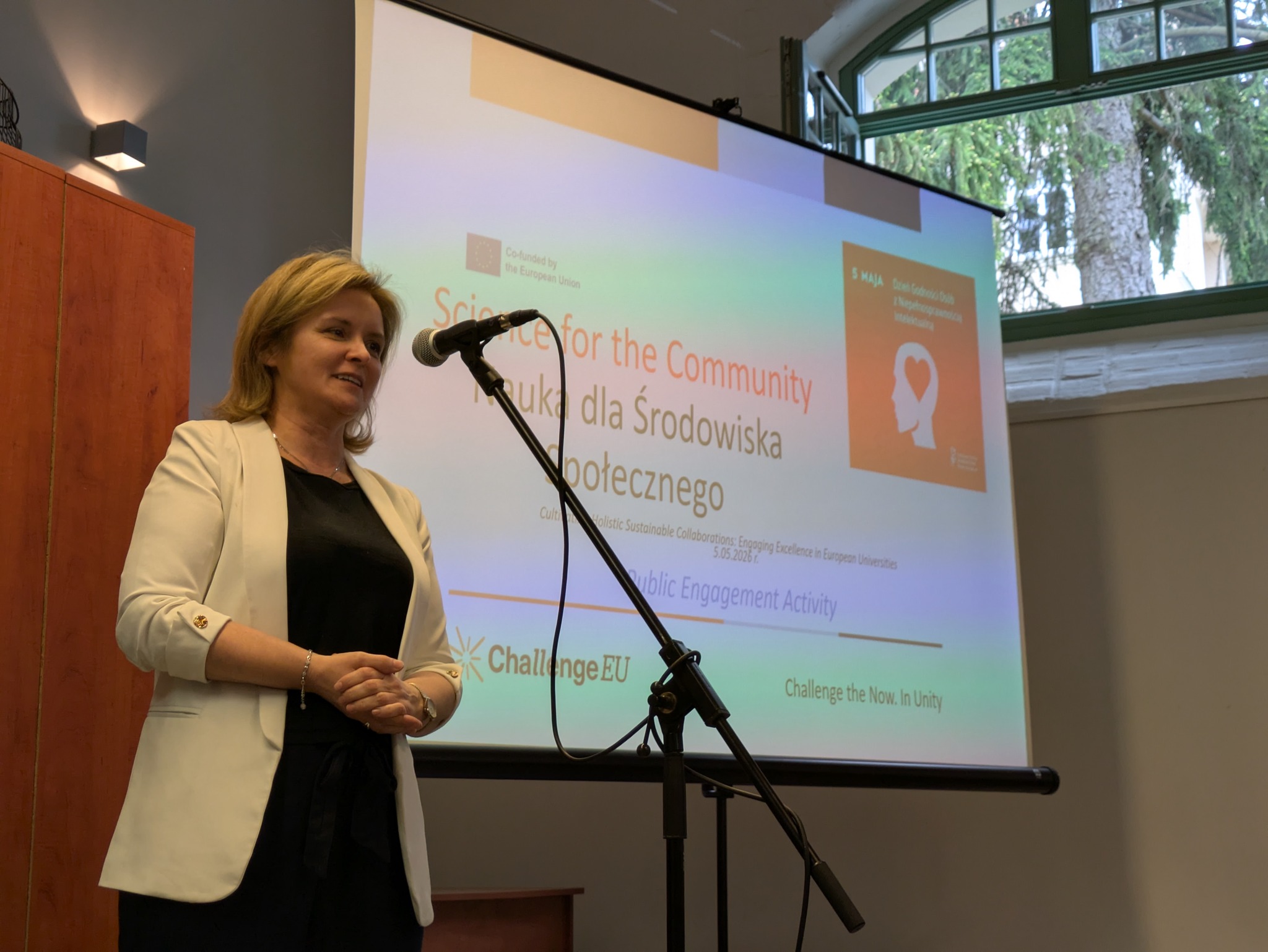
On 5 May 2026, the Ostróda District Multimedia Library “Przystań z Kulturą”, located at the Public Utility Centre in Ostróda, became a space for dialogue, inclusion and mutual learning. On that day, the event “Science for the Social Environment” took place as part of the ChallengeEU Alliance and was organised as a Public Engagement Activity. The meeting served as a prelude to the ChallengeEU 1st Annual Conference.
The date was no coincidence. In Poland, 5 May marks the Day of Dignity of Persons with Intellectual Disabilities. The event in Ostróda therefore formed part of an important social context, highlighting the importance of respect, agency and the active participation of persons with intellectual disabilities in social, cultural and academic life.
The meeting was attended by representatives of the Faculty of Social Sciences at the University of Warmia and Mazury in Olsztyn: Katarzyna Ćwirynkało, PhD, Associate Professor at UWM, Agnieszka Żyta, PhD, Professor of UWM; and Monika Chełchowska, MA. The event also brought together members of the local support community, including employees and instructors from the Vocational Activity Establishment, participants and therapists from Occupational Therapy Workshops, parents and other people supporting persons with intellectual disabilities.
The main focus of the discussion was cooperation between the university and the local community, as well as ways of building a positive image of persons with intellectual disabilities. Particular attention was given to inclusive research, in which persons with intellectual disabilities are not merely research participants, but co-create the research process as partners.
The meeting also provided an opportunity to present the assumptions of the OPUS-26 project funded by the National Science Centre, entitled “Inclusive Research with Persons with Intellectual Disabilities. A Methodological and Analytical Model”. The project is being carried out by Prof. Katarzyna Ćwirynkało and Prof. Agnieszka Żyta. Its aim is to develop methodological and analytical foundations for research conducted together with persons with intellectual disabilities.
The event was accompanied by an exhibition of works by co-researchers. The posters on display, designed by Michał Orłowski from UWM, were the result of the research project “Beauty in Our Eyes”, carried out using the photovoice method. In the project, academic researchers and researchers with intellectual disabilities worked together as equal partners, presenting their own perspectives on beauty, everyday life and the world around them.
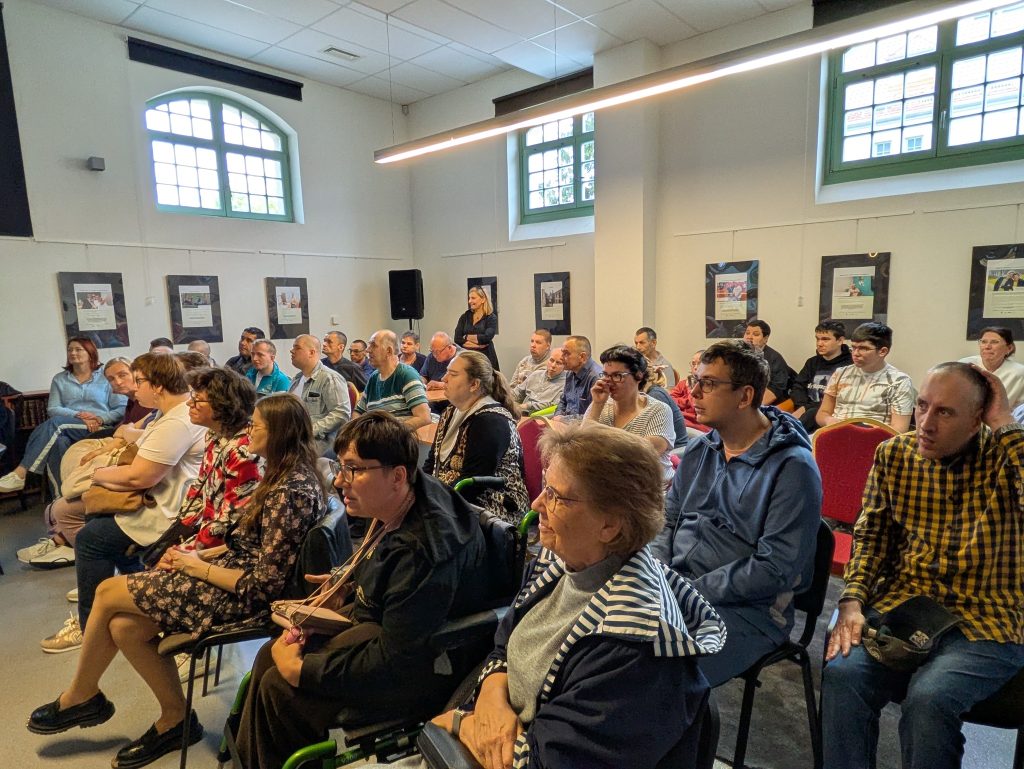
“Science for the Social Environment” demonstrated that academic activity can and should extend beyond the walls of the university. As a Public Engagement Activity, the event in Ostróda served as an example of how a university can cooperate with the local community, share knowledge and, at the same time, learn from people whose experience brings a unique perspective to research.
Through dialogue, art and a shared search for solutions, the meeting showed that inclusive research is not only possible, but also necessary. It strengthens the voice of persons with intellectual disabilities, builds relationships based on respect and contributes to creating a more open, attentive and inclusive society.

Daria
Contributor at ChallengeEU Alliance.

Advancing ODEI Through Legal Education: The Impact of Mentorship and Student Engagement
Read article
Family Law through ODEI M.A.R.K.E.T.: Student Perspectives
Read article