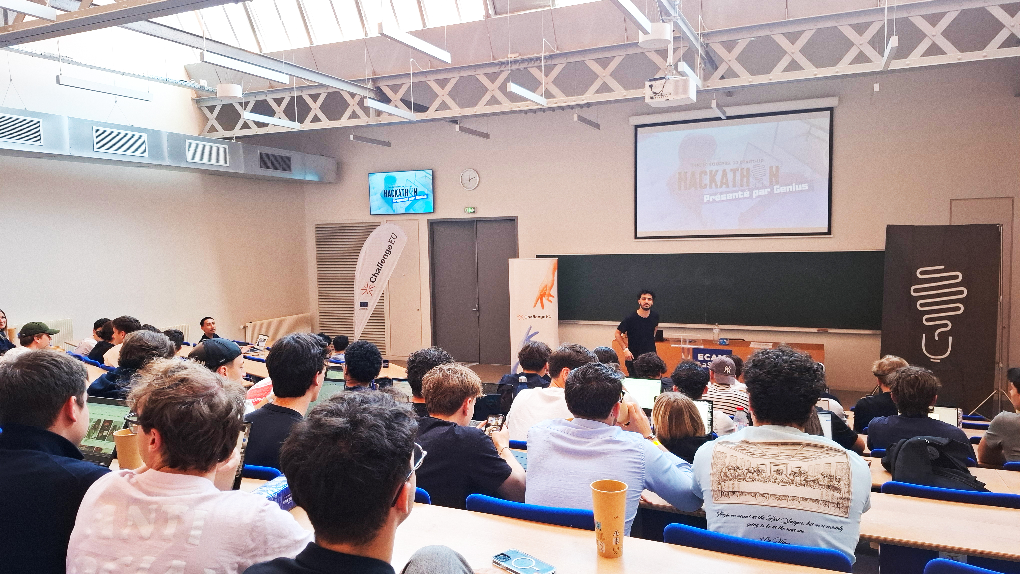
On 25 and 26 April, ECAM LaSalle hosted the 4th edition of the Genius Hackathon on its Lyon campus. During this 24-hour innovation marathon, 46 students from several higher education institutions worked together to develop responsible entrepreneurial concepts responding to some of the key challenges linked to the region’s digital, ecological and social transitions.
This year’s edition was organised within the framework of the ChallengeEU European University Alliance, giving the event an even stronger regional, international and collaborative dimension. As part of ChallengeEU’s Regional Innovation Initiative, the hackathon offered a practical example of how universities can support innovation, entrepreneurship and knowledge transfer while engaging with real societal needs.
ChallengeEU brings together nine European higher education institutions committed to developing interdisciplinary learning pathways and practical solutions in three priority areas: Smart Digitalisation, Health and Well-being, and Sustainable Futures. The Genius Hackathon reflected this approach by encouraging students to think beyond traditional academic boundaries and to design ideas with both business potential and positive social or environmental impact.
Launched in 2023, the Genius Hackathon has become an important annual event at ECAM LaSalle. It is organised by the ECAM LaSalle Genius Club, a student association dedicated to innovation and entrepreneurship. The 2026 edition gathered students from ECAM LaSalle, EMLyon, ESDES, IAE de Lyon, INSEEC and MADEIn, who worked in nine multidisciplinary teams of four to six participants.
Over the course of 24 hours, the teams were challenged to turn an initial idea into a start-up concept ready to be presented to the market. They were supported by expert-led talks designed to help them structure their projects, define their value propositions and prepare their final pitches. This intensive format encouraged creativity, teamwork, strategic thinking and the ability to respond quickly to complex challenges.
At the end of the hackathon, each team presented its project to a jury of professionals in a demanding format: a five-minute pitch followed by five minutes of questions. The projects were assessed according to their level of innovation, economic viability, societal and environmental impact, and the quality of the final presentation.
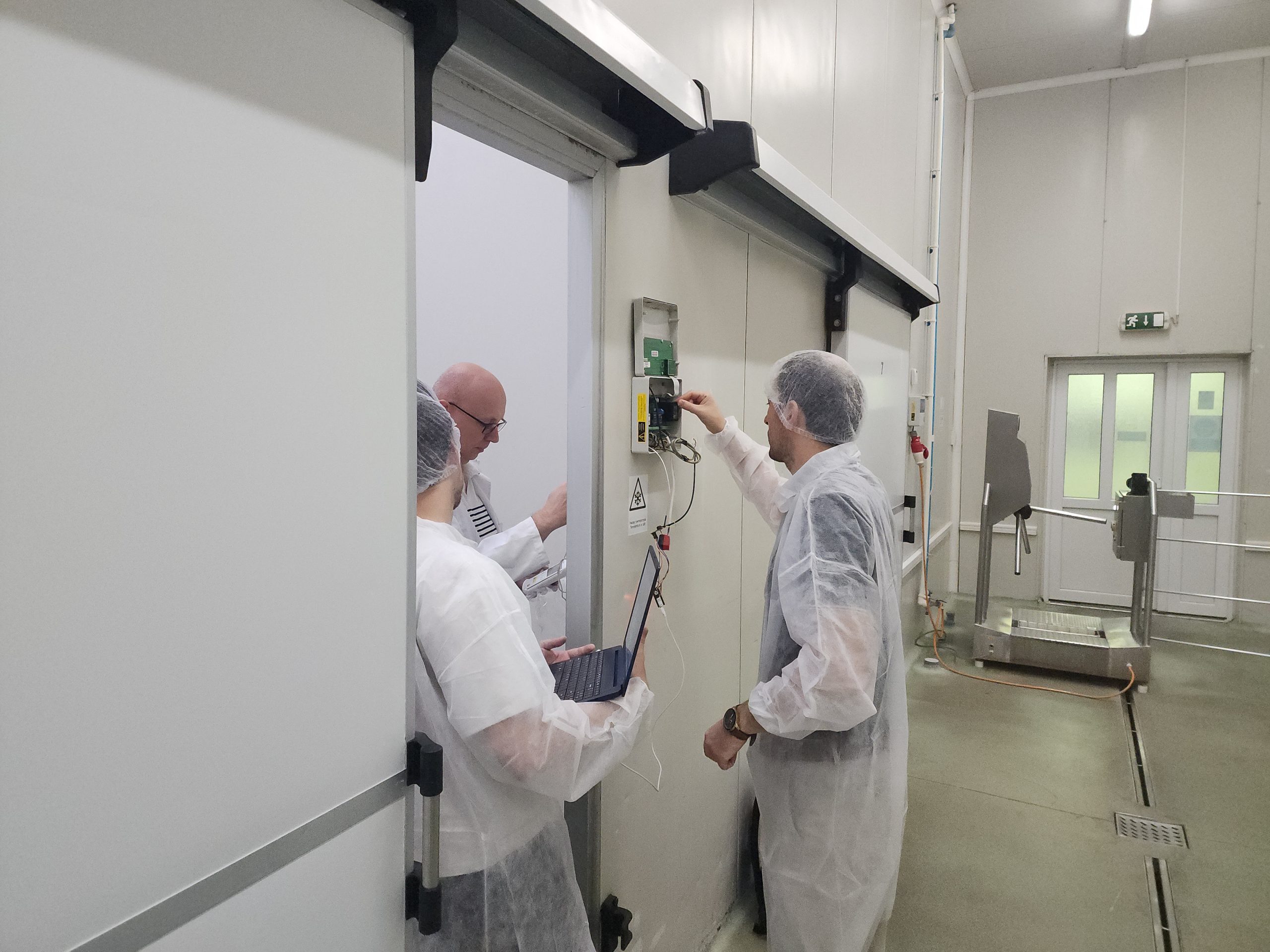
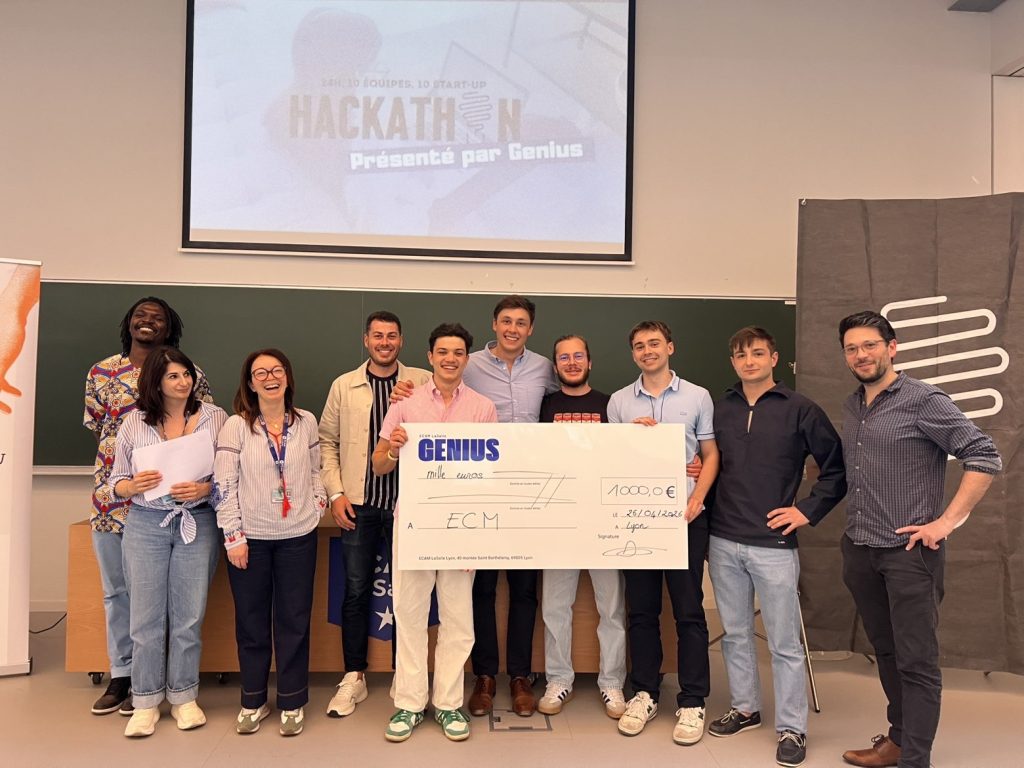
Three teams were awarded for their proposals. The first prize went to ECM, which developed a solution to optimise last-mile delivery within Low Emission Zones. O’FRAIS took second place with a project focused on creating a more reliable and secure cold chain. Third place went to EVERSTONE, whose concept explored the recycling of demolition rubble to give materials a second life and reduce environmental impact.
With its fourth edition, the Genius Hackathon once again confirmed its role as a dynamic laboratory for ideas, talent and responsible entrepreneurship. By connecting students, universities and regional challenges, the event showed how innovation can become a collaborative process and how young people can actively contribute to more sustainable and resilient futures.