Three students from Universidad Europea de Valencia, recognised at the 9th Capitanía General Awards for their academic excellence
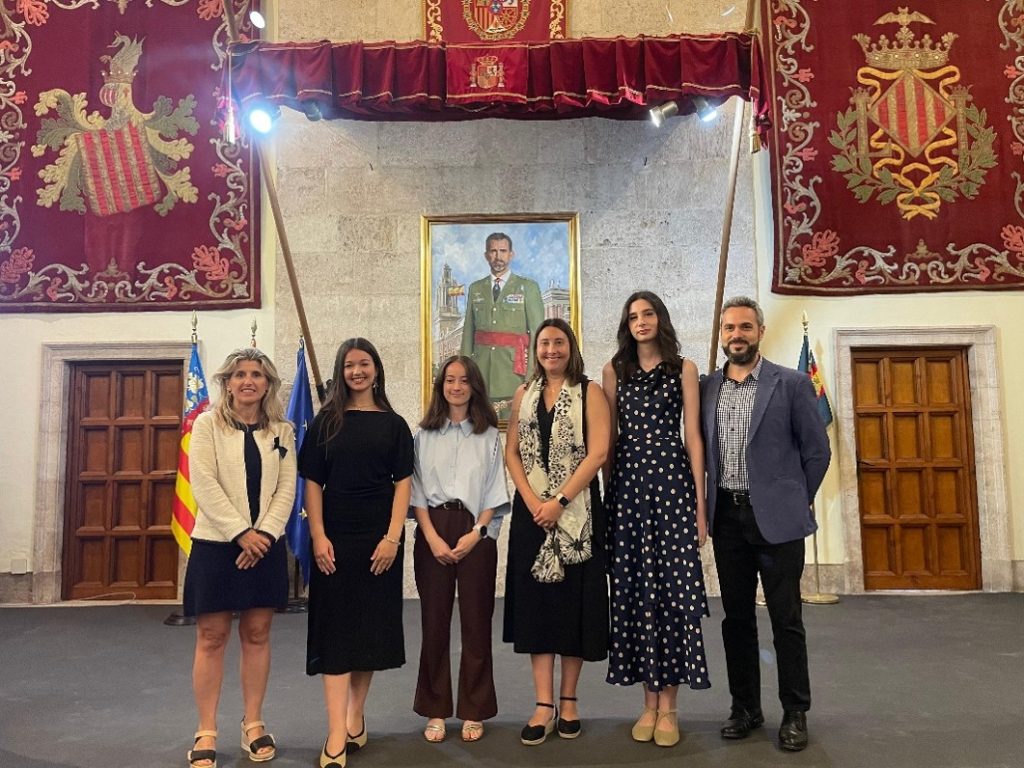
The students were honoured at a ceremony organised by the Army to recognise university talent and the training of future leaders. Three students from Universidad Europea de Valenciahave been recognised for their outstanding academic record at the 9th edition of the ‘Capitanía General de Valencia’ Awards, organised by the Spanish Army’s High Readiness Land Headquarters (CGTAD). This prestigious award honours students with the best academic records from Valencian universities across various fields of study. The award winners are Brenda Artagoitia Abellán, from the Bachelor’s Degree in Business Administration and Management with International Teaching (Global Bachelor’s Degree); Apolline Mélanie Marcelle Bonnefoy-A-L’Anne, from the Bachelor’s Degree in Physiotherapy; and María Minguela Sáez, from the Bachelor’s Degree in Physics. The ceremony, held on Tuesday 16 June at the Cuartel de Santo Domingo in Valencia, brought together 27 award-winning students, due to graduate in 2025, nominated by their respective universities in these three fields of study: Arts and Humanities/Social and Legal Sciences; Sciences and Health Sciences; and Engineering and Architecture. The students were accompanied by their families and by academic representatives from Universidad Europea de Valencia, including the Vice-Chancellor for Academic Organisation and Students, Silvia Trujillo; the Dean of the Faculty of Social Sciences, Carla de Paredes; and the Director of the School of Science, Engineering and Design, Vicent Gassó. In this context, Vice-Rector Silvia Trujillo highlighted “the value of initiatives such as these awards, which recognise academic achievement and strengthen the connection between the university and institutions, such as the Army, that share a commitment to education, values and the development of a better-prepared and more responsible society”. These awards, now well established in the city of Valencia, aim to recognise the best undergraduate academic records and strengthen the links between the Armed Forces and the university sector, emphasising the role of education in shaping the leaders of the future. During the ceremony, emphasis was placed not only on academic achievement, but also on humanity, discipline and commitment – key qualities for tackling the challenges of a society in constant transformation.
“Data matters most before the match”
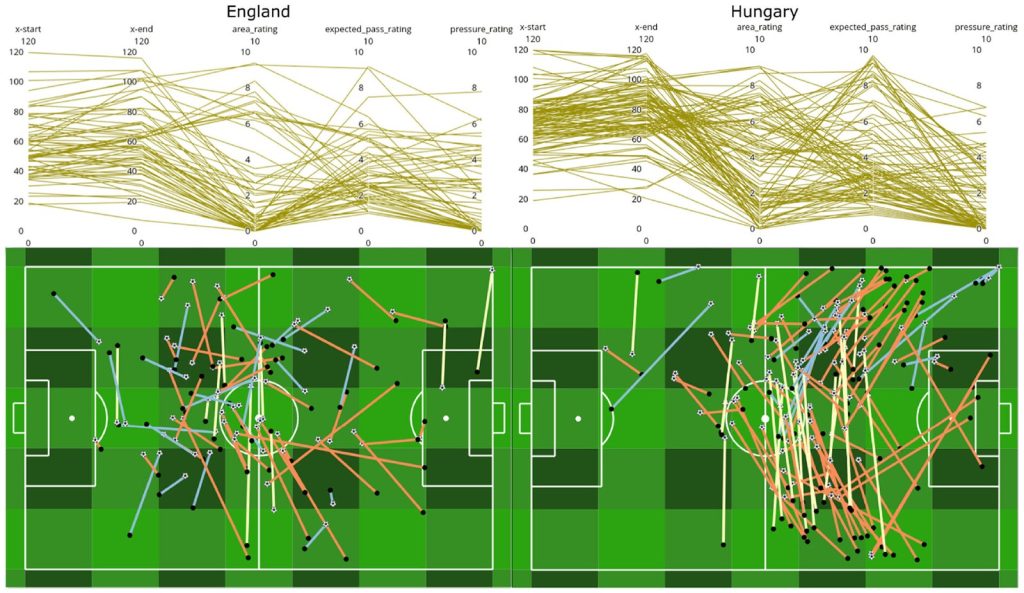
How do AI and data science change sports? The FHNW Data Science Study Track “Data Science & AI for Sports” explores exactly that. It is led by Martin Rumo (FHNW School of Computer Science) who researches how performance in sports can be measured and improved using data-driven methods. Major tournaments like the Football and Ice Hockey World Cups show how much happens behind the scenes. Today, games are carefully planned and intensively analyzed. Sensors and cameras generate vast amounts of data: tracking positions, passes, speed, and duels in real time. However, only a few teams have the tools and expertise to fully use this data during tournaments. Martin Rumo, how do you follow major sports events: more as a fan or a scientist?Both. Years of studying how to measure and improve performance have shaped my perspective. I watch games more analytically now, but that hasn’t reduced my enjoyment as a fan. Is AI already used by teams during tournaments like the World Cup?Yes. In every match, detailed data is collected and made available within seconds. Teams with the right tools analyze patterns such as running routes, passing decisions, or player workload. Still, data plays its most important role before the match. It helps identify talent early, develop players, and define team strategy: What type of players do we need? What are their strengths and weaknesses? How can they improve? What do students learn in “Data Science & AI for Sports”?They learn how to describe and measure performance, collect and process data, and build data pipelines. These skills can be applied across different sports, although deep sport-specific understanding remains essential. While performance and results can be quantified, not everything in sports can be captured in numbers. Can the essence of sport really be measured?Competition and results can be measured. But why one athlete outperforms another often depends on intuition, experience, and context. Coaches rely heavily on subjective judgment. That’s why qualitative data also matters. New tools like language models help analyze such data more systematically. Even so, sport will always include unpredictable moments, where intuition and human factors decide the outcome. Martin Rumo, study track lead Example of football data analysis: The passes of Toni Kroos during two matches at EURO 2020, source: Evers et al. (2024), https://doi.org/10.1177/14738716231220539 More information about the new study track here: https://www.fhnw.ch/en/computer-science/degree-programmes/offerings/programmes/data-science-ai-for-sports Full article (in German): https://www.fhnw.ch/de/aktuelles/news-storys/alle/ki-data-science-sport-wm
ChallengeEU in Practice: MIUN and SEEU Develop Academic Cooperation
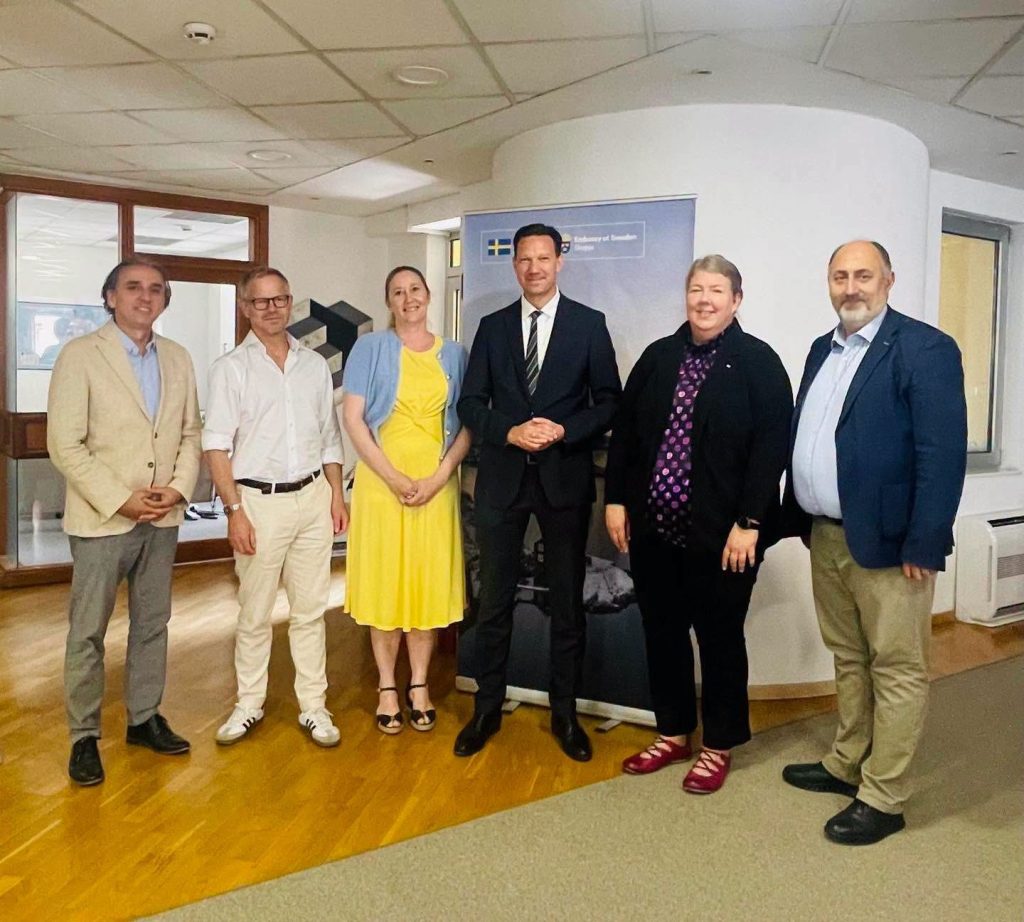
South East European University (SEEU) hosted a delegation from Mid Sweden University as part of efforts to strengthen academic cooperation and activities within the European university alliance ChallengeEU. During the visit, the Swedish delegation held a series of meetings with SEEU representatives, including the Rector of SEEU, Prof. Dr. Sadudin Ibraimi, together with members of the university management and academic staff. At a meeting with the Pro-Rector for Planning, Research and Entrepreneurship, Prof. Dr. Veland Ramadani, discussions focused on the development of joint study programmes — Joint Degrees and Double Degrees — within Work Package 3 of the ChallengeEU alliance. The parties explored the possibility of establishing a joint degree in the fields of entrepreneurship and innovation, as an important step towards expanding the university’s international academic offer. A separate meeting was held with the Head of the International Relations Office, Bujar Sinani, during which opportunities for student and staff mobility were presented, along with the services and programmes offered by SEEU as part of international cooperation. On the second day of the visit, the MIUN delegation and SEEU representatives held separate meetings at the Embassy of Sweden in Skopje with the Ambassador of Sweden to North Macedonia, Ola Sohlström, as well as with one of the founding partners of the Swedish–Macedonian Chamber of Commerce. The meetings emphasised the importance of successful cooperation between MIUN and SEEU within the ChallengeEU, as well as their shared ambition to develop innovative study programmes in entrepreneurship and innovation. Both universities are actively engaged in the development of the ChallengeEU and contribute to its mission of building stronger, more connected and innovative European higher education. Through their cooperation, MIUN and SEEU support the alliance’s objectives by promoting internationalisation, academic mobility, joint educational initiatives, and collaboration with external partners. Their shared commitment demonstrates how ChallengeEU creates a platform for universities to exchange knowledge, develop new opportunities for students and staff, and respond together to regional and European challenges.