“Data matters most before the match”
How do AI and data science change sports? The FHNW Data Science Study Track “Data Science & AI for Sports” explores exactly that. It is led by Martin Rumo (FHNW School of Computer Science) who researches how performance in sports can be measured and improved using data-driven methods.
Major tournaments like the Football and Ice Hockey World Cups show how much happens behind the scenes. Today, games are carefully planned and intensively analyzed. Sensors and cameras generate vast amounts of data: tracking positions, passes, speed, and duels in real time. However, only a few teams have the tools and expertise to fully use this data during tournaments.
Martin Rumo, how do you follow major sports events: more as a fan or a scientist?
Both. Years of studying how to measure and improve performance have shaped my perspective. I watch games more analytically now, but that hasn’t reduced my enjoyment as a fan.
Is AI already used by teams during tournaments like the World Cup?
Yes. In every match, detailed data is collected and made available within seconds. Teams with the right tools analyze patterns such as running routes, passing decisions, or player workload. Still, data plays its most important role before the match. It helps identify talent early, develop players, and define team strategy: What type of players do we need? What are their strengths and weaknesses? How can they improve?
What do students learn in “Data Science & AI for Sports”?
They learn how to describe and measure performance, collect and process data, and build data pipelines. These skills can be applied across different sports, although deep sport-specific understanding remains essential. While performance and results can be quantified, not everything in sports can be captured in numbers.
Can the essence of sport really be measured?
Competition and results can be measured. But why one athlete outperforms another often depends on intuition, experience, and context. Coaches rely heavily on subjective judgment. That’s why qualitative data also matters. New tools like language models help analyze such data more systematically. Even so, sport will always include unpredictable moments, where intuition and human factors decide the outcome.
Martin Rumo, study track lead
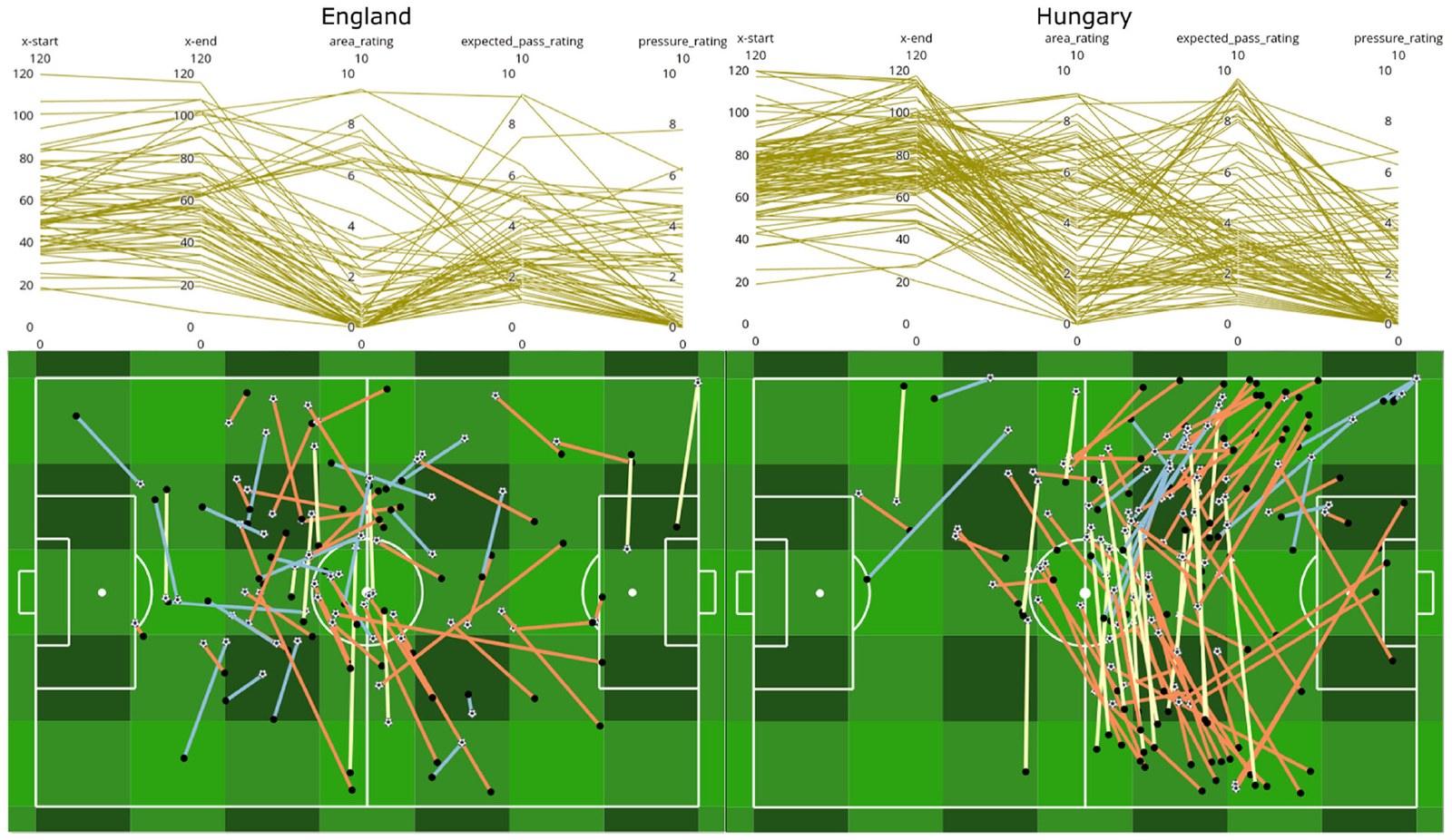
Example of football data analysis: The passes of Toni Kroos during two matches at EURO 2020, source: Evers et al. (2024), https://doi.org/10.1177/14738716231220539
More information about the new study track here: https://www.fhnw.ch/en/computer-science/degree-programmes/offerings/programmes/data-science-ai-for-sports
Full article (in German): https://www.fhnw.ch/de/aktuelles/news-storys/alle/ki-data-science-sport-wm

Michal
Contributor at ChallengeEU Alliance.

Delegation from the University of Applied Sciences and Arts Northwestern Switzerland (FHNW) Visited SEEU
Read article
20 years of Applied Psychology: FHNW celebrates with interactive experience day
Read article