ChallengeEU at the 4th European Universities Initiative Forum in Ireland
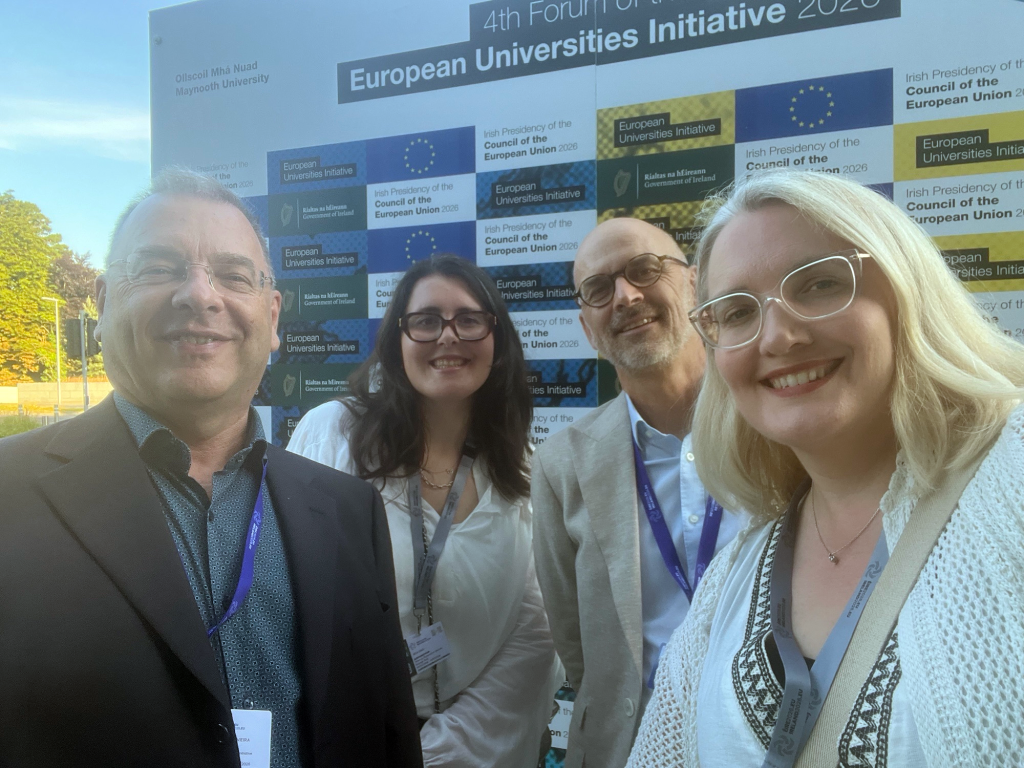
Shaping the future of higher education requires both bold ambition and a sustainable foundation. This perspective guided the ChallengeEU delegation during the 4th European Universities Initiative Forum, held on 10 July 2026 in County Kildare, Ireland, under the Irish Presidency of the Council of the European Union. The forum brought together representatives of the European higher education and research sectors, as well as institutions responsible for shaping public policy to take stock of the progress of the European Universities Initiative and discuss its future direction. The programme focused on the future of European University Alliances, with particular attention to sustainable investment, governance and policy frameworks that can support deep and lasting collaboration in education, research and innovation. The ChallengeEU delegation included Managing Director Tobias Hagen from Hochschule Offenburg, Paulo Nuno Vieira from Universidade Europeia, who serves on the Management Board, and External Advisory Board members Enora Bennetot Pruvot from the European University Association and Ana Rita Dias from the European Association for International Education. The forum addressed some of the most important questions currently shaping the future of European higher education: how university alliances can become permanent catalysts for institutional transformation, how they can contribute to European competitiveness, innovation, inclusion and democratic values, and how students can be meaningfully involved in governance and co-creation. Discussions also covered the development of the European Degree, deeper academic integration, and the alignment of EU, national and institutional strategies. One of the key takeaways from the forum was the strategic role of university alliances in driving long-term institutional change. Rectors and university leaders highlighted that alliances are no longer only project-based cooperation structures, but increasingly serve as engines of transformation, helping institutions rethink education, research, innovation and governance in a European context. At the same time, the discussions clearly pointed to a significant challenge: the need to address the funding gap. Against the background of ongoing negotiations on the next Multiannual Financial Framework, participants reflected on the tension between the transformative ambitions of European University Alliances and the limitations of current project-based funding models, which are often based on short cycles and intensive reporting requirements. “Together, we engaged in critical discussions regarding the current state of the initiative and the strategic evolution of university alliances. The discussions underscored a critical necessity: the need to reconcile the programme’s long-term vision with a more sustainable and robust financial structure,” said Tobias Hagen, Managing Director of ChallengeEU. For ChallengeEU, participation in the forum was an important opportunity to contribute to the European debate on the future of university alliances and to strengthen the shared commitment to building long-term, resilient and transformative cooperation in higher education. Through dialogue, strategic reflection and collaboration across Europe, ChallengeEU continues to challenge the now — in unity.