ChallengeEU External Advisory Board

Eva Zemandl
Eva Zemandl is a lecturer in public policy, researcher and a knowledge exchange practitioner. She operates at the intersection of stakeholder engagement and student community engagement. She specializes in bringing people together from across different sectors, building bridges in local policy communities and managing projects and bringing students along on the journey so that they can contribute meaningfully to the places they live in while building their professional toolkit and networks.
She is currently working on projects involving quadruple helix partnerships in a UK local authority, including to tackle food poverty and sustainability and to facilitate an internationalisation strategy for Nottingham. She has previously worked in international trade and exchange promotion in urban regions as well as community project management. Eva enjoys contributing insights from various cultural and political contexts, thanks to her years living in Seattle, Brussels and Budapest. She has a BA in International Studies (Seattle University), a Masters in European Public Policy (University of Kent) and a PhD in Political Science (Central European University).

Julia Priess-Buchheit
Julia Priess-Buchheit (Prof. Dr. phil.) is an expert in learning open science, ethics and integrity, and social technologies. She leads the Zentrum für Konstruktive Erziehungswissenschaft and conducts her research at Kiel University. Before this transition, she was a professor of Education and Didactics at the University of Applied Sciences Coburg (Academic Centre for Sciences and Humanities), implementing an interdisciplinary study program for all faculties. In 2020, she became the Dean of Studies at the Academic Centre for Sciences and Humanities and founded the (German-speaking) Teaching and Learning Scientific Practice network.
She coordinates IP4OS, a HorizonEurope project on Open Science and Intellectual Property (€ 2 million). She is one of the few coordinators of a Horizon2020 project (Path2Integrity, € 2.5 million) associated with a university of applied sciences in Germany (and Europe).
She actively supported EOSC from 2022-2025, co-founded NERQ (Network for Education and Research Quality), and the University of Kiel awarded her the Innovative and Trendsetting Teaching prize; she won the Genius Loci-Preis with the Coburger Weg team. Her digital learning settings for students and pupils are open source, and she won both the #WeForSchool Hackathon (Germany) and the #EUvsVirus Hackathon.

Rita Dias
Strategic Relationships Coordinator – European Association for International Education (EAIE).
Rita Dias, originally from Portugal, holds a Bachelor’s degree in Political Science and International Relations and a Master’s degree in Public Policy. She completed her Erasmus experience in Leuven, Belgium. Following her Erasmus experience, Rita joined the Erasmus Student Network (ESN) in 2018, where she remained active until 2025, holding several positions, including serving as President of the organisation from 2023 to 2025. After completing her mandate at ESN, Rita joined the European Association for International Education (EAIE) as Strategic Relationships Coordinator, supporting the organisation’s visibility and external relations. Her main areas of focus include the internationalisation of higher education, fostering cooperation between institutions, and promoting youth participation in higher education.
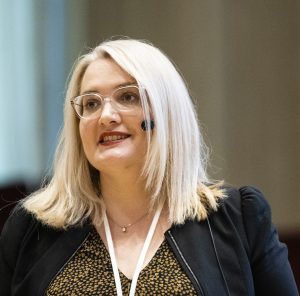
Enora Bennetot Pruvot
Enora Bennetot Pruvot is Deputy Director for Governance, Funding and Public Policy Development at the European University Association (EUA). Her expertise focuses on university financial sustainability as well as university leadership, governance and autonomy. She is responsible for EUA’s biannual Funding Forum and has led EUA’s Public Funding Observatory, a monitoring tool recording public funding to higher education institutions over time. A key area of her work relates to the regulatory and financial developments linked to the expansion of European university alliances, and in particular the need to develop sustainable governance processes for alliances, connect to core decision-making processes within universities and support their long-term vision.
Enora holds master’s degrees in political science and European public affairs, and in European political and administrative studies from the College of Europe in Bruges, Belgium.

Christoph Münzer
Christoph Münzer is a political economist, executive leader, and policy practitioner working at the intersection of industry, public policy, and academia. His work focuses on connecting people across sectors, translating economic ideas into practice, and creating platforms where dialogue, trust, and collaboration can lead to meaningful impact.
Over more than two decades, Christoph has led and developed wvib, one of southern Germany’s most influential industrial networks, working closely with entrepreneurs, CEOs, policymakers, and researchers. He brings extensive experience in stakeholder engagement, strategic communication, and institutional development, with a strong interest in how liberal economic order, industrial transformation, and democratic governance can be strengthened in times of change. Earlier in his career, he worked as a senior lobbyist for the Confederation of German Employers’ Associations (Bonn/Köln) and the Federal Chamber of German Architects (Berlin).
Alongside his executive career, Christoph has remained closely connected to universities through teaching, guest lectures, public talks, and collaborative formats that bring students, practitioners, and decision-makers together.
Christoph holds a PhD in Economics from the University of Freiburg and a Master’s degree in Economics from Portland State University (USA).
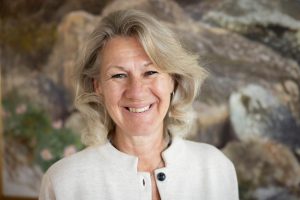
Caroline Sjöberg
Caroline Sjöberg is the University Director of Uppsala University, where she is part of the executive leadership team and oversees institutional governance, regulatory affairs, and the university’s administrative services. She is a senior leader in higher education and public administration, specialising in organisational development and strategic management. She holds a degree in Human Resource Management from Lund University and has built her career across several major Swedish institutions.
She previously served as HR Director at Uppsala University, the Swedish National Audit Office, and the Swedish University of Agricultural Sciences (SLU), where she later became Deputy University Director. In 2010, she was appointed Director General of the Swedish Agency for Higher Education Services (VHS), the national authority responsible for admissions to universities and university colleges. Following the integration of VHS into the Swedish Council for Higher Education (UHR), she worked in London as a consultant with the Leadership Foundation for Higher Education (2013–2014).
From 2014 to 2019, Caroline was University Director at Umeå University before returning to Uppsala University in her current role.
She contributes to national and international higher education policy and governance through appointments such as the board of Mid Sweden University, SUHF’s Employers’ Group, the Swedish Agency for Government Employers’ delegation, the supervisory board of KÅPAN Pensioners, and the advisory council of the Swedish Higher Education Authority (UKÄ). She also serves on the Board of Directors of HUMANE – the Heads of University Management & Administration Network in Europe (2023–), the Board of Directors of NUAS – the Nordic Association of University Administrators (2023–), and the board of the Uppsala University Foundations Management of Estates and Funds (2019–).

Anne Lequy
Dr Anne Lequy (born in 1971 in France) earned a joint Franco-German doctorate in German Literature from the Universities of Metz and Leipzig in 1999 (doctorat en cotutelle). Since 2006, she has been Professor for Technical Translation French at Magdeburg-Stendal University of Applied Sciences. She served two consecutive terms as Rector of the university (2014–2022) and acted as Project Manager for the German Jordanian University (GJU) in Germany (2017–2022).
She has served on the advisory boards of the Centrum für Hochschulentwicklung gGmbH and two European University Alliances. She is also an active member of the German higher education network Lehre hoch n.
Between 2021 and 2025, she was a Board member of the European University Association (EUA), where she chaired the EUA Learning & Teaching Steering Committee. In 2025, the Federal President of Germany appointed her to the Scientific Commission of the German Science and Humanities Council (Wissenschaftsrat).

Nicolas Thieffry
Nicolas Thieffry works at the intersection of student engagement, university governance and project management. His profile is shaped by extensive hands-on experience as a student representative at both institutional and European levels, combined with academic research on participation and organisational practices. He specialises in structuring student involvement, building representative bodies, and translating informal engagement into sustainable governance frameworks.
He has been actively involved in the development of the COLOURS European University Alliance, where he contributed to the creation of a transnational student network, co-founded the COLOURS Student Forum, helped design its governance structures, and served as Student Vice-President of the alliance. Through this role, he also engaged with broader European initiatives on inter-alliance cooperation and student representation. Originally trained as a historian, Nicolas later shifted toward Management and Business Administration, completing a master’s thesis on managing student involvement in university projects. He continues to develop this work, focusing on recognition, legitimacy and the practical conditions that enable meaningful student participation.