Building Bridges Through Mobility: FHNW Representative Visits UEV
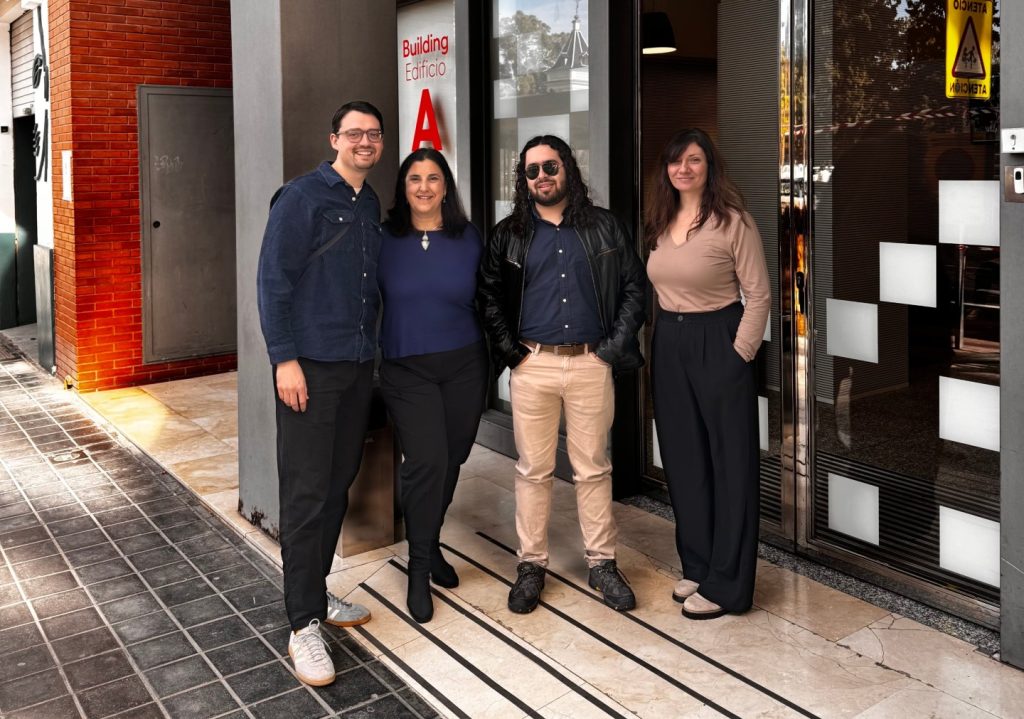
Luca Niederhauser from Fachhochschule Nordwestschweiz (FHNW) visited university in Valencia as part of the Mobility Program Visit at Universidad Europea de Valencia (UEV). The visit provided an opportunity to strengthen institutional ties, exchange best practices, and explore new avenues for academic cooperation between the partner universities. Mr. Niederhauser represents Hochschule für Angewandte Psychologie, specifically the Zentrum für Ausbildung. This visit is part of a mobility initiative linked to Work Package 3 (WP3) of the European university alliance ChallengeEU, in which both FHNW and UEV are active partners. During his stay in Valencia, Mr. Niederhauser participated in a comprehensive program designed to strengthen inter-institutional collaboration and promote the exchange of best practices. His visit included a series of academic, administrative, and cultural activities, such as: a guided tour and in-depth explanation of the Alameda Campus; job shadowing in the area of innovation and the development of new academic programmes with Ana Ferrer, Dulce Gómez, and Alberto Garcés; and a presentation on the ChallengeEU network delivered by Laura Bertolin (WP4 Officer) and Emmanuël Hazé (ChallengeEU, CIO). Professional exchange with Luz Barradas focusing on quality management, a guided tour and detailed presentation of the Turia Campus, a discussion with Ana Povoa on the Psychology degree programme, an exchange with Christian Garzoni on the admissions process, and a visit to a Psychology class to observe teaching practices. Beyond the academic agenda, Mr. Niederhauser also had the opportunity to discover the rich culture, traditions, and gastronomy of the city of Valencia, gaining a deeper appreciation of its local identity. These exchanges not only enrich the experience of visiting staff, but also strengthen the relationships between partner universities within the ChallengeEU alliance, fostering trust and mutual understanding. They also open the door to new avenues of academic collaboration, from program development to joint initiatives that contribute to the internationalisation of higher education. The European University of Valencia extends its warmest thanks to Mr. Niederhauser for his visit and looks forward to future cooperation with FHNW within the ChallengeEU framework.
The ChallengeEU Mentoring Programme has officially launched
On Monday, January 19, and Thursday, January 22, meetings officially inaugurating the ChallengeEU Mentoring Programme took place. The programme is coordinated by the University of Warmia and Mazury. The ChallengeEU Mentoring Programme aims to provide students with support from European professionals, boost their self-confidence and skills, and help them define their career paths – all through mentoring rooted in the idea of ODEI (Openness, Diversity, Equity and Inclusion). During the first kick-off meeting, participants were welcomed by Prof. Paweł Wielgosz, Rector’s Representative for European Universities, while the second meeting was opened by Prof. Tobias Hagen, Vice-Rector for Internationalisation at Hochschule Offenburg and Chair of the ChallengeEU Alliance. Both speakers spoke about the ChallengeEU Alliance and the role the mentoring programme plays within it. They also expressed their thanks to everyone involved in the programme and to those who showed interest in participating Starting together The main idea behind the kick-off meetings was to allow all mentors and mentees to inaugurate the programme together and to ensure they knew what to expect in the subsequent stages. “The mentoring programme is of great importance to the ChallengeEU Alliance, as it represents a direct investment in what is most valuable – people. It demonstrates that UWM, as the programme organiser and a member of the alliance, is committed to implementing the principles of ODEI. This is crucial for building a culture of openness and development,” said Prof. Katarzyna Ćwirynkało from the Faculty of Social Sciences and ODEI Officer in the ChallengeEU Alliance. The ChallengeEU Mentoring Programme is addressed to all students at universities participating in the alliance. Mentors may include academic staff as well as professionals from outside the academic community, including entrepreneurs. In total, 75 mentors and 79 mentees applied. During the meetings, participants became familiar with essential information about how the programme works, what it involves, and what will take place in the coming weeks. They also had the opportunity to meet the team from the University of Warmia and Mazury responsible for organising the initiative. The team includes Prof. Katarzyna Ćwirynkało, Dr Monika Ryndzionek and Agata Przyborowska, MA, supported by members of Work Package 5. The first edition of the mentoring programme within the ChallengeEU Alliance will last approximately six months. A minimum of five mentor–mentee meetings is planned, which will primarily take place online (with the option of meeting on university campuses). Both mentors and mentees will receive certificates of participation upon completion of the programme. A dose of essential knowledge After both inauguration meetings, training sessions for mentors were held and led by Dr Monika Ryndzionek. During these sessions, mentors learned about their roles, received practical tools and tips to help them fulfil their responsibilities, and became thoroughly familiar with the goals of the ChallengeEU Alliance mentoring programme. Each training session lasted 75 minutes. “The idea behind mentoring programmes is to learn from more experienced people in various areas and fields of life, as mentors may include university staff, representatives of non-governmental organisations, or entrepreneurs. However, it is worth remembering that mentors also develop through this process, for example by sharing their experience,” emphasised Dr Monika Ryndzionek from the Faculty of Social Sciences, an ODEI expert in the ChallengeEU Alliance. Photo by: Freepik.com
AI in higher education discussed at the Online Café meeting

On December 18, ChallengeEU organized its first Online Café on Artificial Intelligence, bringing together professors from across the Alliance to share institutional practices, ethical guidelines, and innovative solutions for AI integration in higher education. ChallengeEU Online Café was dedicated to one of the most transformative topics in academia today: Artificial Intelligence in higher education. The aim of the meeting was to create a collegial and open space for discussion, where professors and academic staff could meet peers facing similar questions, exchange experiences, and gather ideas for their own pedagogical practice. The conversation was broadly structured around three overarching questions: how are institutions framing and supervising students’ use of AI?; in what ways can AI enrich teaching and course activities?; what governance, support mechanisms, and ethical frameworks are needed for responsible AI use? This session brought together four speakers from four ChallengeEU partner universities, each offering brief insights into AI-related initiatives developed at their institutions. Sara Gancho from Universidade Europeia de Lisoboa showcased institutional initiatives: AI Best Practices Awards, professor training and ethical guidelines. Florije Ismaili from Southeast European University presented AI@SEU, a system with three modules to streamline admissions, academic guidance, and research support. Ingus Šmits from Latvia University of Life Sciences and Technologies addressed challenges of generative AI in student work and lecturer training to ensure integrity. Etienne Bossy from ECAM LaSalle shared experience with AI detection tools and mandatory AI usage forms, aiming to balance transparency, ethics, and practical assessment in engineering education. These presentations were followed by breakout room sessions, which allowed professors to interact more deeply on this topic. In the future, further events from the Online Café series will take place. Photo: www.freepik.com
Two Weeks of M.A.R.K.E.T. Officer Impact: Transforming Collaboration in the Polog Region
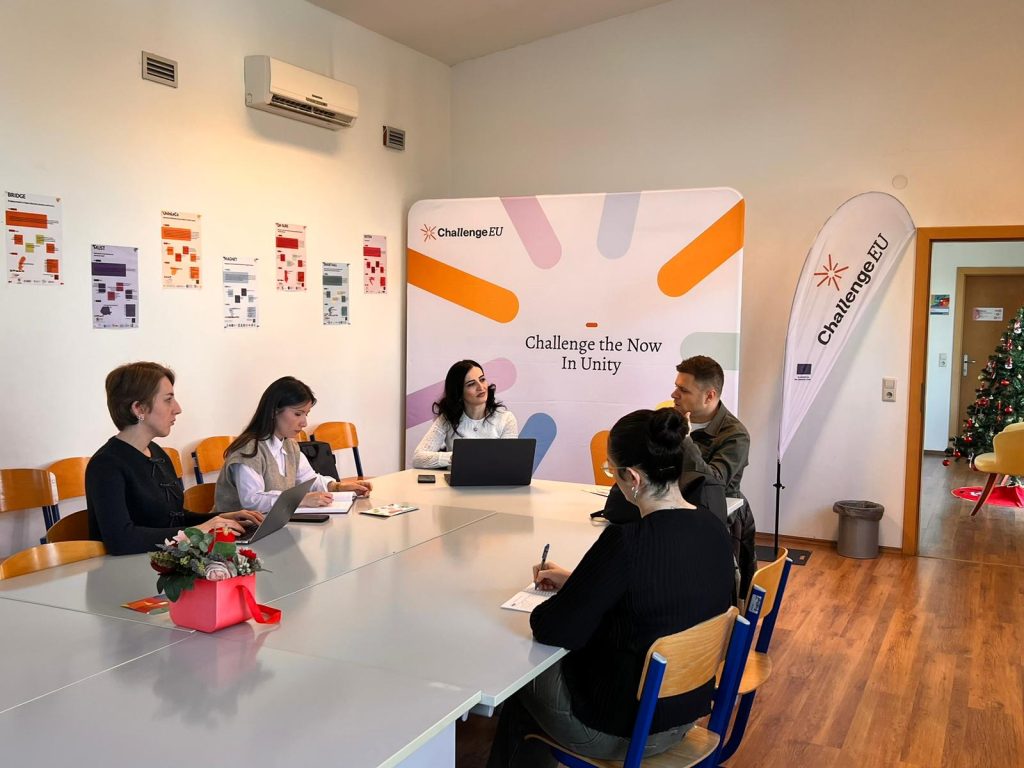
Over the past two weeks, M.A.R.K.E.T. Officer Shpresa Alija, together with team members of working package 4, has been engaged in a series of meaningful M.A.R.K.E.T. Pop-Up Meetings, strengthening cooperation between SEEU and key partners across the public sector, private industry, and civil society — all within the ChallengeEU framework. These engagements brought together a diverse set of partners who play a crucial role in shaping regional development across several key themes: Local Governance, Digital Transition & Youth Engagement A constructive meeting with the Municipality of Gostivar focused on identifying community challenges and exploring how SEEU students can contribute through digital transition projects, internships, and MakerHathon activities. Regional Planning, Sustainability & Applied Learning Discussions with the Center for Development of the Polog Planning Region (CDPPR) emphasized involving students from Architecture, Environment, Energy, and Economy in hands-on regional development and GIS-based projects, strengthening applied learning experiences. Agri-Food Innovation & Industry–Academia Collaboration Ongoing cooperation with Vezë Sharri continues through digital innovation initiatives, logistics improvements, and applied student engagement within the agri-food sector. Creative Industries, Visual Communication & Project-Based Learning Collaboration with Arberia Design, a leading graphic design and printing company, focused on student internships and project-based learning in graphic design, digital communication, and creative content development. Cold Chain Logistics, Digitalization & Workforce Development Engagement with UniFrigo, a manufacturing company of a cold-chain refrigeration, identified concrete opportunities for internships and digital transformation initiatives aligned with real industry needs. Civil Society Engagement, Well-being & Social Awareness Meeting with Mollëkuqja, a civil society organization, highlighted the need on communication initiatives, awareness campaigns, mental health guest lectures in high schools, and creative student involvement. All of these meetings have been very important in terms of ChallengeEU core mission and contribute to strengthening regional partnerships, creating real-world learning opportunities for students, supporting innovation across sectors, Connecting academia with industry and public institutions “It has been inspiring to see how each partner is eager to collaborate and open new opportunities for our students. These meetings mark an important step towards impactful regional cooperation”, said Shpresa Alija, M.A.R.K.E.T. Officer, SEEU. Thanks to this kind of initiatives SEEU students now have expanded access to meaningful, impactful engagements e.g. MakerHathon preparations with high schools, mental health educational activities, internship pathways and digital transformation projects.
December of Social Responsibility: when the university opens itself to the community

December brought Universidad Europeia de Lisoboa a clear roadmap of commitment to the community: bringing academia closer to people, creating tangible opportunities, and honoring the culture that defines us. In just a few days, two local protocols were signed – with the Loures City Council and with the Casa do Artista, in Carnide – and the European University’s Volunteer Pool was presented, a new channel for student participation with direct impact on the territory. Both protocols were signed on behalf of the European University by the Rector, Professor Dr. Hélia Gonçalves Pereira, underscoring the institution’s leadership and long‑term commitment. The guiding principle is simple and demanding: serve, innovate, and transform. Loures: Upskilling that turns into opportunity The partnership with the Loures City Council aims to open doors for those who want to study and progress, aligning education with local development. The protocol provides facilitated access to higher education via scholarships for municipal employees, and the integration of students into curricular and professional internships – concrete steps to connect talent with the real needs of the municipality. More than administrative cooperation, it is a platform for joint projects with academic, social, and economic impact, and for promoting innovation, research, and new approaches to public management. In practice, Loures gains more skills and future; the University gains a living laboratory to apply knowledge and generate solutions with measurable effects on the territory. Carnide: Culture that cares for memory and unites generations On December 4, the European University and the Casa do Artista (Apoiarte Association), in Carnide, formalized a protocol that brings the academic community closer to the senior artistic community – in a moment attended by the actor José Raposo, the institution’s president. The collaboration foresees reading sessions, research projects, cultural initiatives, and actions with real impact on residents’ quality of life. By joining the project “O meu lugar no Teatro Armando Cortez”, the European University also assumes an affective and memory-based commitment: contributing to the preservation of the legacy of Portuguese artists, while creating intergenerational meeting spaces where culture is bridge, care, and citizenship. Volunteer Pool: participation that is felt on the ground To amplify this movement of proximity, the European University officially launched its Volunteer Pool (Bolsa de Voluntariado) – presented by the Vice‑Rector for Academic Life, Professor Dr. Sara Sousa. The Pool is a structured participation channel that allows students to get involved in social, cultural, and educational initiatives, with direct benefit for partner communities. More than volunteer hours, it is purposeful learning: developing transversal skills (communication, empathy, teamwork, leadership), strengthening the academic path, and gaining transformative experiences that leave a mark – in Loures, at the Casa do Artista, and in future partnerships that may emerge from this ecosystem. The essentials: upskilling with an open door, culture that cares for people, and volunteering with impact. This is how the European University lives social responsibility – on and off campus. This was a December of alliances and action, marked by two protocols that connect the University to the territory and a Volunteer Pool that brings to life the will to participate and transform. Thus, the European University reaffirms its mission: to learn, innovate, and serve – with students at the center of change.
Public Engagement and Volunteer Fair: applied science and civic participation
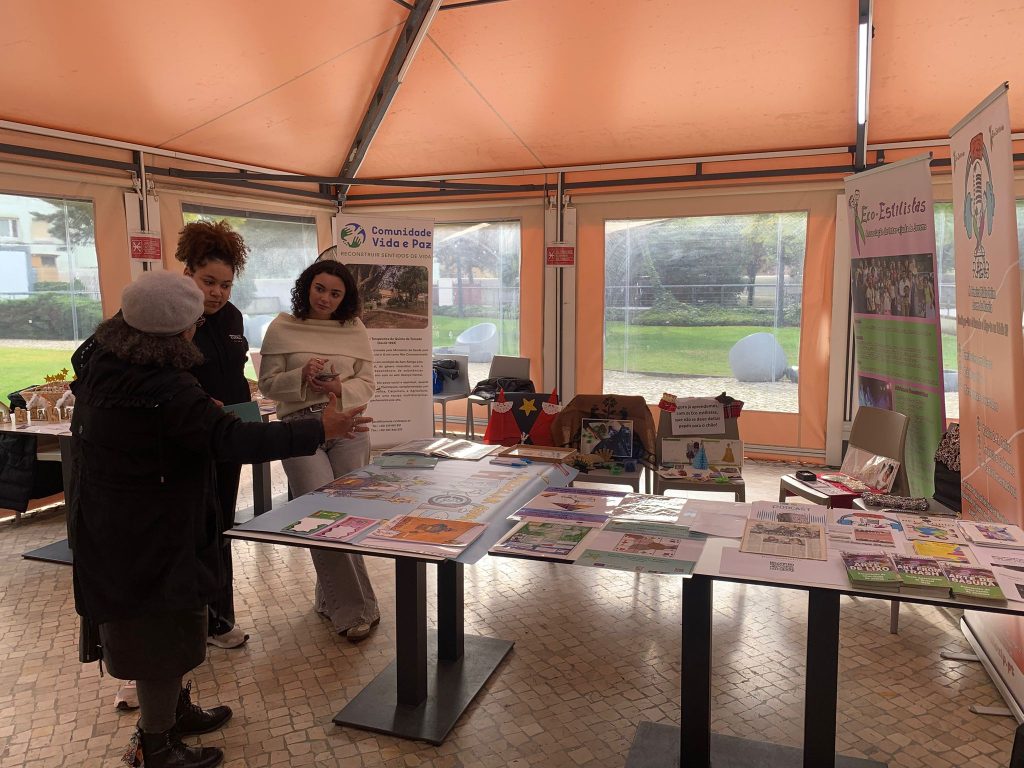
On 4th December, at the Universidade Europeia de Lisboa was held Public Engagement and Volunteer Fair event. Throughout the day, around 100 people moved through the university’s common space on the Carnide campus, engaging with stands, student‑led activities, and volunteer networks. The occasion included the launch of the Universidade Europeia’s Volunteer Scholarship and spotlighted the scientific poster presentation of results from the ODEI TRAINING COURSE – a pilot held from 23 to 27 June 2025. The poster was presented by Professor Rebeca Rocha and Dr. Rita Freitas, Chief Implementation Officer of Universidade Europeia in the ChallengeEU alliance. Universidade Europeia is the lead university for the ODEI theme and has been working in this area with the eight other universities that make up ChallengeEU. In the presentation of the poster “DEI Awareness – A Pilot Course Assessment,” Universidade Europeia placed applied science at the heart of the conversation, offering a clear, rigorous account of a pilot that is already transforming practice. The ODEI (Openness, Diversity, Equity & Inclusion) training has evolved into an annual offering for students and staff across the nine universities in the alliance. The poster succinctly and coherently outlined the course’s pedagogical architecture: six modules delivered over 12 hours, blending theoretical framing with practical applications and reflective activities. The modules cover the essential spectrum of DEI capacity‑building – Introduction to DEI, Self‑Awareness & Unconscious Bias, Intersectionality & Inclusion, Inclusive Communication, Neurodiversity & Accessibility, and From Awareness to Action – aligning concepts, skills, and transfer to real‑world contexts. The hybrid format (in‑person and online), with group/project work, was highlighted as a driver of accessibility and engagement, enabling 46 participants (staff and students) from partner institutions to experience the content in diverse, collaborative settings. “As a journalist specialized in scientific communication, I underscore the care taken with the learning objectives, clearly mapped to observable outcomes: understanding key concepts (such as unconscious bias, intersectionality, and neurodiversity), critically reflecting on personal bias and its impact on professional practice, demonstrating inclusive communication practices, and designing actionable strategies to strengthen institutional DEI. This taxonomy of objectives reveals a course aimed at behavioral and organizational change, moving beyond awareness into implementation,” says Dr. Rita Freitas. In the evaluation section, the poster presented a bar chart across six dimensions – Relevance, Engagement, Materials, Knowledge, Methods, and Overall – showing consistently high participant satisfaction in all metrics. While explicit numerical values were not displayed, the consistently high profile of the results suggests robust perceived quality and coherence between pedagogical design and classroom experience. This is a crucial indicator for decisions on scaling and institutionalization. Scientific rigor was equally evident in the continuous improvement section. Based on pilot data, the ChallengeEU DEI team – comprising the nine universities and led by Universidade Europeia – introduced specific adaptations: in Module 1, a stronger focus on key definitions to consolidate a shared language; in Module 2, the inclusion of more real cases, bringing content closer to everyday challenges; in Module 3, additional support materials to diversify learning strategies; in Module 4, adjustments to neurodiversity content for greater precision and breadth; in Module 5, the removal of the gender‑sensitive language topic – a technical decision reflecting careful scope curation; and, in Module 6, changes to activity duration to optimize the balance between practice and synthesis. Notes on timing (such as setting 1h30–2h for Module 1 and revising Module 2 from 3h to 2h30) reinforce that the course is iterative, attentive to cognitive load and the optimal learning pace. In summary, the poster’s narrative delivered what one expects from effective scientific communication: clarity of exposition, methodological transparency, evidence of results, and plans for improvement. By transforming a pilot into an annual program, Universidade Europeia and ChallengeEU signal a vision of ODEI as a practical competence – to learn, apply, measure, and improve – and offer a replicable model that brings knowledge and action closer together, both on campus and beyond. For those who attended the poster presentation, the takeaway was clear: ODEI Training is not just a course; it is an evidence‑based instrument of change, ready to impact people, teams, and institutions.
The ChallengeEU Student Ambassadors Team gathers in Offenburg to build skills and connections
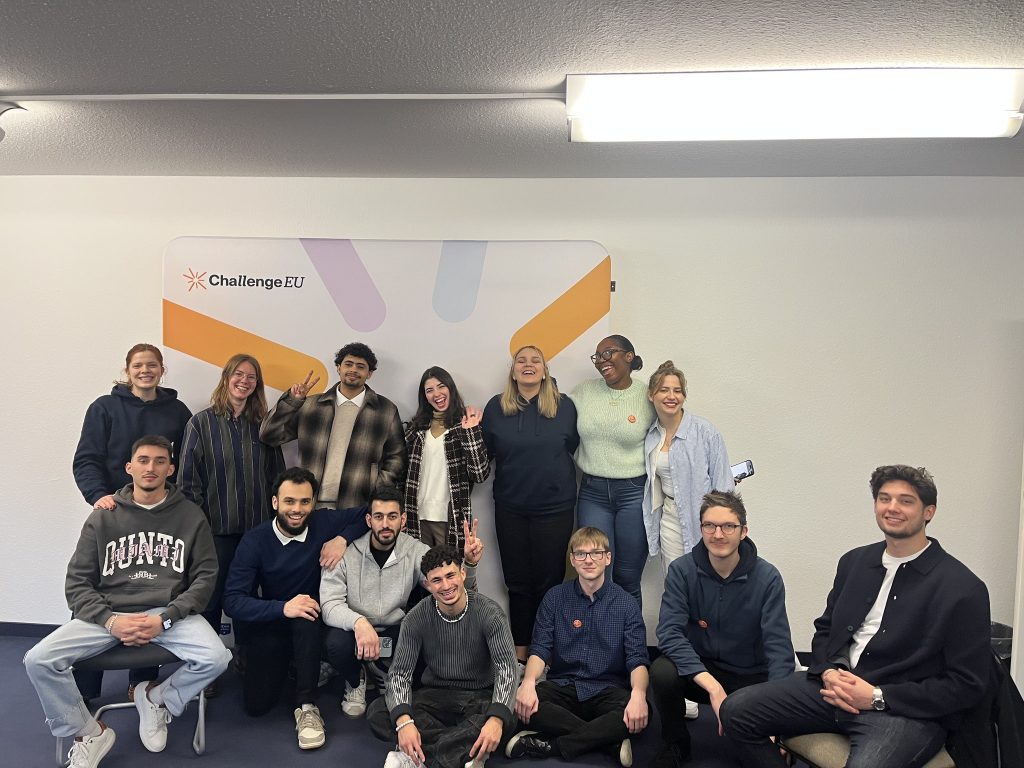
Between 4th and 5th of December Hochschule Offenburg hosted first official meetup of ChallengeEU Student Ambassadors Team. The first official gathering of the young people who represent the alliance across Europe was a great opportunity to strengthen relationships and develop the skills they need in their everyday work as ambassadors. “It was great to talk with my colleagues and learn about their cultures and different perspectives on studying. I really appreciate the fact that I could discover the differences between us,” says Marion Angsthelm, student ambassador from FHNW. “Through photography, social media, cultural intelligence and inclusion workshops, we learned how each tool can amplify our voices and help us create meaningful impact across Europe. But beyond the academic side, we realised that our stories, backgrounds and experiences are powerful — and when we unite, we can inspire real change. This meetup reminded us that each one of us has a voice that matters and that we are capable of shaping a better, more inclusive future for young people,” adds Jana Zaher Eddine from Universidad Europea de Valencia. “I come from Offenburg, so I was at home, but I really appreciate the fact I could get to know other ambassadors. I also learned a lot about the media, social media, how to use them to promote the ideas of our alliance,” says Hendrik Kirchoff, student ambassador from HSO. The student ambassador meeting focused on connecting our international student ambassadors from the nine universities together. The goal was to train them on how to carry out their responsibilities efficiently and deliver the alliance’s message accurately. The official agenda was full of interesting and engaging activities e.g. social media and photography training or communication exercises. Other workshops explored inclusivity and ODEI principles, complemented by practical strategies for intercultural communication skills that are particularly valuable for ambassadors when engaging on social media “We are committed to fostering collaboration, innovation, and intercultural exchange among students across Europe. Welcoming our ambassadors on campus allowed us to see this vision come to life: engaged students, motivated teams and inspiring sessions designed to help ambassadors to improve skills that will help them carry on with their mission within the alliance,” Hochschule Offenburg, host of the meetup and leader of the ChallengeEU alliance, writes on their social media. People who are responsible for the communication in the alliance have no doubts that the meeting was a success. “Ambassadors expressed a strong desire to connect with their peers in person and move beyond the limitations of virtual interaction, and this event provided the perfect opportunity to do so. They reported gaining a clearer understanding of ChallengeEU and their role within it,” says Lynn Summerfield from Universidad Europea de Valencia, who took part in the meeting. „Organizing the Student Ambassadors Meeting in Offenburg was an inspirational project. It was great to see how many students from different backgrounds and stories were able to relate to each other so closely and so fast. Seeing them work together proactively was merely a visual manifestation of what ChallengeEU is all about – centered around cooperation and cultural openness,” adds Zina Qabbani from HSO. Complementing the learning sessions were cultural experiences such as a visit to the local Christmas market and a dinner at a traditional restaurant renowned for its regional cuisine.