ChallengeEU Strategy Board Meeting in Switzerland
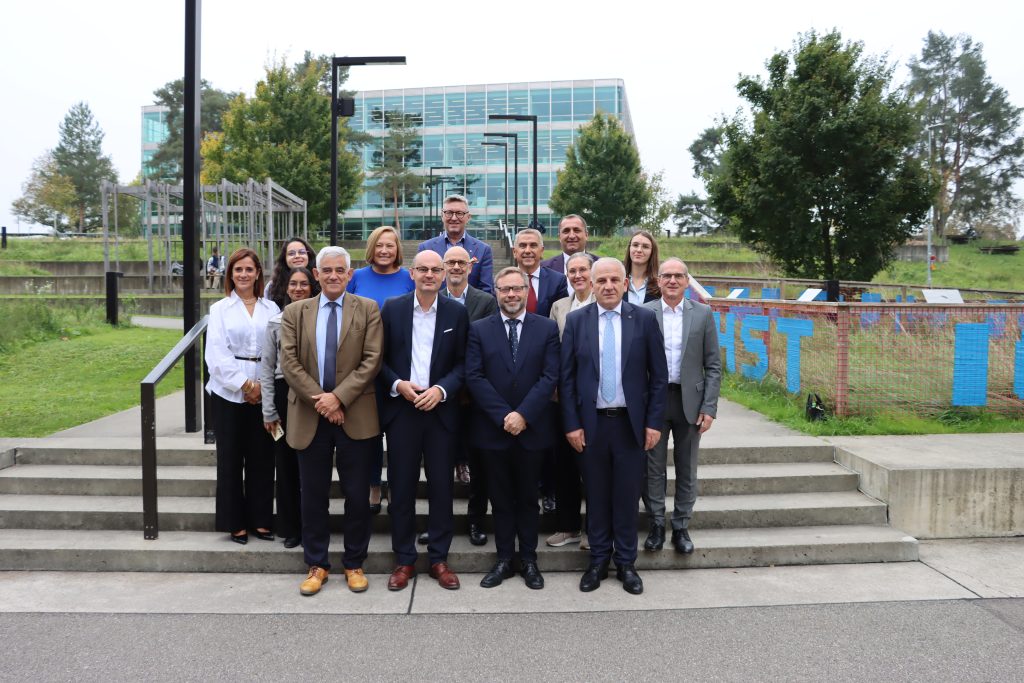
Strategy Board gathered at Fachhochschule Nordwestschweiz FHNW for two inspiring days (8–9 Oct) of exchange and strategic dialogue between rectors and student representatives. Participants also had the pleasure of touring the FHNW campus in Windisch. They were hosted by, among others, FHNW President Crispino Bergamaschi, with Arne Wahlen, Peter Flohr, Rico Travella, Guido McCombie, and Brandon Panos sharing insights into their respective schools: ChallengeEU has been accepted into the circle of ‘European University Alliances’ and will be funded by the European Commission from 2025 to 2028 as part of this flagship initiative of the European higher education strategy. As a Swiss partner, FHNW is funded by Movetia as part of the Swiss European Mobility Programme (SEMP).
Shaping ChallengeEU’s Digital Future in Offenburg
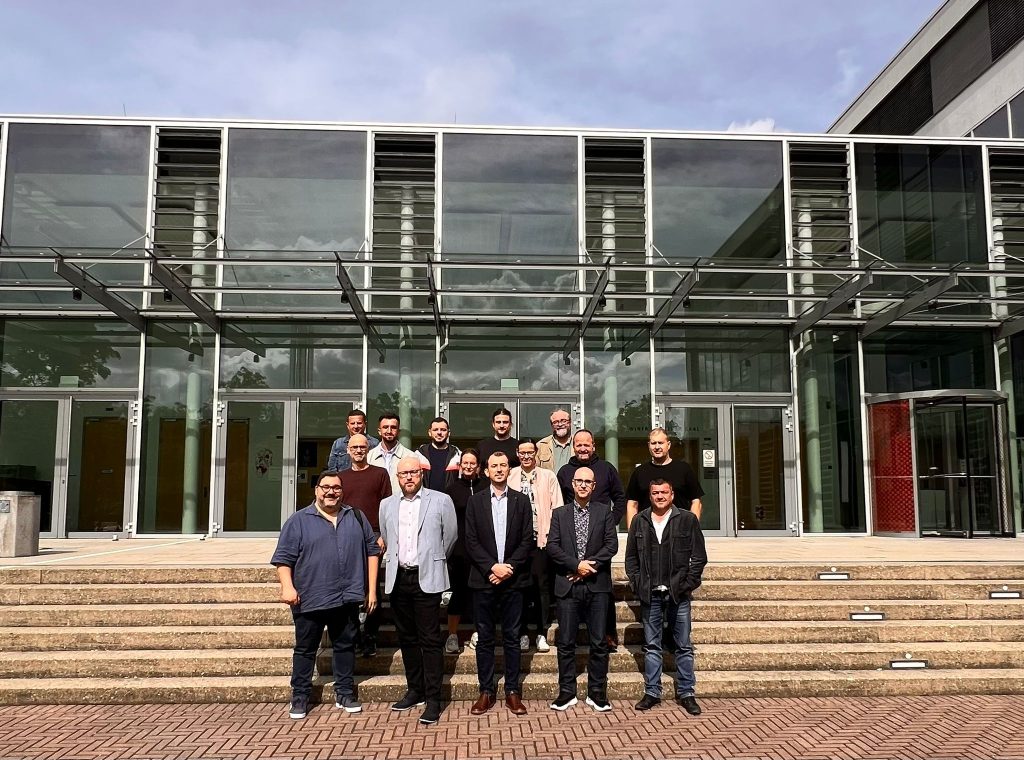
As part of the ChallengeEU university alliance, representatives from nine European universities, primarily IT leads involved in Work Package 2 (WP2), met at Hochschule Offenburg (Offenburg University of Applied Sciences) to advance discussions on the alliance’s digital infrastructure. WP2 plays a key role in creating the digital backbone of ChallengeEU, enabling collaboration, mobility, and data exchange across partner institutions. The meeting focused on shaping the platform’s architecture and core functionalities that will steer the alliance over the coming three to four years. Among the priorities are the development of a joint course and mobility catalogue, the launch of the DigitalHub (known as the Digital M.A.R.K.E.T Space) and the integration of AI-powered features. All modules will align with major European digital initiatives, including eduGAIN, Erasmus Without Papers (EWP), ECTS, and the European Student Card. WP2 is coordinated by South East European University (SEEU), led by Prof. Dr. Mennan Selimi, with co-leadership from Mid Sweden University under Prof. Dr. Niklas Brinkfeldt. SEEU’s IT team — Shefik Osmani, Ahmed Abdullai, and Hamit Kamberi — joined the Offenburg meeting to contribute their expertise to the design of ChallengeEU’s digital platform.
ChallengeEU at EAIE Gothenburg 2025
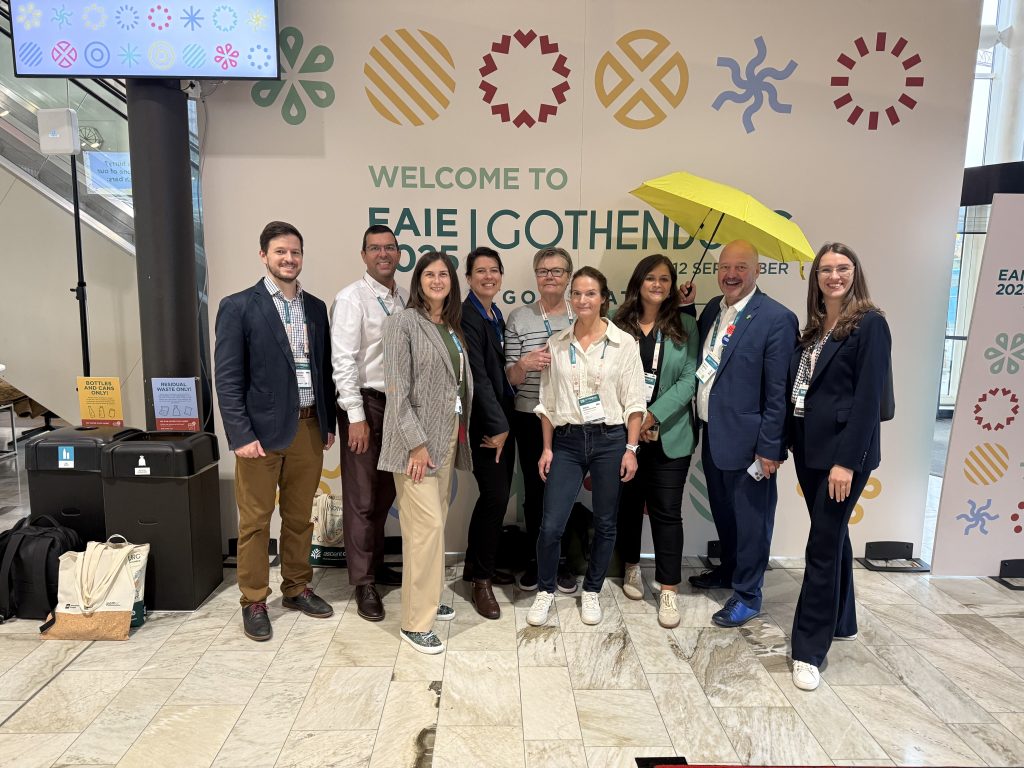
At EAIE, not all breakthroughs happen in the plenary hall. Often, it is in the informal moments – during spontaneous encounters, quick conversations, or exchanges of ideas between sessions – that the most inspiring ideas emerge. This spirit perfectly reflects the mission of ChallengeEU. As Caroline Hanras from ECAM LaSalle, who took part in the event, pointed out: “We don’t just face challenges, we turn them into opportunities for learning and improving. We don’t just promote Challenge-Based Learning, we live it — with each partner pushing the other to think bigger, bolder, and more European.” This year’s conference in Gothenburg (9-12 September) brought together more than 7,000 participants from 110 countries. Over four days, more than 250 sessions and workshops took place, all under the theme GO-create – an invitation to courage, creativity, and joint action. In this diverse setting, the ChallengeEU alliance had the opportunity to share experiences and draw inspiration from other European initiatives. Particularly valuable sessions focused on the role of university alliances as catalysts for innovative recognition and quality assurance systems, the need to go beyond international offices by involving all university staff in the development of alliances, and creative models of mobility – from virtual exchanges and blended learning to transnational online courses. These approaches expand access to education and prepare students for global opportunities. ChallengeEU representatives also actively participated in the work of the FOREU4ALL mobility group, where discussions centered on making mobility more inclusive and diverse across Europe. It was an inspiring exchange of experiences and a clear example of how cooperation between alliances can strengthen the long-term impact of the initiative. The atmosphere of EAIE 2025 was further enriched by numerous networking events, an exhibition area with more than 1,000 institutions, and community gatherings – from debates on Erasmus+ digital transformation to inspiring talks by changemakers such as Melati Wijsen. All this confirmed that the real challenge is not always a problem to be solved – sometimes, it is an invitation to innovate together. For ChallengeEU, participation in EAIE Gothenburg 2025 was not only an opportunity to promote the alliance and learn from best practices, but above all to co-create the future of European higher education in a spirit of openness, shared responsibility, and collaboration.
Young Voices, Big Impact: ChallengeEU Student Ambassadors Team
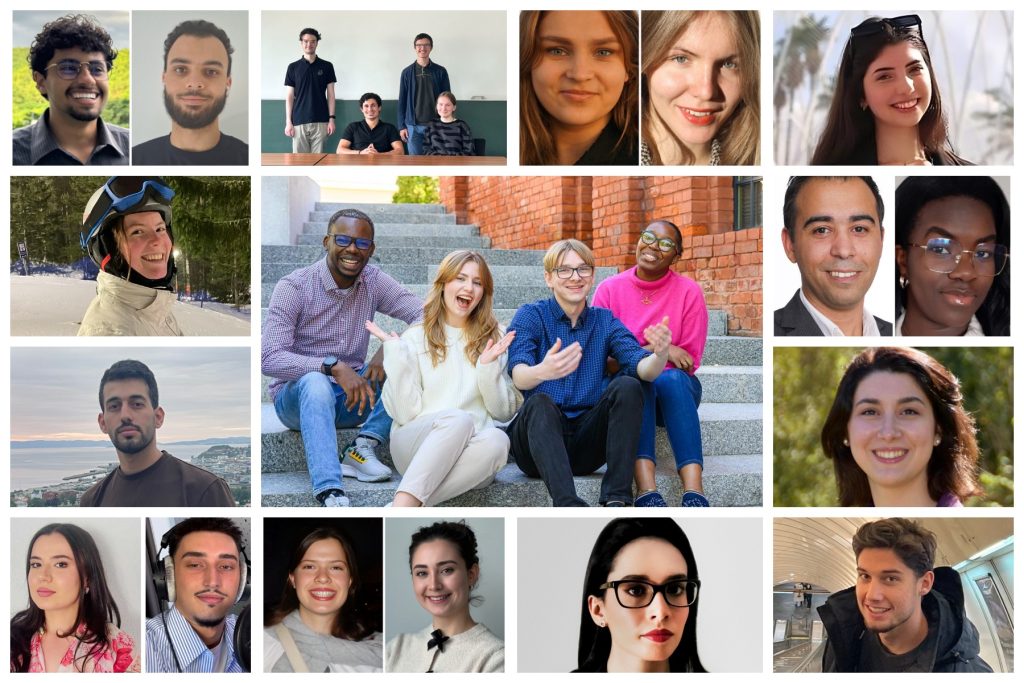
Over the past few months, we have completed the formation of the ChallengeEU Student Ambassadors Team (SAT) and introduced it to the communities of our universities. The team brings together engaged, creative, and motivated students from all nine partner universities. More than just representatives, they are the voice of the student community, actively shaping a more open, inclusive, and innovative European higher education. As members of the alliance, our ambassadors take on a unique role. They promote mobility, encourage co-creation, and foster intercultural dialogue across campuses. By sharing their own experiences, they inspire others to explore new opportunities and act as a vital link between students and the broader ChallengeEU community. HSO Reimund Schmidt: I’m currently studying Applied Artificial Intelligence at Hochschule Offenburg. Learning different languages and about different cultures fascinates me a lot. I’m also curious about other topics like artificial intelligence (my career), economy, adventures, and sports. With my open, curious, and creative mind, I hope to bring ChallengeEU inside and outside HSO a step forward. Elias Folwaczny: I’m an Applied Artificial Intelligence student and have just completed my fourth semester at HSO. Outside of university, I love meeting new people and I’m very passionate about sports, especially MMA. My motivation to become a student ambassador comes from a deep desire to connect people from all over the world. I’m excited to work towards this goal with like-minded individuals and build a strong and inspiring community. Hendrik Kirchhoff: I’m 21 years old and come from a town near Cologne, Germany. I study Applied Artificial Intelligence. In my free time, I enjoy programming and playing chess. As a Student Ambassador, I take pride in supporting fellow students, sharing knowledge about AI, and contributing to a dynamic and inspiring community. I also place great value on international exchange, as it broadens my perspective, deepens cultural understanding, and opens up opportunities for meaningful collaboration across borders. These experiences are not only essential for my academic journey but also for my personal growth. UWM Temitope Francis: I’m a PhD student at the Institute of Journalism and Social Communication. I am a Nigerian. Being part of a community like ChallengeEU matters to me because it brings together students from different cultures in ways that are thoughtful and constructive. Europe gave me the space to study without borders, and now I want to help others feel welcome, supported, and confident that their voices are valued here.Julia Wysocka: I study Psychology and English Philology (yes, by choice!). I’m full of contrasts – organised and responsible, but also spontaneous and a bit scatterbrained. I love dancing, especially when something feels overwhelming. ChallengeEU is not just a project — it’s real opportunites! My goal is to share those opportunities with you and encourage you to take action.Rafał Pirsztuk: I’m a law student. I’m passionate about foreign languages, history, and international culture. I came across the ChallengeEU programme while looking for opportunities to go beyond traditional academic paths. I want to be a university ambassador who inspires others to engage and collaborate. I enjoy challenges – that’s why I set goals that require commitment and courage.Georden Shaw: I am a 2nd Year Medical Student (from the English Division) at the UWM. My home country is Jamaica I was inspired to join the SAT because I believe in representation, building alliances and growth. The alliance is also an opportunity to create bridges between universities, students, and ideas across Europe. Back home, there’s a saying, “Each one, teach one!”, and I believe the aim of the alliance embodies that. SEEU Mevlan Ademi: I am currently studying law at South East European University in North Macedonia. I am deeply passionate about European integration and believe that young people must play an active role in shaping the future of Europe. That is why the ChallengeEU strongly resonates with my vision and ambitions. Mirajete Selami: I am a student of International Relations. I believe that as a united society, we can make global progress only if we share our capacities and create common goals and a shared future. I am extremely happy and excited to begin this long, beautiful, and most importantly meaningful journey with great responsibility. Gajur Memeti: I am student of International Communication at South East European University (SEEU). My motivation to become part of the ChallengeEU initiative comes from a deep desire to contribute to cross-cultural dialogue and build bridges between students from different backgrounds. I see this opportunity as a way to represent not only my university but also the youth of my community on the broader European stage. FHNW Marion Angsthelm: I am studying for a diploma in International Business Management. This trilingual curriculum is taught in French, German and English, in partnership with the Université de Haute-Alsace in Colmar, the Duale Hochschule Baden-Württemberg in Lörrach and the Fachhochschule Nordwestschweiz FHNW. I want to be an active student who participates fully in their studies, to help others in their journey, and to contribute to creating a rewarding collective experience. Marija Kosovljanovic: I have just finished my second semester in Business Administration. I chose to become a student ambassador to connect with other universities and people, and also to grow personally through the knowledge and experiences I’ll gain in this role. I am also a member of the ChallengeEU Student Council and look forward to being actively involved in both capacities. MIUN Runa Ziegler: I grew up in Germany, but moved to Sweden for my Bachelor’s and have stayed there to study a Master’s in Media and Communication Sciences at Mid Sweden University. Along the way, I have met many fellow Europeans who also chose to study in a different European country – either for an Erasmus semester or for the whole programme.Having lived this experience, I am excited to find out how to deepen academic integration across European Universities through the Challenge EU Alliance. UEV Jana Zaher Eddine: I see ChallengeEU as a unique platform where students can exchange ideas, support one another, and drive positive impact beyond borders. I’m truly excited to be
Voices in Action: ChallengeEU at EUSAF 2025
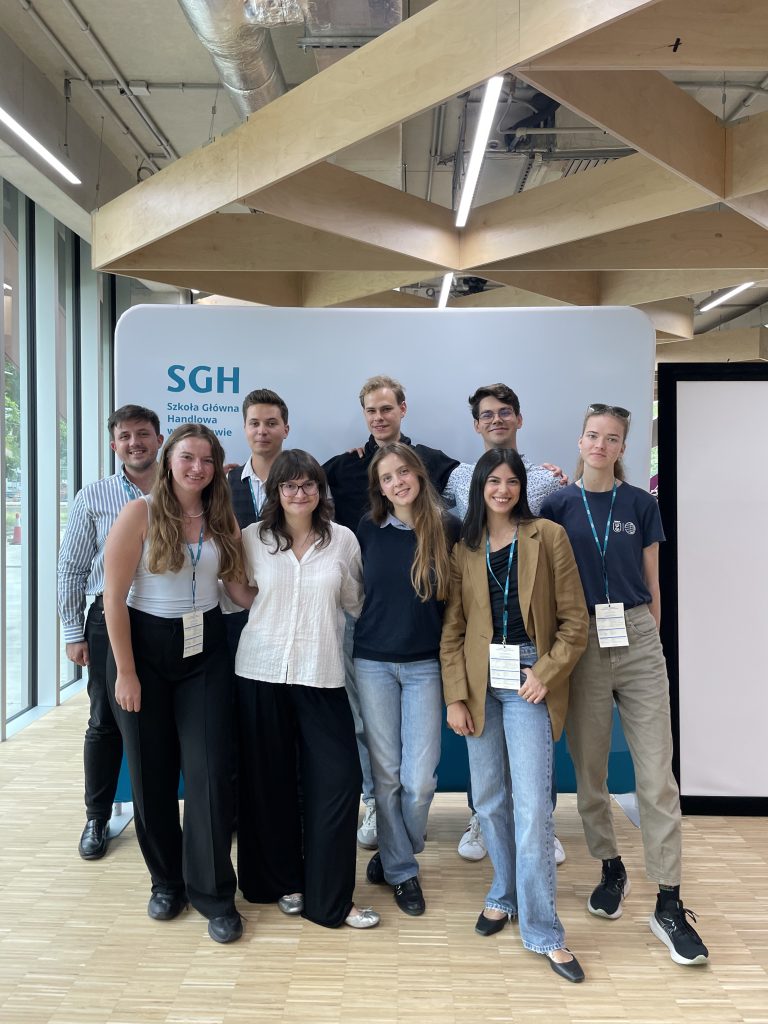
Forty-six student representatives from European University Alliances met in Warsaw, Poland, for the European Universities Student Ambassadors’ Forum (EUSAF) – a platform for sharing perspectives on the present and future of higher education across Europe. Hosted by the Warsaw School of Economics (SGH), the three-day gathering combined workshops and roundtables with informal networking. “We reflected on initiatives that could be implemented at our universities within the framework of co-operation among the European University Alliances (EUAs). Much of our time was dedicated to discussing the role of student councils and the methods used to elect their representatives. A key topic was the election processes for student representatives to governing bodies within the alliances,” said Iwona Pająk (University of Warmia and Mazury), representing the ChallengeEU Student Council. “We noticed significant differences in this regard, which raised some concerns. Perhaps it would be worthwhile to develop a set of best practices for the election of our student representatives. The debate was particularly engaging, as models of student representation vary considerably between consortia.” As Iwona points out, another valuable aspect of the meeting was the opportunity to learn about other consortia: their specific characteristics, internal structures and priorities. “Each participant had the chance to present their network and share unique insights from their home institution,” said the ChallengeEU representative. She added: “EUSAF proved to be an exceptional experience, allowing us to establish new connections and relationships while creating a space for the open exchange of opinions, reflections and best practices. The meeting not only broadened our horizons but also inspired us to continue strengthening the student voice in the European debate on higher education. Forums like EUSAF are essential, as they give us the opportunity to stay connected, inspire one another and offer support during more challenging times.”
ODEI Programme in Action
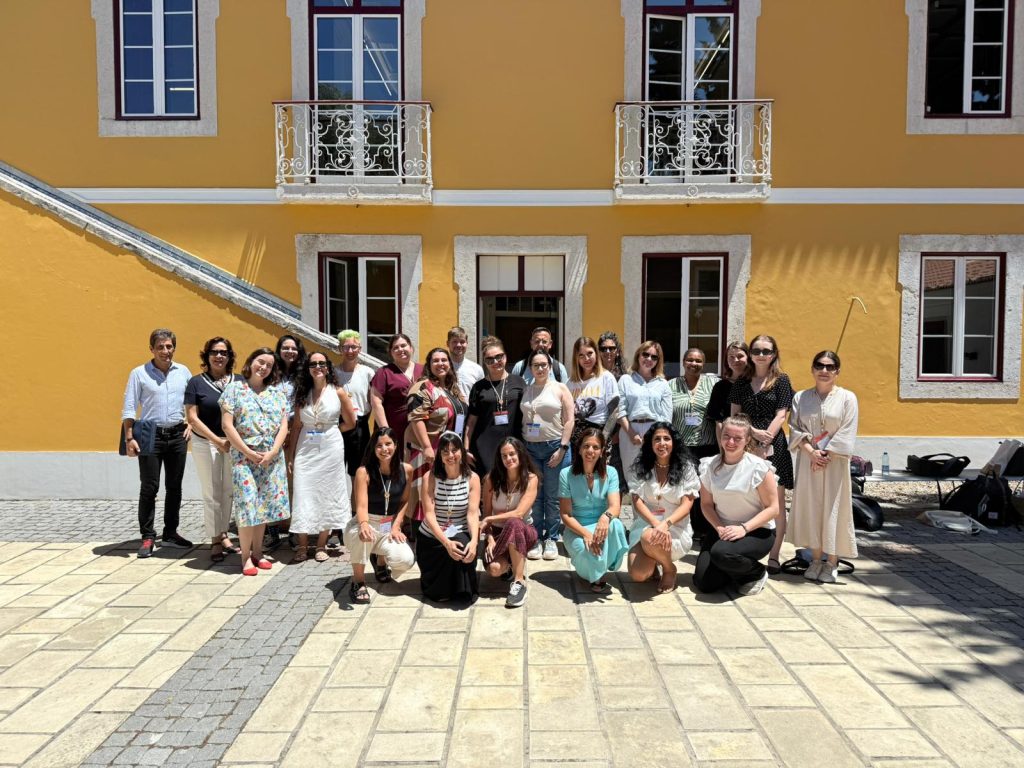
From June 20 to 30, members of Work Package 5 from the ChallengeEU Alliance conducted an innovative pilot training on Openness, Diversity, Equity, and Inclusion. The immersive Blended Intensive Programme (BIP), hosted by Universidade Europeia, brought together participants from all partner universities, offering a unique opportunity to develop and refine their teaching skills on key ODEI topics. After several weeks of in-depth preparation, the training provided a dynamic platform to put their knowledge into practice. The training was structured into six interactive modules, each addressing key aspects of ODEI: A standout feature of the training was the ODEI simulation, where participants engaged in experiential learning by observing actors role-playing real-life scenarios involving discrimination and microaggressions. This powerful exercise sparked deep discussions, allowing attendees to analyze these situations and collaboratively explore solutions. While the opening and closing sessions were held online, the core of the training took place in a hybrid format, combining virtual participation with an in-person gathering in Lisbon, Portugal. This blended approach not only made the program accessible to a wider audience but also provided an invaluable opportunity for participants to network, exchange ideas, and strengthen cross-university partnerships. The training employed diverse, interactive methods – including experiential learning, Mentimeter polls, group discussions, and brainstorming sessions – to ensure active participation. The final evaluations reflected high satisfaction with the content, materials, and facilitation methods, demonstrating the program’s effectiveness in deepening ODEI competencies. Building on this successful pilot, the next phase will involve rolling out the training to students and staff across all ChallengeEU universities. This expansion will further embed ODEI principles into institutional cultures, empowering more individuals to champion inclusivity and equity in their communities. This initiative marks a significant step forward in creating more inclusive, aware, and collaborative academic environments – a testament to the power of shared learning and collective action.
For Better Communication: Internal Training at SEEU
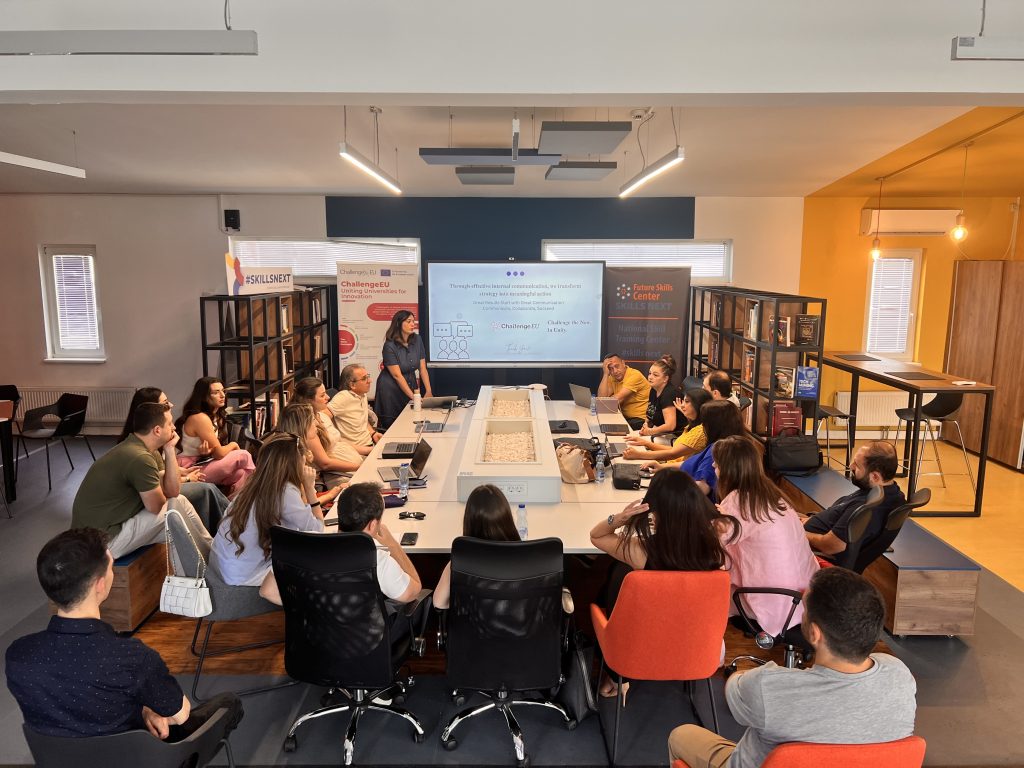
Effective internal communication is key to the success of any international alliance — and the ChallengeEU Alliance is no exception. With this in mind, the Work Package 6 (WP6) team, which leads communication and dissemination efforts across the Alliance, organized a dedicated internal training session at South East European University (SEEU) on 2 July. The training, titled “Internal Communication Tools and Effective Collaboration”, aimed to strengthen coordination among different teams involved in the ChallengeEU project at SEEU and to establish a more unified and effective communication culture across all university departments engaged in the initiative. The session was led by Edlira Palloshi Disha, communication specialist and researcher at the Max van der Stoel Institute (MVDSI), who introduced key tools, techniques, and principles for impactful communication within a complex, multi-stakeholder environment. Drawing from practical experience, Nerodia Selimi from SEEU’s Public Relations Office shared valuable best practices and examples from the university’s communication strategy. The training brought together a diverse group of participants representing all SEEU work packages involved in ChallengeEU, including colleagues from Participants included representatives from the International Relations Office, Career Center, the Pro-Rector for Digitalization, Business Innovation Center, MVDSI’s Project Coordination Unit, deans, and other academic staff and administrative offices across the university. This broad participation created a dynamic environment for knowledge-sharing and collective reflection. One of the session’s main objectives was to initiate a more standardized internal communication framework across SEEU’s project teams, ensuring smoother collaboration, clearer messaging, and improved responsiveness. Participants actively engaged in discussions on: The training session laid the groundwork for more efficient collaboration within SEEU and, by extension, within the broader ChallengeEU Alliance. By aligning internal communication practices, the university is taking a critical step toward ensuring that the Alliance functions as a truly integrated and collaborative ecosystem. This event highlights how internal capacity building can directly contribute to the success of international cooperation — reinforcing ChallengeEU’s core mission to bring European universities together to tackle shared challenges through joint innovation, research, and education
Student Voices Shaping the ChallengeEU Talent Academy
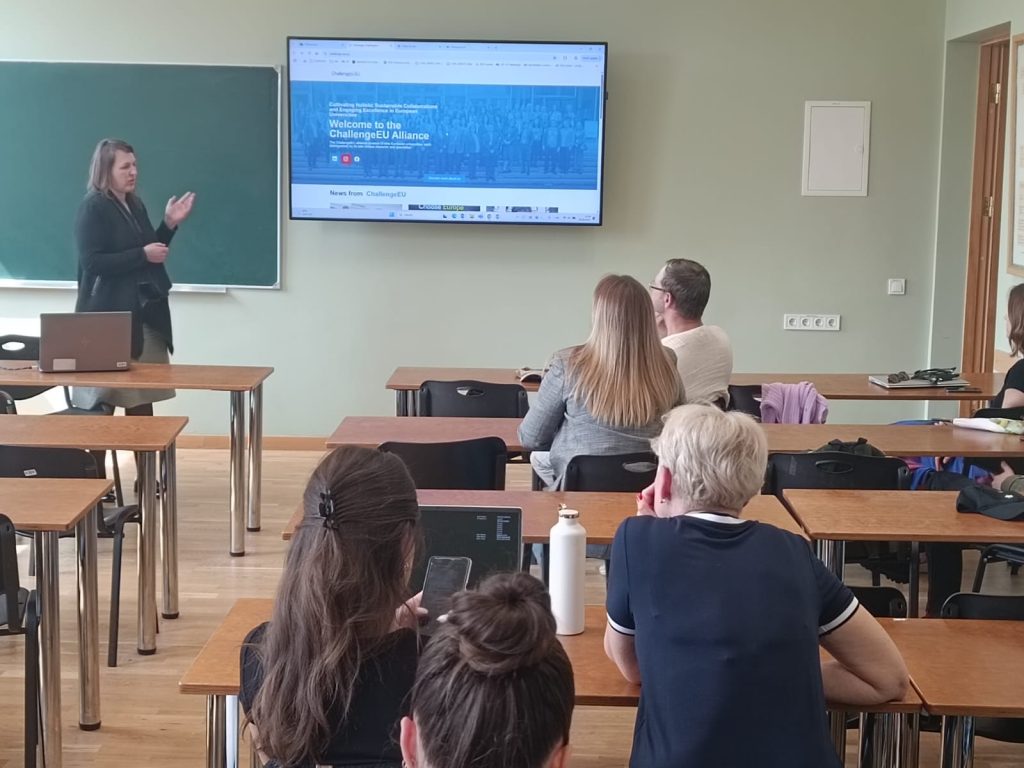
In June, the Latvia University of Life Sciences and Technologies (LBTU) became a hub of dialogue and collaboration as staff and students came together for two dynamic focus group discussions organised within the framework of the ChallengeEU project. These meetings marked a key step in ensuring that the voices of students are at the heart of shaping future educational initiatives across the Alliance. The focus groups brought together doctoral and master’s students from a variety of disciplines, creating a safe and open space for them to share their experiences, challenges, and ideas for improvement related to their academic journey. The atmosphere was both reflective and constructive, with participants offering thoughtful feedback on many aspects of university life. What did they talk about?Discussions explored a wide range of topics, including: Each perspective shared during the sessions provided valuable insight into the lived experiences of early-career researchers and postgraduate students. Their suggestions and reflections are already proving to be essential in the development of one of ChallengeEU’s key initiatives — the Talent Academy. Why does it matter? The Talent Academy is being designed to support (early-career) researchers in acquiring both methodological capacities and entrepreneurial skills, enabling them to conduct socially relevant research and translate findings into real-world impact. The feedback collected during these sessions will directly inform its structure and priorities, helping to ensure that it reflects the true needs of students and young researchers. This type of participatory engagement is at the core of ChallengeEU’s values: building inclusive, challenge-driven, and impactful education and research ecosystems. By listening closely to students, the Alliance aims to co-create a more supportive and effective learning environment — one that empowers students to grow, thrive, and reach their full potential. These focus groups are just one of many ongoing efforts to build bridges between universities and their communities, and to ensure that the transformation of higher education in Europe is driven by collaboration, inclusion, and dialogue.
ChallengeEU Meets with Partners at FHNW
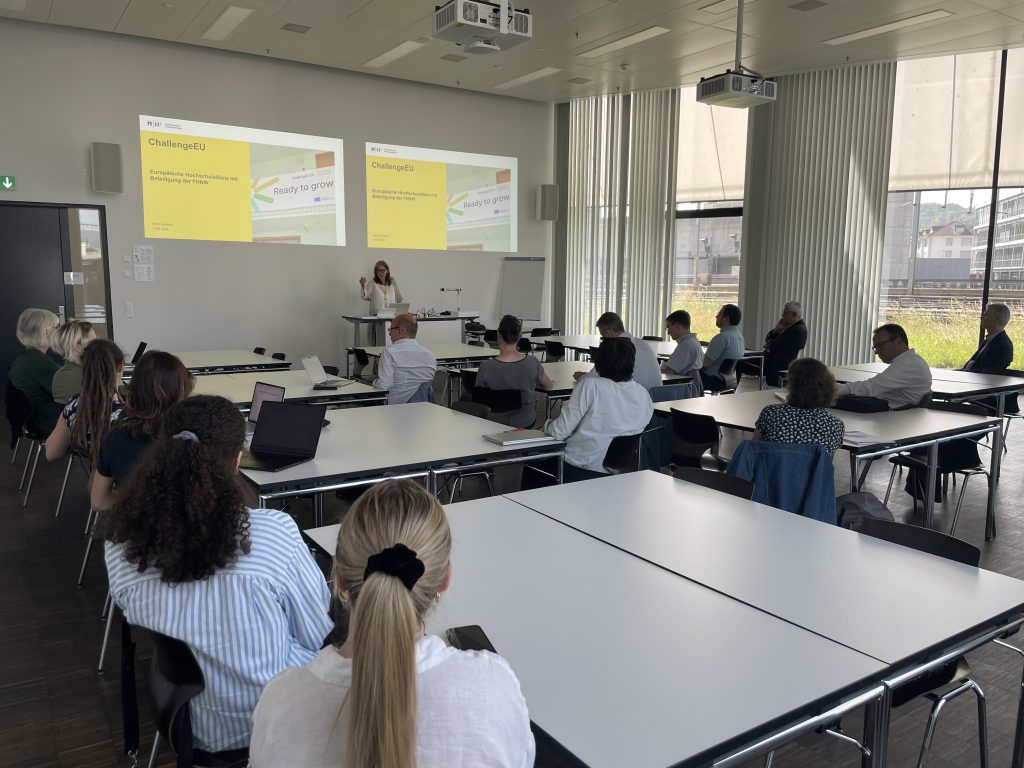
Strengthening regional partnerships is one of the key ways the ChallengeEU Alliance ensures that its work creates tangible impact in local communities across Europe. These partnerships bring the Alliance’s mission closer to reality by connecting higher education institutions with the people, institutions, and industries that shape their surrounding ecosystems. In June, this commitment took a meaningful step forward during a special meeting at Fachhochschule Nordwestschweiz (FHNW) in Switzerland. The ChallengeEU team, together with FHNW President Prof. Crispino Bergamaschi, had the pleasure of presenting the Alliance’s current initiatives to a group of associated partners from the Northwestern Switzerland region. The meeting sparked engaging discussions and laid the foundation for exciting future collaborations. Topics ranged from the evolving needs of students and early-career professionals, to major challenges and opportunities in digitalisation, robotics, artificial intelligence, and diversity. A particularly meaningful part of the exchange focused on the topic of neurodiversity and how schools and employers can better support individuals with diverse cognitive profiles. Initial ideas for joint projects and synergies are already emerging, and all participants shared a strong interest in shaping initiatives that are creative, sustainable, and truly future-oriented. This meeting clearly demonstrated the added value of close cooperation between universities and their regional environments — a core principle of the ChallengeEU Alliance. We are excited to continue these conversations and turn them into concrete, impactful action.
ChallengeEU at the European University Alliances Forum in Wrocław
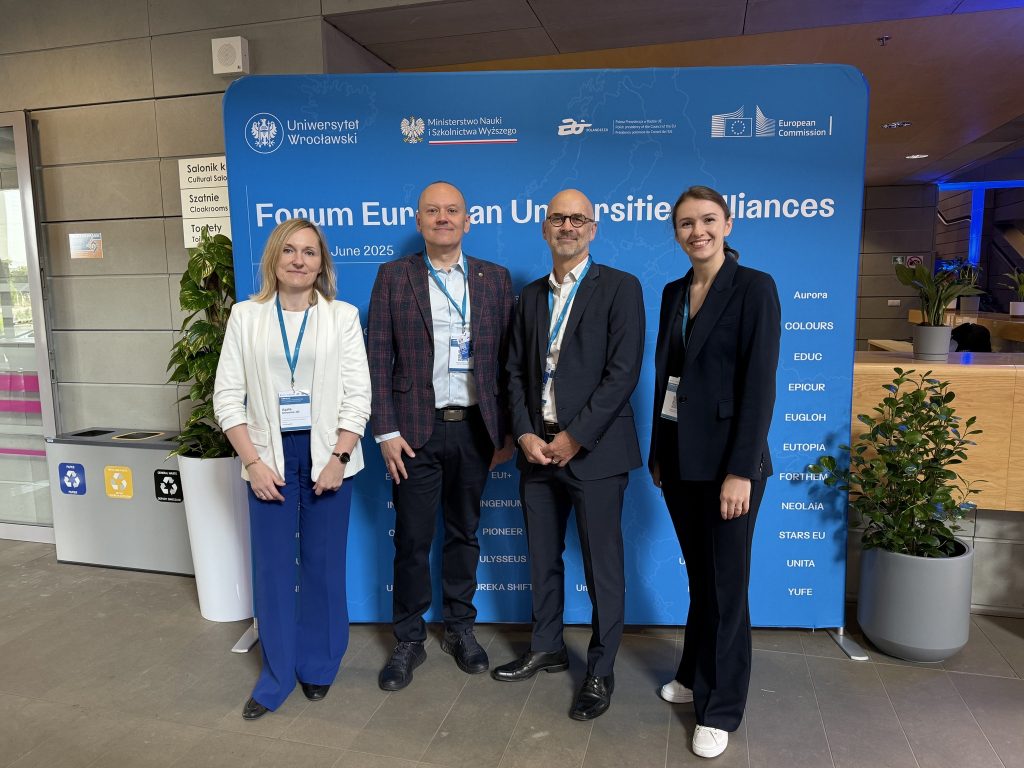
Representatives of the ChallengeEU Alliance are taking part in the 3rd European University Alliances Forum, held in Wrocław, Poland. The event is organized under the Polish Presidency of the Council of the European Union and serves as an important platform for exchange, dialogue, and knowledge sharing among university alliances and key stakeholders. Our delegation (Prof. Dr. Tobias Hagen, HSO’s Vice-Rector for Internationalization and Managing Director of ChallengeEU, Prof. Dr. Paweł Wielgosz, Vice-Deputy Director of ChallengeEU and Rector’s UWM representative for EUI, Sofiia Hecker, Secretary General and Agata Głowacka-Gil, Project Office Coordinator) will gain valuable insights and inspiration through meetings with representatives from other alliances across Europe. The Forum opened with welcome speeches by: Already during the first panel, it was emphasized that European University Alliances are at the very top of the European political agenda Key topics of the Forum included: Participation in the Forum marks another important step in strengthening ChallengeEU’s position within the European academic landscape – and a new opportunity to shape the future of higher education in Europe. >>> 3rd European University Alliances Forum: Summary