Science for the Social Environment: UWM Co-organises the Day of Dignity of Persons with Intellectual Disabilities
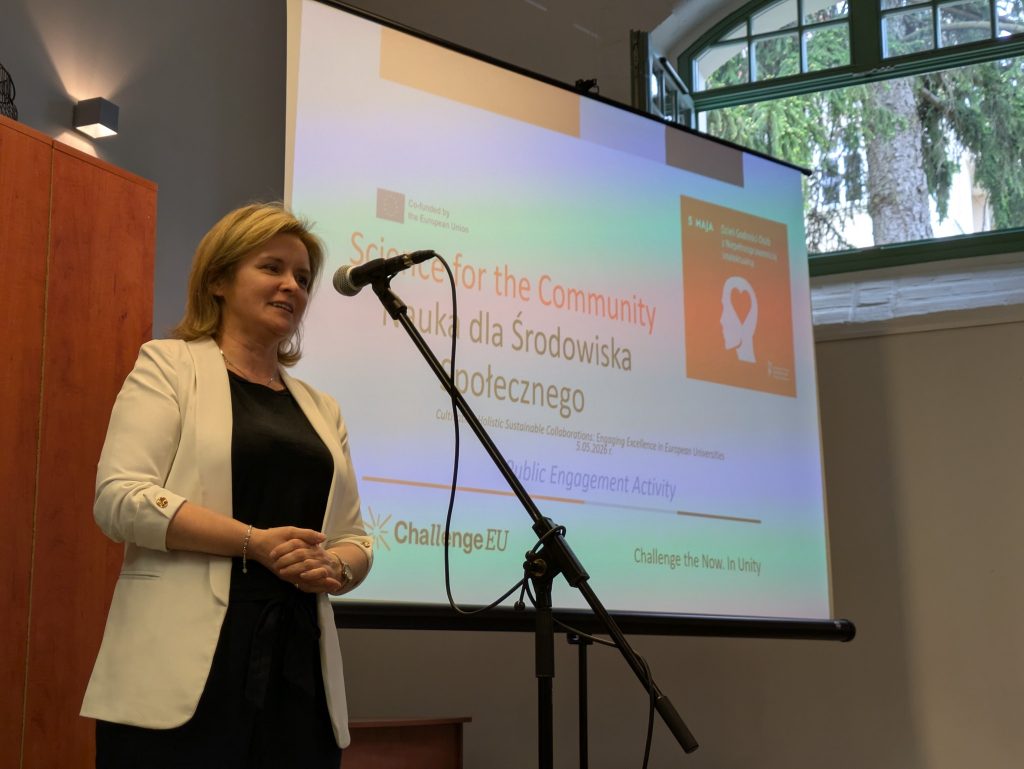
On 5 May 2026, the Ostróda District Multimedia Library “Przystań z Kulturą”, located at the Public Utility Centre in Ostróda, became a space for dialogue, inclusion and mutual learning. On that day, the event “Science for the Social Environment” took place as part of the ChallengeEU Alliance and was organised as a Public Engagement Activity. The meeting served as a prelude to the ChallengeEU 1st Annual Conference. The date was no coincidence. In Poland, 5 May marks the Day of Dignity of Persons with Intellectual Disabilities. The event in Ostróda therefore formed part of an important social context, highlighting the importance of respect, agency and the active participation of persons with intellectual disabilities in social, cultural and academic life. The meeting was attended by representatives of the Faculty of Social Sciences at the University of Warmia and Mazury in Olsztyn: Katarzyna Ćwirynkało, PhD, Associate Professor at UWM, Agnieszka Żyta, PhD, Professor of UWM; and Monika Chełchowska, MA. The event also brought together members of the local support community, including employees and instructors from the Vocational Activity Establishment, participants and therapists from Occupational Therapy Workshops, parents and other people supporting persons with intellectual disabilities. The main focus of the discussion was cooperation between the university and the local community, as well as ways of building a positive image of persons with intellectual disabilities. Particular attention was given to inclusive research, in which persons with intellectual disabilities are not merely research participants, but co-create the research process as partners. The meeting also provided an opportunity to present the assumptions of the OPUS-26 project funded by the National Science Centre, entitled “Inclusive Research with Persons with Intellectual Disabilities. A Methodological and Analytical Model”. The project is being carried out by Prof. Katarzyna Ćwirynkało and Prof. Agnieszka Żyta. Its aim is to develop methodological and analytical foundations for research conducted together with persons with intellectual disabilities. The event was accompanied by an exhibition of works by co-researchers. The posters on display, designed by Michał Orłowski from UWM, were the result of the research project “Beauty in Our Eyes”, carried out using the photovoice method. In the project, academic researchers and researchers with intellectual disabilities worked together as equal partners, presenting their own perspectives on beauty, everyday life and the world around them. “Science for the Social Environment” demonstrated that academic activity can and should extend beyond the walls of the university. As a Public Engagement Activity, the event in Ostróda served as an example of how a university can cooperate with the local community, share knowledge and, at the same time, learn from people whose experience brings a unique perspective to research. Through dialogue, art and a shared search for solutions, the meeting showed that inclusive research is not only possible, but also necessary. It strengthens the voice of persons with intellectual disabilities, builds relationships based on respect and contributes to creating a more open, attentive and inclusive society.
Advancing ODEI Through Legal Education: The Impact of Mentorship and Student Engagement

In an era where legal education is increasingly called upon to address real-world challenges, the role of mentorship and student engagement has never been more vital. This article highlights how the principles of Opportunity, Diversity, Equity, and Inclusion (ODEI) can be effectively advanced through academic work that bridges theory and practice. By showcasing student research on domestic violence and the guidance of dedicated faculty, it demonstrates how legal education can move beyond the classroom to drive meaningful social change. We proudly recognize and commend the outstanding work of students from South East European University, Iva Stefanovska and Bojana Velkovska, authors of the article “From Silence to Visibility: The Role of Diversity, Equity and Inclusion in Preventing Domestic Violence.” This contribution reflects the core mission of our University: to foster academic excellence that is closely connected to societal impact. The students’ work demonstrates not only a high level of legal analysis, but also a strong sense of social responsibility. By addressing domestic violence through data, institutional critique, and a human rights perspective, they contribute meaningfully to raising awareness and fostering a culture of reporting, protection, and accountability. We particularly emphasize the essential role of their mentor, Prof. Dr. Arta Mero, Professor of Family Law and Inheritance Law and ODEI Officer at South East European University. Through her dedicated mentorship, students are guided not only to understand the legal framework, but also to critically engage with the realities behind the law. Her approach reflects the values of modern legal education, combining doctrinal knowledge with clinical insight, ethical responsibility, and a strong commitment to social justice. As ODEI Officer, her leadership ensures that the principles of Opportunity, Diversity, Equity, and Inclusion are not merely abstract ideals, but are actively integrated into teaching, research, and student engagement. This work is a clear example of how mentorship and institutional values come together to produce meaningful outcomes. The students’ analysis highlights the complexity of domestic violence, including its less visible forms, and underscores the need for stronger institutional coordination and more inclusive support systems. At the same time, the article powerfully advances the principles of ODEI: Such initiatives reflect our University’s commitment to developing future legal professionals who are not only knowledgeable, but also empathetic, engaged, and ready to contribute to a more just and inclusive society. We remain proud of our students and their mentor, whose work embodies the transformative power of education—turning knowledge into action, and action into societal change. Below you can read the full version of the article. FROM SILENCE TO VISIBILITY: THE ROLE OF DIVERSITY, EQUITY AND INCLUSION IN PREVENTING DOMESTIC VIOLENCE Domestic violence in North Macedonia is increasingly coming out of the shadows, and recent data show a concerning trend. In 2024 alone, 101 cases of psychological violence were reported—almost twice as many as in the previous two years, when 57 cases were recorded in 2022 and 56 in 2023. This increase may indicate two things: that violence is indeed rising, but also that victims are increasingly recognizing it and feel more encouraged to report it. Particularly concerning are the data from the Sector for Internal Affairs in Tetovo. In the period from 2022 to 2024, a total of 1,667 cases of domestic violence were reported, along with 28 cases of sexual violence. Although the number of sexual violence cases is significantly lower, an upward trend is evident, especially in cases involving minor victims. An additional problem is that data from different institutions often do not match. This points to insufficient inter-institutional coordination and the absence of a unified, functional system for monitoring cases of violence. Violence Has Many Faces and Not All Leave Bruises When discussing domestic violence, physical injury is often what first comes to mind. However, the reality is much broader. Psychological control, economic dependence, constant threats, humiliation, and forced sexual relations are also forms of violence that leave deep consequences, even though they are often not visible. Victims can be women, men, children, and elderly individuals—especially those who are economically or emotionally dependent on the abuser. Many do not recognize their situation as violence, as it often develops gradually and is disguised as “care,” “control out of love,” or “jealousy.” The reasons why victims remain silent are often similar: fear of retaliation, financial dependence, feelings of shame or guilt, as well as distrust in institutions. It is precisely this combination of factors that keeps violence hidden behind closed doors. Why ODEI Can Be Part of the Solution One of the concepts increasingly mentioned in violence prevention is ODEI—an acronym for Opportunity, Diversity, Equity, and Inclusion. This approach is applied by institutions and organizations worldwide to create fairer and more inclusive societies, where all individuals have equal access to rights, protection, and support. In the context of domestic violence, the principles of ODEI imply several important aspects. First, diversity reminds us that violence can occur in any family, regardless of education, social status, or cultural background. Second, equity ensures that every victim has fair and effective access to protection, institutional assistance, and legal support. Third, inclusion involves creating an environment in which victims are encouraged to speak out and seek help without fear of judgment or marginalization. When these principles are absent, violence is easily normalized. A culture of silence emerges, cases go unreported, and victims become isolated. Over time, patterns of violence are repeated and passed down from generation to generation. How the Findings Were Reached This research is based on an analysis of institutional reports from the Ministry of Internal Affairs and social services, available statistical data for the period 2022–2024, as well as information from crisis centers, non-governmental organizations, and victim support and protection programs. The data were compared to identify trends, discrepancies, and systemic weaknesses. The conclusion is clear: domestic violence is not a private matter, but a social responsibility. Greater visibility, accurate data, and the application of ODEI principles are the first steps from silence to protection, and from silence to justice. Combating domestic violence is not only about punishing perpetrators,
Family Law through ODEI M.A.R.K.E.T.: Student Perspectives
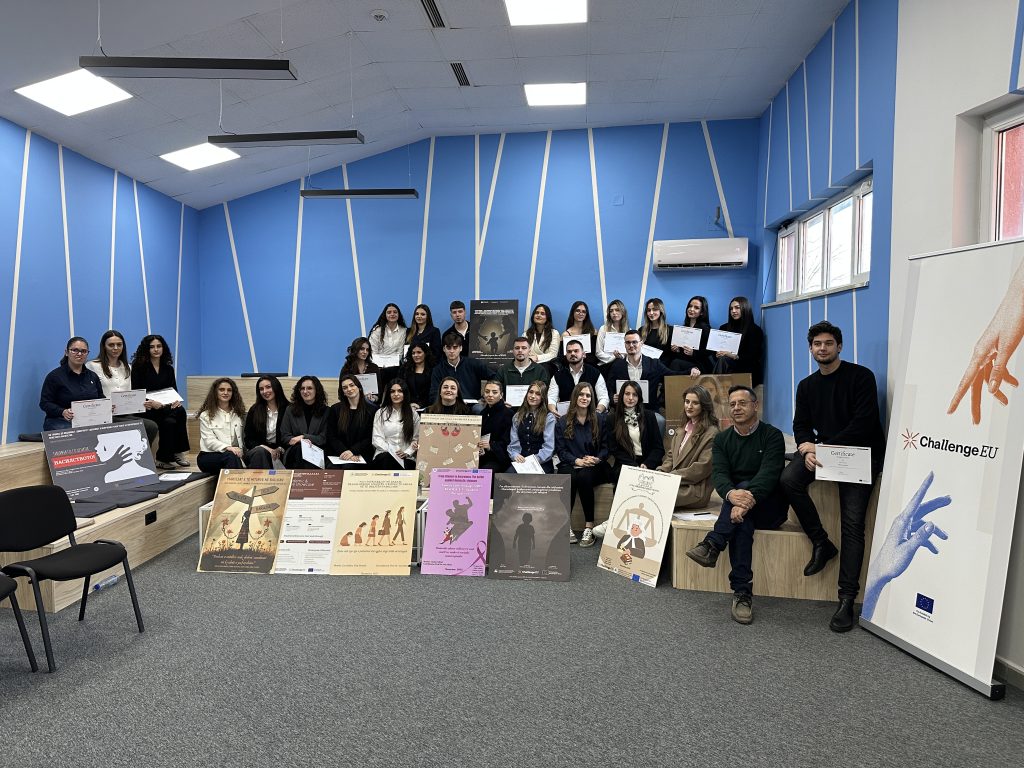
The event “Family Law through ODEI M.A.R.K.E.T.: Student Perspectives”, organised as part of ChallengeEU, is a compelling example of how innovative, inclusive and student-centred learning can generate meaningful academic and societal impact at South East European University (SEEU). The event opened with remarks from Prof. Dr Arta Mero, who emphasised the pedagogical value of the ODEI M.A.R.K.E.T. approach in fostering student advocacy, critical thinking and socially engaged legal education. This was followed by a welcome address from Prof. Dr. Veli Kreci, Director of the Max van der Stoel Institute, who highlighted the importance of embedding openness, diversity, equity, and inclusion into academic practice and curricula, particularly within the framework of the ChallengeEU Alliance. Representing the student perspective, Mevlan Ademi, Student Ambassador for ChallengeEU, reflected on the role of students as active contributors to university initiatives and European academic collaboration, underscoring how such formats empower students to engage meaningfully with societal challenges. Through the ODEI M.A.R.K.E.T. framework (Multi-Actor Research, Knowledge, Exchange, Teams), students moved beyond traditional classroom learning to become active researchers, presenters, and contributors to public and academic discourse. Their work demonstrated not only strong legal knowledge but also critical reflection, ethical awareness, and social sensitivity, particularly in addressing family law challenges through the lenses of diversity, equity, openness, and inclusion. The integration of the M.A.R.K.E.T. model in Family Law confirms its value as a sustainable, inclusive, and high-impact educational approach, enhancing academic excellence while strengthening the social relevance of legal education. The event also highlighted the transformative role of academic staff and fourth-year student mentors, whose guidance and commitment enabled participating students to translate theoretical knowledge into practice-oriented and socially responsive legal analysis. This collaborative effort reflects SEEU’s core values and reinforces its position as a leading institution within the European University Alliance, actively shaping modern, responsible and inclusive higher education. Presentations on adoption, domestic violence, child marriage, post-divorce parental responsibilities, children’s participation in legal proceedings and evolving approaches to divorce were delivered by: Albina Pajaziti, Sara Besimi, Era Fejzullai, Arion Dauti, Erjon Murseli; Iva Stefanovska, Bojana Velkovska, Emanuela Dimovska, Suejla Sulejmani, Zahide Hajdari, Drita Emini, Sara Vejseli; Aida Selami, Fatime Sejfuli, Leonita Xhelili, Mimoza Jahiu; Erlind Rufati, Valon Bexheti; Lindihana Uzeiri, Amina Iljazi, Eugerta Selami; and Jehona Saiti, Albina Rexhepi and Djellza Pajaziti, under the mentorship of Elisa Murseli, Mila Arsić, Elsa Havziju, Amina Ademi, Elfatir Lloga, Mevlan Ademi, Era Sadiku and Omer Ajruli (fourth-year students). The presentations were followed by an open and dynamic debate, during which students, mentors, and participants discussed research challenges, the role of mentoring, and emerging perspectives for family law within the ODEI framework, further enriching the academic exchange and reinforcing the participatory nature of the initiative. Strong engagement from legal practitioners (attorneys, notaries and judges), NGOs, institutional representatives, and students from other faculties and universities significantly amplified the event’s impact. Stakeholders welcomed the initiative and described it as a unique and rarely seen format in the legal field, emphasising its value in bridging academia and practice. As key collaborators of SEEU, they recognised the importance of such initiatives in advancing legal scholarship and strengthening societal trust in the legal system. The event concluded with a certificate ceremony, recognising the commitment and academic contribution of all participating students and mentors. Overall, this initiative confirms that ODEI M.A.R.K.E.T. within the ChallengeEU framework is not merely a project activity but a sustainable educational model, one that empowers students as agents of change, strengthens academic practice, and positions SEEU as a hub of inclusive, forward-looking, and socially responsible higher education with a tangible impact on both society and academia.
ChallengeEU Mentoring Programme

Connect with supportive professionals across Europe and grow your confidence, skills and career vision— through mentoring rooted in diversity, equity and inclusion.