ChallengeEU 2nd Annual Conference
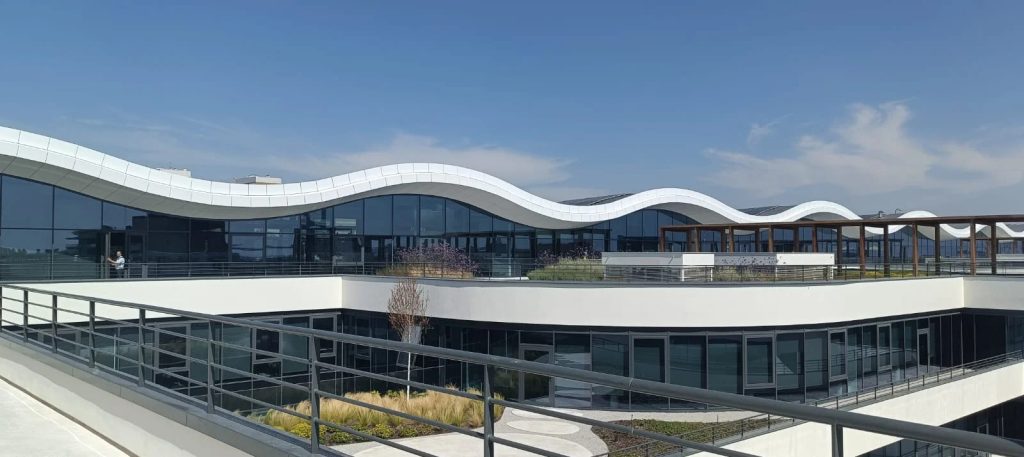
Time to Challenge The Now. In unity again, this time in Lisbon. We are proud to invite you to our 2nd annual conference: Rethinking Wellbeing in Europe Through University Alliances.
ChallengeEU 1st Annual Conference Through the Lens: Photo Gallery
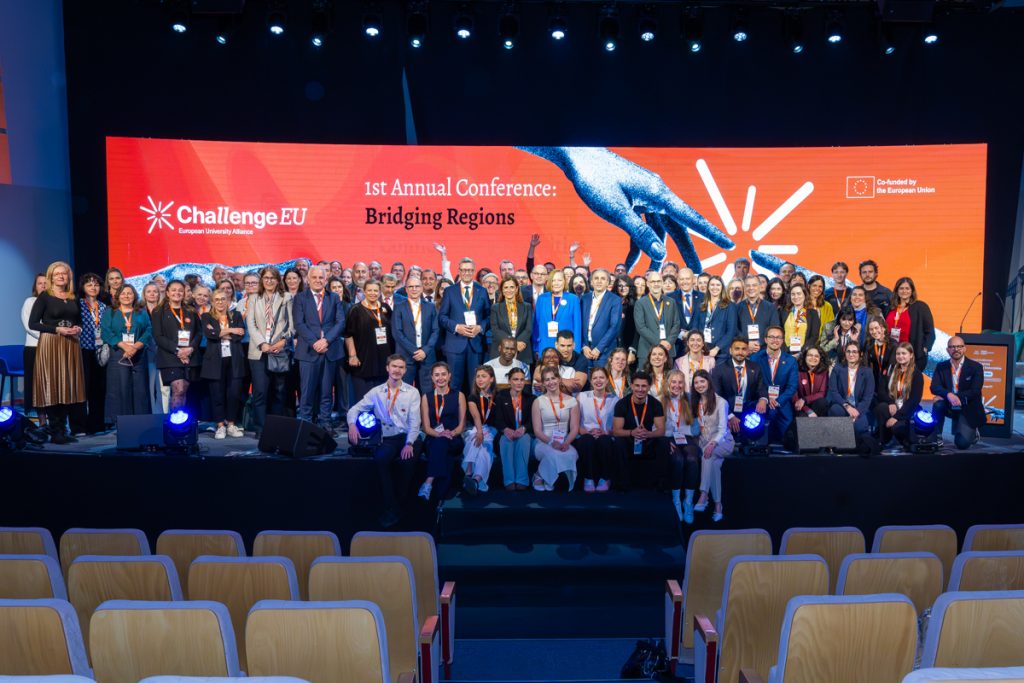
The 1st ChallengeEU Annual Conference in Olsztyn (May 6-7) was not only an opportunity for representatives of nine European universities to meet, but also an important moment to reflect on the journey so far, build relationships and define the next directions for cooperation. The event showed that the strength of the alliance lies in people, regions and concrete actions that can have a real impact on the future of higher education in Europe. For two days, the University of Warmia and Mazury in Olsztyn became a space for discussions on cross-border cooperation, the responsibility of universities for regional development, and the challenges related to the green, digital and social transitions. The conference brought together representatives of academia, students, regional partners and stakeholders from different parts of Europe, creating a space for dialogue, exchange of experience and the search for shared solutions. However, the significance of the event went beyond the conference programme itself. Its impact lay in strengthening ties between the alliance partners, increasing the visibility of ChallengeEU in the region, and demonstrating that cooperation between European universities can bring tangible benefits to academic and local communities. The meetings, discussions and joint initiatives became an impulse for further actions to be developed within the alliance — from education and research to social engagement and cooperation with the socio-economic environment. We invite you to view the photo gallery, which offers a chance to revisit the atmosphere of the conference, its key meetings and the moments that helped build the ChallengeEU community. Opening Ceremony, Plenary Sessions and Closing Conference (photo by Janusz Pająk/UWM) Working Meetings (photo by Janusz Pająk/UWM) Conversations and integration (photo by Janusz Pająk/UWM, Michał Orłowski) Through the lens of the UWM Student Photo Agency (Studencka Agencja Fotograficzna “Jamnik”)
Bridging Regions – Connecting Universities: ChallengeEU meets at University of Warmia and Mazury
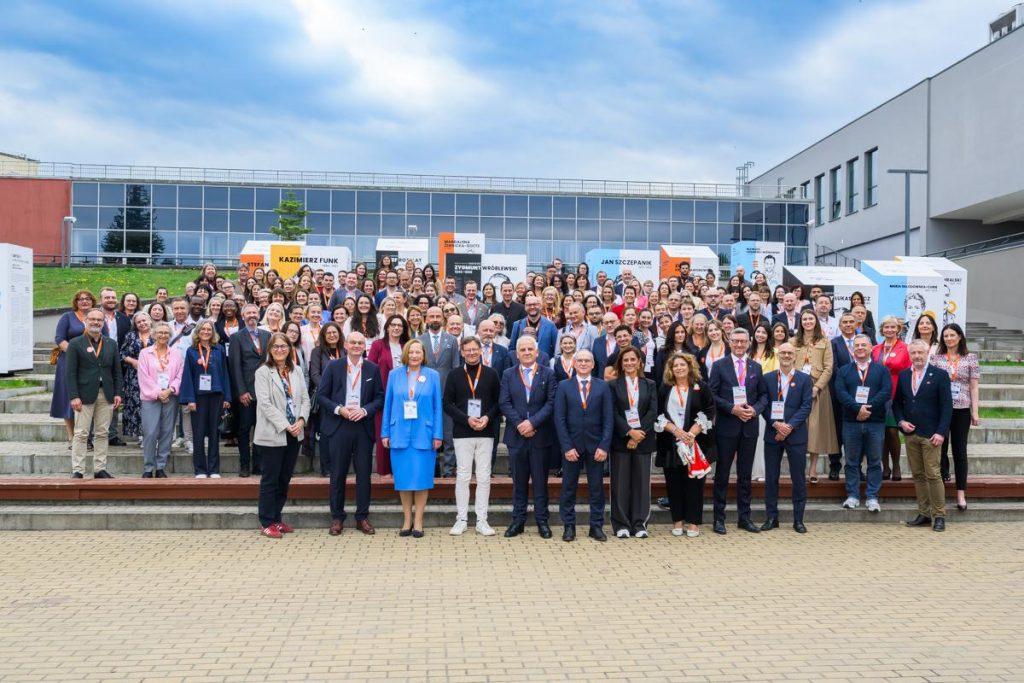
For two days, the University of Warmia and Mazury in Olsztyn became the beating heart of the ChallengeEU Alliance. Created within the framework of the European Universities initiative, ChallengeEU brings together nine institutions from different parts of Europe under a shared banner. Together, they are working on solutions that will support not only their own development, but also the future of European higher education and the regions in which they operate. On 6–7 May, UWM hosted the ChallengeEU 1st Annual Conference. The ChallengeEU Alliance’s journey began several years ago. It brings together Hochschule Offenburg, South East European University, ECAM LaSalle, Mid Sweden University, Universidade Europeia, Latvia University of Life Sciences and Technologies, Universidad Europea de Valencia, Fachhochschule Nordwestschweiz (FHNW) and the University of Warmia and Mazury in Olsztyn. All these universities took on a shared challenge — quite literally — to create an alliance aligned with the idea of European Universities. Achieving this goal meant meeting not only formal requirements. All the work invested in agreeing on a common plan, developing a strategy and addressing many other issues was rewarded with approval to establish the Alliance, which began its activities in 2025. “Faced with a challenge, we basically have two choices: approach or avoid. The fact that we’re all here today shows clearly that not only have we approached our Challenge, but we have also managed it quite well (…). But our Challenge doesn’t stop here; and this ChallengeEU First Annual Conference is not a grand finale; it’s a stepping stone because there’s still work to be done, there are still challenges ahead. We’ll be spending these two days exchanging ideas on how to implement our strategies not only in the world of academia, but also in the communities around us, bridging the gap between regions in the same way as we have bridged the gap between our universities”, reminded Dr Czesław Kiński, the conference host. He added: “Over these two days, we will exchange ideas on how to implement our strategies not only in the academic world, but also in the communities around us, bridging differences between regions in the same way as we bridge differences between our universities.” “Five kilometres from this room, in a red-brick castle on a hill, a young canon once spent his evenings looking at the stars. His name was Nicolaus Copernicus. He lived here, in Warmia, for over forty years. He was not yet famous. He worked, as we might say in the language of today’s funding bodies, ‘based at a regional institution’. And from that so-called regional institution, he moved to the centre of the universe,” said Prof. Jerzy Przyborowski, Rector of the University of Warmia and Mazury in Olsztyn, during the opening of the conference. He stressed that, in his view, the famous Polish astronomer would have understood the idea behind the ChallengeEU Alliance. “Copernicus understood that ‘the centre’ is not a place. It is a question. And whoever is brave enough to ask better questions becomes, for that moment, the centre of the world.. In this hall today, I see representatives of nine universities who have decided to ask better questions. Questions about how regions and universities can support each other. About how the green transition can also be a just transition. About how challenge-based learning can replace lecture-based forgetting. About what European belonging means when the borders of Europe are once again being renegotiated, sometimes peacefully and sometimes not.” What brings the ChallengeEU community together is not only a readiness to ask questions and push boundaries, but also enthusiasm. This was exactly what Prof. Hélia Gonçalves Pereira, Rector of Universidade Europeia in Lisbon, spoke about when welcoming the conference guests on behalf of the Strategy Board. “When we created this alliance, some said that such an undertaking was impossible; others argued that it was possible, but would be very, very difficult. Today, we can proudly say that we have succeeded — that our dream has come true,” said Prof. Hélia Gonçalves Pereira. “ChallengeEU involves more than 90,000 students, teachers, researchers and partners, working in areas that are crucial not only for the universities forming the Alliance, but also for Europe: mobility and cooperation. As we work to make this ecosystem function as effectively as possible, we are accompanied by great enthusiasm. There is no doubt that in these strange, yet exciting times, we need more and better knowledge.” Prof. Stephan Trahasch, Rector of Hochschule Offenburg, the Alliance’s leading institution, drew attention to the goal that had guided the project from the beginning. “When we brought this alliance to life many months ago, we had a clear vision of what we wanted to do: we wanted European universities to cooperate not only on paper, but in practice, and to take on concrete challenges with a real impact on the world around them. What I see today strengthens my belief that the path we have chosen is the right one,” Prof. Trahasch emphasised. The HSO Rector gave a particularly warm welcome to the students taking part in the conference. “You are not guests at this meeting — you are the reason this alliance exists, and you are the heart of this alliance. Every partnership we build and every barrier we overcome is for you and, most importantly, with you. Your energy and commitment are what make this alliance truly European,” said Prof. Trahasch. Universities have an impact The first Annual Conference of the Alliance was held under the motto “Bridging Regions – Connecting Universities”. It referred to the idea from which ChallengeEU has grown, and whose practical expression can be seen in the long-standing partnership between Offenburg and Olsztyn, as well as in the cooperation between Hochschule Offenburg and the University of Warmia and Mazury that emerged from it. This cooperation would not have been possible without Maria and Georg Dietrich, the founders of the foundation which continues to strengthen relations between the two cities and universities to this day. Julia Ritter spoke about her grandfather’s work and her readiness
New Leadership Elected for ChallengeEU Student Council
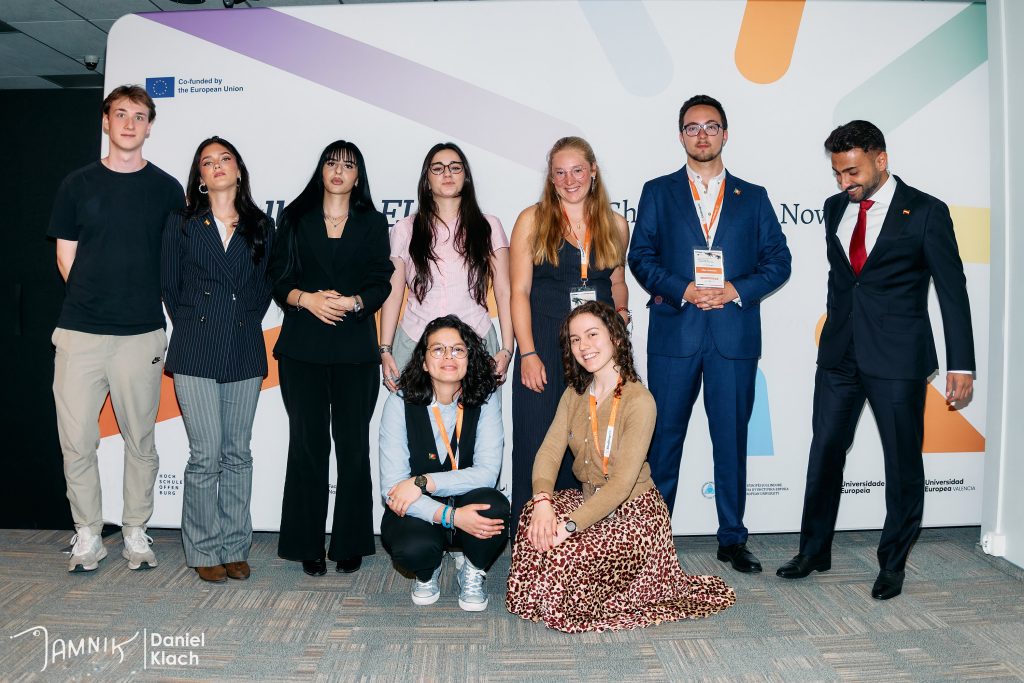
The ChallengeEU Student Council has elected its new leadership, marking an important step in strengthening student representation across the alliance. Rebeca Rocha from Universidade Europeia in Lisbon will be President for the second time. The newly appointed President and Vice-President will guide the Council’s work, coordinate activities, and ensure that student perspectives are effectively reflected in key discussions and decisions. The new leadership will also represent students within the alliance’s governance structures, contributing to dialogue with academic and institutional stakeholders. Their role will be crucial in fostering collaboration, amplifying student voices, and supporting the development of inclusive, student-centred initiatives across ChallengeEU. Position Elected Representatives President Rebeca Rocha (UEL) Vice-President Reik Herrmann (HSO) Strategy Board Alketa Mustafi (SEEU) Capucine Carrier (ECAM) Management Board Larissa Josephine Biernacki (UWM) Iwona Pająk (UWM) Academic Council Linda Priede (LBTU) Emil Thors (MIUN) Social Media Axel Cadart (ECAM) Emil Thors (MIUN) SC Members Anna Harter (HSO), Liāna Gailite (LBTU), Filipe Crisóstomo (UEL), Ella Päffgen (UEV), Alicia Devaux (FHNW), Marija Kosovljanovic (FHNW), Tina Adili (SEEU)
Positive Impact Challenge in Freiburg
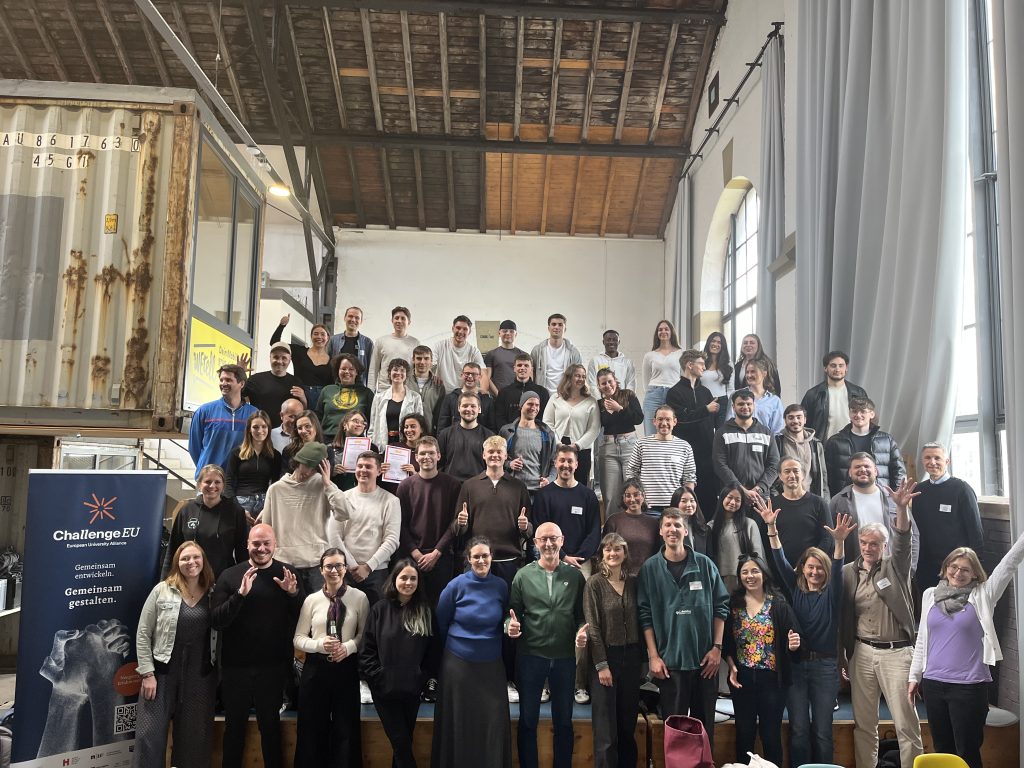
Hochschule Offenburg just concluded three inspiring days at the Positive Impact Challenge in Freiburg—an experience that reflects the core of ChallengeEU’s mission to drive challenge-based, impact-oriented education across Europe. The programme began with an onboarding Design Sprint, equipping students with design thinking tools to engage in collaborative, solution-driven processes from the outset. Building on this, teams developed social impact projects addressing real societal challenges—ranging from digital community engagement to inclusive everyday systems—demonstrating how student-led initiatives can contribute to regional innovation ecosystems. Throughout the challenge, participants were supported by our Seekers, whose expertise helped translate ideas into sustainable, scalable solutions with long-term impact. This mentorship process embodies ChallengeEU’s approach to fostering open innovation and knowledge exchange between academia and society. What stood out most was not only the diversity of project outcomes, but also the process itself: teams applied user-centred, emotionally intelligent methods, reflecting the shift towards challenge-based learning as a driver of societal transformation. In doing so, students actively became agents of change, contributing to more inclusive and responsive innovation practices. The collaborative environment—bringing together local and international perspectives—highlighted the strength of transnational cooperation within the ChallengeEU Alliance. It is through these shared experiences that we build a connected European learning community capable of addressing complex challenges beyond institutional and national boundaries. This activity is more than a standalone event—it is part of a broader ambition to reshape higher education towards impact, participation, and social innovation, strengthening Europe’s capacity to respond to the triple transition and future societal needs. As we close this chapter, we carry forward the momentum generated in Freiburg, looking ahead to the continued development and real-world implementation of these ideas. Stay tuned for the final project launches on June 24.
Industrial Robotics in Practice: SEEU, ECAM LaSalle and FHNW at Hochschule Offenburg
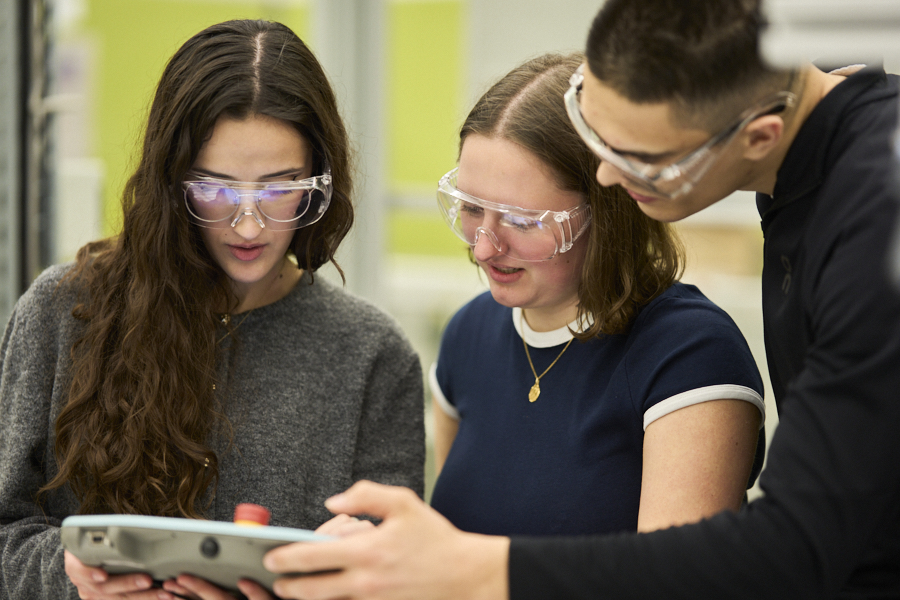
The first Blended Intensive Programme (BIP) at Hochschule Offenburg, titled Industrial Robotics in Practice, focused on fostering cross-border collaboration through interdisciplinary training in robotics. Representatives of the universities that make up the ChallengeEU alliance took part in it. On the first day, the 16 participants from South East European University, ECAM LaSalle and FHNW – three partner universities in the European University Alliance ChallengeEU – were welcomed by Prof. Dr Tobias Hagen, Vice-Rector for Internationalisation. Afterwards, Dr Alexander Burdumy and Klara Wehrlein from the International Office gave the guests a brief introduction to the region and Hochschule Offenburg. The programme also included a tour of the laboratories and a safety briefing at the Work-Life Robotics Institute (WLRI). © Hochschule Offenburg, Joerdis Damrath Over the following days, the BIP participants worked together with WLRI staff at the intersection of CAD, additive manufacturing (3D printing), and industrial robotics. They designed components digitally, optimised them for production, and programmed real industrial robots. At the end of the week, the students from North Macedonia, France and Switzerland presented their results during a final session and also visited Hansgrohe. By combining theoretical content, practical application and international teamwork, the Erasmus+ funded BIP offered a unique opportunity to develop skills in industrial robotics while also gaining intercultural experience. For more than half of the students, it was their first stay at a higher education institution abroad. There was also plenty of room for fun: the social programme included a city rally, a pub crawl with Offenburg student ambassadors of the European University Alliance ChallengeEU, a brewery tour with beer tasting, and shared meals. In addition, the guests were able to take part in the World Café and the Easter baking event organised by the International Office for international students at Hochschule Offenburg. © Hochschule Offenburg, Alexander WeigandAlongside the 16 BIP participants, Prof. Florije Ismaili, Vice-Rector for Academic Planning and Digitalisation, and Prof. Xhemal Zenuni, Dean of the Faculty of Contemporary Sciences and Technologies from South East European University, as well as Prof. Guillaume Gibert, Professor of Robotics at ECAM LaSalle, also travelled to Offenburg. In addition to visiting the WLRI, they used their stay to establish contacts at Hochschule Offenburg and discuss possible further cooperation within the framework of the European University Alliance ChallengeEU. Source: HSO
Erasmus+ Teaching Mobility at Universidade Europeia

As part of the Erasmus+ Teaching Mobility Programme, Sandra Stallmann participated in the International Week at the Universidade Europeia in Lisbon, and she has also taught classes as a guest lecturer for students attending the Bachelor in Hotel Management programme. Prof. Sandra Stallmann delivered a lecture on “English in the Business Environment and Tourism” focusing on the importance of professional communication skills in the hospitality industry. The session addressed topics such as professional communication with customers, formal language use in a hospitality environment, and language use in business situations within tourism and hospitality. The class participated actively in discussions and practical exercises based on real-life situations. The guest lecturers also provided an exchange with academic staff at the university in Lisbon, getting to know their background, their teaching experiences and their insights. Students actively participated in discussion rounds after the lectures, showing interest in international relations, cultural differences, living and studying abroad, and the exchange of international experiences. In addition to her guest lectures, she also attended the International Week at the Universidade Europeia. This included for instance an academic workshop led by Prof. Rodrigo Morais (WP5) on “CBL: Designing, Implementing & Assessing Challenge-Based Learning”, which focused on innovative teaching methodologies and the application of Challenge-Based Learning in higher education, and required an interactive participation of all candidates. In general the international week provided an opportunity for academic exchange and networking with international lecturers and university staff besides from the experience as a guest lecturer.
Building Bridges Through Mobility: FHNW Representative Visits UEV
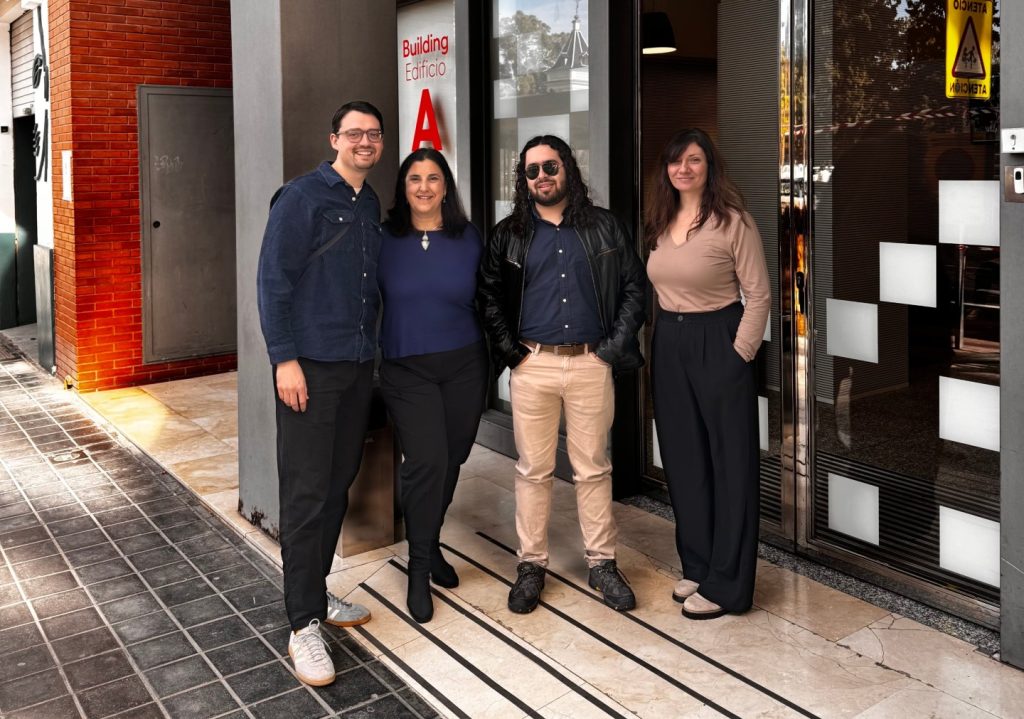
Luca Niederhauser from Fachhochschule Nordwestschweiz (FHNW) visited university in Valencia as part of the Mobility Program Visit at Universidad Europea de Valencia (UEV). The visit provided an opportunity to strengthen institutional ties, exchange best practices, and explore new avenues for academic cooperation between the partner universities. Mr. Niederhauser represents Hochschule für Angewandte Psychologie, specifically the Zentrum für Ausbildung. This visit is part of a mobility initiative linked to Work Package 3 (WP3) of the European university alliance ChallengeEU, in which both FHNW and UEV are active partners. During his stay in Valencia, Mr. Niederhauser participated in a comprehensive program designed to strengthen inter-institutional collaboration and promote the exchange of best practices. His visit included a series of academic, administrative, and cultural activities, such as: a guided tour and in-depth explanation of the Alameda Campus; job shadowing in the area of innovation and the development of new academic programmes with Ana Ferrer, Dulce Gómez, and Alberto Garcés; and a presentation on the ChallengeEU network delivered by Laura Bertolin (WP4 Officer) and Emmanuël Hazé (ChallengeEU, CIO). Professional exchange with Luz Barradas focusing on quality management, a guided tour and detailed presentation of the Turia Campus, a discussion with Ana Povoa on the Psychology degree programme, an exchange with Christian Garzoni on the admissions process, and a visit to a Psychology class to observe teaching practices. Beyond the academic agenda, Mr. Niederhauser also had the opportunity to discover the rich culture, traditions, and gastronomy of the city of Valencia, gaining a deeper appreciation of its local identity. These exchanges not only enrich the experience of visiting staff, but also strengthen the relationships between partner universities within the ChallengeEU alliance, fostering trust and mutual understanding. They also open the door to new avenues of academic collaboration, from program development to joint initiatives that contribute to the internationalisation of higher education. The European University of Valencia extends its warmest thanks to Mr. Niederhauser for his visit and looks forward to future cooperation with FHNW within the ChallengeEU framework.