ChallengeEU Strengthens Cooperation with Associated Partners
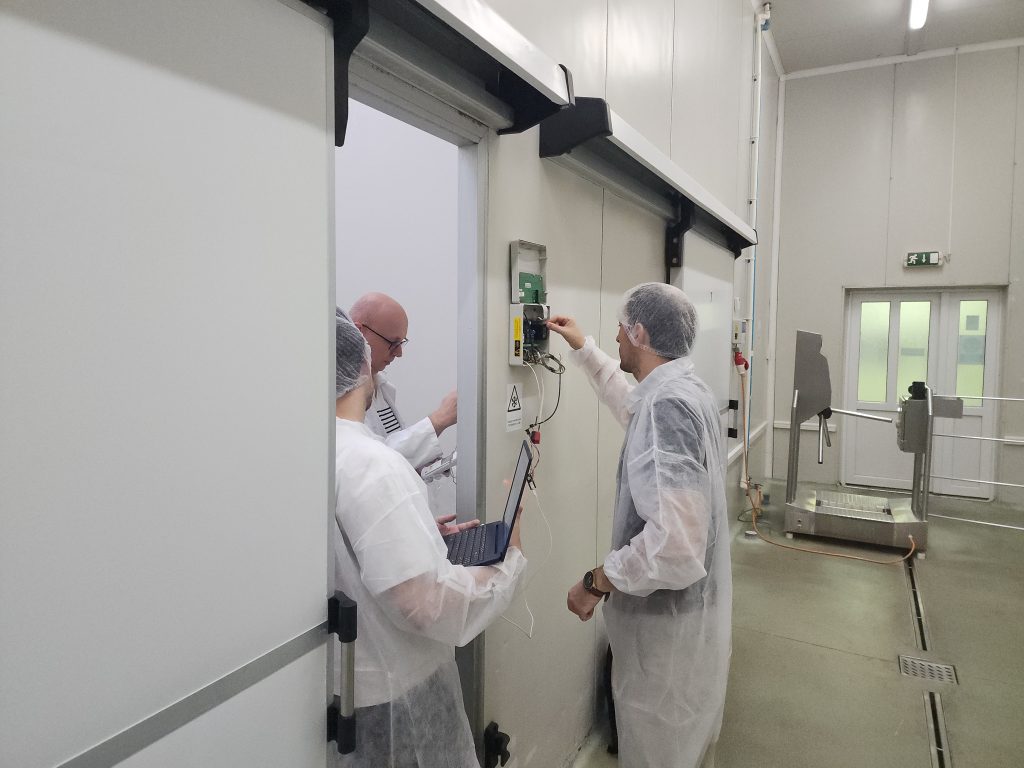
On 4 September, as part of the ChallengeEU initiative, South East European University (SEEU) successfully carried out sensor testing in collaboration with Veze Sharri, one of ChallengeEU’s Associated Partners. This activity marks an important milestone in the development of the Smart Fridge Monitoring System, which aims to explore innovative solutions for monitoring and improving refrigeration processes through smart sensor technologies and data-driven insights. This project component is led by Prof. Mennan Selimi, Hamit Kamberi and Samir Shabani, who are working closely with Veze Sharri on testing, data collection and the further development of the solution. SEEU is grateful to Veze Sharri for its cooperation and commitment to supporting innovation, experimentation and the practical application of digital technologies. This collaboration within ChallengeEU demonstrates the value of connecting academia, industry and innovation to develop solutions with real-world impact.
ChallengeEU for Youth Wellbeing
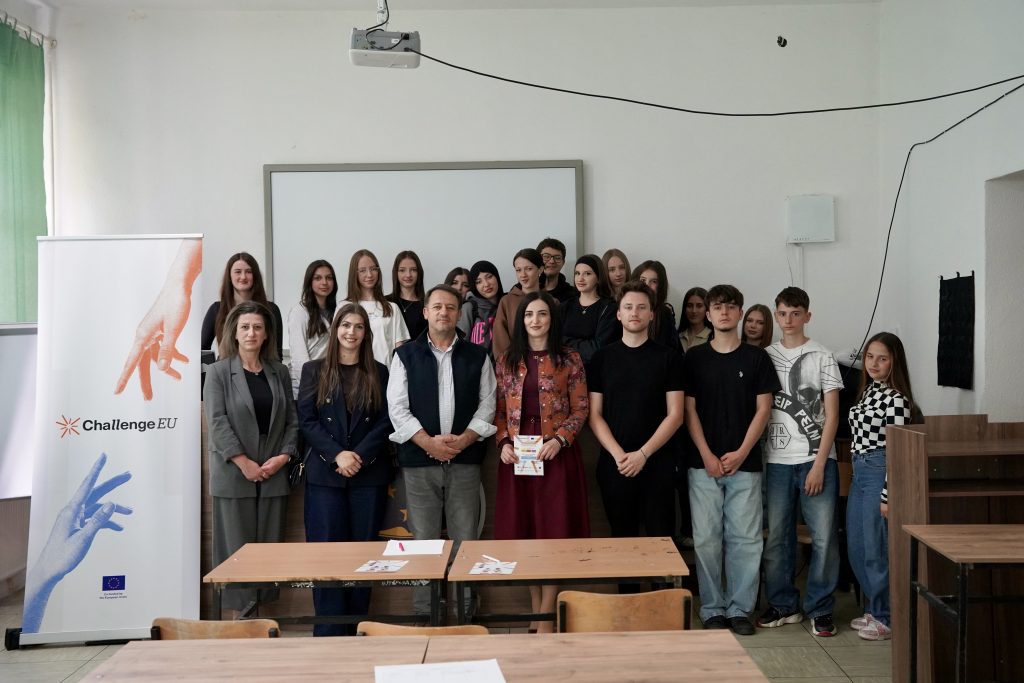
As part of the ongoing ChallengeEU initiative, South East European University, in cooperation with the Municipality of Gostivar as an Associate Partner of the ChallengeEU Alliance, successfully carried out a youth awareness campaign at the Economic High School and the Industrial High School in Gostivar. During the activities, Assoc. Prof. Dr Shpresa Alija, acting as a M.A.R.K.E.T. Officer, introduced students to the ChallengeEU project and its mission of fostering student engagement, wellbeing and social responsibility. Particular attention was given to the Alliance’s third pillar, Mental Health and Wellbeing, emphasising the importance of healthy lifestyles, emotional resilience and informed decision-making among young people. The educational sessions were enriched by the contribution of Prof. Dr Naser Durmishi, an expert in neuropsychiatry, who delivered an interactive lecture on the health risks associated with energy drinks and illegal substances. Through practical examples and open discussion, students were encouraged to reflect critically on the consequences of harmful habits and the importance of adopting healthier behaviours. Representatives of the Municipality of Gostivar also took an active part in the event, highlighting the significance of joint efforts between local authorities, educational institutions and universities in promoting youth wellbeing and preventive education. The students showed great interest in the topics presented, actively engaging through questions, comments and discussion. The activity further strengthened cooperation between the ChallengeEU Alliance, local stakeholders and secondary education institutions in fostering awareness, health and wellbeing among young people. The event marked the successful completion of the awareness campaign across all four secondary schools in Gostivar, contributing to the broader objectives of the ChallengeEU Alliance in supporting youth development and community engagement.
ChallengeEU Hackathon at SEEU Showcases Sustainable Student Solutions
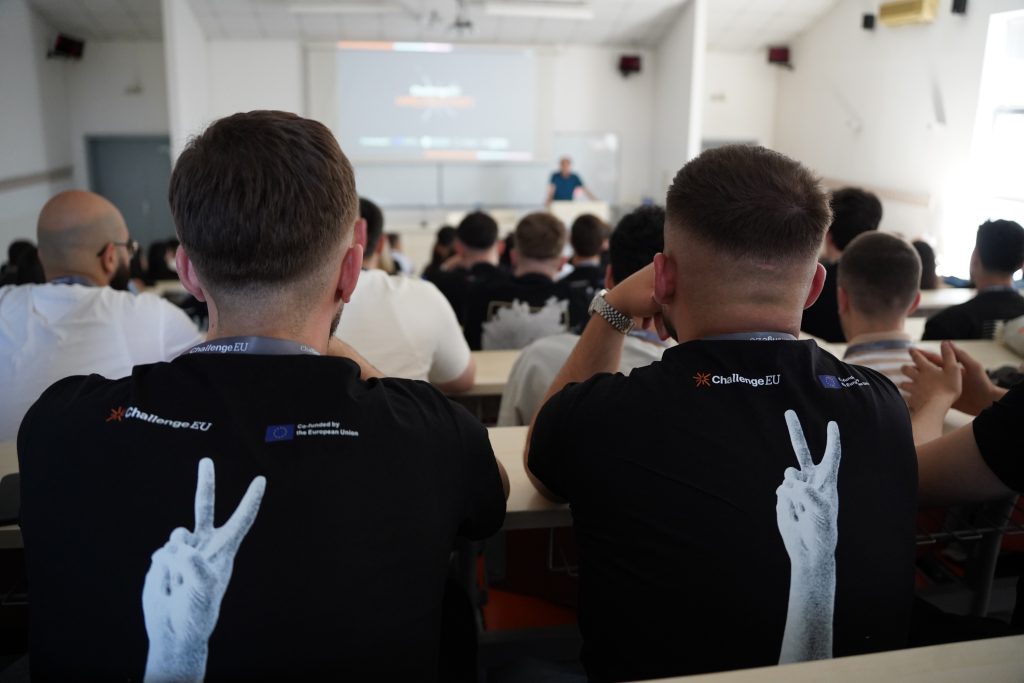
The Hackathon “Innovation Challenge: Turning Partnerships into Sustainable Solutions” (29-30 May) concluded successfully at South East European University (SEEU), in cooperation with the Business Innovation Center (BIC) and the Student Parliament and Association, marking the end of two intensive days of creativity, collaboration and innovation. During the second day, student teams focused on finalising their projects and preparing their presentations for evaluation by a five-member expert jury. The participants demonstrated exceptional dedication, presenting a diverse range of innovative solutions that addressed contemporary challenges through technology, sustainability, entrepreneurship and social impact. Following a highly competitive evaluation process, the jury awarded the top three teams: 1st place: ProtocolMinds2nd place: Predictors3rd place: LegacyLink Special awards also went to: Best Business Idea: Exchange for Less WasteBest Technical Idea: Quantum FiveBest Social Idea: Kitogo The Hackathon showcased the talent and innovative spirit of SEEU students, with many teams presenting solutions that have the potential to generate real-world impact. It concluded as a remarkable success, giving students a valuable opportunity to transform ideas into sustainable solutions while strengthening partnerships across disciplines and institutions.
ChallengeEU in Action: GIS Mapping in Tetovo
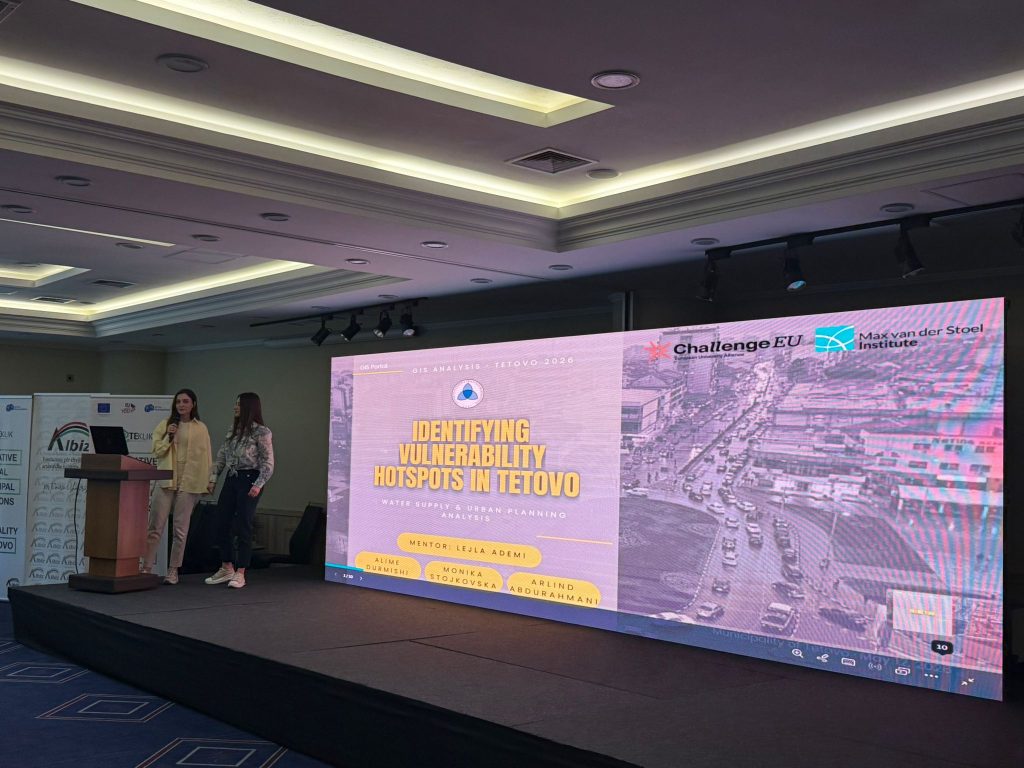
Students from South East European University used GIS tools to examine urban and infrastructure challenges in Tetovo. The activity, carried out as part of ChallengeEU initiatives supporting the digital and green transition, showed how spatial data can contribute to sustainable urban planning, environmental resilience and decision-making focused on local communities. Within the framework of the digital and green transition initiatives promoted by ChallengeEU, and in collaboration with the Center for Development of the Polog Region as an Associate Partner of the ChallengeEU Alliance, students from South East European University participated in a GIS-based activity focused on identifying urban and infrastructure vulnerability hotspots in the city of Tetovo. Following a GIS training session and the introduction to spatial data related to Tetovo’s urban planning and water supply infrastructure, students worked on analyzing GIS layers to identify areas with limited infrastructure coverage, lack of greenery, and spatial planning challenges, while proposing potential intervention zones based on observed spatial patterns. Under the mentorship of Lejla Ademi Shaqiri, the students Alime Durmishi, Monika Stojkovska, and Arlind Abdurahmani presented their findings and recommendations, demonstrating the potential of GIS tools and digital technologies in supporting sustainable urban planning, environmental resilience, and evidence-based local decision-making. The initiative also reflected the broader mission of ChallengeEU: to connect universities, regional stakeholders and local communities in addressing real-life challenges. By combining academic knowledge, digital skills and regional cooperation, the activity showed how students can actively contribute to the green and digital transformation of their cities and regions.
SEEU and Gostivar Municipality Launch Youth Awareness Campaign as Part of ChallengeEU
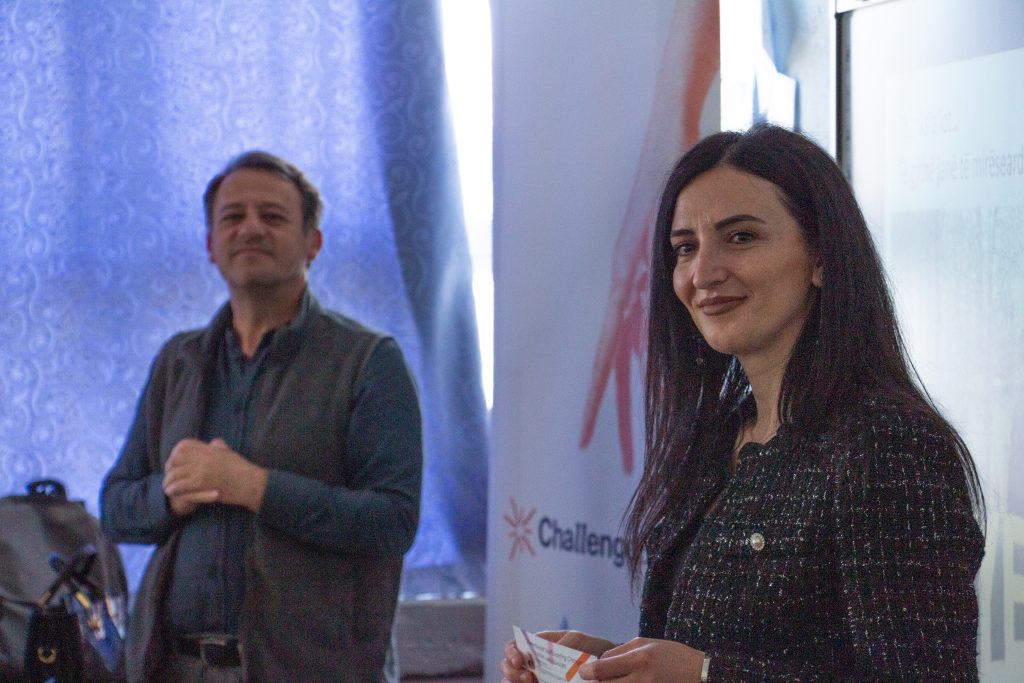
Within the framework of the ChallengeEU initiative, South East European University, in cooperation with the Municipality of Gostivar as an Associate Partner of the ChallengeEU Alliance, launched a youth awareness campaign in the Medical High School and the Gymnasium in Gostivar. During the event, Assoc. Prof. Dr. Shpresa Alija, acting as a M.A.R.K.E.T. Officer, presented the ChallengeEU project, with particular emphasis on its third pillar focused on Mental Health and Wellbeing, highlighting the importance of promoting healthy lifestyles and supporting the wellbeing of young people. The neuropsychiatric expert Prof. Dr. Naser Durmishi delivered an interactive lecture addressing the risks and consequences associated with the consumption of energy drinks and illegal substances among young people. The session emphasized the importance of prevention, awareness and early education in fostering healthier behaviours among adolescents. Representatives of the Municipality of Gostivar also attended the activity, reaffirming the importance of cooperation between local institutions and academia in advancing youth education, mental health and social wellbeing. As part of the ongoing campaign, similar awareness activities are planned to continue in two additional high schools in Gostivar, namely the Economic School and the Industrial School. The students demonstrated significant interest in the discussed topics and actively engaged throughout the sessions through questions and discussions, contributing to a highly interactive and meaningful event. The activity reflects the mission of ChallengeEU to connect universities, regional stakeholders and local communities in addressing real-life challenges that affect society. By promoting cooperation between academia and local partners, the Alliance supports initiatives that contribute to healthier, more inclusive and more resilient communities.
Cracking the Job Market: SEEU Connects Students with Industry Experts
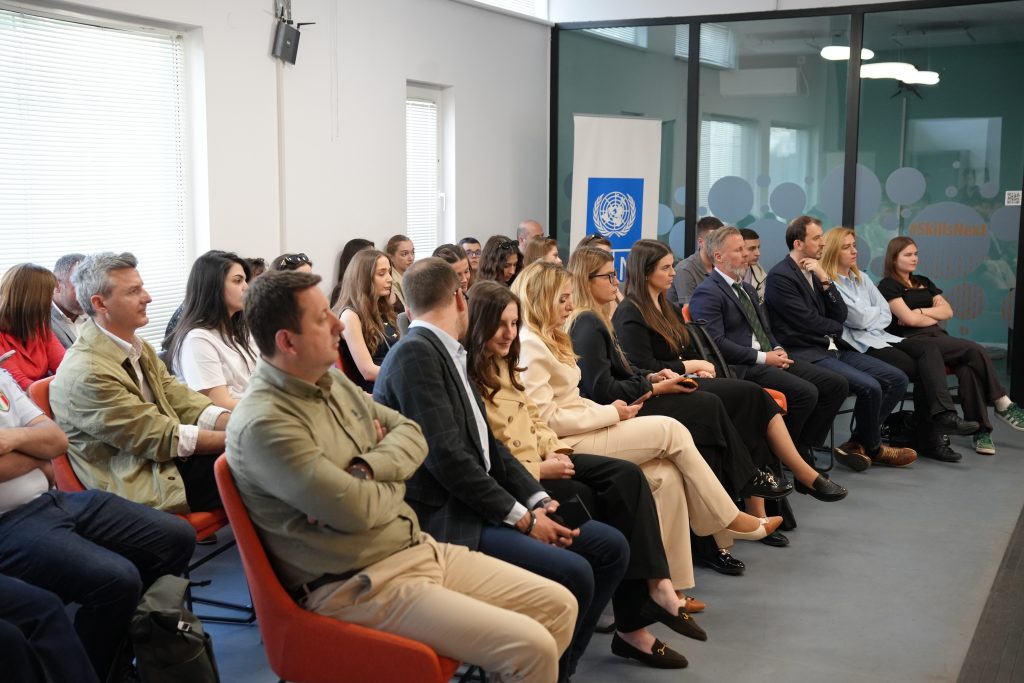
South East European University (SEEU), within the framework of the ChallengeEU alliance, organized the session “Preparing the Next Generation: Cracking the Job Market” as part of its Career Fair activities, bringing together students, staff, and industry professionals for an engaging discussion on career development and employment opportunities. The hybrid event, held at the Future Skills Center, featured distinguished speakers from leading organizations. Vigan Ademi, Head of Group Recruitment and Employer Branding at EVN, shared insights into hiring strategies within a major international energy company and highlighted what employers look for in candidates entering the workforce. Predrag Karanfiloski, Recruitment Officer at Coordea, offered practical perspectives on recruitment processes in the outsourcing sector, emphasizing adaptability and communication skills in international work environments. From a career development perspective, Anita Kochovska, Career Advisor at the Association of Career Development Advisors (ASK), focused on guiding students in building clear career paths, strengthening employability skills, and making informed professional decisions. Meanwhile, Nebi Mustafi, CEO of M House, provided an entrepreneurial perspective, sharing his experience in building and managing a successful brand in North Macedonia and encouraging students to think creatively and pursue opportunities beyond traditional career paths. Throughout the session, participants had the opportunity to learn from real-life experiences and gain practical advice on entering and navigating today’s competitive job market. The discussion highlighted the importance of continuous learning, resilience, and proactive engagement in shaping successful careers. As part of the ChallengeEU initiative, the event was open to students from partner universities, further strengthening collaboration and knowledge exchange across institutions. This session reflects SEEU’s ongoing commitment to supporting students’ career readiness by connecting academia with industry and creating opportunities for meaningful professional engagement.
Advancing Digital Transformation through ChallengeEU: Open Lectures at SEEU
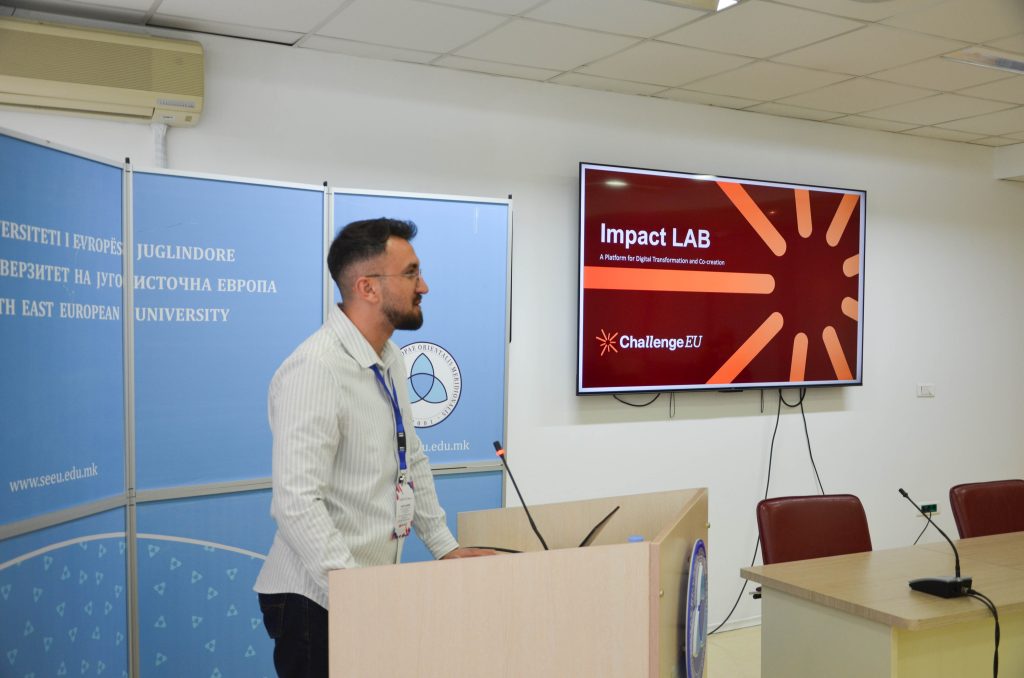
A series of open lectures was held at South East European University, highlighting key developments in digital transformation and collaborative learning within the ChallengeEU alliance. Delivered as part of a dedicated ChallengeEU track titled “Digital Transformation through ChallengeEU” within a broader international symposium, the sessions represented a distinct contribution of ChallengeEU staff to a wider public event, engaging information professionals, academics, and external stakeholders. Through these sessions, the initiative moved beyond internal promotion by presenting concrete digital infrastructures and tools developed within the alliance. Prof. Dr. Mennan Selimi, in his lecture “Digital Foundations of ChallengeEU: Building the Joint E-Campus,” introduced the concept of the Joint E-Campus as a shared digital foundation. This was followed by Samir Shabani with “Online Learning through the ChallengeEU Course Catalogue,” where he demonstrated the practical use of the platform for cross-institutional learning. In addition, Hamit Kamberi presented “Impact Lab: A Platform for Digital Transformation and Co-Creation,” showcasing its functionality as a space for innovation, collaboration, and engagement with a broader network of partners and users. By opening these discussions to an international audience and embedding them within a larger collaborative event, the ChallengeEU track contributed to public engagement and knowledge exchange, while also disseminating the alliance’s tangible outputs and results to stakeholders beyond its immediate institutional framework. The lectures were organized as part of the International Symposium “Empowering Information Professionals: Digital Transformation through Collaboration between Türkiye, Norway, and North Macedonia,” held from 20–25 April 2026 and hosted by the Max van der Stoel Library, SEEU, which brought together information professionals, academics, and experts from Türkiye, Norway, and North Macedonia to exchange knowledge and best practices in digital librarianship, open science, and data management, while presenting innovative digital initiatives.
SEEU Hosts Second Session of ChallengeEU Youth Mental Health Initiative in Skopje
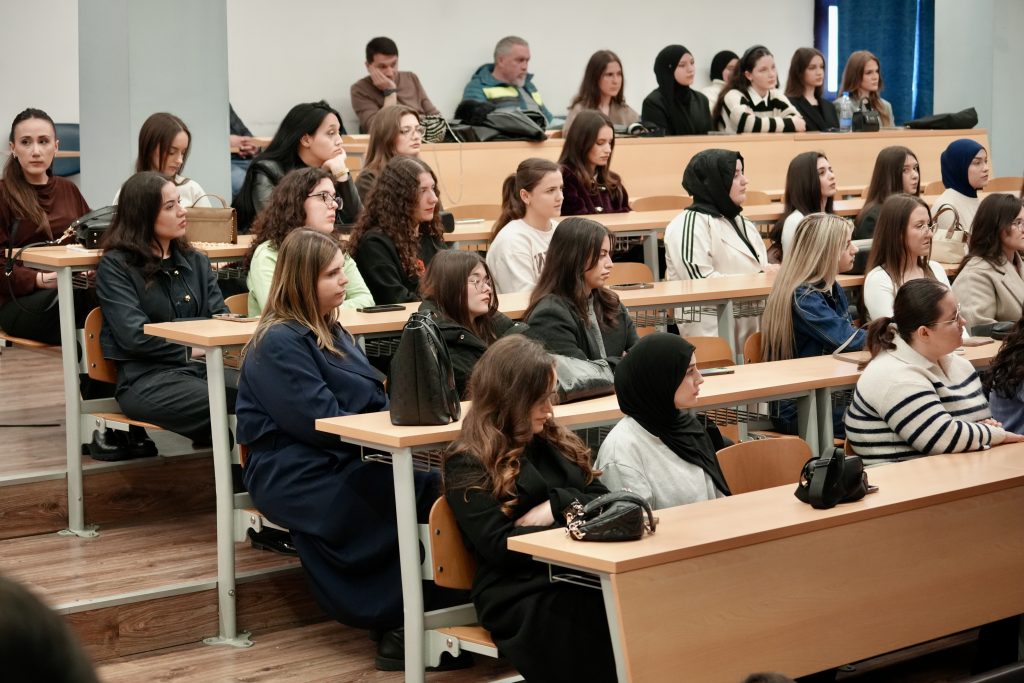
Following its successful launch in Tetovo, the ChallengeEU Youth Mental Health Initiative continued its momentum with a second impactful session held at the South East European University (SEEU) Skopje campus on April 2. The event opened with a focus on the ODEI initiative, led by Prof. Arta Mero in her role as ODEI Officer. She reaffirmed the university’s commitment to the values of Opportunity, Diversity, Equity, and Inclusion, emphasizing that mental health is an essential component of a truly inclusive academic community. Impact Lab in focus: Led by Prof. Shpresa Alija, the session provided students with clear pathways to access the Lab’s resources. The discussion highlighted the vital role of the M.A.R.K.E.T. Officer in bridging the gap between institutional research and the student community, ensuring that support is genuinely accessible. Expert clinical insights: Prof. Dr. Naser Durmishi, a distinguished neuropsychiatrist and SEEU professor, delivered an in-depth overview of the neurological trends and stressors unique to Generation Z. His lecture offered valuable clinical insights and practical strategies for building resilience in an increasingly complex world. With both the Tetovo and Skopje sessions now concluded, the ChallengeEU initiative has successfully sparked a vital cross-campus dialogue, ensuring that mental health remains at the forefront of the student experience.
Advancing ODEI Through Legal Education: The Impact of Mentorship and Student Engagement

In an era where legal education is increasingly called upon to address real-world challenges, the role of mentorship and student engagement has never been more vital. This article highlights how the principles of Opportunity, Diversity, Equity, and Inclusion (ODEI) can be effectively advanced through academic work that bridges theory and practice. By showcasing student research on domestic violence and the guidance of dedicated faculty, it demonstrates how legal education can move beyond the classroom to drive meaningful social change. We proudly recognize and commend the outstanding work of students from South East European University, Iva Stefanovska and Bojana Velkovska, authors of the article “From Silence to Visibility: The Role of Diversity, Equity and Inclusion in Preventing Domestic Violence.” This contribution reflects the core mission of our University: to foster academic excellence that is closely connected to societal impact. The students’ work demonstrates not only a high level of legal analysis, but also a strong sense of social responsibility. By addressing domestic violence through data, institutional critique, and a human rights perspective, they contribute meaningfully to raising awareness and fostering a culture of reporting, protection, and accountability. We particularly emphasize the essential role of their mentor, Prof. Dr. Arta Mero, Professor of Family Law and Inheritance Law and ODEI Officer at South East European University. Through her dedicated mentorship, students are guided not only to understand the legal framework, but also to critically engage with the realities behind the law. Her approach reflects the values of modern legal education, combining doctrinal knowledge with clinical insight, ethical responsibility, and a strong commitment to social justice. As ODEI Officer, her leadership ensures that the principles of Opportunity, Diversity, Equity, and Inclusion are not merely abstract ideals, but are actively integrated into teaching, research, and student engagement. This work is a clear example of how mentorship and institutional values come together to produce meaningful outcomes. The students’ analysis highlights the complexity of domestic violence, including its less visible forms, and underscores the need for stronger institutional coordination and more inclusive support systems. At the same time, the article powerfully advances the principles of ODEI: Such initiatives reflect our University’s commitment to developing future legal professionals who are not only knowledgeable, but also empathetic, engaged, and ready to contribute to a more just and inclusive society. We remain proud of our students and their mentor, whose work embodies the transformative power of education—turning knowledge into action, and action into societal change. Below you can read the full version of the article. FROM SILENCE TO VISIBILITY: THE ROLE OF DIVERSITY, EQUITY AND INCLUSION IN PREVENTING DOMESTIC VIOLENCE Domestic violence in North Macedonia is increasingly coming out of the shadows, and recent data show a concerning trend. In 2024 alone, 101 cases of psychological violence were reported—almost twice as many as in the previous two years, when 57 cases were recorded in 2022 and 56 in 2023. This increase may indicate two things: that violence is indeed rising, but also that victims are increasingly recognizing it and feel more encouraged to report it. Particularly concerning are the data from the Sector for Internal Affairs in Tetovo. In the period from 2022 to 2024, a total of 1,667 cases of domestic violence were reported, along with 28 cases of sexual violence. Although the number of sexual violence cases is significantly lower, an upward trend is evident, especially in cases involving minor victims. An additional problem is that data from different institutions often do not match. This points to insufficient inter-institutional coordination and the absence of a unified, functional system for monitoring cases of violence. Violence Has Many Faces and Not All Leave Bruises When discussing domestic violence, physical injury is often what first comes to mind. However, the reality is much broader. Psychological control, economic dependence, constant threats, humiliation, and forced sexual relations are also forms of violence that leave deep consequences, even though they are often not visible. Victims can be women, men, children, and elderly individuals—especially those who are economically or emotionally dependent on the abuser. Many do not recognize their situation as violence, as it often develops gradually and is disguised as “care,” “control out of love,” or “jealousy.” The reasons why victims remain silent are often similar: fear of retaliation, financial dependence, feelings of shame or guilt, as well as distrust in institutions. It is precisely this combination of factors that keeps violence hidden behind closed doors. Why ODEI Can Be Part of the Solution One of the concepts increasingly mentioned in violence prevention is ODEI—an acronym for Opportunity, Diversity, Equity, and Inclusion. This approach is applied by institutions and organizations worldwide to create fairer and more inclusive societies, where all individuals have equal access to rights, protection, and support. In the context of domestic violence, the principles of ODEI imply several important aspects. First, diversity reminds us that violence can occur in any family, regardless of education, social status, or cultural background. Second, equity ensures that every victim has fair and effective access to protection, institutional assistance, and legal support. Third, inclusion involves creating an environment in which victims are encouraged to speak out and seek help without fear of judgment or marginalization. When these principles are absent, violence is easily normalized. A culture of silence emerges, cases go unreported, and victims become isolated. Over time, patterns of violence are repeated and passed down from generation to generation. How the Findings Were Reached This research is based on an analysis of institutional reports from the Ministry of Internal Affairs and social services, available statistical data for the period 2022–2024, as well as information from crisis centers, non-governmental organizations, and victim support and protection programs. The data were compared to identify trends, discrepancies, and systemic weaknesses. The conclusion is clear: domestic violence is not a private matter, but a social responsibility. Greater visibility, accurate data, and the application of ODEI principles are the first steps from silence to protection, and from silence to justice. Combating domestic violence is not only about punishing perpetrators,
The M.A.R.K.E.T. Student Pop-Up: Launch of ChallengeEU Youth Mental Health Initiative at SEEU
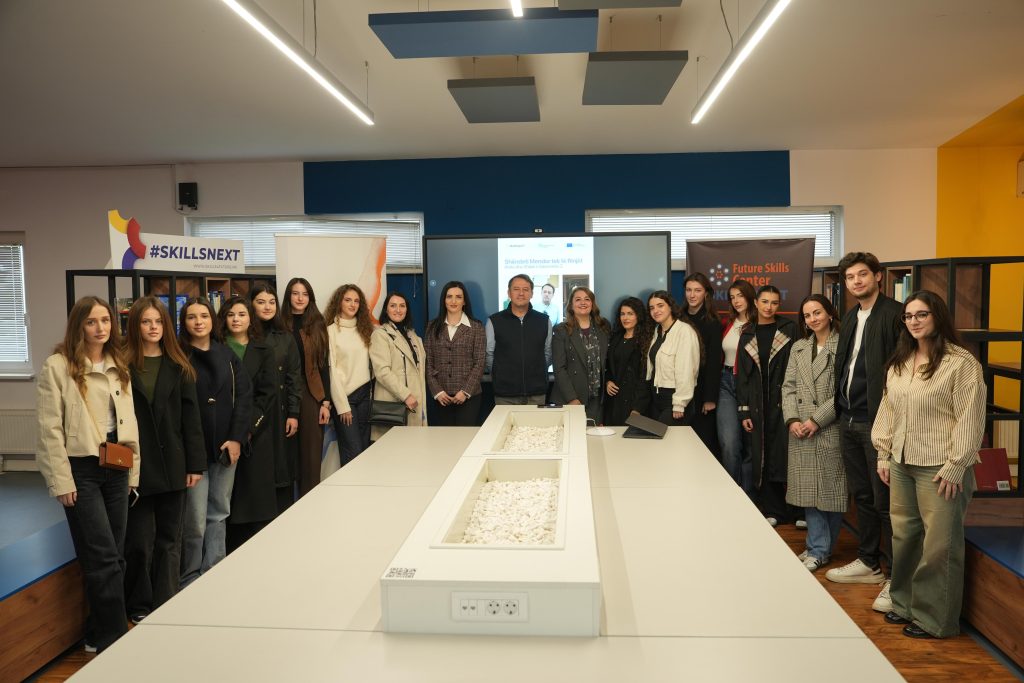
The ChallengeEU project’s initiative on youth mental health launched yesterday at the Tetovo Campus, marking a significant step in addressing the psychological complexities facing Generation Z. The event opened with a focus on the ODEI initiative, where Prof. Arta Mero emphasized South East European University’s (SEEU) commitment to the values of Opportunity, Diversity, Equity, and Inclusion. This framework reflects the commitment of the ChallengeEU pillar to fostering a campus culture where mental health is treated as an essential component of a truly inclusive academic community. The M.A.R.K.E.T. Student Pop-Up served as a hands-on outreach activity aimed at directly connecting students with available mental health support. A key focus was introducing students to the Impact Lab, led by Prof. Shpresa Alija, informing them about its purpose, the resources it offers, and how to register and make use of its services. The M.A.R.K.E.T. Officer role was also highlighted as the key bridge between the Impact Lab’s institutional research and the student community, ensuring these resources are clearly communicated and genuinely accessible. The highlight of the session was an expert lecture by Prof. Dr. Naser Durmishi, a distinguished neuropsychiatrist and SEEU professor. Dr. Durmishi provided a deep dive into the neurological trends shaping Gen Z, offering clinical insights into the unique stressors this generation faces while providing actionable strategies for resilience. With the Tetovo session successfully concluded, the dialogue continues on April 2, at the Amphitheater on the Skopje Campus from 11:00 to 12:30, inviting the community to further engage with these critical topics.