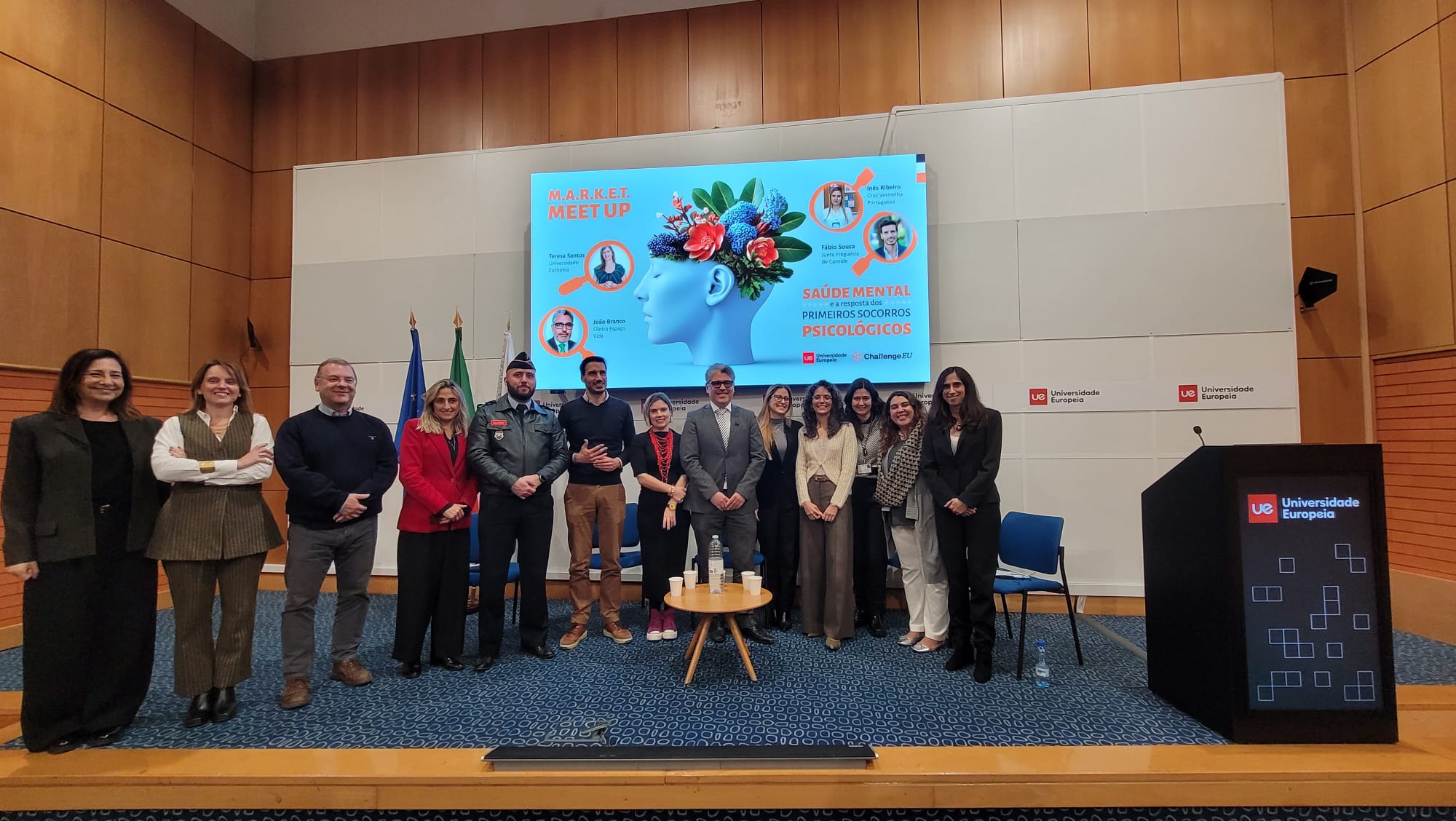
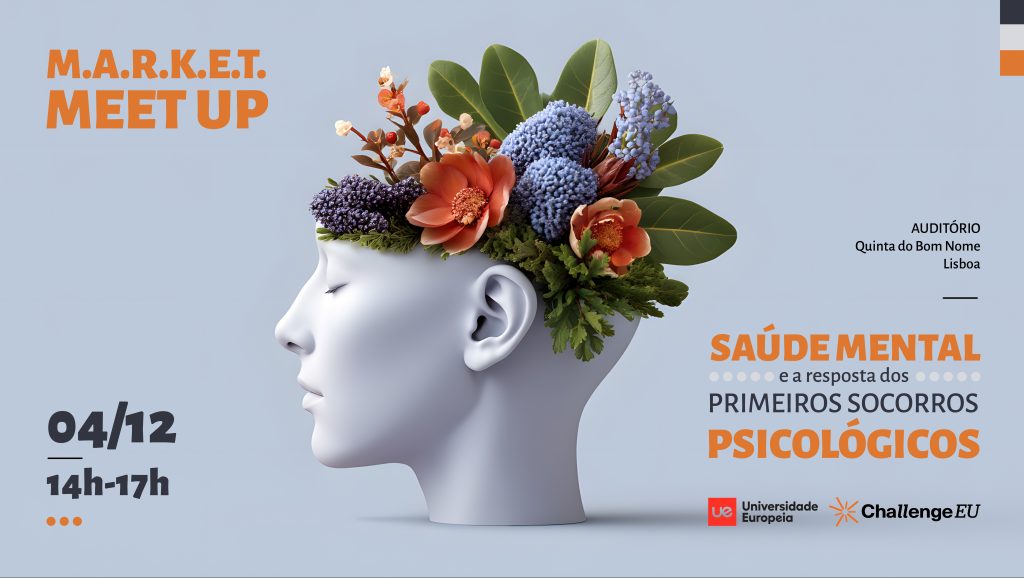
On 4 December, Quinta do Bom Nome, one of Universidade Europeia’s campuses in Carnide, hosted a vibrant gathering that brought together 50 participants: partners in the ChallengeEU Alliance, academia (academic staff, administrative staff and students), civil society, political decision-makers and economic actors. The group engaged in a frank, action-oriented conversation on mental health and psychological first aid (PFA).
Opening remarks were delivered by Dr Rita Freitas, ChallengeEU Chief Implementation Officer at Universidade Europeia. She framed the Quadruple Helix model as a collaborative framework that brings together academia, government, civil society and the economy to reflect on shared challenges and design practical solutions across the initiative’s three Smart Specialisation Areas: Health & Well-Being, Smart Digitalisation and Sustainable Futures. Professor Dr Sofia Lopes hosted the event throughout the day, ensuring smooth transitions between segments and speakers. The roundtable was moderated by Professor Dr Lisa Roque, a member of the ChallengeEU community and a psychology faculty member, who placed PFA at the centre of the discussion and emphasised the need to build capacity to respond competently when someone experiences a critical event.
Quadruple Helix in action
The conversation gained depth as representatives from each “vertex” of the helix sat side by side. On behalf of academia, Prof Teresa Santos, Dean of the Faculty of Health Sciences, underscored the importance of mental-health literacy and transversal training – integrating competencies such as active listening, emotional regulation and crisis management into curricula and professional development programmes for students, faculty and staff. Representing civil society, Dr Inês Ribeiro of the Portuguese Red Cross highlighted the importance of timely responses and certified training in PFA, especially in crisis contexts, and the value of normalising these care practices as part of collective preparedness. From the local economy, Dr João Branco of Clínica Espaço Vida – Clínica Médica shared an integrated clinical perspective (general practice, psychiatry, nutrition and psychology), emphasising the link between prevention, triage and referral, as well as the value of accessible protocols connecting campus services, community support and specialised follow-up. The political dimension was represented by Fábio Sousa, Vice-President of the Carnide Parish Council, who explained how the council engages with local residents and stressed the importance of shared involvement – building proximity, networks and collective responsibility as pillars of an effective public response.

Regional voices join the dialogue
In a second round, the dialogue opened to regional stakeholders, reinforcing the reach of the model and the commitment to translate intentions into consistent practice. Firefighter Miguel Pereira, from the Sacavém Volunteer Firefighters, brought frontline experience, showing how early emotional and behavioural responses can make a tangible difference in mitigating harm and guiding decisions under pressure. Pedra Base – Consulting & Training, represented by Sara Carvalha and Daniela Guerreiro, presented first-aid training solutions for the corporate sector, advocating the implementation of internal protocols, response plans and ongoing team capacity-building.
From expertise to practice: building mental-health literacy and response capacity
A key takeaway resonated throughout the day: anyone can provide psychological first aid – provided they have the competence to do so. In many settings, equipping communities with PFA skills can help address shortages in resources and existing capacity, strengthening empathy, mutual support and immediate responses to critical events – alongside physical first aid when necessary. This shared vision turns the campus into a living laboratory of solutions, with impact both within and beyond the university.
The closing segment opened the floor and turned the gathering into a productive brainstorming session, generating proposals that set direction and ambition: PFA modules embedded in curricula and continuous training; campus response plans and referral protocols aligned with local partnerships; mental-health literacy campaigns combined with hands-on skills training; and monitoring and impact-evaluation mechanisms grounded in data and continuous improvement. It became clear that Universidade Europeia and ChallengeEU are taking the concept off the page and into practice: when academia, civil society, political decision-makers and the economy sit at the same table – with informed moderation, careful hosting and shared objectives – the outcomes can be applicable, replicable and sustainable. More than a debate, this meet-up marked a turning point: empowering people to act with competence and care, precisely when it matters most.