To Improve Communication: UWM Hosted Two Online Events for ChallengeEU Community
The University of Warmia and Mazury, coordinator of the ChallengeEU Mentoring Programme, organised two online events dedicated to communication in mentoring and inclusive mentoring, which took place on 17 April 2026. The workshop titled “Communication in the context of mentoring” was led by Dr Monika Cichmińska from the UWM. “I designed these workshops in a way that would help raise awareness of how important the words we use to communicate with each other are. Despite the online format, participants practiced, among other things, active listening and formulating precise messages—ones that are not judgmental but based on facts. The goal was to learn how to become a more effective ‘communicator.’ I hope these sessions provided a foundation for further exploration of these topics,” explained Dr Monika Cichmińska. Dr Monika Cichmińska is an Assistant Professor at the Institute of Linguistics in the Department of Humanities at the University of Warmia and Mazury in Olsztyn, Poland. Her academic interests include cognitive semantics, especially the use of conceptual metaphors and multimodality in popular culture, the language of emotions, and different aspects of communication. She is also interested in applied linguistics, especially the influence of affective factors in learning, and brain-friendly teaching and learning. She enjoys working with people, and likes to combine theory (linguistics, psychology and neurosciences) with practice (teaching English). In her free time, she likes to read, learn new things, go to the cinema and watch TV series. On the same day, there was also an open online lecture dedicated to inclusive mentoring in the context of bridging academia and business. The workshop, titled “Inclusive mentoring for interdisciplinary and international career development: bridging academia and industry,” was led by Dr Hafizur Rahman from Mid Sweden University (MIUN). The researcher shared his experience stemming from an interdisciplinary education and professional background that included academia, industry, international collaboration, and active involvement in mentoring within the ChallengeEU alliance. His lecture focused on inclusive mentoring, which allowed participants to recognize its benefits for career development, also at the international level. During the session the worlds of academia and business were brought together. Dr Hafizur Rahman is a Researcher and Project Manager at Mid Sweden University, Sweden, working at the interface of chemical engineering, sustainable materials, and industrial innovation. His research focuses on fiber-based materials, resource-efficient processes, and advanced material characterization in close collaboration with industry and international research infrastructures. With a multidisciplinary academic background and professional experience spanning academia, industry, and international collaboration, he is actively engaged in mentoring within the ChallengeEU program. His mentoring focuses on helping early-career researchers navigate interdisciplinary and international environments, bridge academia and industry, and develop impactful, sustainable career pathways. The workshops were mandatory for participants of the BIP programme entitled “Inclusive Mentoring and Career Development for a Diverse Academia”, but at the same time they were open to all members of the ChallengeEU alliance community. Main photo: www.freepik.com
ChallengeEU Research Matchmaking Workshop Launches New Collaborative Initiatives
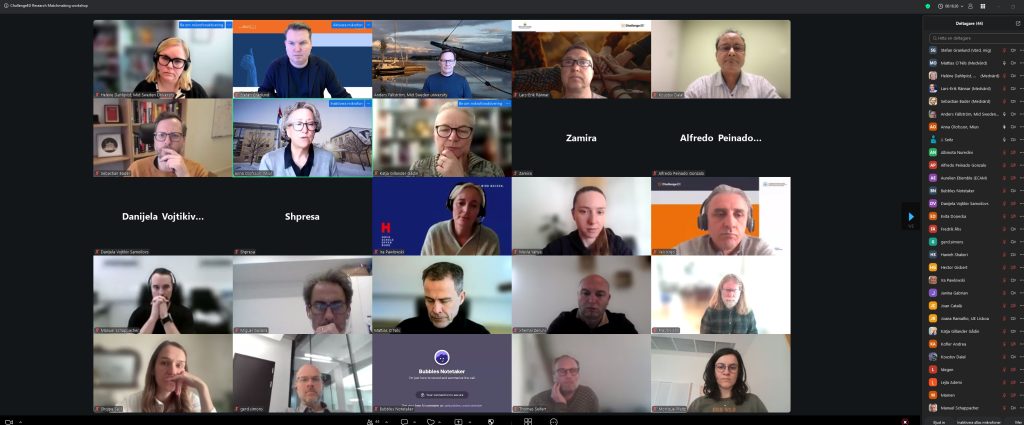
The first ChallengeEU Research Matchmaking Workshop, hosted by Mid Sweden University on 13 April, brought together 44 researchers from across the alliance to initiate new collaborations and explore joint research opportunities. Following a joint introduction, participants worked in four thematic breakout groups covering areas such as IoT and AI, additive manufacturing, anxiety, depression, stress and trauma, and digital health, health economic evaluations, and policy. The interactive format enabled participants to quickly identify shared interests, complementary expertise, and potential pathways for future cooperation. For example, in the IoT, AI and Electrification group, participants aligned around AI applications, data-driven development, and the role of AI in education and organisations. The group has already established a shared communication channel and scheduled a follow-up meeting in June to continue developing ideas. In the Metal Additive Manufacturing group, researchers connected across the full value chain—from materials and processes to industrial applications. Key collaboration areas include advanced materials such as tungsten, characterisation methods, and educational uses of 3D printing. The group also identified several relevant funding opportunities and has planned a follow-up meeting in late May. Overall, the workshop marked a strong starting point for deeper research collaboration within ChallengeEU, with several concrete follow-up activities already underway.
Inclusive Mentoring in Action: ChallengeEU Alliance Members Meet in Olsztyn
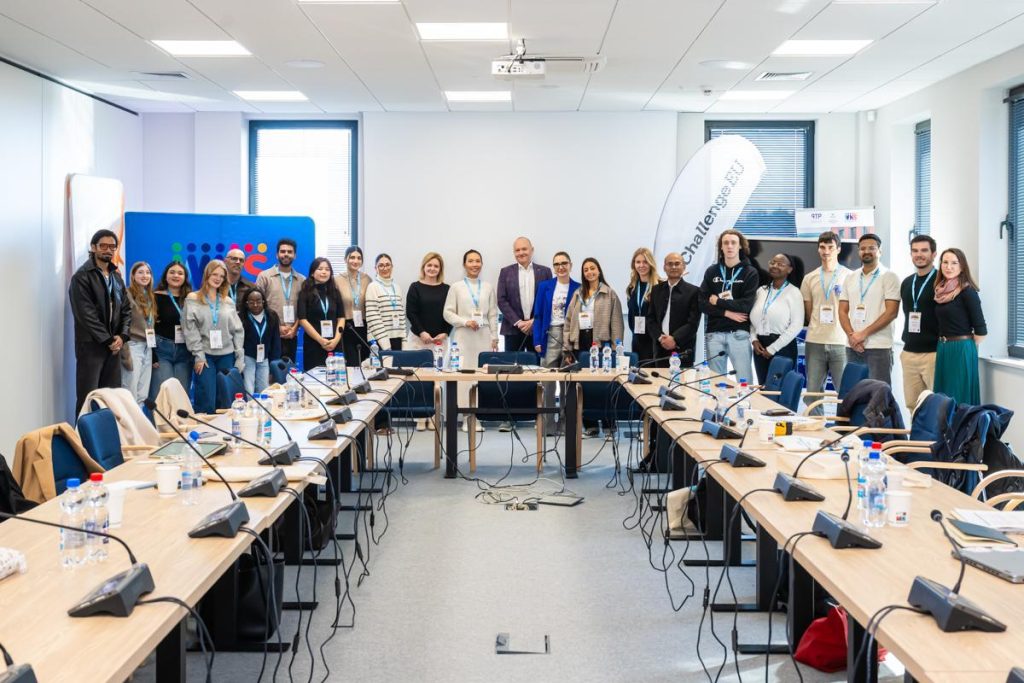
The Faculty of Social Sciences at the University of Warmia and Mazury hosted an Erasmus+ BIP Programme entitled “Inclusive Mentoring and Career Development for a Diverse Academia”. Eighteen students from universities that form the ChallengeEU alliance came to Olsztyn. The students represented Universidade Europeia (UEL), Hochschule Offenburg (HSO, the alliance leader), and Latvia University of Life Sciences and Technologies (LBTU). The programme also involved academic staff: Dr Hafizur Rahman from Mid Sweden University (MIUN), Professor Maria Rita Albergaria, and Dr Mafalda Leitão (both from UEL). Without leaving anyone behind “The main theme of this BIP programme was inclusive mentoring, so we focused on the idea of ODEI (openness, diversity, equity, inclusion). Around these values, we built the programme of the event, which included workshops, lectures, and a trip to the Invisible House in Toruń, where everyone can experience what everyday life is like for people who are blind,” said Professor Katarzyna Ćwirynkało from the Faculty of Social Sciences at UWM and ODEI Officer in the ChallengeEU alliance. The principles of inclusive mentoring were explained to the BIP programme participants by Dr Monika Ryndzionek from the Faculty of Social Sciences, who works in the ODEI team within the ChallengeEU alliance. “We discussed the conditions that must be met for mentoring programmes to be considered inclusive. The primary goal of inclusive mentoring is to support individuals who, for various reasons, may be at risk of exclusion, feel overlooked, or face different challenges at university. The idea is to respect diversity and help such individuals navigate the academic community—regardless of their social, identity-related, or demographic characteristics,” explained Dr Monika Ryndzionek. Participants developed practical skills in mentoring communication, giving feedback, and setting boundaries. They also explored strategies for building trust, psychological safety, and intercultural sensitivity, while reflecting on their professional identity and leadership potential within an inclusive academic environment. Workshops were led by Dr Czesław Kiński (“Feed Back, Feed Forward: A Quick Guide to Giving, Getting, and Using Feedback”), Dr Jacek Łagun (“Let’s Get Emotional… in a Mentoring Space: Building an Emotionally Aware Learning Environment”), and Agata Przyborowska, MA, who addressed the topic of procrastination. Professor Maria Rita Albergaria led a seminar on coping with difficult interpersonal situations, while Dr Mafalda Leitão facilitated interactive sessions on observing and analysing support dynamics. Dr Hafizur Rahman focused on inclusive mentoring in multicultural and multidisciplinary environments. A wealth of knowledge and experience Angelo Valente from Universidade Europeia emphasised that the programme helped him better understand other cultures. “I think it is very important to talk about equality and inclusivity, because we live in an increasingly globalised world. We need to learn to respect other cultures without losing our own identity,” he said. Vishwajeet Kumbhar from Hochschule Offenburg highlighted the interactive nature of the programme. “Once I arrived, I realised that many interactive sessions had been planned, which was quite different from my usual classes. The programme focused not only on mentoring, but also on personal development. I particularly enjoyed the sessions where Polish students joined us and we worked together,” he said. Renāte Ruska, a ChallengeEU Student Ambassador from LBTU, also took part in the programme at the Faculty of Social Sciences at the University of Warmia and Mazury. “It was wonderful to learn more about ODEI. The lectures and workshops we attended inspired me to move beyond stereotypical thinking. The trip to Toruń was also very educational—we were able to experience, even if only for a moment, what it is like to be blind. It completely changes your perspective and helps you better understand the challenges such individuals face in everyday life,” said Renāte. Renāte also admitted that the competences she gained during the Blended Intensive Programme at UWM will allow her to become an even better ambassador of the ChallengeEU alliance. “We are diverse, and we must respect that by approaching each person individually. I am also glad that, as an ambassador, I had the opportunity to meet people from other universities within the alliance and see how different—and at the same time similar—we are. The ChallengeEU alliance brings together universities that are distant not only geographically but also culturally, and it is inspiring to see how each of us can contribute something and how we can build a community that shares the same values,” she emphasised.