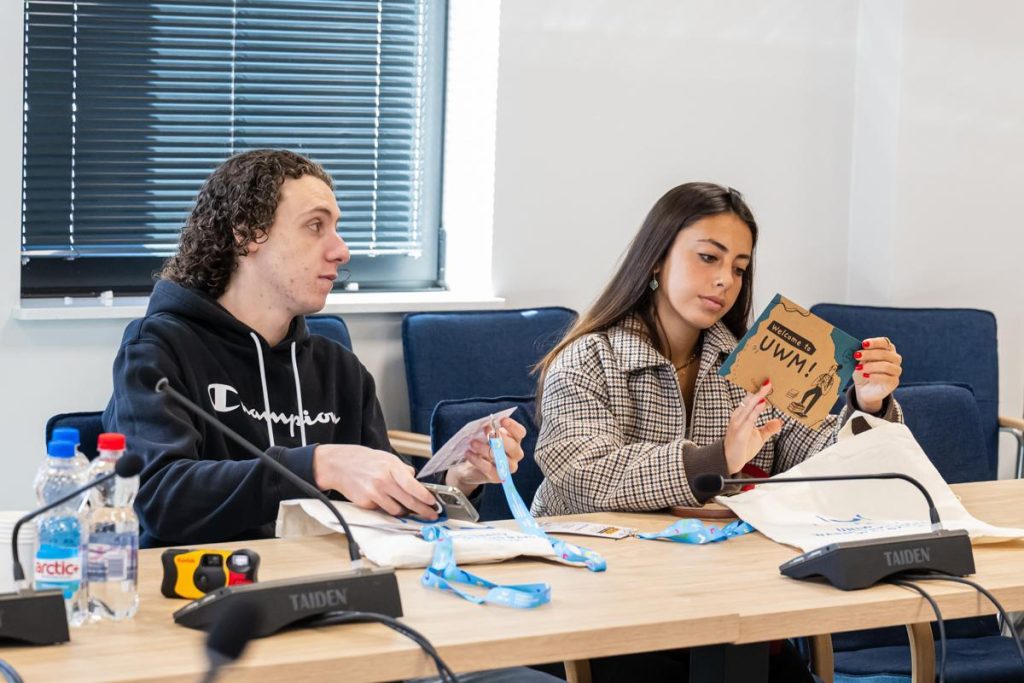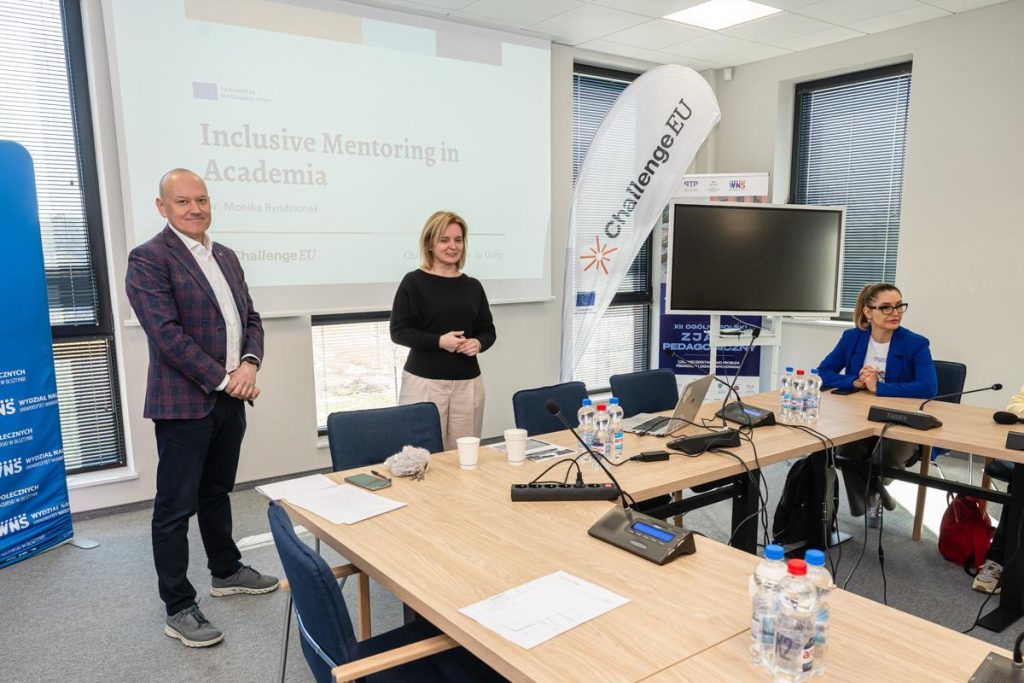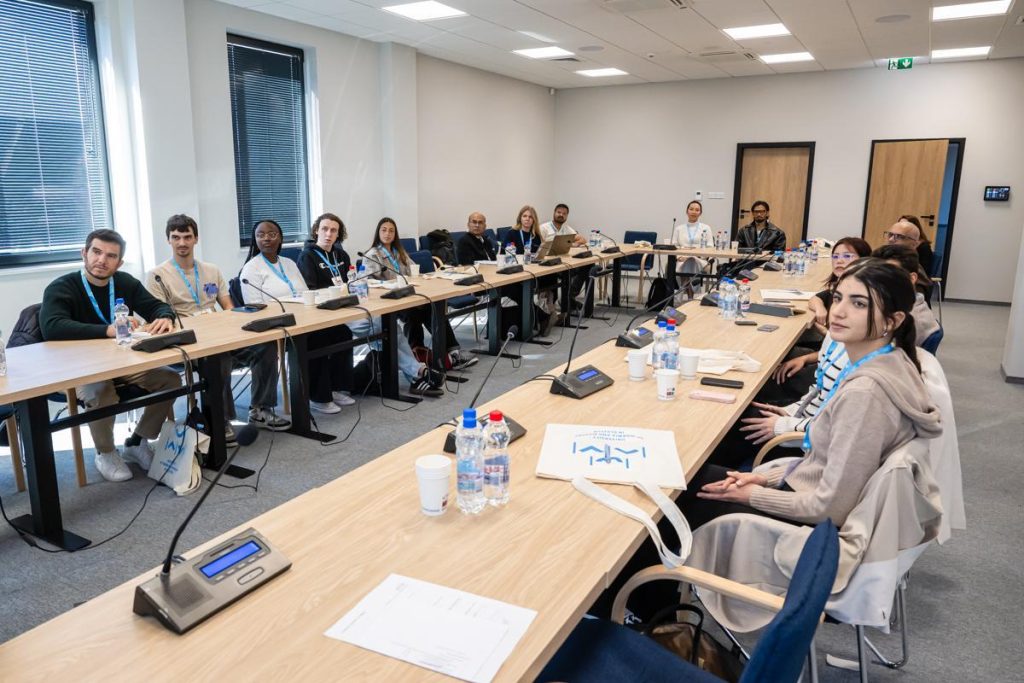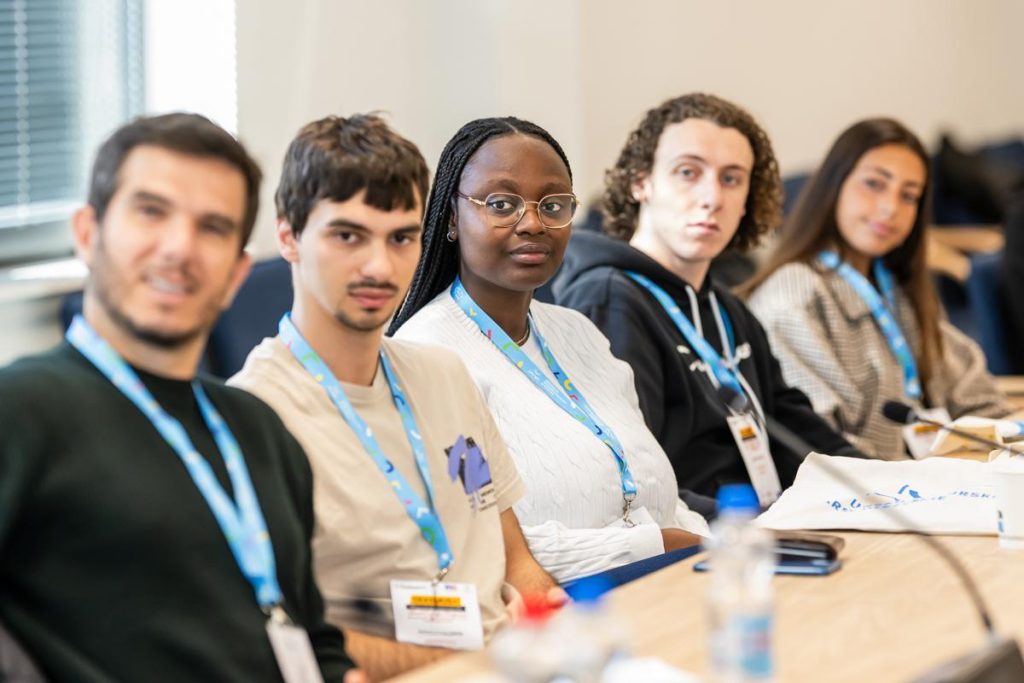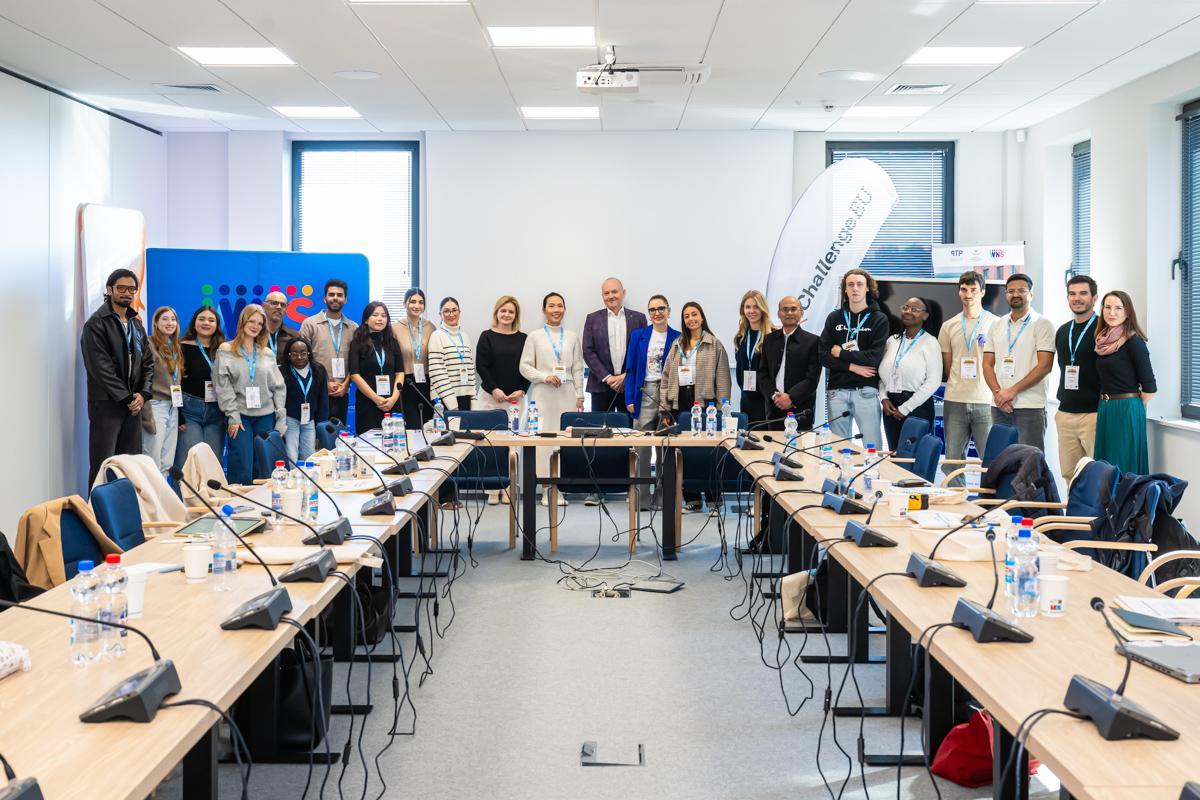
The Faculty of Social Sciences at the University of Warmia and Mazury hosted an Erasmus+ BIP Programme entitled “Inclusive Mentoring and Career Development for a Diverse Academia”. Eighteen students from universities that form the ChallengeEU alliance came to Olsztyn.
The students represented Universidade Europeia (UEL), Hochschule Offenburg (HSO, the alliance leader), and Latvia University of Life Sciences and Technologies (LBTU). The programme also involved academic staff: Dr Hafizur Rahman from Mid Sweden University (MIUN), Professor Maria Rita Albergaria, and Dr Mafalda Leitão (both from UEL).
Without leaving anyone behind
“The main theme of this BIP programme was inclusive mentoring, so we focused on the idea of ODEI (openness, diversity, equity, inclusion). Around these values, we built the programme of the event, which included workshops, lectures, and a trip to the Invisible House in Toruń, where everyone can experience what everyday life is like for people who are blind,” said Professor Katarzyna Ćwirynkało from the Faculty of Social Sciences at UWM and ODEI Officer in the ChallengeEU alliance.
The principles of inclusive mentoring were explained to the BIP programme participants by Dr Monika Ryndzionek from the Faculty of Social Sciences, who works in the ODEI team within the ChallengeEU alliance.
“We discussed the conditions that must be met for mentoring programmes to be considered inclusive. The primary goal of inclusive mentoring is to support individuals who, for various reasons, may be at risk of exclusion, feel overlooked, or face different challenges at university. The idea is to respect diversity and help such individuals navigate the academic community—regardless of their social, identity-related, or demographic characteristics,” explained Dr Monika Ryndzionek.
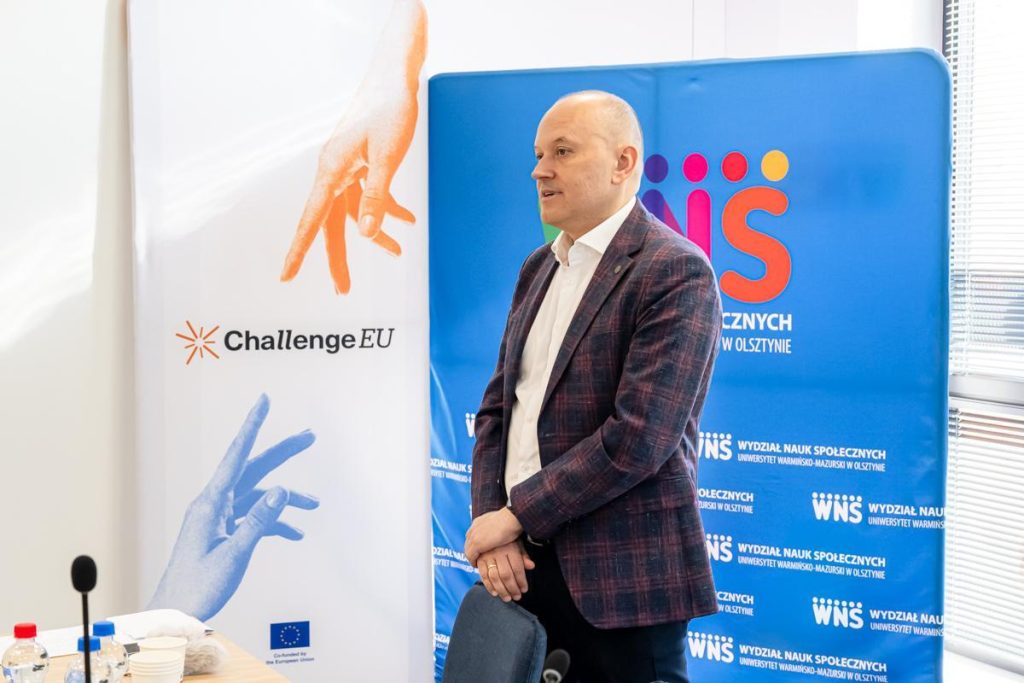
Participants developed practical skills in mentoring communication, giving feedback, and setting boundaries. They also explored strategies for building trust, psychological safety, and intercultural sensitivity, while reflecting on their professional identity and leadership potential within an inclusive academic environment.
Workshops were led by Dr Czesław Kiński (“Feed Back, Feed Forward: A Quick Guide to Giving, Getting, and Using Feedback”), Dr Jacek Łagun (“Let’s Get Emotional… in a Mentoring Space: Building an Emotionally Aware Learning Environment”), and Agata Przyborowska, MA, who addressed the topic of procrastination.
Professor Maria Rita Albergaria led a seminar on coping with difficult interpersonal situations, while Dr Mafalda Leitão facilitated interactive sessions on observing and analysing support dynamics. Dr Hafizur Rahman focused on inclusive mentoring in multicultural and multidisciplinary environments.
A wealth of knowledge and experience
Angelo Valente from Universidade Europeia emphasised that the programme helped him better understand other cultures.
“I think it is very important to talk about equality and inclusivity, because we live in an increasingly globalised world. We need to learn to respect other cultures without losing our own identity,” he said.
Vishwajeet Kumbhar from Hochschule Offenburg highlighted the interactive nature of the programme.
“Once I arrived, I realised that many interactive sessions had been planned, which was quite different from my usual classes. The programme focused not only on mentoring, but also on personal development. I particularly enjoyed the sessions where Polish students joined us and we worked together,” he said.
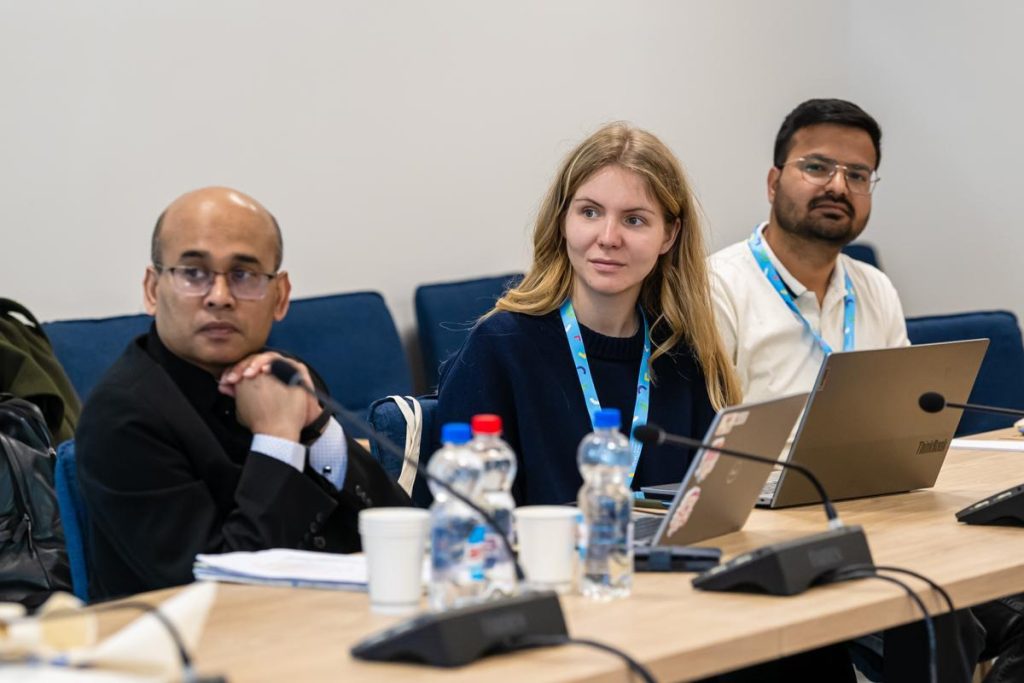
Renāte Ruska, a ChallengeEU Student Ambassador from LBTU, also took part in the programme at the Faculty of Social Sciences at the University of Warmia and Mazury.
“It was wonderful to learn more about ODEI. The lectures and workshops we attended inspired me to move beyond stereotypical thinking. The trip to Toruń was also very educational—we were able to experience, even if only for a moment, what it is like to be blind. It completely changes your perspective and helps you better understand the challenges such individuals face in everyday life,” said Renāte.
Renāte also admitted that the competences she gained during the Blended Intensive Programme at UWM will allow her to become an even better ambassador of the ChallengeEU alliance.
“We are diverse, and we must respect that by approaching each person individually. I am also glad that, as an ambassador, I had the opportunity to meet people from other universities within the alliance and see how different—and at the same time similar—we are. The ChallengeEU alliance brings together universities that are distant not only geographically but also culturally, and it is inspiring to see how each of us can contribute something and how we can build a community that shares the same values,” she emphasised.