ChallengeEU Connects Polish and Latvian Foresters
For five days, experts from the Latvia University of Life Sciences and Technologies (LBTU), hosted by Professor Piotr Mederski, travelled through Polish forests – from the steep slopes of the Silesian Beskids to stands of the famous Tabórz pine. They were looking for answers to one key question: how can Latvia’s forests be prepared for climate change? The visit was made possible thanks to the ChallengeEU Alliance and support from the Polish National Agency for Academic Exchange (NAWA).
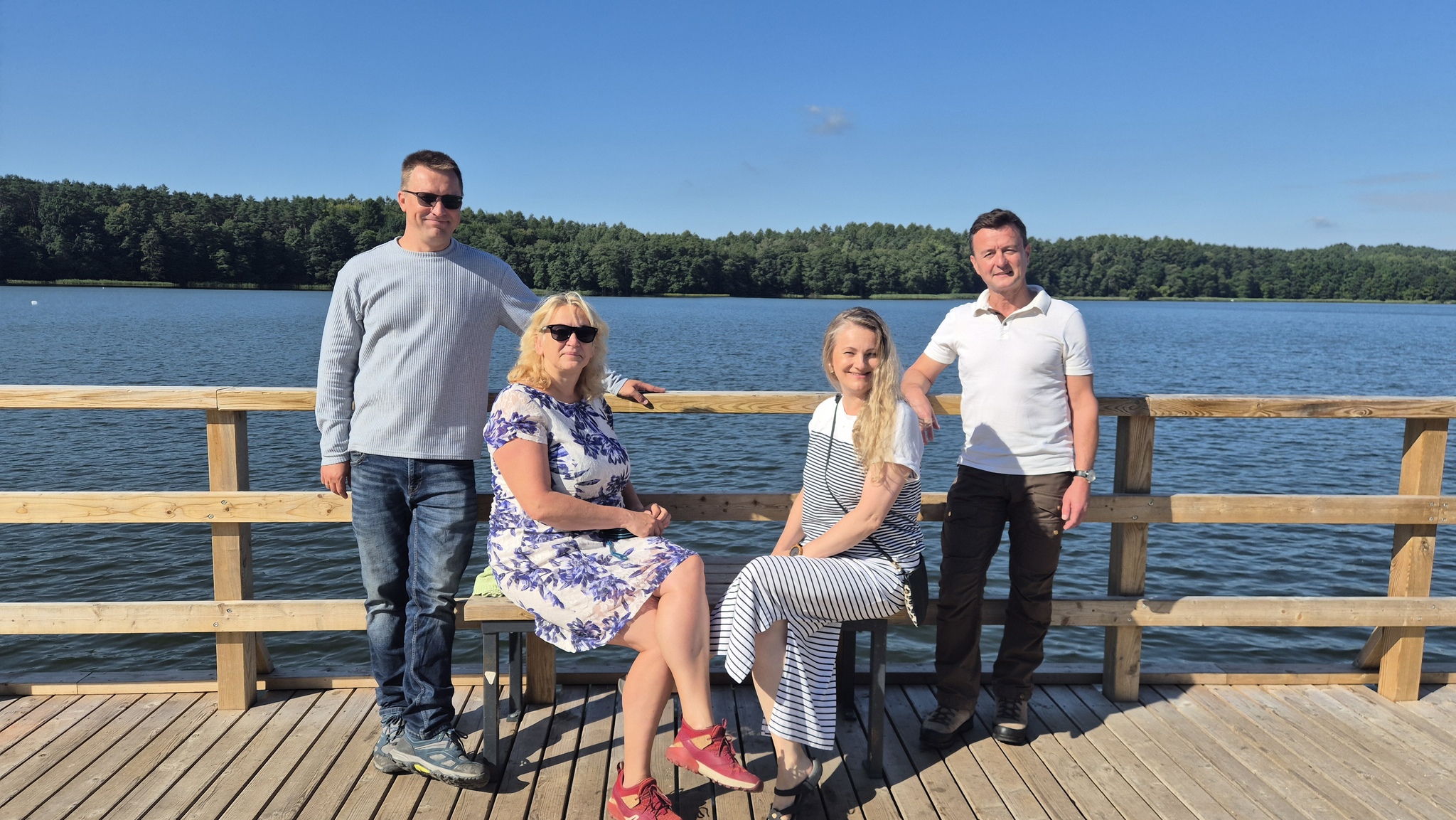
The University of Warmia and Mazury in Olsztyn hosted representatives of the Institute of Forestry at LBTU’s Faculty of Forest and Environmental Sciences in Jelgava. Their guide to both Polish forestry and UWM itself was Prof. Piotr Mederski from Faculty of Agriculture and Forestry. The Staff Week programme followed a simple principle: fewer presentations, more time in the forest.
“During the five-day visit, we planned trips to selected State Forests units that demonstrate both the similarities between forestry in Poland and Latvia and the differences that may be particularly interesting in the context of introducing new solutions in Latvia,” explains Prof. Piotr Mederski.
The first stop was southern Poland.
“We visited the Silesian Beskids, which was a completely new experience for our Latvian guests, who are used to a lowland and relatively flat landscape,” says the group’s host. “At the same time, visiting beech stands was of particular interest to Latvian foresters because of climate change and the search for solutions involving changes in tree-species composition, including the introduction of European beech (Fagus sylvatica).”
The final part of the programme brought the group back to Warmia and Mazury, with a visit to the Miłomłyn Forest District. There, the guests could see stands of Tabórz pine for themselves – an ecotype known for trees reaching up to 40 metres in height, with exceptionally straight trunks and few lower branches. Tabórz pine is regarded as one of the most valuable pine ecotypes in Europe.
For the Latvian visitors, the scale of Polish forestry proved just as interesting as the forests themselves.
“It is very interesting to come from a small country to one as large as Poland and compare how small- and large-scale forestry can work alongside each other,” says Dr Lelde Vilkriste, Associate Professor at the LBTU Institute of Forestry, whose research focuses on forest resource economics and private forestry. “The differences in species composition and forest management methods are also very interesting and valuable.”
Solveiga Luguza, a lecturer at the LBTU Institute of Forestry specialising in dendrology and forest regeneration, summed up the differences between the two countries most succinctly.
“The forests are similar, but they are not the same. They are similar because we have the same species – Scots pine, for example, is just as important in Latvian forests as it is in yours. But your soils are more fertile, which is why you have many more deciduous forests compared with our predominantly coniferous ones. There are many similarities and plenty of differences we can learn from,” says the Latvian researcher.
Her words capture the essence of the entire visit. The shared tree species and forestry traditions of the Baltic Sea region provided a starting point for identifying solutions that could potentially be transferred to Latvia, as well as those that work only under Poland’s specific habitat conditions.
The intensive exchange of experience during the five-day Staff Week was made possible thanks to the support of the Polish National Agency for Academic Exchange (NAWA) and the ChallengeEU European University Alliance, which brings together nine universities. LBTU is UWM’s Latvian partner within the Alliance, and cooperation between the two universities in the field of forestry is set to continue.

Daria
Contributor at ChallengeEU Alliance.
New Double Degree Opportunity Connects HSO and SEEU
Read article
One Sound, Many Perspectives. ChallengeEU Art & Science Day at UWM
Read article