Holiday Traditions Across the ChallengeEU Alliance

The ChallengeEU Alliance brings together nine universities from nine different countries. Members of our community are happy to share their cultures with one another – including the traditions that shape them. We invite you to explore a short guide to customs associated with the Christmas and New Year holiday season. From candlelit processions and Christmas markets to family feasts, carols, and small acts of kindness, the weeks around the end of the year look a little different in every country – yet they share a common spirit of togetherness. Below, our partner universities take you on a festive journey through their local traditions, favourite flavours, and the unique ways their campuses celebrate the season. Latvia: Candlelit Ziemassvētki, Nine Dishes and the Magic of Riga’s Christmas Market Christmas in Latvia is a blend of Christian tradition and deep-rooted pagan customs that honour light, nature, and renewal. The season begins with Advent, when homes glow with candles and the aroma of piparkūkas – spiced gingerbread – fills the air. On December 24th, Ziemassvētki, families gather for a warm and peaceful celebration. Many still observe the old custom of eating nine symbolic dishes, believed to bring strength and luck, e.g. grey peas with bacon for prosperity. The Christmas tree also has special significance here: Latvia is one of the first places in Europe where the decorated tree tradition was recorded, dating back to the 16th century. Instead of folk songs and ķekatas, many visitors today experience the festive atmosphere at the Riga Christmas Market, one of the most charming and celebrated markets in the world. Set in the heart of the Old Town, it glows with wooden stalls, handmade crafts, mulled wine, local delicacies, and traditional music. Tourists and locals gather around the towering Christmas tree in Doma Square, creating a warm, bustling contrast to the crisp winter air. Christmas in Latvia remains slow, candlelit, and deeply rooted in tradition – yet beautifully complemented by the magical charm of Riga’s world-famous market. Latvia University of Life Sciences and Technologies has its own special Christmas traditions. One of the most elegant and anticipated events in the country is the Christmas Ball held in Jelgava Palace, bringing together students, staff, and guests for an evening of music, dancing, and rich historical atmosphere. Each year, LBTU also hosts a Christmas market organized by students and university employees, offering handmade gifts, festive treats, and a warm sense of community. Another cherished tradition is the LBTU Winter Solstice greeting, which highlights the university’s connection to Latvian seasonal heritage. Among the most significant traditions is the formal session of the LBTU Convent, a ceremonial gathering that reflects the university’s academic spirit and long–standing cultural identity. Spain: Twelve Grapes, the Christmas Lottery and Three Kings In Spain, Christmas celebrations are deeply rooted in tradition. Families and close friends gather on Christmas Eve and Christmas Day to share festive meals and joyful moments. New Year’s Eve is equally special: people flock to the main square of their city or village, holding twelve grapes to eat in rhythm with the twelve chimes of midnight. Finishing all twelve grapes before the last chime is believed to bring good luck in the year ahead. Another highlight of the season occurs on December 22, when the entire country tunes in to watch the National Christmas Lottery. Known as the largest lottery in the world, it boasts a prize pool of €2.7 billion, with more than 70% of Spaniards participating. Finally, on January 6, Spain celebrates the arrival of the Three Wise Kings. Traditionally, Spanish children receive their gifts from the Reyes Magos rather than from Father Christmas. During the holidays, Christmas music echoes everywhere. Alongside global favorites like All I Want for Christmas Is You, traditional Spanish carols can be heard in Christmas markets, bustling streets, and department stores, adding a uniquely local charm to the festivities. Christmas in Spain is also a feast for the senses. Families enjoy dishes such as turkey, seafood, and comforting meatball soup, accompanied by classic sweets like nougat and polvorones. On January 6, the celebration continues with the Roscón de Reyes, a special cake hiding a bean inside. Whoever finds it is crowned “King” for the day, adding a playful tradition to the holiday table. At Universidad Europea de Valencia, the festive spirit fills every corner. Buildings are beautifully decorated with Christmas ornaments and a grand tree, creating a warm and joyful atmosphere. The university also partners with Fundación Mi Aportación to fulfill the wishes of underprivileged individuals who have written heartfelt letters. In addition, student clubs – ranging from sports to cultural groups – organize special activities to celebrate the season together. North Macedonia: Holiday Songs, Flavours, Buzmi and Badnik Traditions In North Macedonia, winter holidays are celebrated across communities through a mix of shared practices and distinct cultural traditions shaped by the country’s multiconfessional character. New Year’s Eve (31 December) is widely observed as a family celebration, marked by festive meals, visits, and gifts for children. Among Albanians, the holiday season carries an additional cultural layer rooted in the ancient traditions of Buzmi and Kërshëndellat – pre-Christian solstice rituals symbolizing renewal and the rebirth of light. The burning of the buzmi log expresses hopes for prosperity and good fortune, while Kërshëndellat are understood as të këndellunit e ditës së re – the awakening of the new day. Macedonian families observe Badnik on 6 January and Orthodox Christmas on 7 January. Across the country, all communities welcome the season with warm hospitality, family gatherings, and traditions that blend spiritual meaning with elements of older symbolism. Most families decorate Christmas trees as part of the New Year festivities. End-of-year celebrations also fill schools with laughter and excitement, as children present songs, dramas, and poems during festive concerts. During the winter holidays in North Macedonia, music reflects the country’s cultural diversity. Among Albanians, children often sing “Drenushat vrapojnë” (“The Does Are Running”), a playful winter song – similar in melody to Jingle Bells – that is especially popular around New Year.
UWM–HSO meeting: Cooperation is a shield in difficult times

On Monday, 8 December, the University of Warmia and Mazury was visited by guests from Hochschule Offenburg and the Maria and Georg Dietrich Foundation. The pre-Christmas meeting is a tradition that strengthens the ties between the two partner universities. It was, among other things, this friendship that gave rise to the ChallengeEU Alliance. The annual UWM–HSO meeting is a tradition. Professor Jerzy Przyborowski, Rector of the University of Warmia and Mazury (UWM), welcomed the delegation in the rector’s office building, saying: “I am very grateful that we can meet every year as part of the Christmas Bridge initiative, launched by Georg Dietrich. It is a true symbol of friendship between our institutions, but also between all the people involved.” Both the host and the guests emphasised that good relations between countries are more important than ever in the face of the ongoing war in Ukraine and many other geopolitical threats. “Thank you very much for this wonderful welcome during Advent. For us, this is not an official visit – it is a visit to friends. This friendship is a prerequisite for successful cooperation, because something good usually grows out of human relationships,” said Prof. Dr Stephan Trahasch, Rector of Hochschule Offenburg (HSO). Participants in the meeting underlined that what has particularly strengthened the friendship between the University of Warmia and Mazury and Hochschule Offenburg in recent times is the fact that both universities are members of the ChallengeEU European Universities Alliance. The ChallengeEU Alliance places strong emphasis on student mobility. “Exchange and cooperation among young people form the foundation of unity between nations, and thus of peace in Europe,” explained Stephan Trahasch. During the meeting, discussions on joint initiatives within the ChallengeEU Alliance were continued. Prof. Dr Tobias Hagen, Vice-Rector for Internationalisation at Hochschule Offenburg and Chair of the ChallengeEU Alliance, spoke, among others, with Professor Paweł Wielgosz, the UWM Rector’s Representative for European Universities, about new joint educational programmes and academic cooperation – especially in the field of research. “The project has only just started, but we already have our first results – our academic staff have taken part in joint training sessions, and in recent days students, including from our university, met in Offenburg,” said Prof. Paweł Wielgosz. “We are preparing to launch new joint study programmes – not only with HSO, but also with other partner universities. It is also very important to me that we can conduct scientific research together. From experience, I know that effective academic cooperation is often born precisely from joint research. I hope that our working meetings will lead to ideas for new study programmes and new areas of scientific collaboration.” As Prof. Dr Stephan Trahasch recalled, in addition to cooperation within the ChallengeEU Alliance and its other dimensions, what connects UWM and HSO is joint education. The universities run two programmes at the Faculty of Geoengineering (Environmental Engineering in the field of Process Engineering and Biotechnology) and one at the Faculty of Food Science (Food Technology and Human Nutrition in the field of Food Engineering). They also cooperate in programmes such as German Studies and Business Linguistics, in which students also learn German. Prof. Dr Tobias Hagen, who took part in several ChallengeEU working meetings during his stay at UWM (including one devoted to the conference planned for May to summarise the Alliance’s first year of activities), noted that discussions within the ChallengeEU team and with the Faculties of Economics, Geoengineering and Food Science were intensive, extremely fruitful and constructive, and took place in a very friendly atmosphere. He was convinced that this would enable us to further develop the long-standing partnership between our universities and that there would be many new ideas for the future. The HSO delegation also included Prof. Dr Jens Pfafferott (Dean of the Faculty of Mechanical Engineering and Process Engineering in Offenburg), who had the opportunity to meet with UWM representatives to discuss possibilities for further cooperation. Dr Wolfgang Bruder, Chairman of the Georg and Maria Dietrich Foundation, noted that over the years the foundation has awarded more than 200 scholarships to UWM students, contributing to broadening knowledge, creating better learning conditions, and deepening cooperation. In this way, it continues the ideas of Georg Dietrich, who already decades ago deeply understood the importance of Polish–German cooperation and was committed to ensuring that it also developed at university level.
The ChallengeEU Student Ambassadors Team gathers in Offenburg to build skills and connections

Between 4th and 5th of December Hochschule Offenburg hosted first official meetup of ChallengeEU Student Ambassadors Team. The first official gathering of the young people who represent the alliance across Europe was a great opportunity to strengthen relationships and develop the skills they need in their everyday work as ambassadors. “It was great to talk with my colleagues and learn about their cultures and different perspectives on studying. I really appreciate the fact that I could discover the differences between us,” says Marion Angsthelm, student ambassador from FHNW. “Through photography, social media, cultural intelligence and inclusion workshops, we learned how each tool can amplify our voices and help us create meaningful impact across Europe. But beyond the academic side, we realised that our stories, backgrounds and experiences are powerful — and when we unite, we can inspire real change. This meetup reminded us that each one of us has a voice that matters and that we are capable of shaping a better, more inclusive future for young people,” adds Jana Zaher Eddine from Universidad Europea de Valencia. “I come from Offenburg, so I was at home, but I really appreciate the fact I could get to know other ambassadors. I also learned a lot about the media, social media, how to use them to promote the ideas of our alliance,” says Hendrik Kirchoff, student ambassador from HSO. The student ambassador meeting focused on connecting our international student ambassadors from the nine universities together. The goal was to train them on how to carry out their responsibilities efficiently and deliver the alliance’s message accurately. The official agenda was full of interesting and engaging activities e.g. social media and photography training or communication exercises. Other workshops explored inclusivity and ODEI principles, complemented by practical strategies for intercultural communication skills that are particularly valuable for ambassadors when engaging on social media “We are committed to fostering collaboration, innovation, and intercultural exchange among students across Europe. Welcoming our ambassadors on campus allowed us to see this vision come to life: engaged students, motivated teams and inspiring sessions designed to help ambassadors to improve skills that will help them carry on with their mission within the alliance,” Hochschule Offenburg, host of the meetup and leader of the ChallengeEU alliance, writes on their social media. People who are responsible for the communication in the alliance have no doubts that the meeting was a success. “Ambassadors expressed a strong desire to connect with their peers in person and move beyond the limitations of virtual interaction, and this event provided the perfect opportunity to do so. They reported gaining a clearer understanding of ChallengeEU and their role within it,” says Lynn Summerfield from Universidad Europea de Valencia, who took part in the meeting. „Organizing the Student Ambassadors Meeting in Offenburg was an inspirational project. It was great to see how many students from different backgrounds and stories were able to relate to each other so closely and so fast. Seeing them work together proactively was merely a visual manifestation of what ChallengeEU is all about – centered around cooperation and cultural openness,” adds Zina Qabbani from HSO. Complementing the learning sessions were cultural experiences such as a visit to the local Christmas market and a dinner at a traditional restaurant renowned for its regional cuisine.
ChallengeEU Empowers Early-Career Researchers at SEEU

As part of the ChallengeEU Talent Academy, South East European University successfully organized (6th December) the “Meet the Researchers” training session, designed to inspire and empower early-career researchers. The goal of this session was to encourage socially relevant research and strengthen participants’ ability to effectively translate scientific findings into real-world impact. During the Meet the Researchers event with coffee in hand and plenty of motivation, attendees enjoyed a series of insightful presentations showcasing three socially impactful research case studies – along with valuable guidance on scientific writing and research design. The training session was opened by Pro-Rector for Planning, Research, and Entrepreneurship, Prof. Dr. Veland Ramadani, who shared practical strategies and key steps for navigating the publication process with confidence. The session was followed by the Director of the Max van der Stoel Institute, Prof. Veli Kreci, who provided clear guidance on crafting strong, testable hypotheses that lay the foundation for robust research. The three case studies that followed the session were mainly on topics aligned with the Challenge EU three Smart Specialisation Areas, that of Smart Digitalisation, Sustainable Futures, Health and Well-being. Fortesa Asani, a researcher at the Max van der Stoel Institute, presented findings on how social perceptions influence individual well-being, highlighting implications for policy and practice. Lejla Ademi Shaqiri, a researcher at the Max van der Stoel Institute, demonstrated methods for assessing indoor air quality and discussed its importance for public health. Lastly, Shqipe Salii, a teaching assistant at the Faculty of Contemporary Sciences and Technologies, introduced an innovative machine-learning approach that enhances accuracy while protecting patient data privacy. The event brought together curious minds, meaningful discussions, and inspiring ideas.
Orange for Awareness at SEEU: Empowering Law Students Against Gender-Based Violence

South East European University (SEEU), through its Faculty of Law and the ODEI Working Group (Openness, Diversity, Equity, and Inclusion) of the ChallengeEU project, launched the 16 Days of Activism Against Gender-Based Violence with the seminar “Orange for Awareness: Empowering Law Students Against Gender-Based Violence.” This year’s global theme, “UNiTE to End Digital Violence Against All Women and Girls”, guided the keynote messages and discussions throughout the event. The seminar opened with remarks by Prof. Dr. Arta Mero, who emphasized the importance of preparing future legal professionals to address both physical and digital forms of violence against women and girls. She highlighted SEEU’s ongoing commitment to fostering a safe, inclusive, and supportive academic environment for all students. The event brought together law students, academic staff, NGOs, gender-based violence activists, and participants from ChallengeEU partner universities who joined online. The presence of SEEU’s leadership demonstrated strong institutional support: Rector Prof. Dr. Sadudin Ibrahimi, Pro-Rector Prof. Dr. Veland Ramadani, and Prof. Dr. Besa Arifi, Advisor for Community and International Relations. The seminar featured a series of powerful contributions from experts and practitioners in the field. Vilma Dule, activist and survivor of gender-based violence, offered a deeply personal and academic reflection in her presentation “Rebirth as an Act of Resistance.” Elizabeta Bozhinovska, Programme Director at HERA, highlighted the importance of comprehensive services for victims, perpetrators, and men in crisis. From the University of Tetova, Prof. Dr. Hana Saliu discussed the psychological impacts of gender-based violence and the therapeutic interventions available to survivors. SEEU’s Prof. Dr. Albana Meta-Stojanova examined the alarming rise of femicide in her talk “Femicide: Chronicle of a Foretold Murder,” while Prof. Dr. Vedije Ratkoceri provided an overview of the criminal legal framework for protection against gender-based violence and its alignment with international standards. A special highlight of the event was the acknowledgment of the “Emine Zendeli” Legal Clinic, which supports victims of gender-based violence through primary legal assistance and offers students essential practical training and real-case experience. Today’s seminar reaffirmed that gender-based violence is not only a legal or institutional challenge, but a shared social responsibility. Only through cooperation among universities, institutions, organizations, activists, and students can we build a safer, fairer, and more humane society. SEEU and ChallengeEU remain committed to safeguarding human rights and standing united against all forms of gender-based violence. Together, we rise against gender-based violence.
Sustainable Idea Lab: Creative Minds Co-Create Solutions

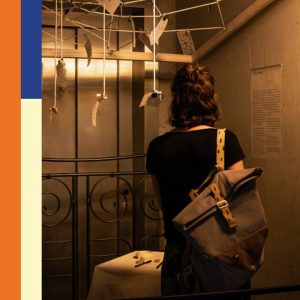
During a two-day (14–15 November) Sustainable Idea Lab workshop, 25 motivated participants came together to tackle five exciting real-world challenges. Divided into five dynamic teams, they worked side by side, sharing ideas in several languages and bringing together diverse perspectives, backgrounds, and experiences. The Sustainable Futures Idealab, held at Flow1986 in Offenburg, was organized by the Open Innovation Managers (M.A.R.K.E.T. Officers) of Sustainable Futures Idealab and the ChallengeEU Alliance. Their mission is to act as bridge builders between universities, students, industry, politics, and civil society – connecting people who want to collaboratively shape a sustainable future. The two-day workshop invited participants to bring their own sustainability-related challenges. These were consolidated into five problem statements addressing inclusive tourism, fair energy transition, inclusive collaboration, circular economy solutions, and the quality of scientific illustration. To strengthen regional cooperation, the team initiated dialogue with local partners such as Impact Hub, Link, La Maison de l’Emploi, SINGA, Interreg, Black Forest Innovation, and BadenCampus. Together, they co-created the concept for an open, participatory Sustainable Idealab. Interdisciplinary teams worked on these topics using design thinking, creative methods, and structured mentoring. Each group was guided by a team mentor who ensured both methodological clarity and space for innovation. The Idealab brought together a diverse group of participants from multiple countries and backgrounds, who collaborated intensively and produced early prototypes and solution concepts in just 1.5 days. This initiative started with fruitful discussions and ended with generated impact through:
Orange for Awareness: Empowering Law Students Against Gender-Based Violence

This seminar is organized within the framework of the ChallengeEU project, as part of the ODEI Working Group (WP5), which aims, among other objectives, to strengthen students’ capacities in addressing gender-based violence. “Orange for Awareness” is an activity that brings together professionals from the legal system, mental health, civil society, and activism to create a shared space for education, reflection, and awareness on one of the most serious human rights challenges. Aligned with the 2025 theme of the 16 Days of Activism Against Gender-Based Violence “UNiTE to End Digital Violence Against All Women and Girls”, the seminar emphasizes the growing importance of combating violence in both physical and digital spaces. It aims to equip students with legal, psychological, and practical knowledge, preparing them to become professionals committed to justice, victim protection, and fostering social change. The Legal Clinic “Emine Zendeli”, through its role in providing primary legal assistance, enables students to respond professionally to real cases of gender-based violence, strengthening the connection between theory, practice, and ethical engagement in the protection of human rights. Join online: https://meet.google.com/upq-ikjb-ena Involved institutions and partners: Max Vander Stoel Institute; Cortex; Mollekuqja, Margini, Hera; Shega; Centre for Women Support
Online Training on E-Accessibility

FHNW is organising an online exchange and training session on E-Accessibility, aimed at those interested in digital learning, communication and inclusion within the ChallengeEU Alliance (in particular within WP2, WP5 and WP6). Together with experts Andrea Gerber (FHNW) and Markus Böni (Access for All, participation requested), the event will address current challenges and good practices for making digital content accessible to all users. The session is designed to spark ideas, support reflection on institutional practices and connect participants engaged in E-Accessibility across the alliance. Programme outline: Kick-off Expert input: Andrea Gerber (FHNW) Expert input: Markus Böni (Access for All, participation requested) Breakout sessions: Highlights & Lowlights Key findings and discussion Wrap-up The event is open to participants from all ChallengeEU partner institutions and associated partners who are interested in E-Accessibility and inclusive digital practices. More information: leonie.wallisch@fhnw.ch
Talent Day at Universidad Europea de Valencia: Boosting Young Careers

European companies, students and universities come together for a day that promotes professional development and strengthens the ChallengeEU alliance. Universidad Europea de Valencia has successfully held a new edition of Talent Day, an event dedicated to connecting students with companies that are committed to young talent and work every day to promote their professional growth. Talent Day – a bridge between the university and the labour market During the event, students had the opportunity to participate in practical activities designed to strengthen key skills for their professional development, such as Adecco’s Escape Room and professional photography sessions to improve their image on social media and in selection processes. The event took place on the Valencia, Viveros and Turia campuses, as well as on the Alicante Campus, where job fairs were held with the participation of companies such as Domusvi, Ecura, Globalworking, NorasCare Talent , Preventium, Adecco, Fundación Adecco, Eures, Melt Group, Randstad and Eurofirms. In addition, the auditorium hosted an IBM Masterclass on artificial intelligence and career opportunities in Valencia, which brought together around 75 students from Valencia and Alicante, who attended both in person and online. The European dimension of the event thanks to the ChallengeEU Alliance One of the major new features of this edition was the Job Fair becoming much more European as it was organized in collaboration with the European ChallengeEU Alliance, which allowed member universities from 8 different countries to participate, offering more opportunities to students from the Alliance. In total, 116 registered users explored the offers of the 11 participating companies, including Adecco, Fundación Adecco, GlobalWorking, Melt Group, Ecura, Eurofirms, Vezë Sharri, Fecke Coaching, ECAM La Salle, OSYPKA and the Port Authority of Valencia. In addition, the virtual open lectures organized within the framework of ChallengeEU attracted a total of 541 listeners, reflecting the growing interest in professional opportunities at European level. The sessions were offered by institutions such as South East European University (SEEU) from North Macedonia, Latvia University of Life Sciences and Technology (LBTU), Eures France, Eures Switzerland and the Universidad Europea de Valencia itself, consolidating the international and collaborative nature of the event. Talent Day has proven to be an effective platform for bringing the academic world closer to the professional world, and has reinforced Universidad Europea de Valencia’s commitment to employability, innovation and internationalisation. It should be noted that, in this edition, the collaboration with ChallengeEU, the European alliance that promotes cooperation between universities, companies and students, has been key to expanding the impact of this event and offering real opportunities for professional development beyond our borders. During Talent Day, Jana and Rocío from Universidad Europea de Valencia, members of the ChallengeEU Student Ambassadors Team, were among those who spoke about the opportunities that come with the development of the alliance. Their involvement in the event underlined in a special way that the idea of cooperation within the European Universities initiative is very close to the hearts of young Europeans.
Stay Connected with ChallengeEU – Subscribe to Our Newsletter

Want to stay up to date with what’s happening in ChallengeEU and at the universities that make up our alliance? Sign up for the ChallengeEU newsletter and: Join our community and don’t miss what is truly transforming European universities! Photo: Freepik