Strengthening University–Industry Cooperation: HSO and SEEU Delegations Visit Associated Partner
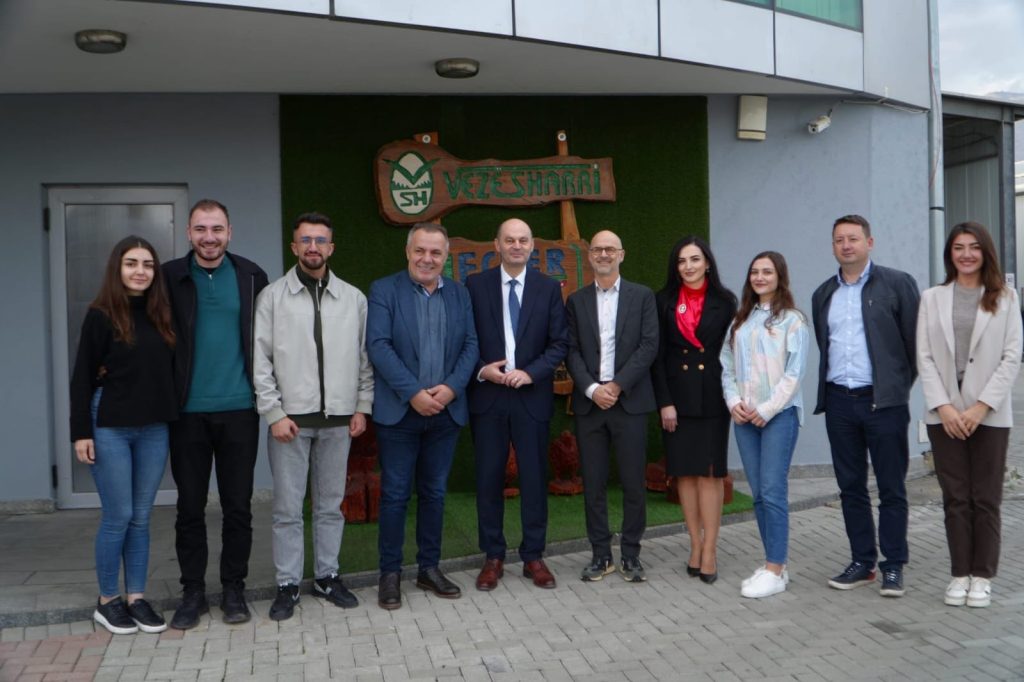
Representatives from Hochschule Offenburg (HSO) visited South East European University (SEEU) in North Macedonia and the agrifood company Veze Sharri as part of the ChallengeEU Alliance. The visit strengthened university–industry cooperation and created new opportunities for students, research collaboration and regional development in the Polog region. A delegation from HSO led by Prof. Dr. Stephan Trahasch, Rector, and Prof. Dr. Tobias Hagen, Vice-Rector for Internationalization and Managing Director of ChallengeEU, visited South East European University (SEEU) in North Macedonia, where they met with Prof. Dr. Sadudin Ibraimi, Rector, SEEU’s high management, and the ChallengeEU teams. Connecting ChallengeEU with the Agrifood Sector As part of the ongoing efforts to advance university-industry partnerships within the ChallengeEU Alliance, they visited Veze Sharri, one of the project’s associated partners and a leading agrifood company in the Polog region. The visit was organized and led by the M.A.R.K.E.T. Officer of ChallengeEU, Assoc. Prof. Dr. Shpresa Alija from South East European University (SEEU). During the meeting, the owner of Veze Sharri, Arben Abdurahmani, welcomed the delegation and presented the company’s development, production processes, and strategic vision. The delegation emphasized that Veze Sharri plays an important role not only as a regional business leader but also as a contributor to local development, workforce capacity building, and knowledge transfer. Through its involvement in ChallengeEU, the company will provide SEEU students with meaningful opportunities for practical learning, professional growth, and exposure to real-sector challenges and future innovation initiatives.This visit marks an important step toward strengthening long-term collaboration within the ChallengeEU ecosystem and creating impactful pathways for students, academic staff, and the local community. Joint Pathways for Students and Research During their time in North Macedonia, the delegation led by SEEU Project Lead, Prof. Veli Kreci, met with staff from Max van der Stoel Institute and the ChallengeEU team, followed by a meeting with Rector Ibraimi and the university’s management team: Academician Prof. Abdylmenaf Bexheti, Prof. Veland Ramadani, Prof. Besa Arifi, and Prof. Florije Ismaili. The discussions centred on academic collaboration, digital initiatives, and areas of shared interest. The visit concluded with a meeting coordinated by Prof. Dr. Mennan Selimi and the SEEU deans to review possibilities for developing joint and double-degree study programmes in engineering, computer science/AI and business.
Talent Day at Universidad Europea de Valencia: Boosting Young Careers
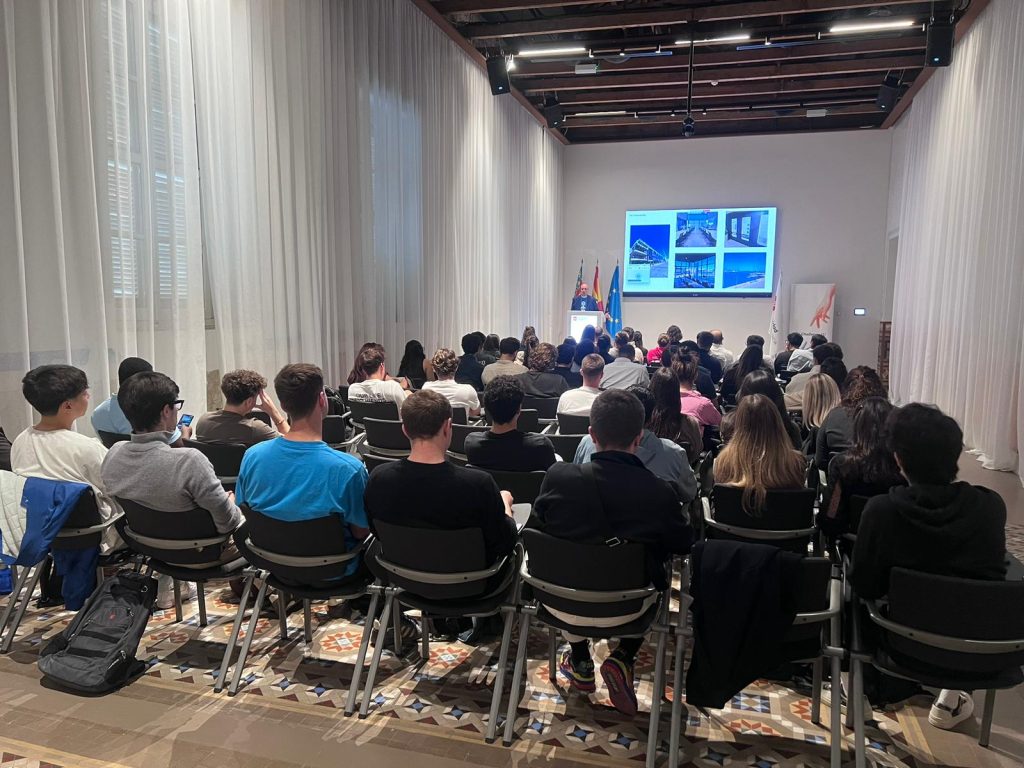
European companies, students and universities come together for a day that promotes professional development and strengthens the ChallengeEU alliance. Universidad Europea de Valencia has successfully held a new edition of Talent Day, an event dedicated to connecting students with companies that are committed to young talent and work every day to promote their professional growth. Talent Day – a bridge between the university and the labour market During the event, students had the opportunity to participate in practical activities designed to strengthen key skills for their professional development, such as Adecco’s Escape Room and professional photography sessions to improve their image on social media and in selection processes. The event took place on the Valencia, Viveros and Turia campuses, as well as on the Alicante Campus, where job fairs were held with the participation of companies such as Domusvi, Ecura, Globalworking, NorasCare Talent , Preventium, Adecco, Fundación Adecco, Eures, Melt Group, Randstad and Eurofirms. In addition, the auditorium hosted an IBM Masterclass on artificial intelligence and career opportunities in Valencia, which brought together around 75 students from Valencia and Alicante, who attended both in person and online. The European dimension of the event thanks to the ChallengeEU Alliance One of the major new features of this edition was the Job Fair becoming much more European as it was organized in collaboration with the European ChallengeEU Alliance, which allowed member universities from 8 different countries to participate, offering more opportunities to students from the Alliance. In total, 116 registered users explored the offers of the 11 participating companies, including Adecco, Fundación Adecco, GlobalWorking, Melt Group, Ecura, Eurofirms, Vezë Sharri, Fecke Coaching, ECAM La Salle, OSYPKA and the Port Authority of Valencia. In addition, the virtual open lectures organized within the framework of ChallengeEU attracted a total of 541 listeners, reflecting the growing interest in professional opportunities at European level. The sessions were offered by institutions such as South East European University (SEEU) from North Macedonia, Latvia University of Life Sciences and Technology (LBTU), Eures France, Eures Switzerland and the Universidad Europea de Valencia itself, consolidating the international and collaborative nature of the event. Talent Day has proven to be an effective platform for bringing the academic world closer to the professional world, and has reinforced Universidad Europea de Valencia’s commitment to employability, innovation and internationalisation. It should be noted that, in this edition, the collaboration with ChallengeEU, the European alliance that promotes cooperation between universities, companies and students, has been key to expanding the impact of this event and offering real opportunities for professional development beyond our borders. During Talent Day, Jana and Rocío from Universidad Europea de Valencia, members of the ChallengeEU Student Ambassadors Team, were among those who spoke about the opportunities that come with the development of the alliance. Their involvement in the event underlined in a special way that the idea of cooperation within the European Universities initiative is very close to the hearts of young Europeans.
Stay Connected with ChallengeEU – Subscribe to Our Newsletter

Want to stay up to date with what’s happening in ChallengeEU and at the universities that make up our alliance? Sign up for the ChallengeEU newsletter and: Join our community and don’t miss what is truly transforming European universities! Photo: Freepik
Alliance brings us closer: French students spent a semester in Sweden
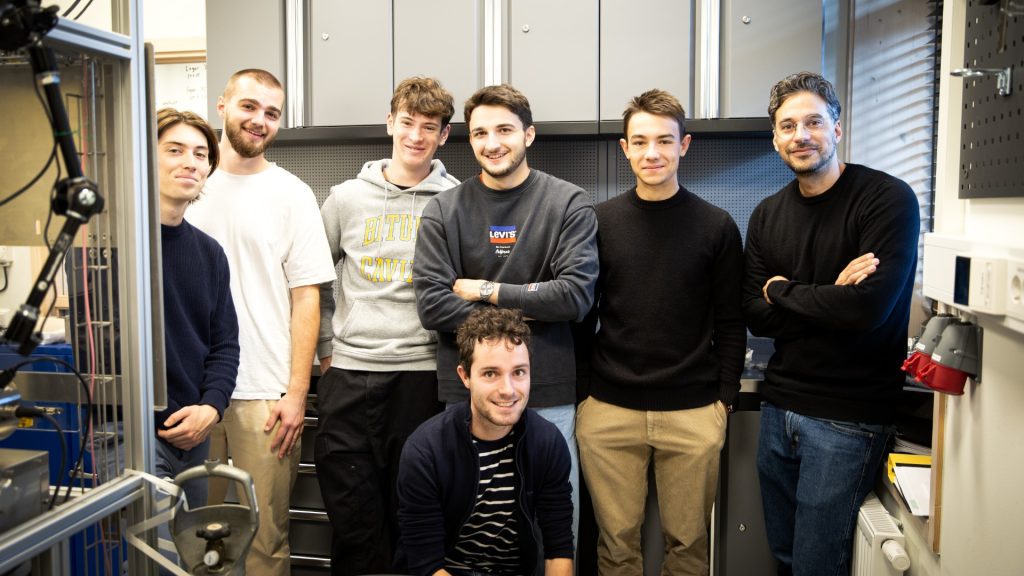
This year, five students from the ECAM LaSalle are spending an academic semester at Mid Sweden University. It is the first French–Swedish university exchange carried out thanks to the ChallengeEU Alliance. Tom, Louis, Corentin, Juline and Victor left for Sweden at the beginning of September. “We’re delighted with the semester so far! Life in Sweden is very different from life in France, and we truly felt the change when we arrived. We’ve been warmly integrated into the community – the teaching staff, the exchange student office, and mentors who are themselves international students all look after us on campus. In short: we’re very happy in Östersund, and the balance between study and life outside the university is perfect,” the students say. As Caroline Henras, Director of International Relations at ECAM LaSalle, emphasises:“Establishing this academic partnership with a university in Sweden – a country particularly attractive to French students –demonstrates in practice the opportunities that ChallengeEU creates for our students.” ECAM LaSalle representatives note that the alliance is much more than an academic network: it is a chance to put the university’s values and educational mission into action. ChallengeEU opens new perspectives for students by fostering international mobility within a network of engaged European universities. This strategic partnership enables young Europeans to gain diverse academic and cultural experiences, significantly strengthening their employability in an increasingly international professional environment. Photo credit: Annacarin Aronsson
After the ChallengeEU meeting in Brussels: we’re ready for the next steps!
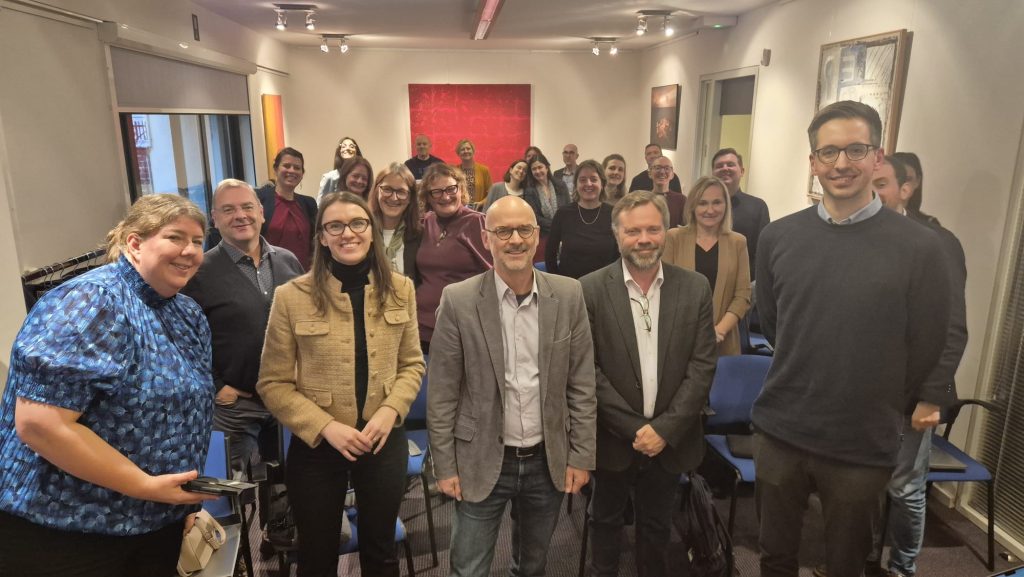
First at the headquarters of the Fundación Comunidad Valenciana – Región Europea, and then at the Representation Office of the State of Baden-Württemberg in Brussels, members of the ChallengeEU team took part in a three-day working meeting (27-29 October). The aim was to strengthen collaboration between Work Packages, refine the delivery timetable, and align milestones for the months ahead. Work was carried out both in plenary and in dedicated working groups. This setup enabled joint strategic decisions and detailed task work within teams responsible for specific areas (including mobility, digitalisation, ChallengeEU Academy, ODEI, and communication & dissemination). Among the key topics addressed were a summary of activities undertaken in 2025 and planning for the next year of cooperation. The main priorities and expected results were also discussed. The session “How Do We Align Quality Processes” focused on standardising quality processes and document workflows. Day one also included a WP6 training on branding, communication, and dissemination – a practical module that clarified standards for content preparation, EU funding acknowledgements, brandbook compliance, and reporting of communication activities. It’s also worth adding that an opportunity to continue improving our internal communication will be the team workshops taking place on 3–4 November. Significant attention was devoted to mobility, the ChallengeEU Academy, the course catalogue, and the ODEI initiative. The teams worked on mobility frameworks, the educational offer, and solutions supporting inclusiveness (e.g., a virtual ODEI office and mentoring pathways). A crucial point of the agenda was an open Q&A with Daniel Hubner, the EACEA Project Officer, during which issues such as project activity reporting, formal expectations, and preparation for the mid-term report were discussed. Participants emphasised that such a meeting will help better align internal procedures with programme requirements and reduce the risk of inconsistencies in documentation. A valuable experience was also the meeting with Maria-Valerie Schegk from the YUFE Alliance, who shared with participants the good practices developed within the alliance she represents. She highlighted, among other things, the importance of documenting the alliance’s impact. The balance between group work and plenary discussions made it easier for teams to translate strategic decisions into day-to-day work plans. Further actions were agreed in the areas of: refining the shared infrastructure for events and stakeholder collaboration tools; streamlining approval and publication pathways for official alliance channels; and preparing for the mid-term report along with a review of indicators. The meeting concluded with a discussion on the alliance’s future and the announcement of initial plans for the ChallengeEU conference, which will take place in May in Olsztyn. The event will summarise the results achieved to date, strengthen cooperation with stakeholders, and showcase the impact of the alliance’s initiatives on regions and academic communities. A symbolic moment of the Brussels meeting was a minute of silence in tribute to the victims of the flood that struck Valencia a year ago. Although it was spontaneous and not part of the official programme, it was the best proof that the alliance is not only about creating joint study programmes or exchanging knowledge and experience. Above all, it is about building a community.
ChallengeEU Collaboration Powered by Lab IDEAS BIP
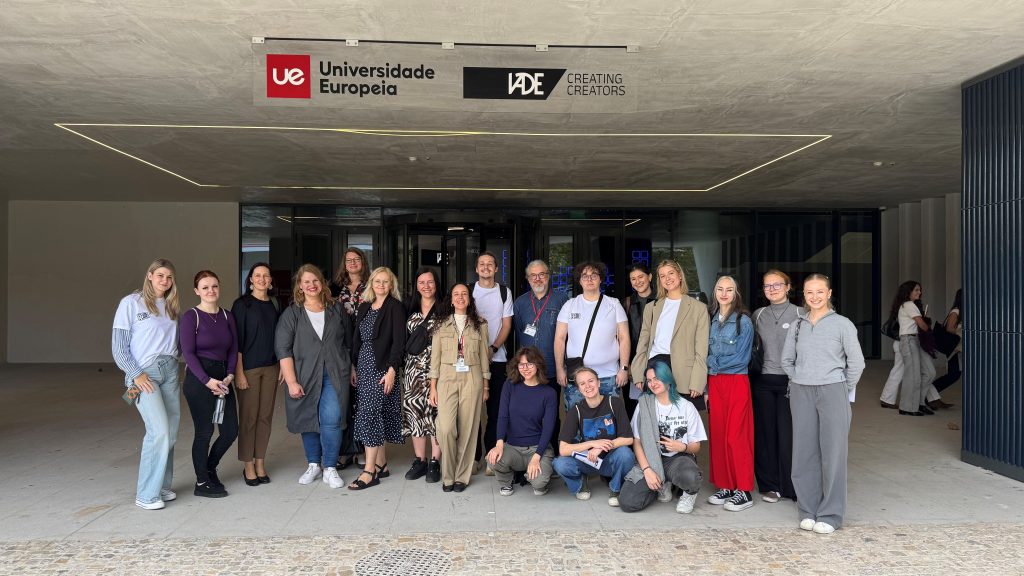
The ChallengeEU Alliance continues to promote collaboration and innovation through the Lab IDEAS: Impact-Driven Education for Action and Sustainability Blended Intensive Program (BIP), organized by IADE – Faculty of Design, Technology and Communication of Universidade Europeia, one of the founding institutions of the alliance in Lisbon, Portugal. The programme, held under Erasmus+, gathered 51 participants, including 36 international travelling participants from partner universities. Among them were students and professors from two ChallengeEU institutions, Latvia University of Life Sciences and Technologies and the University of Warmia and Mazury in Olsztyn, who joined multidisciplinary teams to co-create innovative solutions addressing digital behaviour and social responsibility. Under the theme “Designing Safe Digital Communities”, and in collaboration with the Portuguese Public Security Police (PSP), participants explored how social design can help prevent cyberbullying, foster empathy, and promote safer and more inclusive online environments. Students proposed a range of solutions, including ideas for board games for children and teenagers, creating a website to support victims, and developing informational materials for professionals involved in bullying prevention in cooperation with the police. They also drafted the idea of establishing an association that could later evolve into a social movement. As explained, this could help raise awareness of bullying in society and schools and contribute to creating a safe environment where victims can receive practical and psychological support. All of these solutions were presented to representatives of the police in Lisbon. “The concept of this programme really appeals to me. It was four days of intensive work with a tangible outcome at the end (presented to the client) — that’s exactly what we, students of Trend Analysis and Creation, enjoy. I’m very glad we have the opportunity to take part in initiatives like this. I’d happily do it again,” says Dominika Staniszewska, a student of Trend Analysis and Creation at University of Warmia and Mazury. Wiktor Kotarski, who also studies at UWM, adds:“I think the idea is excellent because it lets us look at what we’ll be doing professionally from a completely different perspective. Another advantage is that it allows you to test yourself in a new, international environment. In my view, the intensity is a plus – in a short time you can see whether this kind of work is for you. And if you decide it isn’t, you haven’t lost much time.” “Because we worked in mixed groups, we were able to experience intercultural exchange. Every student brought something new to the project — for example, a different way of thinking or acting. My colleague and I encouraged our teammates to use design-thinking methods, which is how we work at UWM. We exchanged knowledge, which was both pleasant and instructive,” says Dominika. The meeting in Lisbon was a valuable experience not only for the students but also for their accompanying supervisors. For example, Prof. Līga Paula (LBTU) noted that taking part in the mobility programme was an excellent opportunity to gain experience in organising BIPs, establish new contacts, and exchange insights with international colleagues. Through this initiative, the ChallengeEU Alliance reinforces its commitment to interdisciplinary learning, mobility, and social impact, empowering students and educators to transform real-world challenges into opportunities for positive change.
The Quadruple Helix in Practice: M.A.R.K.E.T. at SEEU
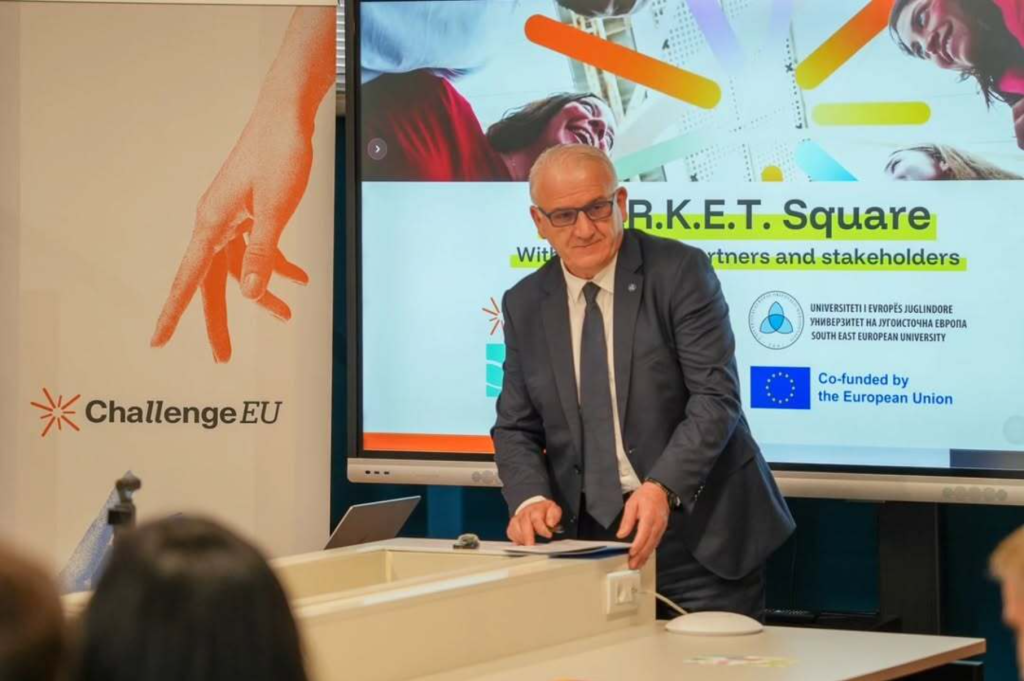
South East European University (SEEU) convened the forum “Connecting Education and the Labor Market” under the ChallengeEU umbrella, a milestone event reflecting the alliance’s ambition to shape its immediate environment and co-create its future. The meeting advanced cooperation among universities, industry, public institutions, and civil society in the spirit of the quadruple-helix model. We believe regional development and academic excellence go hand in hand. In his opening, SEEU Rector Prof. Dr. Sadudin Ibraimi highlighted the University’s commitment to creating tangible opportunities for students and partners through innovative, collaborative platforms. Acad. Prof. Dr. Abdylmenaf Bexheti followed with a motivational address on how the quadruple helix strengthens links between education, industry, government, and the community. Prof. Dr. Veli Kreci presented the ChallengeEU initiative, while Shpresa Alija outlined her responsibilities as M.A.R.K.E.T. Officer. Hamit Kamberi introduced the M.A.R.K.E.T. Digital Center, showcasing its features and partner benefits. The forum closed with an open discussion and networking reception, where participants exchanged ideas and explored avenues for future cooperation. Attendees included representatives of associated partners and key stakeholders. M.A.R.K.E.T. (Mapping, Awareness Raising, Knowledge Exchange, and Training) is a digital hub and collaboration platform developed by SEEU within ChallengeEU to connect the University with businesses, public institutions, and civil society organizations.
ChallengeEU delegation attended ECAM LaSalle’s anniversary
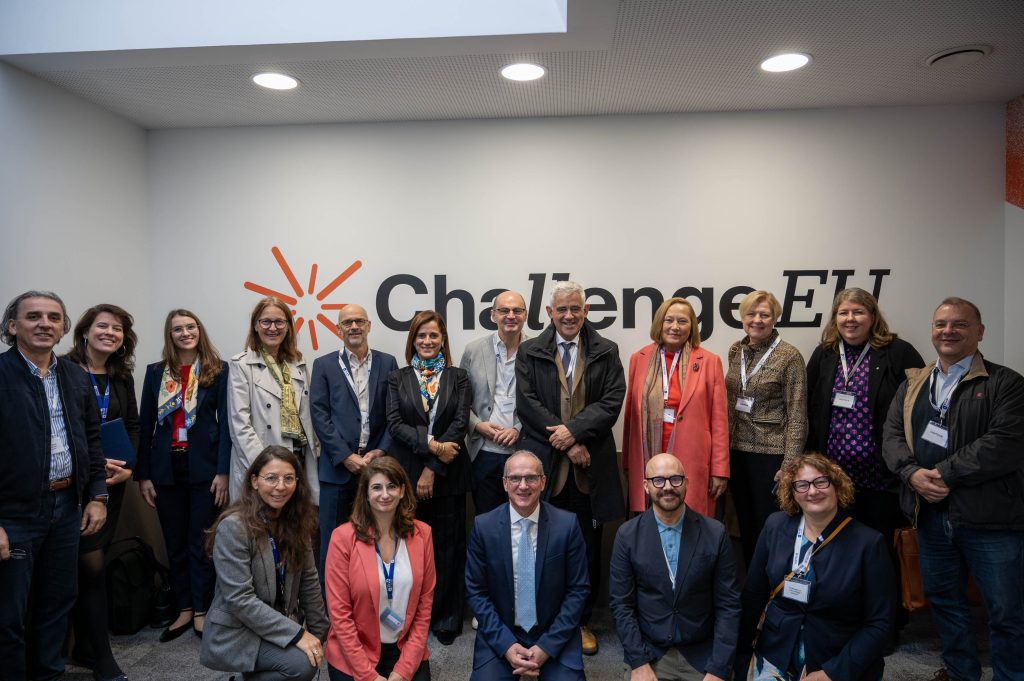
A 14-member delegation from the ChallengeEU Alliance visited ECAM LaSalle in Lyon to mark the university’s 125th anniversary, combining celebrations with working discussions. The group, led by five rectors, included representatives from Fachhochschule Nordwestschweiz (FHNW), Hochschule Offenburg, Latvia University of Life Sciences and Technologies, Mid Sweden University, South East European University (SEEU), Universidad Europea de Valencia, Universidade Europeia, and the University of Warmia and Mazury in Olsztyn. Beyond the official celebrations, the visit provided an opportunity for strategic discussions on research collaboration, sustainability, and European perspectives for academic cooperation. Participants exchanged experiences from across the Alliance and identified areas for future joint initiatives. The delegation also explored ECAM LaSalle’s educational facilities and met students involved in technical clubs, including the ECAM Formula Student Team (EFST), H2 Eco’Innov, and the #WorldSkills team. The presentations showcased a range of innovative student projects and underlined the strong potential of emerging European talent. The programme concluded with a visit to the Basilica of Fourvière. ECAM LaSalle reaffirmed its commitment to globally open, future-oriented engineering education. Representatives of ChallengeEU extend congratulations to ECAM LaSalle on this milestone and wish the university continued success in the years ahead. About ECAM LaSalle: In September 1900, the first class of the Jean Baptiste de La Salle School of Arts and Crafts in Reims began the school year under the guidance of the Brothers of the Christian Schools. For over a century, ECAM LaSalle trains generations of responsible and creative engineers, who use their scientific expertise to serve a sustainable and ethic future. University has continued to adapt to the needs of companies and to the expectations of young people and their families. A pioneer in its field, its notable innovations are: the establishment of one of the first Engineering Apprenticeship programmes; the first factory-school dedicated to Lean Management (INEXO: Institute of Operational Excellence) and the first 5 year Engineering Program in English in France (ECAM Engineering).
ChallengeEU Strategy Board Meeting in Switzerland
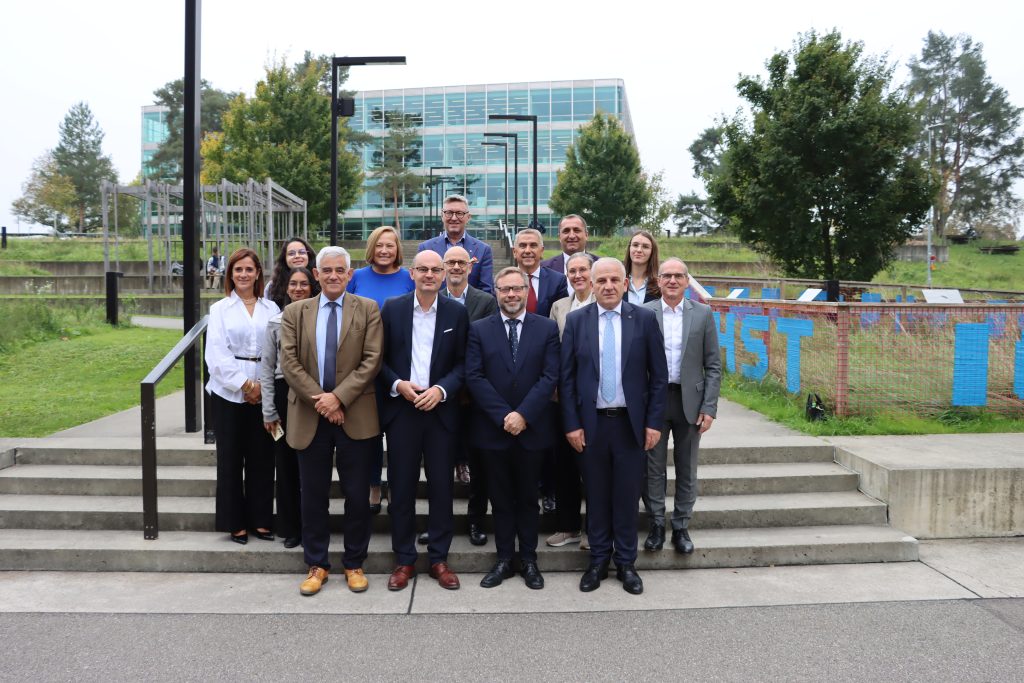
Strategy Board gathered at Fachhochschule Nordwestschweiz FHNW for two inspiring days (8–9 Oct) of exchange and strategic dialogue between rectors and student representatives. Participants also had the pleasure of touring the FHNW campus in Windisch. They were hosted by, among others, FHNW President Crispino Bergamaschi, with Arne Wahlen, Peter Flohr, Rico Travella, Guido McCombie, and Brandon Panos sharing insights into their respective schools: ChallengeEU has been accepted into the circle of ‘European University Alliances’ and will be funded by the European Commission from 2025 to 2028 as part of this flagship initiative of the European higher education strategy. As a Swiss partner, FHNW is funded by Movetia as part of the Swiss European Mobility Programme (SEMP).
Shaping ChallengeEU’s Digital Future in Offenburg
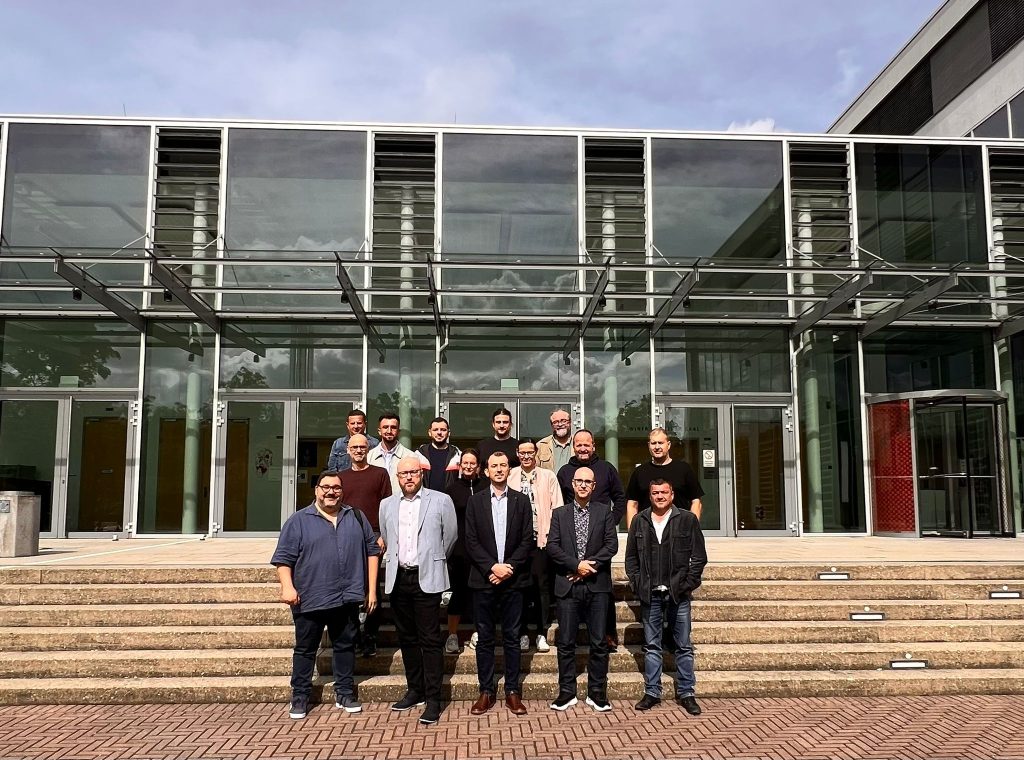
As part of the ChallengeEU university alliance, representatives from nine European universities, primarily IT leads involved in Work Package 2 (WP2), met at Hochschule Offenburg (Offenburg University of Applied Sciences) to advance discussions on the alliance’s digital infrastructure. WP2 plays a key role in creating the digital backbone of ChallengeEU, enabling collaboration, mobility, and data exchange across partner institutions. The meeting focused on shaping the platform’s architecture and core functionalities that will steer the alliance over the coming three to four years. Among the priorities are the development of a joint course and mobility catalogue, the launch of the DigitalHub (known as the Digital M.A.R.K.E.T Space) and the integration of AI-powered features. All modules will align with major European digital initiatives, including eduGAIN, Erasmus Without Papers (EWP), ECTS, and the European Student Card. WP2 is coordinated by South East European University (SEEU), led by Prof. Dr. Mennan Selimi, with co-leadership from Mid Sweden University under Prof. Dr. Niklas Brinkfeldt. SEEU’s IT team — Shefik Osmani, Ahmed Abdullai, and Hamit Kamberi — joined the Offenburg meeting to contribute their expertise to the design of ChallengeEU’s digital platform.