ChallengeEU Hackathon at SEEU Showcases Sustainable Student Solutions
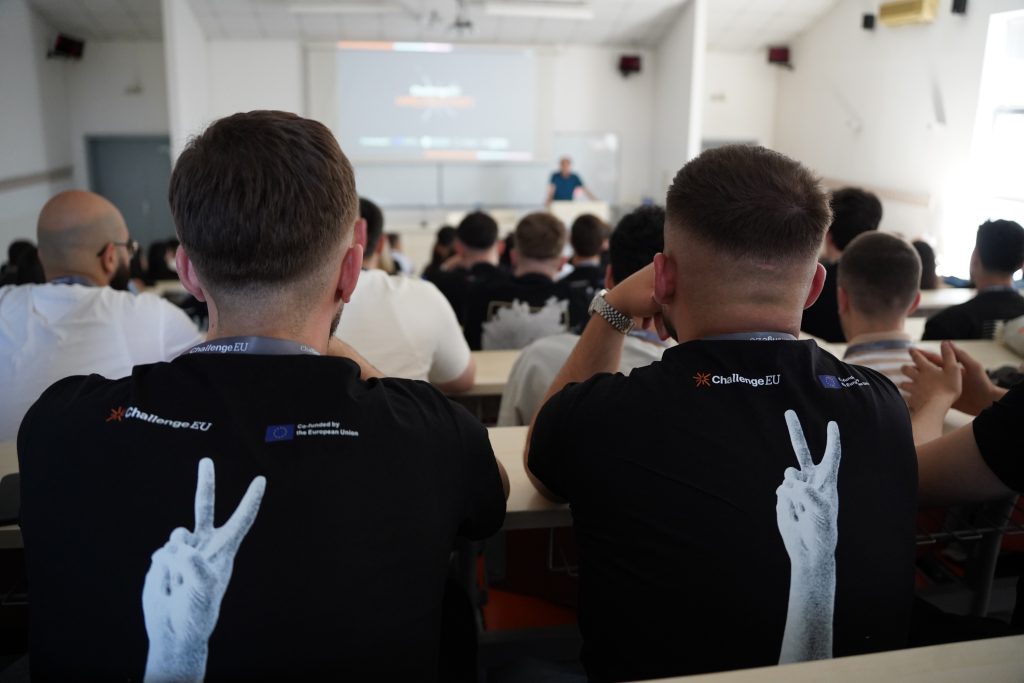
The Hackathon “Innovation Challenge: Turning Partnerships into Sustainable Solutions” (29-30 May) concluded successfully at South East European University (SEEU), in cooperation with the Business Innovation Center (BIC) and the Student Parliament and Association, marking the end of two intensive days of creativity, collaboration and innovation. During the second day, student teams focused on finalising their projects and preparing their presentations for evaluation by a five-member expert jury. The participants demonstrated exceptional dedication, presenting a diverse range of innovative solutions that addressed contemporary challenges through technology, sustainability, entrepreneurship and social impact. Following a highly competitive evaluation process, the jury awarded the top three teams: 1st place: ProtocolMinds2nd place: Predictors3rd place: LegacyLink Special awards also went to: Best Business Idea: Exchange for Less WasteBest Technical Idea: Quantum FiveBest Social Idea: Kitogo The Hackathon showcased the talent and innovative spirit of SEEU students, with many teams presenting solutions that have the potential to generate real-world impact. It concluded as a remarkable success, giving students a valuable opportunity to transform ideas into sustainable solutions while strengthening partnerships across disciplines and institutions.
Media, Diversity and Resilience to Disinformation. ChallengeEU Students Take Part in a BIP at UWM
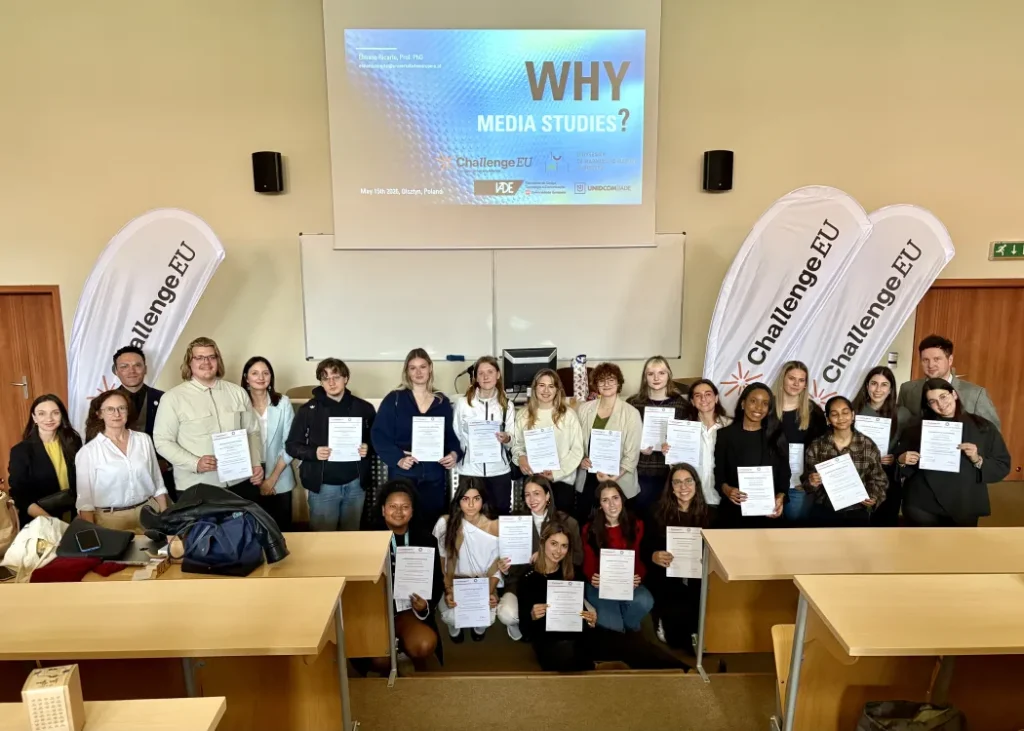
To avoid being misled by disinformation, we need to remain open to other cultures and understand that community can be found in diversity. The Erasmus+ Blended Intensive Programme “Resilience Lab: Media for Social Change”, organised by the UWM Institute of Journalism and Social Communication in cooperation with partner universities from the ChallengeEU Alliance, focused on how media can shape public opinion and support positive social change. From 11 to 15 May, UWM welcomed students and lecturers from Hochschule Offenburg, Universidade Europeia, and the Latvia University of Life Sciences and Technologies. The programme combined online learning with a short stay at a partner university, enabling international teamwork, the exchange of experiences, and the development of skills useful in modern communication. “The programme focused on how, through intercultural communication and the creation of social media content, we can raise young people’s awareness of disinformation. Without a doubt, they have the right skills and tools to tackle this problem,” explained Dr Marta Więckiewicz-Archacka from the Department of Journalism. She added: “When organising this BIP, we took advantage of the opportunities created by UWM’s membership in the ChallengeEU Alliance, as it makes cooperation with other European universities easier.” Breaking Stereotypes and Making Good Use of Media During the lectures, participants learned how intercultural communication can strengthen our resilience to disinformation. In practical classes, they learned, among other things, how to create educational content for social media, podcasts, and texts adapted for online publication. An important part of the programme was also a visit to the European Solidarity Centre in Gdańsk, which demonstrated how social movements can lead to real historical and political change. One of the lecturers from the ChallengeEU partner universities was Prof. Élmano Ricarte from Universidade Europeia in Lisbon, who delivered the lecture concluding the programme. His academic work focuses on intercultural communication and the role of media in building community and dialogue. “We live in a mediasphere, constantly communicating with one another and trying to understand each other. It is precisely this attempt at mutual understanding that interests me most, because we still do not do it well enough. However, I believe that in the future we will become a better society as a whole, because we will begin to recognise differences and stereotypes while also learning from one another. The German philosopher Martin Heidegger introduced the concept of ‘Dasein’, which means being in the world. It helps us understand culture and diversity, and Europe is an excellent example of this,” said Prof. Élmano Ricarte, also referring to the idea behind the ChallengeEU Alliance. “Today, unfortunately, we live in bubbles, including educational and scientific ones, which is why every opportunity to come together, share views, and exchange experiences becomes extremely valuable. Europe grew out of such values, and through this alliance we are trying to put them into practice — not only in theory, but also in reality. There is still a great deal of work ahead of us, but I hope that we will soon become better.” Getting to Know Different Points of View Students emphasised that taking part in the programme allowed them to look at media, communication, and society from an international perspective. For many of them, it was also an opportunity to develop practical skills and build relationships with people from other countries. “It is a really great opportunity to look at media from an international perspective, as well as to meet people representing other cultures. It teaches us that the world can be seen from many different points of view. I decided to take part in this programme because of my field of study — I want to learn how to use media in a way that allows me to influence others,” said Shelsea Arnaldo, a media communication student at Universidade Europeia. The practical dimension of the classes was also appreciated by Inês Costa, a communication and marketing student at Universidade Europeia. “I think the topic of this programme is very important for communication students. In class, we usually learn theory, but the practical dimension is often missing. Here, we can work with colleagues from other countries and learn what they have to say and how they see the world,” said Inês Costa. For Monta Paula Leitlante from the Latvia University of Life Sciences and Technologies (LBTU), taking part in the BIP was another opportunity to visit Poland, which she described as her second home. “I really enjoyed this BIP — the company, the opportunity to get to know other cultures — it was all very exciting. When you stay in your own country, you do not have the chance to experience this, but by taking part in programmes such as BIP or Erasmus+, you can change your perspective and learn a great deal,” said Monta, also praising the opportunities offered by the ChallengeEU Alliance. “It is a great initiative. At my university, I met students from Poland and thought that I simply had to take part in a course like this in Poland. I really appreciate the fact that we have the opportunity to participate in this kind of exchange.” The programme was also attended by Julia Wysocka, an English philology student and ChallengeEU Ambassador at the University of Warmia and Mazury. “I learned many different things, especially from the practical side — how to create a podcast, how to communicate with people, and how to combine social media with everyday work. I will certainly be able to use everything I learned in my role as an alliance ambassador, because one of our tasks is communication through social media. I applied for this programme because I wanted to gain new skills and meet people from other countries — I want to take every opportunity that comes my way,” said Julia Wysocka. “Resilience Lab: Media for Social Change” showed that international education can be not only an opportunity to gain knowledge, but also a space for building dialogue, community, and resilience to the challenges of the contemporary world.
ChallengeEU 1st Annual Conference Through the Lens: Photo Gallery
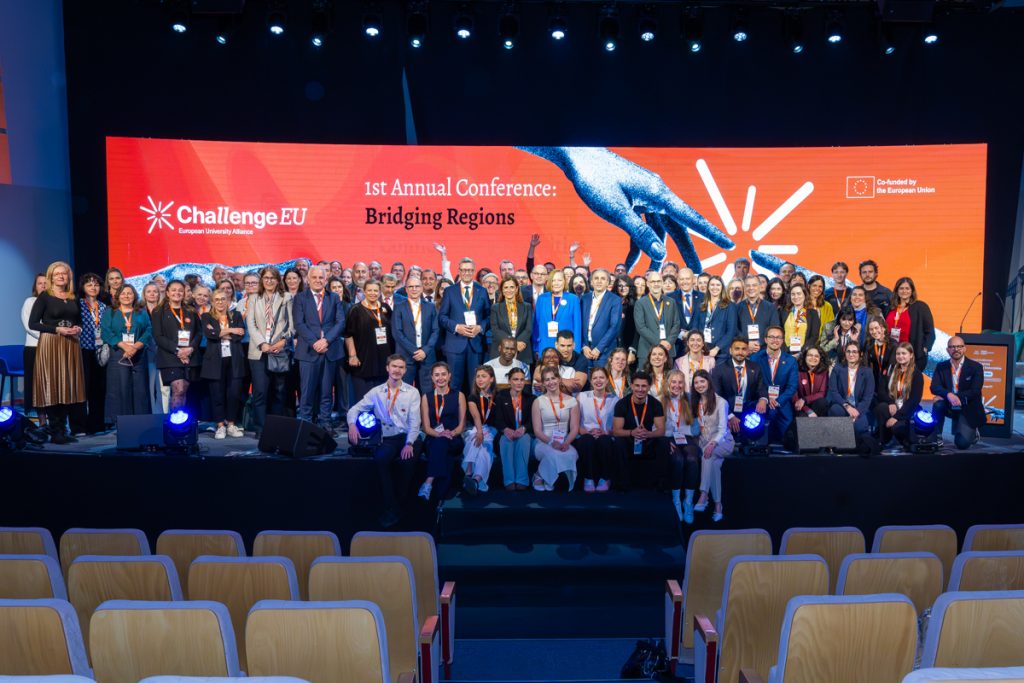
The 1st ChallengeEU Annual Conference in Olsztyn (May 6-7) was not only an opportunity for representatives of nine European universities to meet, but also an important moment to reflect on the journey so far, build relationships and define the next directions for cooperation. The event showed that the strength of the alliance lies in people, regions and concrete actions that can have a real impact on the future of higher education in Europe. For two days, the University of Warmia and Mazury in Olsztyn became a space for discussions on cross-border cooperation, the responsibility of universities for regional development, and the challenges related to the green, digital and social transitions. The conference brought together representatives of academia, students, regional partners and stakeholders from different parts of Europe, creating a space for dialogue, exchange of experience and the search for shared solutions. However, the significance of the event went beyond the conference programme itself. Its impact lay in strengthening ties between the alliance partners, increasing the visibility of ChallengeEU in the region, and demonstrating that cooperation between European universities can bring tangible benefits to academic and local communities. The meetings, discussions and joint initiatives became an impulse for further actions to be developed within the alliance — from education and research to social engagement and cooperation with the socio-economic environment. We invite you to view the photo gallery, which offers a chance to revisit the atmosphere of the conference, its key meetings and the moments that helped build the ChallengeEU community. Opening Ceremony, Plenary Sessions and Closing Conference (photo by Janusz Pająk/UWM) Working Meetings (photo by Janusz Pająk/UWM) Conversations and integration (photo by Janusz Pająk/UWM, Michał Orłowski) Through the lens of the UWM Student Photo Agency (Studencka Agencja Fotograficzna “Jamnik”)
Bridging Regions – Connecting Universities: ChallengeEU meets at University of Warmia and Mazury
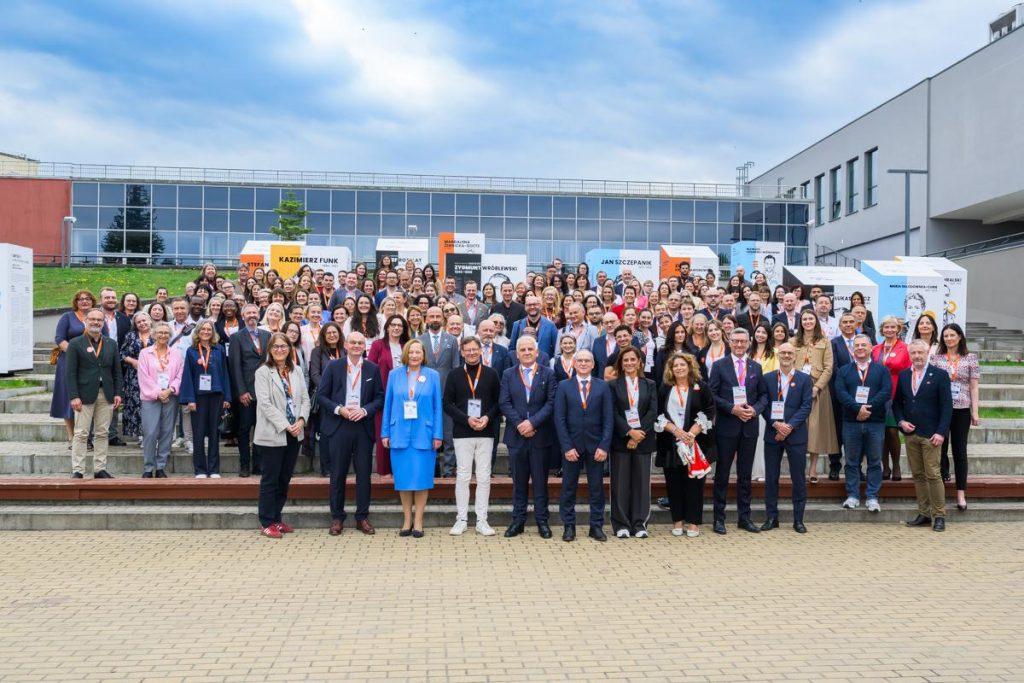
For two days, the University of Warmia and Mazury in Olsztyn became the beating heart of the ChallengeEU Alliance. Created within the framework of the European Universities initiative, ChallengeEU brings together nine institutions from different parts of Europe under a shared banner. Together, they are working on solutions that will support not only their own development, but also the future of European higher education and the regions in which they operate. On 6–7 May, UWM hosted the ChallengeEU 1st Annual Conference. The ChallengeEU Alliance’s journey began several years ago. It brings together Hochschule Offenburg, South East European University, ECAM LaSalle, Mid Sweden University, Universidade Europeia, Latvia University of Life Sciences and Technologies, Universidad Europea de Valencia, Fachhochschule Nordwestschweiz (FHNW) and the University of Warmia and Mazury in Olsztyn. All these universities took on a shared challenge — quite literally — to create an alliance aligned with the idea of European Universities. Achieving this goal meant meeting not only formal requirements. All the work invested in agreeing on a common plan, developing a strategy and addressing many other issues was rewarded with approval to establish the Alliance, which began its activities in 2025. “Faced with a challenge, we basically have two choices: approach or avoid. The fact that we’re all here today shows clearly that not only have we approached our Challenge, but we have also managed it quite well (…). But our Challenge doesn’t stop here; and this ChallengeEU First Annual Conference is not a grand finale; it’s a stepping stone because there’s still work to be done, there are still challenges ahead. We’ll be spending these two days exchanging ideas on how to implement our strategies not only in the world of academia, but also in the communities around us, bridging the gap between regions in the same way as we have bridged the gap between our universities”, reminded Dr Czesław Kiński, the conference host. He added: “Over these two days, we will exchange ideas on how to implement our strategies not only in the academic world, but also in the communities around us, bridging differences between regions in the same way as we bridge differences between our universities.” “Five kilometres from this room, in a red-brick castle on a hill, a young canon once spent his evenings looking at the stars. His name was Nicolaus Copernicus. He lived here, in Warmia, for over forty years. He was not yet famous. He worked, as we might say in the language of today’s funding bodies, ‘based at a regional institution’. And from that so-called regional institution, he moved to the centre of the universe,” said Prof. Jerzy Przyborowski, Rector of the University of Warmia and Mazury in Olsztyn, during the opening of the conference. He stressed that, in his view, the famous Polish astronomer would have understood the idea behind the ChallengeEU Alliance. “Copernicus understood that ‘the centre’ is not a place. It is a question. And whoever is brave enough to ask better questions becomes, for that moment, the centre of the world.. In this hall today, I see representatives of nine universities who have decided to ask better questions. Questions about how regions and universities can support each other. About how the green transition can also be a just transition. About how challenge-based learning can replace lecture-based forgetting. About what European belonging means when the borders of Europe are once again being renegotiated, sometimes peacefully and sometimes not.” What brings the ChallengeEU community together is not only a readiness to ask questions and push boundaries, but also enthusiasm. This was exactly what Prof. Hélia Gonçalves Pereira, Rector of Universidade Europeia in Lisbon, spoke about when welcoming the conference guests on behalf of the Strategy Board. “When we created this alliance, some said that such an undertaking was impossible; others argued that it was possible, but would be very, very difficult. Today, we can proudly say that we have succeeded — that our dream has come true,” said Prof. Hélia Gonçalves Pereira. “ChallengeEU involves more than 90,000 students, teachers, researchers and partners, working in areas that are crucial not only for the universities forming the Alliance, but also for Europe: mobility and cooperation. As we work to make this ecosystem function as effectively as possible, we are accompanied by great enthusiasm. There is no doubt that in these strange, yet exciting times, we need more and better knowledge.” Prof. Stephan Trahasch, Rector of Hochschule Offenburg, the Alliance’s leading institution, drew attention to the goal that had guided the project from the beginning. “When we brought this alliance to life many months ago, we had a clear vision of what we wanted to do: we wanted European universities to cooperate not only on paper, but in practice, and to take on concrete challenges with a real impact on the world around them. What I see today strengthens my belief that the path we have chosen is the right one,” Prof. Trahasch emphasised. The HSO Rector gave a particularly warm welcome to the students taking part in the conference. “You are not guests at this meeting — you are the reason this alliance exists, and you are the heart of this alliance. Every partnership we build and every barrier we overcome is for you and, most importantly, with you. Your energy and commitment are what make this alliance truly European,” said Prof. Trahasch. Universities have an impact The first Annual Conference of the Alliance was held under the motto “Bridging Regions – Connecting Universities”. It referred to the idea from which ChallengeEU has grown, and whose practical expression can be seen in the long-standing partnership between Offenburg and Olsztyn, as well as in the cooperation between Hochschule Offenburg and the University of Warmia and Mazury that emerged from it. This cooperation would not have been possible without Maria and Georg Dietrich, the founders of the foundation which continues to strengthen relations between the two cities and universities to this day. Julia Ritter spoke about her grandfather’s work and her readiness
ChallengeEU take part in the European Student Assembly 2026 in Strasbourg
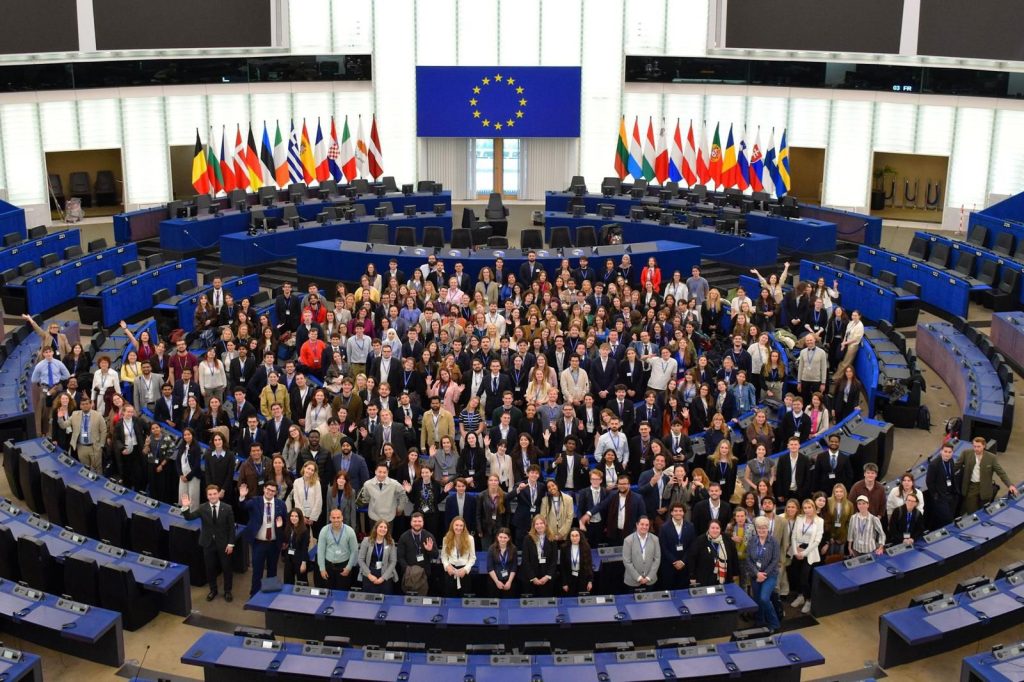
From 20 to 22 April, the European Parliament in Strasbourg welcomed more than 200 students from across Europe for the 2026 European Student Assembly, including representatives of the ChallengeEU Alliance. During the event, participants worked together on shared proposals and developed policy recommendations addressing key issues shaping the future of Europe. The European Student Assembly gives students from European University Alliances the opportunity to work together on policy proposals, share perspectives and engage in democratic debate. Participants joined several preparatory online meetings before the event and actively contributed to discussions in Strasbourg, bringing student perspectives on European politics, culture, society and the future of higher education. Among the ChallengeEU representatives was Runa Ziegler from Mid Sweden University, a member of the Student Ambassadors Team. She worked in the panel “Educating without borders”, which focused on topics such as joint thesis projects, interdisciplinary skills labs and new ways of learning across institutional and national boundaries. “I am so grateful to have had this opportunity to go to Strasbourg and meet so many inspiring people,” Runa said. Sunil Hela, another ChallengeEU student representative, described ESA 2026 as a motivating and valuable experience. He emphasised the international atmosphere, the professionalism of the sessions and the opportunity to observe democratic processes in practice during policy proposal discussions and voting sessions. One of the most meaningful moments for him was the acceptance of his own policy proposal. “It was a great honour and a rewarding achievement to see my ideas appreciated and supported by the participants,” Sunil said. For the students, the event was not only an opportunity to discuss important European issues, but also to experience teamwork, leadership and international cooperation inside the European Parliament. The programme encouraged active participation, dialogue and the exchange of ideas among young people from different backgrounds. ChallengeEU was also represented at the Village of Alliances fair, where European University Alliances had the opportunity to present their communities, activities and ambitions. Sofia Hecker, ChallengeEU Secretary General, and Laura, Project Officer from Hochschule Offenburg, visited the students in Strasbourg and joined parts of the programme. Participation in ESA 2026 showed how important student voices are in shaping the future of European higher education. For ChallengeEU, it was another step towards strengthening student engagement, supporting international cooperation and building a more connected European university community.higher education. For ChallengeEU, it was another step towards strengthening student engagement, supporting international cooperation and building a more connected European university community.
From ideas to action: WP4 team meets in Lyon
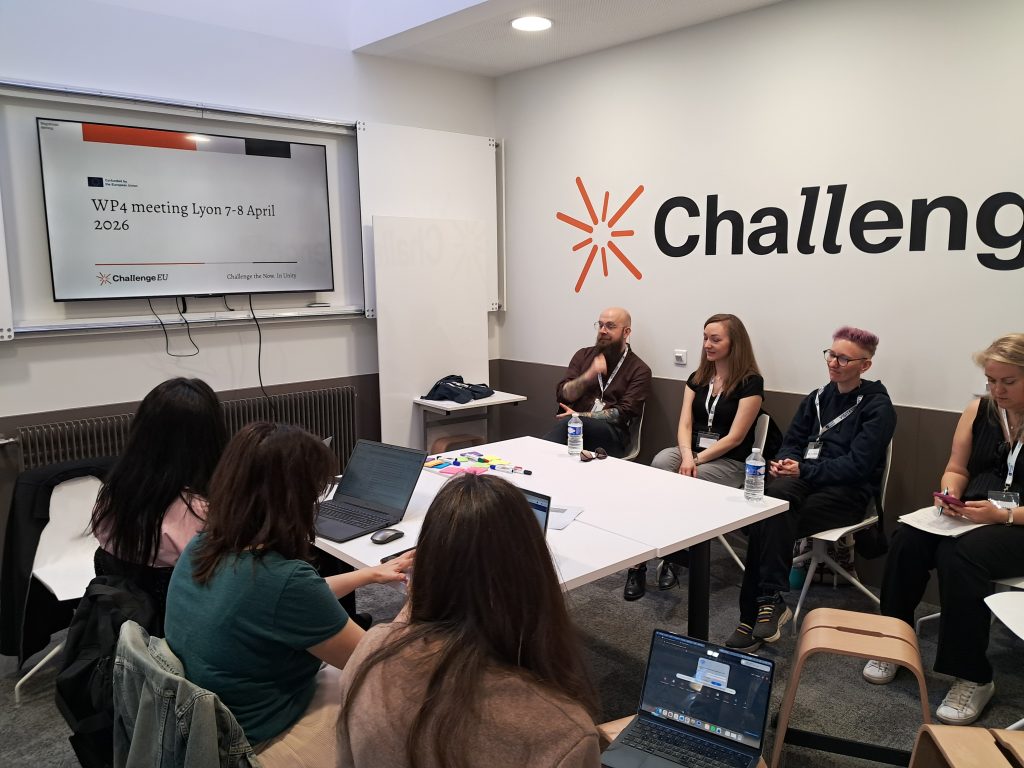
On 7–8 April 2026, M.A.R.K.E.T. officers and task leaders from WP4 across the alliance gathered at ECAM La Salle in Lyon for a two-day, in-person WP4 meeting. The meeting was highly productive and marked an important step forward in strengthening collaboration, aligning approaches, and advancing ongoing work within WP4. The programme combined structured working sessions with interactive discussions. Key topics included sharing experiences and best practices from M.A.R.K.E.T. Meet-ups, planning joint interregional M.A.R.K.E.T. student activities for 2026, and shaping the future of the Impact Lab, as well as contributions to the Talent Academy. The meeting also provided valuable space for networking, strengthening relationships, and fostering a shared understanding of the M.A.R.K.E.T. officer role across the alliance. Overall, the meeting successfully combined concrete progress on key tasks with meaningful exchange and collaboration, reinforcing the foundations for continued joint work within WP4. Did you know? M.A.R.K.E.T. = Multi-Actor Research+Knowledge Exchange Teams In each of the three selected Smart Specialisation Areas, challenge-and impact-driven M.A.R.K.E.T.s will act as dynamic platforms for transdisciplinary collaboration, innovation, and the co-creation of solutions that span digital, green, social, and sustainable dimensions.
Strengthening collaboration within ChallengeEU: LBTU delegation visits SEEU
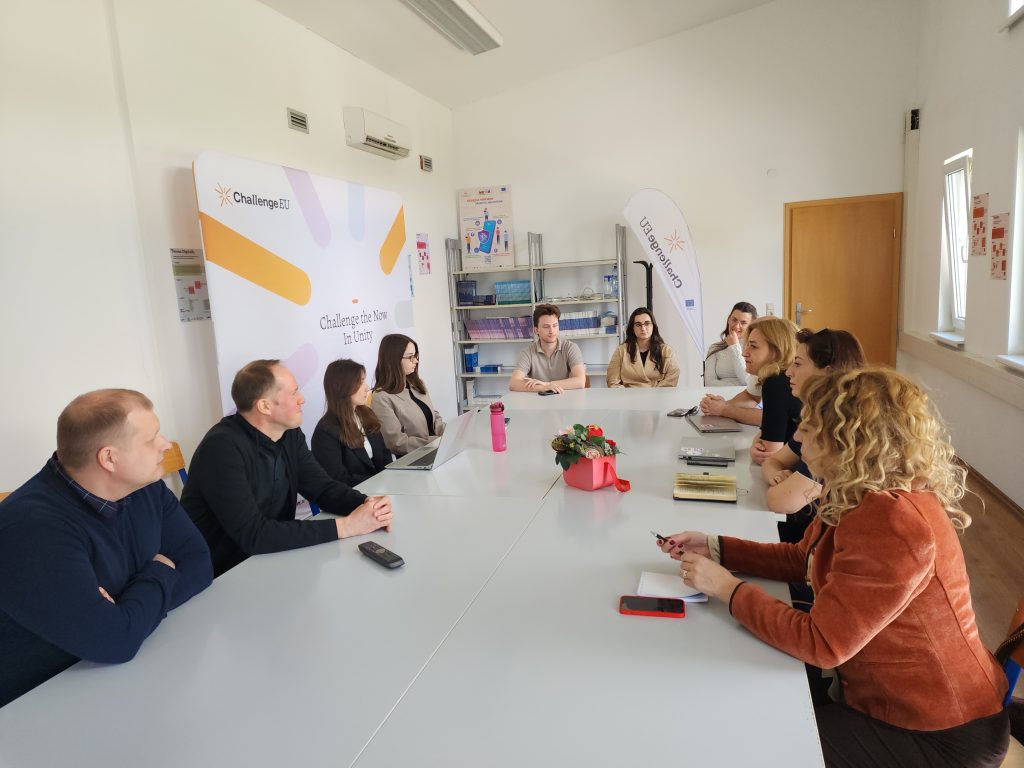
From 7 to 9 April, South East European University (SEEU) welcomed Prof. Dr Gatis Vitols, Vice-Rector for Science, and Ingus Smits, Lecturer at the Latvia University of Life Sciences and Technologies (LBTU), for a visit supported by Erasmus+. During the visit, the LBTU delegation had the opportunity to meet with the team from the Max van der Stoel Institute (MVDSI), including its Director, Prof. Dr Veli Kreci. The meeting provided a valuable opportunity to exchange ideas and discuss research areas of common interest. The delegation also met with Prof. Dr Veland Ramadani, Pro-Rector for Research and Entrepreneurship, and Prof. Dr Florije Ismaili, Advisor for Academic Planning and Digitalisation. These discussions focused on opportunities for research collaboration, as well as the potential development of double degree programmes between the two institutions. As part of their stay at SEEU, the LBTU team also visited several university facilities, including the SEEU Library, where they met with its Director, Elmedina Abdullahi, as well as the STEM Lab and the VR Lab. The visit provided a valuable opportunity to showcase SEEU’s academic and research environment and to further explore areas for future cooperation. We sincerely thank our colleagues from LBTU for their visit and look forward to future opportunities to work together. As partners in the ChallengeEU university alliance, SEEU and LBTU continue to strengthen their cooperation through academic exchange and ongoing discussions on future collaboration.
ChallengeEU Ambassadors: The Alliance Integrates European Students
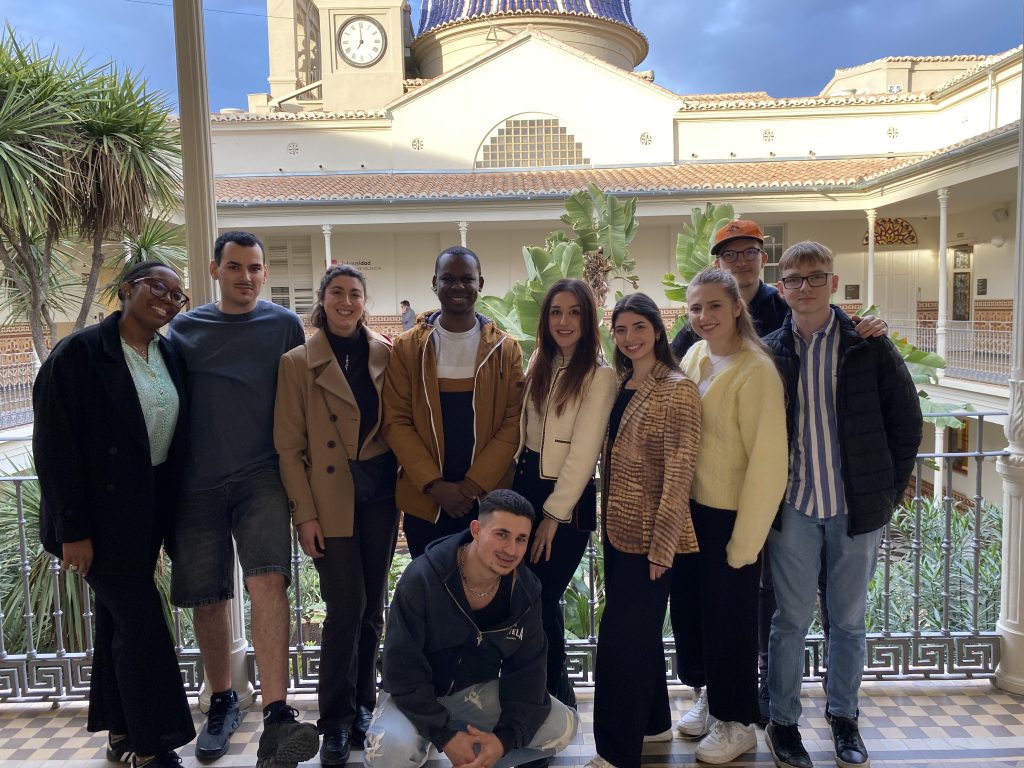
From February 9–13, the ChallengeEU Ambassadors Week took place at Universidad Europea de Valencia, a university that co-creates the ChallengeEU alliance. Students participated in workshops and other educational activities, became familiar with the university and its campus, and had the opportunity to immerse themselves in Spanish culture. Julia Wysocka and Temitope Francis share their impressions of the trip and their experience serving as ambassadors of the alliance. What memories did you bring back from your trip to Valencia? Julia Wysocka (J.W.): It was one of the best trips of my life, largely thanks to the weather (laughs), but speaking seriously, the most valuable part was meeting the other ambassadors. Already during our visit to Hochschule Offenburg last December [in Germany, at the leader of the ChallengeEU alliance – editor’s note], I was surprised by how quickly we bonded. Even though we come from so many different countries, speak many languages, and follow different religions, we formed a close-knit group. That’s why, for me, the most important lesson from such trips is that if we remain open, no borders will exist. Temitope Francis (T.F.): For me, it was also very important that I could meet people from all over the world. It broadened my horizons and opened my eyes to the fact that no matter where we come from, we are all the same, because we are all human. I am also very glad that I had the chance to meet students studying fields other than journalism — it was a very interesting experience for me. Temi, at the university in Valencia you gave a presentation on how the war in Ukraine is portrayed in Polish media compared to Western media coverage. What kind of reception did you receive? T.F.: I’m glad I had that opportunity and I’m satisfied, especially since the students were very interested in the topic, as shown by the many questions I received after the presentation. For example, they were curious about where reliable and up-to-date information on the war in Ukraine can be found. And for you, Julia, what was the most instructive among all the activities you took part in? J.W.: I really enjoyed all the workshops and training sessions. They convinced me that practice is more important than theory. This became especially clear during the workshops where we talked about openness, diversity, equality, inclusivity, and different cultures. There was a presentation followed by a discussion, but what mattered most to me was that we could also share our own experiences and reflections. For example, it turned out that we do not always fully understand the limitations faced by people with disabilities — if we do not experience similar challenges ourselves, we simply do not notice them. That is why it is important to keep our eyes wide open. Were you asked questions about Poland and the University of Warmia and Mazury? J.W.: Yes, we were asked about Poland many times. Already during the first workshop devoted to Spanish culture and the Spanish language, we shared linguistic and cultural differences. However, the topic came up most strongly during a meeting with students who had decided to participate in the Erasmus program and were going to Poland or were still choosing — for example, between Germany and Poland. Rafał [Pirsztuk — UWM ambassador in the ChallengeEU alliance — editor’s note] and I shared the Polish perspective, while Temi and Georden [Shaw — UWM ambassador in the alliance — editor’s note] talked about what it is like to be an international student at the University of Warmia and Mazury. I’m glad that others are curious about our country, our culture, and what studying here is like, and I must admit I haven’t heard any stereotypes about Polish people. T.F.: We all spoke very positively about the University of Warmia and Mazury — truthfully so, because if we felt otherwise, we would not be studying here, although each of us has a slightly different perspective. I think it was an excellent opportunity to promote our university, which we did. I would also like to add that for us, international students, being able to study here is something wonderful. I have also studied at other universities, including in Greece and Romania, so I also have experience from different places around Europe. It is worth emphasizing that no other university has a campus like Kortowo — not even Universidad Europea de Valencia (laughs). As for Poland, we see only two downsides: the Polish language, because it is very difficult, and the weather, because it is too cold (laughs). How do you find yourselves in the role of UWM ambassadors in the ChallengeEU alliance? J.W.: At first, I wasn’t sure what to expect, but it turned out to be a fantastic experience. And it’s not even about the opportunity to travel to other universities — the most valuable part, which I would like to emphasize once again, is meeting the other ambassadors. We have grown very close and remain in constant contact. If it weren’t for ChallengeEU, we probably would not have had the chance to meet, and even if we had, we wouldn’t have had something that connects us so strongly. Moreover, thanks to this role, we learn many interesting and useful things, for example how to apply for various European programs, and we have the opportunity to take part in valuable training sessions. Every day I am grateful that my application to become a ChallengeEU ambassador was accepted. T.F.: For me, as a student from another continent, being an ambassador of the ChallengeEU alliance has opened me up to Europe — its advantages, problems, and challenges. It is an honor to serve in this role and to participate in all these meetings, which are based on the ideas of openness, diversity, and inclusivity. It shows that Poland is very open and attentive to what people of other nationalities have to say, and the fact that the alliance’s ambassadors come from different continents demonstrates that even if we are
ChallengeEU Strategy Board defines next steps in Valencia
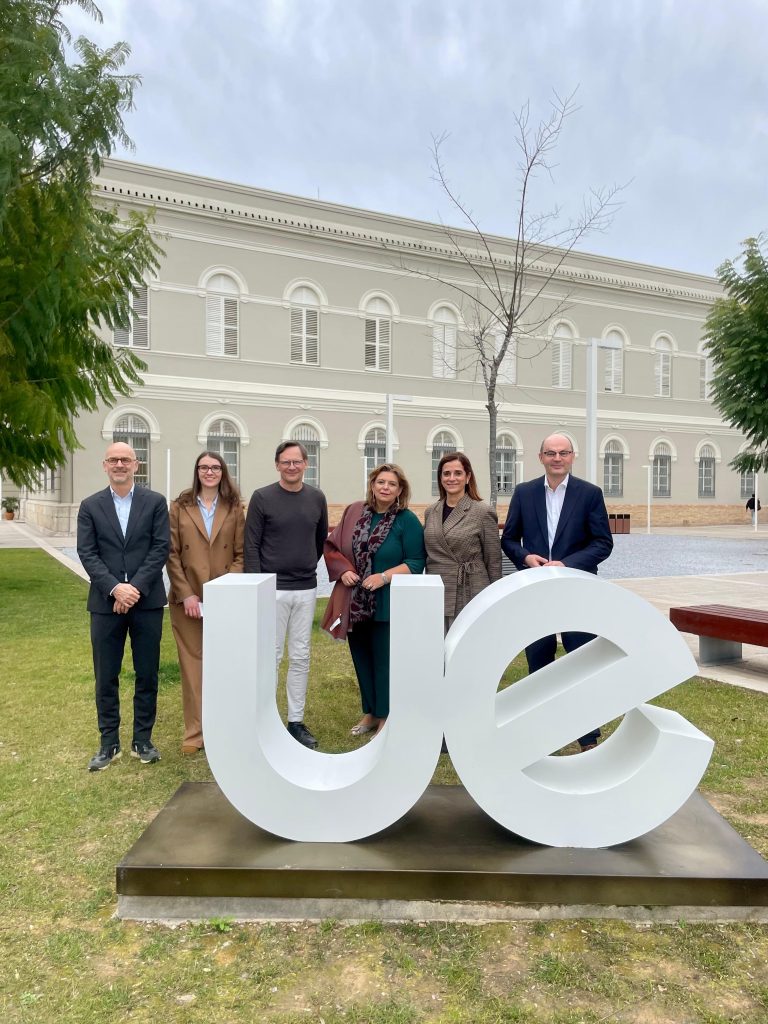
The Strategy Board, made up of the Rectors of the nine member universities, holds its meeting at the Turia Campus to take stock of the alliance’s first year and define future directions. On Tuesday (10 February), Universidad Europea de Valencia hosted the meeting of the ChallengeEU Strategy Board. This meeting brought together, at the Turia Campus, the rectors of the nine universities that make up the Alliance in a working session focused on future directions, strategic challenges and the evolution of the project. The day began with a welcome coffee, during which Dr Esther Gómez, Regional Secretary for Universities of the Generalitat Valenciana, gave a few words of institutional greeting to the Rectors of the alliance before starting the programme of activities. During the working session, the Strategy Board addressed the presentation of the results of the alliance’s first year of operation, as well as the analysis of the medium and long-term strategy, focused on consolidating the vision and priorities for the coming years. The meeting also allowed progress to be made on the proposal to create double degrees between member universities, as well as exploring the possible incorporation of a Ukrainian polytechnic university as an associate member, in line with ChallengeEU’s commitment to broader and more diverse European cooperation. The meeting was chaired by Prof. Tobias Hagen, Director General of ChallengeEU, and by the Secretary General, Sofiia Hecker, both from the University of Offenburg (Germany), the institution responsible for the overall coordination of the alliance. Dr Annette Klinkert, director of the technical agency that has accompanied ChallengeEU in its application and development process, also participated in the proceedings. The session also agreed that the Rector of the Universidade Europeia de Lisboa, Prof. Helia Gonçalves, will assume the chairmanship of the Strategy Board during the alliance’s second year of operation, replacing Prof. Stephan Trahasch, Rector of the Offenburg University of Applied Sciences (Germany). Likewise, the Rector of Mid Sweden University (Sweden), Docent Anders Fallström, has been appointed as the new Vice-President of the body. Two Student Council representatives at the Strategy Board – Hannah Rendle from Hochschule Offenburg and Keshini Nistar from ECAM LaSalle – held their final meeting in this role. Throughout their mandate, they actively contributed student perspectives to the Alliance’s highest decision-making body, ensuring that the student voice remained an integral part of strategic discussions. New Student Council representatives will soon be elected to continue representing students at the Strategy Board.
The ChallengeEU Mentoring Programme has officially launched
On Monday, January 19, and Thursday, January 22, meetings officially inaugurating the ChallengeEU Mentoring Programme took place. The programme is coordinated by the University of Warmia and Mazury. The ChallengeEU Mentoring Programme aims to provide students with support from European professionals, boost their self-confidence and skills, and help them define their career paths – all through mentoring rooted in the idea of ODEI (Openness, Diversity, Equity and Inclusion). During the first kick-off meeting, participants were welcomed by Prof. Paweł Wielgosz, Rector’s Representative for European Universities, while the second meeting was opened by Prof. Tobias Hagen, Vice-Rector for Internationalisation at Hochschule Offenburg and Chair of the ChallengeEU Alliance. Both speakers spoke about the ChallengeEU Alliance and the role the mentoring programme plays within it. They also expressed their thanks to everyone involved in the programme and to those who showed interest in participating Starting together The main idea behind the kick-off meetings was to allow all mentors and mentees to inaugurate the programme together and to ensure they knew what to expect in the subsequent stages. “The mentoring programme is of great importance to the ChallengeEU Alliance, as it represents a direct investment in what is most valuable – people. It demonstrates that UWM, as the programme organiser and a member of the alliance, is committed to implementing the principles of ODEI. This is crucial for building a culture of openness and development,” said Prof. Katarzyna Ćwirynkało from the Faculty of Social Sciences and ODEI Officer in the ChallengeEU Alliance. The ChallengeEU Mentoring Programme is addressed to all students at universities participating in the alliance. Mentors may include academic staff as well as professionals from outside the academic community, including entrepreneurs. In total, 75 mentors and 79 mentees applied. During the meetings, participants became familiar with essential information about how the programme works, what it involves, and what will take place in the coming weeks. They also had the opportunity to meet the team from the University of Warmia and Mazury responsible for organising the initiative. The team includes Prof. Katarzyna Ćwirynkało, Dr Monika Ryndzionek and Agata Przyborowska, MA, supported by members of Work Package 5. The first edition of the mentoring programme within the ChallengeEU Alliance will last approximately six months. A minimum of five mentor–mentee meetings is planned, which will primarily take place online (with the option of meeting on university campuses). Both mentors and mentees will receive certificates of participation upon completion of the programme. A dose of essential knowledge After both inauguration meetings, training sessions for mentors were held and led by Dr Monika Ryndzionek. During these sessions, mentors learned about their roles, received practical tools and tips to help them fulfil their responsibilities, and became thoroughly familiar with the goals of the ChallengeEU Alliance mentoring programme. Each training session lasted 75 minutes. “The idea behind mentoring programmes is to learn from more experienced people in various areas and fields of life, as mentors may include university staff, representatives of non-governmental organisations, or entrepreneurs. However, it is worth remembering that mentors also develop through this process, for example by sharing their experience,” emphasised Dr Monika Ryndzionek from the Faculty of Social Sciences, an ODEI expert in the ChallengeEU Alliance. Photo by: Freepik.com