New Leadership Elected for ChallengeEU Student Council
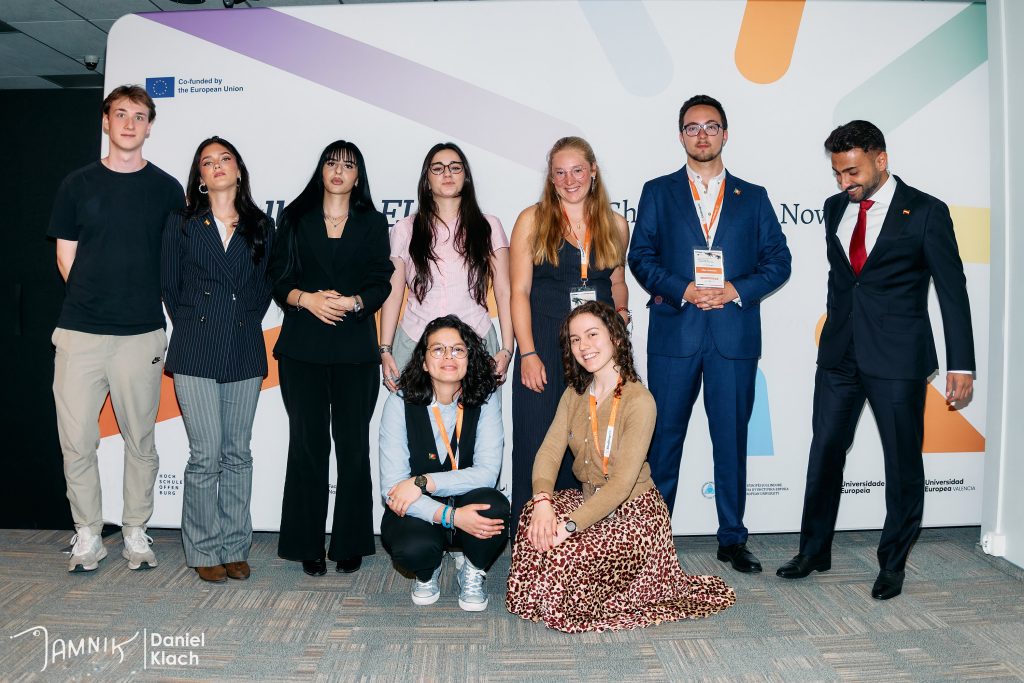
The ChallengeEU Student Council has elected its new leadership, marking an important step in strengthening student representation across the alliance. Rebeca Rocha from Universidade Europeia in Lisbon will be President for the second time. The newly appointed President and Vice-President will guide the Council’s work, coordinate activities, and ensure that student perspectives are effectively reflected in key discussions and decisions. The new leadership will also represent students within the alliance’s governance structures, contributing to dialogue with academic and institutional stakeholders. Their role will be crucial in fostering collaboration, amplifying student voices, and supporting the development of inclusive, student-centred initiatives across ChallengeEU. Position Elected Representatives President Rebeca Rocha (UEL) Vice-President Reik Herrmann (HSO) Strategy Board Alketa Mustafi (SEEU) Capucine Carrier (ECAM) Management Board Larissa Josephine Biernacki (UWM) Iwona Pająk (UWM) Academic Council Linda Priede (LBTU) Emil Thors (MIUN) Social Media Axel Cadart (ECAM) Emil Thors (MIU SC Members Anna Harter (HSO), Liāna Gailite (LBTU), Filipe Crisóstomo (UEL), Ella Päffgen (UEV), Alicia Devaux (FHNW), Marija Kosovljanovic (FHNW), Tina Adili (SEEU)
Erasmus+ Teaching Mobility at Universidade Europeia

As part of the Erasmus+ Teaching Mobility Programme, Sandra Stallmann participated in the International Week at the Universidade Europeia in Lisbon, and she has also taught classes as a guest lecturer for students attending the Bachelor in Hotel Management programme. Prof. Sandra Stallmann delivered a lecture on “English in the Business Environment and Tourism” focusing on the importance of professional communication skills in the hospitality industry. The session addressed topics such as professional communication with customers, formal language use in a hospitality environment, and language use in business situations within tourism and hospitality. The class participated actively in discussions and practical exercises based on real-life situations. The guest lecturers also provided an exchange with academic staff at the university in Lisbon, getting to know their background, their teaching experiences and their insights. Students actively participated in discussion rounds after the lectures, showing interest in international relations, cultural differences, living and studying abroad, and the exchange of international experiences. In addition to her guest lectures, she also attended the International Week at the Universidade Europeia. This included for instance an academic workshop led by Prof. Rodrigo Morais (WP5) on “CBL: Designing, Implementing & Assessing Challenge-Based Learning”, which focused on innovative teaching methodologies and the application of Challenge-Based Learning in higher education, and required an interactive participation of all candidates. In general the international week provided an opportunity for academic exchange and networking with international lecturers and university staff besides from the experience as a guest lecturer.
ChallengeEU Strategy Board defines next steps in Valencia
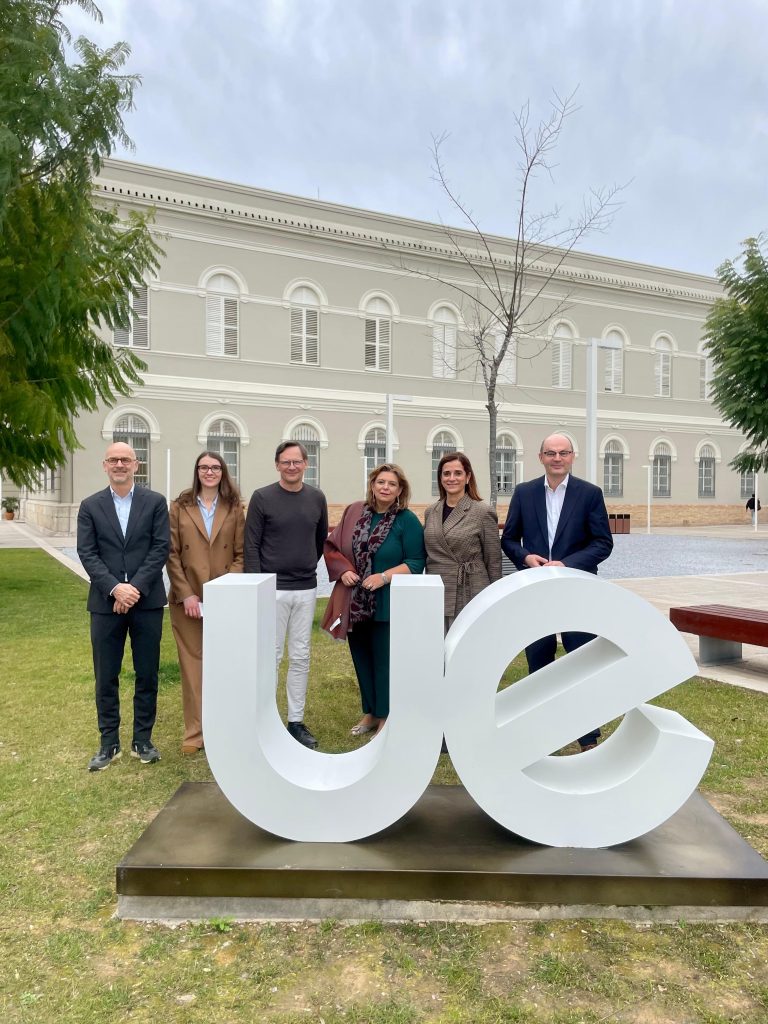
The Strategy Board, made up of the Rectors of the nine member universities, holds its meeting at the Turia Campus to take stock of the alliance’s first year and define future directions. On Tuesday (10 February), Universidad Europea de Valencia hosted the meeting of the ChallengeEU Strategy Board. This meeting brought together, at the Turia Campus, the rectors of the nine universities that make up the Alliance in a working session focused on future directions, strategic challenges and the evolution of the project. The day began with a welcome coffee, during which Dr Esther Gómez, Regional Secretary for Universities of the Generalitat Valenciana, gave a few words of institutional greeting to the Rectors of the alliance before starting the programme of activities. During the working session, the Strategy Board addressed the presentation of the results of the alliance’s first year of operation, as well as the analysis of the medium and long-term strategy, focused on consolidating the vision and priorities for the coming years. The meeting also allowed progress to be made on the proposal to create double degrees between member universities, as well as exploring the possible incorporation of a Ukrainian polytechnic university as an associate member, in line with ChallengeEU’s commitment to broader and more diverse European cooperation. The meeting was chaired by Prof. Tobias Hagen, Director General of ChallengeEU, and by the Secretary General, Sofiia Hecker, both from the University of Offenburg (Germany), the institution responsible for the overall coordination of the alliance. Dr Annette Klinkert, director of the technical agency that has accompanied ChallengeEU in its application and development process, also participated in the proceedings. The session also agreed that the Rector of the Universidade Europeia de Lisboa, Prof. Helia Gonçalves, will assume the chairmanship of the Strategy Board during the alliance’s second year of operation, replacing Prof. Stephan Trahasch, Rector of the Offenburg University of Applied Sciences (Germany). Likewise, the Rector of Mid Sweden University (Sweden), Docent Anders Fallström, has been appointed as the new Vice-President of the body. Two Student Council representatives at the Strategy Board – Hannah Rendle from Hochschule Offenburg and Keshini Nistar from ECAM LaSalle – held their final meeting in this role. Throughout their mandate, they actively contributed student perspectives to the Alliance’s highest decision-making body, ensuring that the student voice remained an integral part of strategic discussions. New Student Council representatives will soon be elected to continue representing students at the Strategy Board.
Student Voices Shaping ChallengeEU: Meet Our Student Council
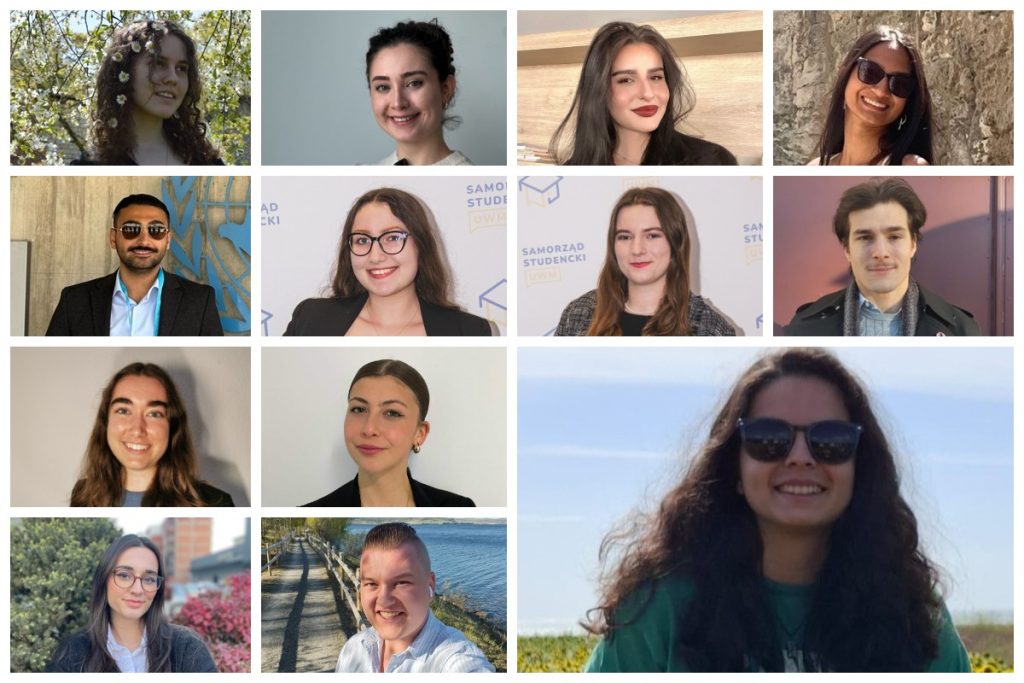
As the calendar year is coming to an end, we will soon say goodbye to the first composition of the Student Council (SCS). We would like to introduce the people who, over the past several months, have supported our Alliance and helped ensure that the student voice was clearly heard. With their student experience and positive energy, they have added one brick after another to the shared project we are building together: ChallengeEU. We are taking this opportunity to thank them for all their work so far. ChallengeEU Student Council (CSC) is the body where students will have the opportunity to shape the Alliance. In particular, the CSC will elaborate and represent students’ ideas, perspectives and feedback about the Alliance’s future development. Each partner university appoints two student representatives. Members are elected for one-year terms through the student associations of their home institutions and may be re-elected for a maximum of two terms. By simple majority, the members elect a President and a Vice-President for the duration of one term. The ChallengeEU Student Council (CSC) meets four times per year. In its decision-making, the Council strives to reach consensus. Where consensus cannot be achieved, decisions are taken by simple majority. The CSC also elects its representatives to the Alliance governance bodies: three representatives to the Strategy Board, two to the Management Board, and two to the ChallengeEU Academic Council. Rebecca Fernandes Paes Pinto Rocha, President CSC As an international PhD student that has studied in 3 different european universities up to my masters degree, ChallengeEU resonates with me and my experiences. That’s why getting involved in the Alliance was an obvious decision for me, specially as a student representative. As the president of the Student Council for the year 2025, I was challenged and able to grow alongside all students representatives. Together we set the base and started shaping the Student Council while working with boards, councils and staff of the Alliance to make the voice of students heard in all spheres. Iwona Pająk, Vice-President CSC I am a 5th-year psychology student at the University of Warmia and Mazury in Olsztyn. I have been actively involved in university life for many years, and I am currently the president of my student council – and I’m happy about it. In my free time, I enjoy reading books and traveling. Alketa Mustafi, representative SCS on the Management Board I’m a first-semester Master’s student in Finance, and I’ve always been curious about how things work – from numbers and strategies to people and ideas. Within ChallengeEU, I’m one of the two student representatives from the Student Council on the Management Board, which means I get to bring the student perspective into big decisions and make sure our voices actually shape the alliance. Beyond titles and roles, I’m someone who learns by doing, asking questions, and turning ideas into something real. I get energized by collaboration, new challenges, and being around people who think differently than me. ChallengeEU gives me the chance to do all of that – connect with amazing people, experiment, and see how far we can actually take an idea. And honestly? I’m here to push boundaries, make student voices matter, and have a little fun while doing it. Fabian Grönvik, Member of CSC I’m in my third year of social sciences studies, focusing on sociology. I believe ChallengeEU is a very impressive project of European integration with huge potential. We have a lot to learn from each other, both as academic knowledge and through cultural exchange. I’m proud to be part of the CSC to along with the others ensure that the student perspective is constantly present. Linda Priede, representative SCS on the Board Academic Council I have been actively involved in student life and the LBTU Student Council since the first year of my bachelor’s degree. Currently, I am studying for my second master’s degree in Project Management. With over six years of experience representing students’ opinions, I am still passionate about sharing the student perspective. That is why I continue to participate in student representation — this time as part of the ChallengeEU Student Council, serving on the Academic Council. It is a great experience to engage in discussions not only with students from different universities and countries but also with other university staff members. Gustav Månsson, Member of CSC I’m 21 years old, study business & economics and my inrest for party is almost as big as my intrest for educational policy. Keshini Nistar, representative SCS on the Strategy Board I’m a 4th-year Mechatronics Engineering student at ECAM LaSalle in Lyon France (Energy & Environmental Engineering track). I have joined the ChallengeEU alliance with the keen interest of contributing to cultural and international exchange in higher education. Being part of the student council and the Strategy Board, I am grateful and delighted to represent our students’ voices, ensuring they are at the heart of this alliance. I am indeed proud to represent ECAM LaSalle and to work with an amazing team of reps as well, ensuring that everyone has an opportunity to grow thanks to this wonderful initiative. I look forward to further participating and engaging with everyone is this alliance. Marija Kosovljanovic, Member of CSC I’m a full-time Business Administration student in my third semester, studying in Olten, Switzerland. I’m part of the Student Council and also a ChallengeEU Student Ambassador. I joined the Student Council because I wanted to get more involved in student life and help represent the voices of my fellow students. I enjoy working with others, supporting new ideas, and helping make our study environment a bit better for everyone. ChallengeEU is important to me because it connects students from different countries and backgrounds to work on real and meaningful challenges. I love the international exchange, the creative teamwork, and the chance to learn new perspectives. For me, it’s an opportunity to grow personally and academically while contributing to something that matters. Tina Adili, representative SCS on the Academic Council The internal
HSO PhD candidates visit MIUN: networking, mobility and research collaboration
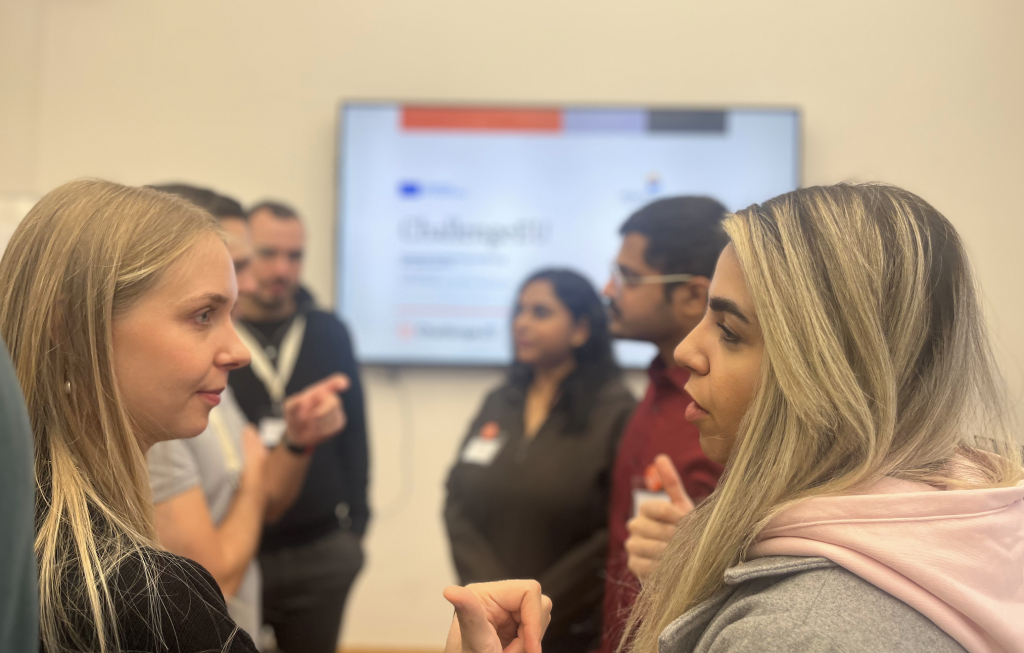
On 12 December, HSO PhD candidates demonstrated a strong commitment to scientific innovation by taking part in a networking visit to Mid Sweden University (MIUN) in Östersund. The event was arranged byDr. Carmen Kuhn (HSO) and Prof. Dr. Lars-Eric Rännar (MIUN) from the Graduate Academy, along withDr. Stefan Granlund from MIUN. The visit provided a valuable platform for strengthening international academic exchange and fostering long-term cooperation between the institutions. It also highlighted the importance of mobility and networking opportunities within doctoral education. Throughout the visit, the program concentrated on the candidates discussing their research, supported by training sessions on research ethics, AI usage, and planning different phases of doctoral work. These sessions encouraged critical reflection and offered practical tools to support the candidates in their individual research journeys. The interactive format allowed for in-depth discussions and peer-to-peer learning in an interdisciplinary setting. Participants benefited from exchanging perspectives and experiences across different research fields. The programme also included visits to the various MIUN laboratories, where exciting concepts on additive manufacturing and materials experimenting were put to the test. These lab tours provided hands-on insights into state-of-the-art research infrastructures and ongoing projects at MIUN. They also opened up opportunities to explore potential synergies for future research collaboration.
Orange for Awareness at SEEU: Empowering Law Students Against Gender-Based Violence
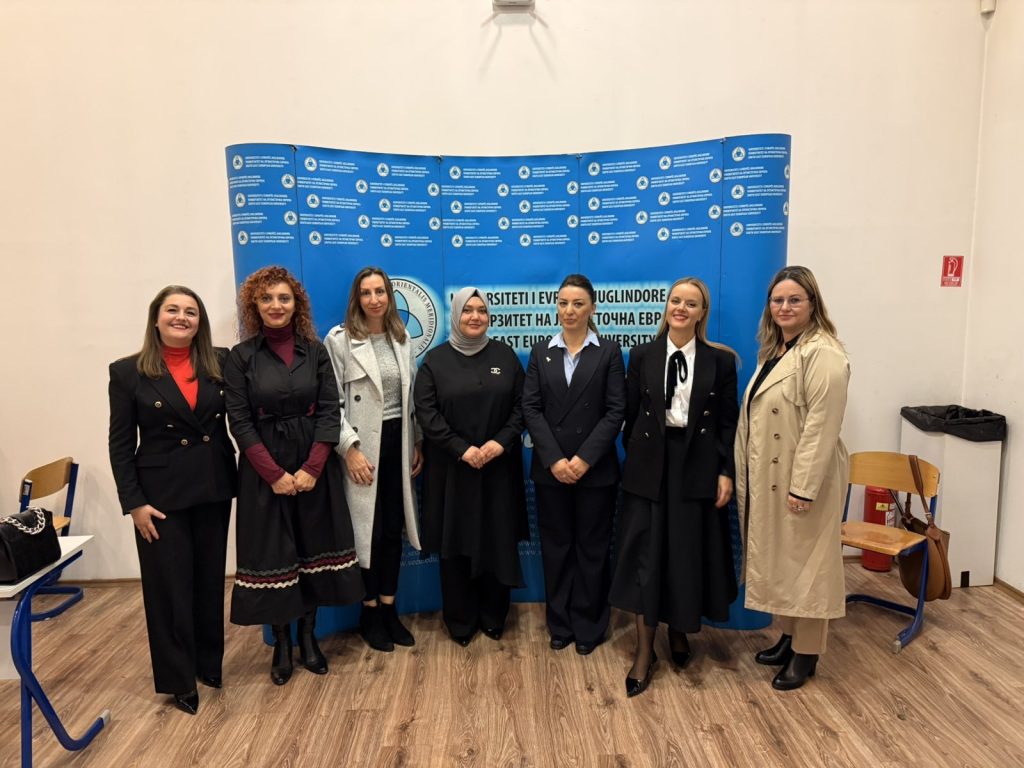
South East European University (SEEU), through its Faculty of Law and the ODEI Working Group (Openness, Diversity, Equity, and Inclusion) of the ChallengeEU project, launched the 16 Days of Activism Against Gender-Based Violence with the seminar “Orange for Awareness: Empowering Law Students Against Gender-Based Violence.” This year’s global theme, “UNiTE to End Digital Violence Against All Women and Girls”, guided the keynote messages and discussions throughout the event. The seminar opened with remarks by Prof. Dr. Arta Mero, who emphasized the importance of preparing future legal professionals to address both physical and digital forms of violence against women and girls. She highlighted SEEU’s ongoing commitment to fostering a safe, inclusive, and supportive academic environment for all students. The event brought together law students, academic staff, NGOs, gender-based violence activists, and participants from ChallengeEU partner universities who joined online. The presence of SEEU’s leadership demonstrated strong institutional support: Rector Prof. Dr. Sadudin Ibrahimi, Pro-Rector Prof. Dr. Veland Ramadani, and Prof. Dr. Besa Arifi, Advisor for Community and International Relations. The seminar featured a series of powerful contributions from experts and practitioners in the field. Vilma Dule, activist and survivor of gender-based violence, offered a deeply personal and academic reflection in her presentation “Rebirth as an Act of Resistance.” Elizabeta Bozhinovska, Programme Director at HERA, highlighted the importance of comprehensive services for victims, perpetrators, and men in crisis. From the University of Tetova, Prof. Dr. Hana Saliu discussed the psychological impacts of gender-based violence and the therapeutic interventions available to survivors. SEEU’s Prof. Dr. Albana Meta-Stojanova examined the alarming rise of femicide in her talk “Femicide: Chronicle of a Foretold Murder,” while Prof. Dr. Vedije Ratkoceri provided an overview of the criminal legal framework for protection against gender-based violence and its alignment with international standards. A special highlight of the event was the acknowledgment of the “Emine Zendeli” Legal Clinic, which supports victims of gender-based violence through primary legal assistance and offers students essential practical training and real-case experience. Today’s seminar reaffirmed that gender-based violence is not only a legal or institutional challenge, but a shared social responsibility. Only through cooperation among universities, institutions, organizations, activists, and students can we build a safer, fairer, and more humane society. SEEU and ChallengeEU remain committed to safeguarding human rights and standing united against all forms of gender-based violence. Together, we rise against gender-based violence.
Sustainable Idea Lab: Creative Minds Co-Create Solutions
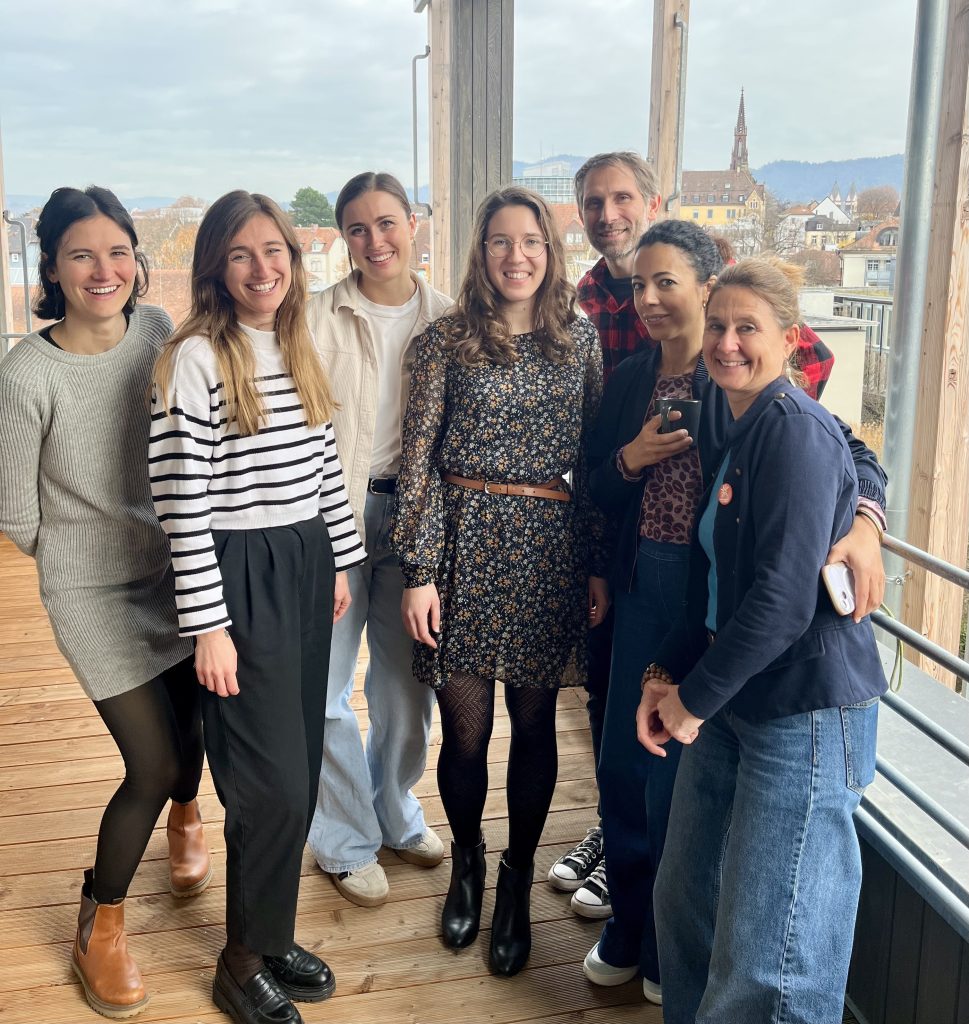
During a two-day (14–15 November) Sustainable Idea Lab workshop, 25 motivated participants came together to tackle five exciting real-world challenges. Divided into five dynamic teams, they worked side by side, sharing ideas in several languages and bringing together diverse perspectives, backgrounds, and experiences. The Sustainable Futures Idealab, held at Flow1986 in Offenburg, was organized by the Open Innovation Managers (M.A.R.K.E.T. Officers) of Sustainable Futures Idealab and the ChallengeEU Alliance. Their mission is to act as bridge builders between universities, students, industry, politics, and civil society – connecting people who want to collaboratively shape a sustainable future. The two-day workshop invited participants to bring their own sustainability-related challenges. These were consolidated into five problem statements addressing inclusive tourism, fair energy transition, inclusive collaboration, circular economy solutions, and the quality of scientific illustration. To strengthen regional cooperation, the team initiated dialogue with local partners such as Impact Hub, Link, La Maison de l’Emploi, SINGA, Interreg, Black Forest Innovation, and BadenCampus. Together, they co-created the concept for an open, participatory Sustainable Idealab. Interdisciplinary teams worked on these topics using design thinking, creative methods, and structured mentoring. Each group was guided by a team mentor who ensured both methodological clarity and space for innovation. The Idealab brought together a diverse group of participants from multiple countries and backgrounds, who collaborated intensively and produced early prototypes and solution concepts in just 1.5 days. This initiative started with fruitful discussions and ended with generated impact through:
Strengthening University–Industry Cooperation: HSO and SEEU Delegations Visit Associated Partner
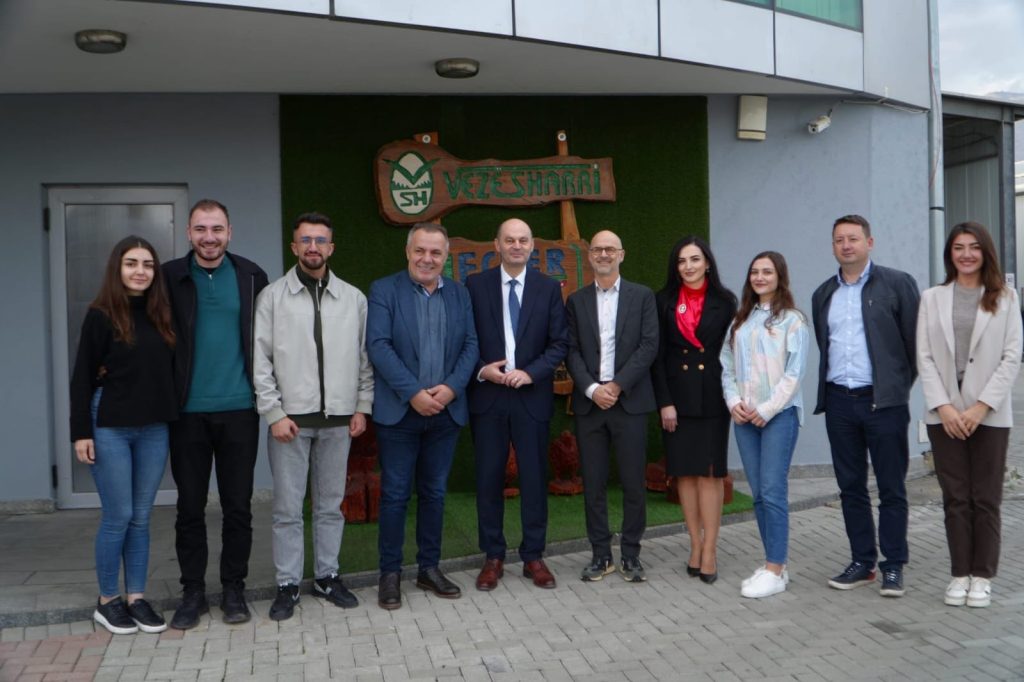
Representatives from Hochschule Offenburg (HSO) visited South East European University (SEEU) in North Macedonia and the agrifood company Veze Sharri as part of the ChallengeEU Alliance. The visit strengthened university–industry cooperation and created new opportunities for students, research collaboration and regional development in the Polog region. A delegation from HSO led by Prof. Dr. Stephan Trahasch, Rector, and Prof. Dr. Tobias Hagen, Vice-Rector for Internationalization and Managing Director of ChallengeEU, visited South East European University (SEEU) in North Macedonia, where they met with Prof. Dr. Sadudin Ibraimi, Rector, SEEU’s high management, and the ChallengeEU teams. Connecting ChallengeEU with the Agrifood Sector As part of the ongoing efforts to advance university-industry partnerships within the ChallengeEU Alliance, they visited Veze Sharri, one of the project’s associated partners and a leading agrifood company in the Polog region. The visit was organized and led by the M.A.R.K.E.T. Officer of ChallengeEU, Assoc. Prof. Dr. Shpresa Alija from South East European University (SEEU). During the meeting, the owner of Veze Sharri, Arben Abdurahmani, welcomed the delegation and presented the company’s development, production processes, and strategic vision. The delegation emphasized that Veze Sharri plays an important role not only as a regional business leader but also as a contributor to local development, workforce capacity building, and knowledge transfer. Through its involvement in ChallengeEU, the company will provide SEEU students with meaningful opportunities for practical learning, professional growth, and exposure to real-sector challenges and future innovation initiatives.This visit marks an important step toward strengthening long-term collaboration within the ChallengeEU ecosystem and creating impactful pathways for students, academic staff, and the local community. Joint Pathways for Students and Research During their time in North Macedonia, the delegation led by SEEU Project Lead, Prof. Veli Kreci, met with staff from Max van der Stoel Institute and the ChallengeEU team, followed by a meeting with Rector Ibraimi and the university’s management team: Academician Prof. Abdylmenaf Bexheti, Prof. Veland Ramadani, Prof. Besa Arifi, and Prof. Florije Ismaili. The discussions centred on academic collaboration, digital initiatives, and areas of shared interest. The visit concluded with a meeting coordinated by Prof. Dr. Mennan Selimi and the SEEU deans to review possibilities for developing joint and double-degree study programmes in engineering, computer science/AI and business.
Talent Day at Universidad Europea de Valencia: Boosting Young Careers
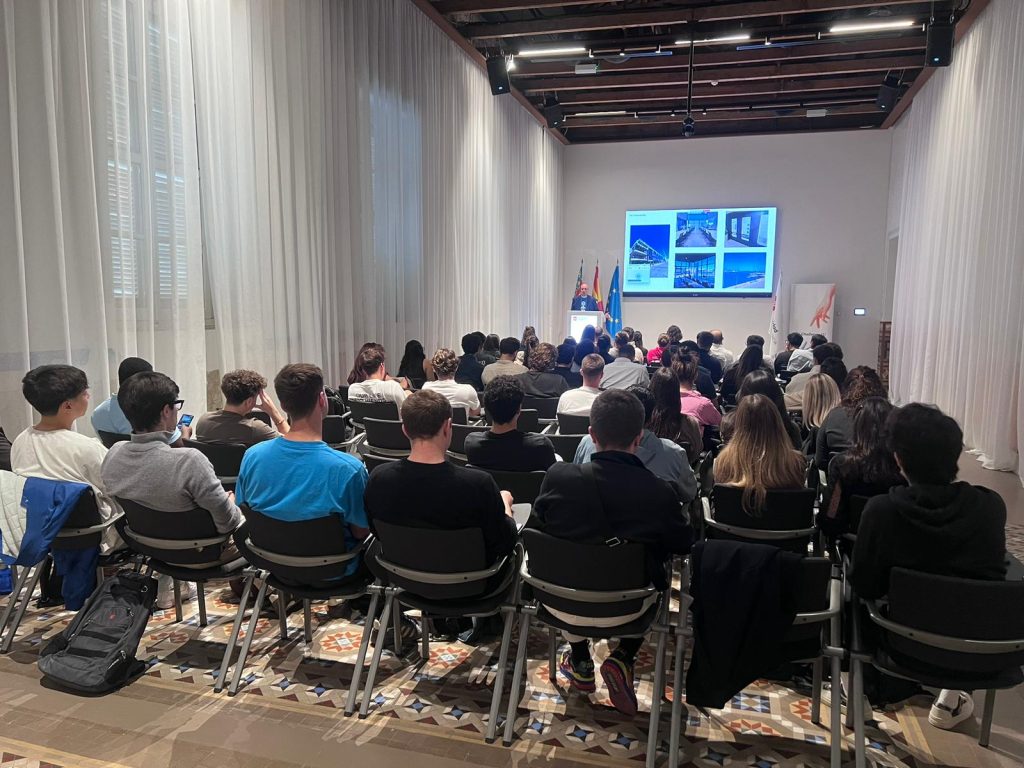
European companies, students and universities come together for a day that promotes professional development and strengthens the ChallengeEU alliance. Universidad Europea de Valencia has successfully held a new edition of Talent Day, an event dedicated to connecting students with companies that are committed to young talent and work every day to promote their professional growth. Talent Day – a bridge between the university and the labour market During the event, students had the opportunity to participate in practical activities designed to strengthen key skills for their professional development, such as Adecco’s Escape Room and professional photography sessions to improve their image on social media and in selection processes. The event took place on the Valencia, Viveros and Turia campuses, as well as on the Alicante Campus, where job fairs were held with the participation of companies such as Domusvi, Ecura, Globalworking, NorasCare Talent , Preventium, Adecco, Fundación Adecco, Eures, Melt Group, Randstad and Eurofirms. In addition, the auditorium hosted an IBM Masterclass on artificial intelligence and career opportunities in Valencia, which brought together around 75 students from Valencia and Alicante, who attended both in person and online. The European dimension of the event thanks to the ChallengeEU Alliance One of the major new features of this edition was the Job Fair becoming much more European as it was organized in collaboration with the European ChallengeEU Alliance, which allowed member universities from 8 different countries to participate, offering more opportunities to students from the Alliance. In total, 116 registered users explored the offers of the 11 participating companies, including Adecco, Fundación Adecco, GlobalWorking, Melt Group, Ecura, Eurofirms, Vezë Sharri, Fecke Coaching, ECAM La Salle, OSYPKA and the Port Authority of Valencia. In addition, the virtual open lectures organized within the framework of ChallengeEU attracted a total of 541 listeners, reflecting the growing interest in professional opportunities at European level. The sessions were offered by institutions such as South East European University (SEEU) from North Macedonia, Latvia University of Life Sciences and Technology (LBTU), Eures France, Eures Switzerland and the Universidad Europea de Valencia itself, consolidating the international and collaborative nature of the event. Talent Day has proven to be an effective platform for bringing the academic world closer to the professional world, and has reinforced Universidad Europea de Valencia’s commitment to employability, innovation and internationalisation. It should be noted that, in this edition, the collaboration with ChallengeEU, the European alliance that promotes cooperation between universities, companies and students, has been key to expanding the impact of this event and offering real opportunities for professional development beyond our borders. During Talent Day, Jana and Rocío from Universidad Europea de Valencia, members of the ChallengeEU Student Ambassadors Team, were among those who spoke about the opportunities that come with the development of the alliance. Their involvement in the event underlined in a special way that the idea of cooperation within the European Universities initiative is very close to the hearts of young Europeans.
Stay Connected with ChallengeEU – Subscribe to Our Newsletter

Want to stay up to date with what’s happening in ChallengeEU and at the universities that make up our alliance? Sign up for the ChallengeEU newsletter and: Join our community and don’t miss what is truly transforming European universities! Photo: Freepik