AI in higher education discussed at the Online Café meeting

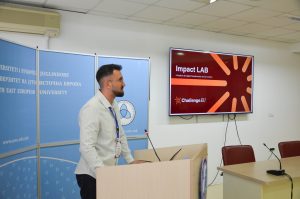
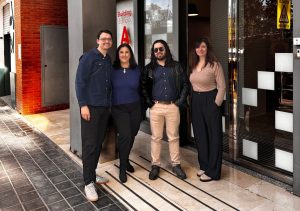
On December 18, ChallengeEU organized its first Online Café on Artificial Intelligence, bringing together professors from across the Alliance to share institutional practices, ethical guidelines, and innovative solutions for AI integration in higher education. ChallengeEU Online Café was dedicated to one of the most transformative topics in academia today: Artificial Intelligence in higher education. The aim of the meeting was to create a collegial and open space for discussion, where professors and academic staff could meet peers facing similar questions, exchange experiences, and gather ideas for their own pedagogical practice. The conversation was broadly structured around three overarching questions: how are institutions framing and supervising students’ use of AI?; in what ways can AI enrich teaching and course activities?; what governance, support mechanisms, and ethical frameworks are needed for responsible AI use? This session brought together four speakers from four ChallengeEU partner universities, each offering brief insights into AI-related initiatives developed at their institutions. Sara Gancho from Universidade Europeia de Lisoboa showcased institutional initiatives: AI Best Practices Awards, professor training and ethical guidelines. Florije Ismaili from Southeast European University presented AI@SEU, a system with three modules to streamline admissions, academic guidance, and research support. Ingus Šmits from Latvia University of Life Sciences and Technologies addressed challenges of generative AI in student work and lecturer training to ensure integrity. Etienne Bossy from ECAM LaSalle shared experience with AI detection tools and mandatory AI usage forms, aiming to balance transparency, ethics, and practical assessment in engineering education. These presentations were followed by breakout room sessions, which allowed professors to interact more deeply on this topic. In the future, further events from the Online Café series will take place. Photo: www.freepik.com

December of Social Responsibility: when the university opens itself to the community

December brought Universidad Europeia de Lisoboa a clear roadmap of commitment to the community: bringing academia closer to people, creating tangible opportunities, and honoring the culture that defines us. In just a few days, two local protocols were signed – with the Loures City Council and with the Casa do Artista, in Carnide – and the European University’s Volunteer Pool was presented, a new channel for student participation with direct impact on the territory. Both protocols were signed on behalf of the European University by the Rector, Professor Dr. Hélia Gonçalves Pereira, underscoring the institution’s leadership and long‑term commitment. The guiding principle is simple and demanding: serve, innovate, and transform. Loures: Upskilling that turns into opportunity The partnership with the Loures City Council aims to open doors for those who want to study and progress, aligning education with local development. The protocol provides facilitated access to higher education via scholarships for municipal employees, and the integration of students into curricular and professional internships – concrete steps to connect talent with the real needs of the municipality. More than administrative cooperation, it is a platform for joint projects with academic, social, and economic impact, and for promoting innovation, research, and new approaches to public management. In practice, Loures gains more skills and future; the University gains a living laboratory to apply knowledge and generate solutions with measurable effects on the territory. Carnide: Culture that cares for memory and unites generations On December 4, the European University and the Casa do Artista (Apoiarte Association), in Carnide, formalized a protocol that brings the academic community closer to the senior artistic community – in a moment attended by the actor José Raposo, the institution’s president. The collaboration foresees reading sessions, research projects, cultural initiatives, and actions with real impact on residents’ quality of life. By joining the project “O meu lugar no Teatro Armando Cortez”, the European University also assumes an affective and memory-based commitment: contributing to the preservation of the legacy of Portuguese artists, while creating intergenerational meeting spaces where culture is bridge, care, and citizenship. Volunteer Pool: participation that is felt on the ground To amplify this movement of proximity, the European University officially launched its Volunteer Pool (Bolsa de Voluntariado) – presented by the Vice‑Rector for Academic Life, Professor Dr. Sara Sousa. The Pool is a structured participation channel that allows students to get involved in social, cultural, and educational initiatives, with direct benefit for partner communities. More than volunteer hours, it is purposeful learning: developing transversal skills (communication, empathy, teamwork, leadership), strengthening the academic path, and gaining transformative experiences that leave a mark – in Loures, at the Casa do Artista, and in future partnerships that may emerge from this ecosystem. The essentials: upskilling with an open door, culture that cares for people, and volunteering with impact. This is how the European University lives social responsibility – on and off campus. This was a December of alliances and action, marked by two protocols that connect the University to the territory and a Volunteer Pool that brings to life the will to participate and transform. Thus, the European University reaffirms its mission: to learn, innovate, and serve – with students at the center of change.

This site uses cookies. Visit our cookies policy page or click the link in footer for more information and to change your preferences.