Family Law through ODEI M.A.R.K.E.T.: Student Perspectives

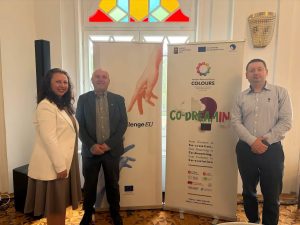
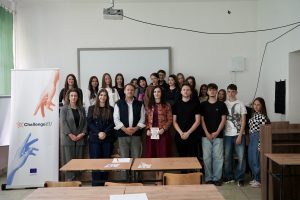
The event “Family Law through ODEI M.A.R.K.E.T.: Student Perspectives”, organised as part of ChallengeEU, is a compelling example of how innovative, inclusive and student-centred learning can generate meaningful academic and societal impact at South East European University (SEEU). The event opened with remarks from Prof. Dr Arta Mero, who emphasised the pedagogical value of the ODEI M.A.R.K.E.T. approach in fostering student advocacy, critical thinking and socially engaged legal education. This was followed by a welcome address from Prof. Dr. Veli Kreci, Director of the Max van der Stoel Institute, who highlighted the importance of embedding openness, diversity, equity, and inclusion into academic practice and curricula, particularly within the framework of the ChallengeEU Alliance. Representing the student perspective, Mevlan Ademi, Student Ambassador for ChallengeEU, reflected on the role of students as active contributors to university initiatives and European academic collaboration, underscoring how such formats empower students to engage meaningfully with societal challenges. Through the ODEI M.A.R.K.E.T. framework (Multi-Actor Research, Knowledge, Exchange, Teams), students moved beyond traditional classroom learning to become active researchers, presenters, and contributors to public and academic discourse. Their work demonstrated not only strong legal knowledge but also critical reflection, ethical awareness, and social sensitivity, particularly in addressing family law challenges through the lenses of diversity, equity, openness, and inclusion. The integration of the M.A.R.K.E.T. model in Family Law confirms its value as a sustainable, inclusive, and high-impact educational approach, enhancing academic excellence while strengthening the social relevance of legal education. The event also highlighted the transformative role of academic staff and fourth-year student mentors, whose guidance and commitment enabled participating students to translate theoretical knowledge into practice-oriented and socially responsive legal analysis. This collaborative effort reflects SEEU’s core values and reinforces its position as a leading institution within the European University Alliance, actively shaping modern, responsible and inclusive higher education. Presentations on adoption, domestic violence, child marriage, post-divorce parental responsibilities, children’s participation in legal proceedings and evolving approaches to divorce were delivered by: Albina Pajaziti, Sara Besimi, Era Fejzullai, Arion Dauti, Erjon Murseli; Iva Stefanovska, Bojana Velkovska, Emanuela Dimovska, Suejla Sulejmani, Zahide Hajdari, Drita Emini, Sara Vejseli; Aida Selami, Fatime Sejfuli, Leonita Xhelili, Mimoza Jahiu; Erlind Rufati, Valon Bexheti; Lindihana Uzeiri, Amina Iljazi, Eugerta Selami; and Jehona Saiti, Albina Rexhepi and Djellza Pajaziti, under the mentorship of Elisa Murseli, Mila Arsić, Elsa Havziju, Amina Ademi, Elfatir Lloga, Mevlan Ademi, Era Sadiku and Omer Ajruli (fourth-year students). The presentations were followed by an open and dynamic debate, during which students, mentors, and participants discussed research challenges, the role of mentoring, and emerging perspectives for family law within the ODEI framework, further enriching the academic exchange and reinforcing the participatory nature of the initiative. Strong engagement from legal practitioners (attorneys, notaries and judges), NGOs, institutional representatives, and students from other faculties and universities significantly amplified the event’s impact. Stakeholders welcomed the initiative and described it as a unique and rarely seen format in the legal field, emphasising its value in bridging academia and practice. As key collaborators of SEEU, they recognised the importance of such initiatives in advancing legal scholarship and strengthening societal trust in the legal system. The event concluded with a certificate ceremony, recognising the commitment and academic contribution of all participating students and mentors. Overall, this initiative confirms that ODEI M.A.R.K.E.T. within the ChallengeEU framework is not merely a project activity but a sustainable educational model, one that empowers students as agents of change, strengthens academic practice, and positions SEEU as a hub of inclusive, forward-looking, and socially responsible higher education with a tangible impact on both society and academia.
SEEU Marks the 24th Anniversary with a Solemn Ceremony: Broad Participation and Messages of Vision for the Future

The South East European University today held the central ceremony marking the 24th anniversary of its establishment, a solemn event that brought together rectors of public universities from the country and the region, representatives of the diplomatic corps, the business community, accreditation and quality assurance bodies in education, as well as many other distinguished guests. SEEU Rector, Prof. Dr. Sadudin Ibraimi, addressed the attendees, emphasizing the historical importance of the University’s founding date and the key role SEEU plays in advancing education, innovation, and inclusion. He highlighted the development of the seven faculties, including the two newest ones — the Faculty of Technical Sciences and the Faculty of Health Sciences — as clear evidence of the institution’s dynamism and strategic vision. Rector Ibraimi also spoke about some of the year’s most significant achievements, such as the launch of the Preparatory Year for international students, the innovative initiative “AI at SEEU”, and SEEU’s active participation in the European Alliance “ChallengeEU”, where the university is recognized as one of the driving forces of the project. The Chairman of the University Board, Prof. Dr. Klaus Tochterman, offered a symbolic perspective on the number 24, connecting it with continuity, stability, and achievement — values that, according to him, have defined SEEU since its creation. He expressed special gratitude to the PhD candidates, university staff, and international partners whose contributions have helped shape SEEU into a modern, resilient, and socially impactful institution. As part of the anniversary, SEEU promoted its PhD candidates, while staff members with 20 and 10 years of service were awarded recognitions and gifts for their long-term contribution to the institution’s development. The artistic program of the ceremony featured performances by the well-known opera artist from Tetovo, Besarta Murtezani, pianist Shkelzen Baftiari, and the Tetovo Choir led by maestro Jeton Pustina, giving the event a refined cultural atmosphere. The ceremony was masterfully moderated by Arbra Sulejmani. In conclusion, the ceremony served as a moment of reflection and return to the University’s core values — inclusion, innovation, and integrity — reaffirming SEEU’s commitment to its mission of educating and empowering future generations.
Orange for Awareness at SEEU: Empowering Law Students Against Gender-Based Violence

South East European University (SEEU), through its Faculty of Law and the ODEI Working Group (Openness, Diversity, Equity, and Inclusion) of the ChallengeEU project, launched the 16 Days of Activism Against Gender-Based Violence with the seminar “Orange for Awareness: Empowering Law Students Against Gender-Based Violence.” This year’s global theme, “UNiTE to End Digital Violence Against All Women and Girls”, guided the keynote messages and discussions throughout the event. The seminar opened with remarks by Prof. Dr. Arta Mero, who emphasized the importance of preparing future legal professionals to address both physical and digital forms of violence against women and girls. She highlighted SEEU’s ongoing commitment to fostering a safe, inclusive, and supportive academic environment for all students. The event brought together law students, academic staff, NGOs, gender-based violence activists, and participants from ChallengeEU partner universities who joined online. The presence of SEEU’s leadership demonstrated strong institutional support: Rector Prof. Dr. Sadudin Ibrahimi, Pro-Rector Prof. Dr. Veland Ramadani, and Prof. Dr. Besa Arifi, Advisor for Community and International Relations. The seminar featured a series of powerful contributions from experts and practitioners in the field. Vilma Dule, activist and survivor of gender-based violence, offered a deeply personal and academic reflection in her presentation “Rebirth as an Act of Resistance.” Elizabeta Bozhinovska, Programme Director at HERA, highlighted the importance of comprehensive services for victims, perpetrators, and men in crisis. From the University of Tetova, Prof. Dr. Hana Saliu discussed the psychological impacts of gender-based violence and the therapeutic interventions available to survivors. SEEU’s Prof. Dr. Albana Meta-Stojanova examined the alarming rise of femicide in her talk “Femicide: Chronicle of a Foretold Murder,” while Prof. Dr. Vedije Ratkoceri provided an overview of the criminal legal framework for protection against gender-based violence and its alignment with international standards. A special highlight of the event was the acknowledgment of the “Emine Zendeli” Legal Clinic, which supports victims of gender-based violence through primary legal assistance and offers students essential practical training and real-case experience. Today’s seminar reaffirmed that gender-based violence is not only a legal or institutional challenge, but a shared social responsibility. Only through cooperation among universities, institutions, organizations, activists, and students can we build a safer, fairer, and more humane society. SEEU and ChallengeEU remain committed to safeguarding human rights and standing united against all forms of gender-based violence. Together, we rise against gender-based violence.
Orange for Awareness: Empowering Law Students Against Gender-Based Violence

This seminar is organized within the framework of the ChallengeEU project, as part of the ODEI Working Group (WP5), which aims, among other objectives, to strengthen students’ capacities in addressing gender-based violence. “Orange for Awareness” is an activity that brings together professionals from the legal system, mental health, civil society, and activism to create a shared space for education, reflection, and awareness on one of the most serious human rights challenges. Aligned with the 2025 theme of the 16 Days of Activism Against Gender-Based Violence “UNiTE to End Digital Violence Against All Women and Girls”, the seminar emphasizes the growing importance of combating violence in both physical and digital spaces. It aims to equip students with legal, psychological, and practical knowledge, preparing them to become professionals committed to justice, victim protection, and fostering social change. The Legal Clinic “Emine Zendeli”, through its role in providing primary legal assistance, enables students to respond professionally to real cases of gender-based violence, strengthening the connection between theory, practice, and ethical engagement in the protection of human rights. Join online: https://meet.google.com/upq-ikjb-ena Involved institutions and partners: Max Vander Stoel Institute; Cortex; Mollekuqja, Margini, Hera; Shega; Centre for Women Support
SEEU Pro-Rector Prof. Dr. Veland Ramadani Among World’s Top 2% Most Cited Researchers for the Sixth Consecutive Time

South East European University (SEEU) continues to demonstrate its leading role in academia through the achievements of its professors. For the sixth consecutive time, the Pro-Rector for Research, Planning and Entrepreneurship, Prof. Dr. Veland Ramadani, has been ranked among the world’s Top 2% most cited researchers, according to the prestigious evaluation conducted by Stanford University in collaboration with the scientific publishing house Elsevier.
Shaping ChallengeEU’s Digital Future in Offenburg

As part of the ChallengeEU university alliance, representatives from nine European universities, primarily IT leads involved in Work Package 2 (WP2), met at Hochschule Offenburg (Offenburg University of Applied Sciences) to advance discussions on the alliance’s digital infrastructure. WP2 plays a key role in creating the digital backbone of ChallengeEU, enabling collaboration, mobility, and data exchange across partner institutions. The meeting focused on shaping the platform’s architecture and core functionalities that will steer the alliance over the coming three to four years. Among the priorities are the development of a joint course and mobility catalogue, the launch of the DigitalHub (known as the Digital M.A.R.K.E.T Space) and the integration of AI-powered features. All modules will align with major European digital initiatives, including eduGAIN, Erasmus Without Papers (EWP), ECTS, and the European Student Card. WP2 is coordinated by South East European University (SEEU), led by Prof. Dr. Mennan Selimi, with co-leadership from Mid Sweden University under Prof. Dr. Niklas Brinkfeldt. SEEU’s IT team — Shefik Osmani, Ahmed Abdullai, and Hamit Kamberi — joined the Offenburg meeting to contribute their expertise to the design of ChallengeEU’s digital platform.
For Better Communication: Internal Training at SEEU

Effective internal communication is key to the success of any international alliance — and the ChallengeEU Alliance is no exception. With this in mind, the Work Package 6 (WP6) team, which leads communication and dissemination efforts across the Alliance, organized a dedicated internal training session at South East European University (SEEU) on 2 July. The training, titled “Internal Communication Tools and Effective Collaboration”, aimed to strengthen coordination among different teams involved in the ChallengeEU project at SEEU and to establish a more unified and effective communication culture across all university departments engaged in the initiative. The session was led by Edlira Palloshi Disha, communication specialist and researcher at the Max van der Stoel Institute (MVDSI), who introduced key tools, techniques, and principles for impactful communication within a complex, multi-stakeholder environment. Drawing from practical experience, Nerodia Selimi from SEEU’s Public Relations Office shared valuable best practices and examples from the university’s communication strategy. The training brought together a diverse group of participants representing all SEEU work packages involved in ChallengeEU, including colleagues from Participants included representatives from the International Relations Office, Career Center, the Pro-Rector for Digitalization, Business Innovation Center, MVDSI’s Project Coordination Unit, deans, and other academic staff and administrative offices across the university. This broad participation created a dynamic environment for knowledge-sharing and collective reflection. One of the session’s main objectives was to initiate a more standardized internal communication framework across SEEU’s project teams, ensuring smoother collaboration, clearer messaging, and improved responsiveness. Participants actively engaged in discussions on: The training session laid the groundwork for more efficient collaboration within SEEU and, by extension, within the broader ChallengeEU Alliance. By aligning internal communication practices, the university is taking a critical step toward ensuring that the Alliance functions as a truly integrated and collaborative ecosystem. This event highlights how internal capacity building can directly contribute to the success of international cooperation — reinforcing ChallengeEU’s core mission to bring European universities together to tackle shared challenges through joint innovation, research, and education
Paving the Way for the Talent Academy: ChallengeEU at ISCBE 2025

The 8th International Scientific Conference on Business and Economics (ISCBE), hosted by South East European University (SEEU), provided an excellent platform for international dialogue and innovation. As part of the event, a dedicated Networking Event brought together international students and industry experts to co-create the vision for the Talent Academy – one of the key initiatives within the ChallengeEU alliance. The session served as an inspiring forum for exchanging ideas and aligning academic ambition with practical realities. Participants emphasized the importance of strengthening the bridge between higher education and the labour market. Key outcomes included: 🔹 Aligning academic programs with real-world industry needs🔹 Focusing on hands-on learning, internships, and mentoring🔹 Enhancing cooperation between universities, businesses, and institutions🔹 Improving accessibility through flexible, inclusive learning opportunities – including online formats🔹 Promoting a culture of continuous improvement driven by feedback The insights gained during the event will play a crucial role in developing a future-ready Talent Academy that is inclusive, innovative, and closely connected to the evolving demands of the job market. The ChallengeEU Talent Academy will provide early-career researchers and lifelong learners with bothmethodological capacities and entrepreneurial skills, enabling them to undertake socially-relevant research and/oreffectively translate research findings. Reciprocal learning with and from stakeholders, as well as transdisciplinarylearning, will support and foster the open innovation processes within the Alliance.
LBTU hosts programme “Media Literacy for Future Leaders”

The Institute of Social and Humanitarian Sciences of the Faculty of Economics and Social Development (ESAF) at the Latvia University of Life Sciences and Technologies (LBTU) has successfully completed the Erasmus+ Blended Intensive Programme (BIP) project “Media Literacy for Future Leaders”. Among the participants were students and lecturers from ChallengeEU partner universities — Hochschule Offenburg, University of Warmia and Mazury in Olsztyn, and South East European University (SEEU) — joined by representatives of the Estonian University of Life Sciences. The program was led by an international team of lecturers, including five LBTU faculty members from ESAF and guest lecturers – professor Edlira Palloshi Disha from North Macedonia, media science professor Urszula Doliwa, and associate professor Magdalena Szydłowska from Poland. The programme focused on media literacy, critical thinking, and intercultural communication — equipping students with tools to analyze digital content, detect disinformation, and craft meaningful messages. Following an initial online seminar, participants gathered for a vibrant study week in Jelgava, featuring hands-on workshops, cultural visits to Riga and Rundāle Palace, and student presentations during the international conference “Students on Their Way to Science”. It was a great experience, as reflected in the words of one of the participants: “I would like to sincerely thank you for the wonderful experience during the Blended Intensive Programme in Latvia. It was an incredibly enriching opportunity, both academically and personally. I am truly grateful for the chance to participate, to meet inspiring peers, and to learn from outstanding professors. The organization and hospitality throughout the programme were exceptional. I truly appreciate all the efforts that made this an unforgettable experience”. >>> More information