Student Voices Shaping ChallengeEU: Meet Our Student Council

As the calendar year is coming to an end, we will soon say goodbye to the first composition of the Student Council (SCS). We would like to introduce the people who, over the past several months, have supported our Alliance and helped ensure that the student voice was clearly heard. With their student experience and positive energy, they have added one brick after another to the shared project we are building together: ChallengeEU. We are taking this opportunity to thank them for all their work so far. ChallengeEU Student Council (CSC) is the body where students will have the opportunity to shape the Alliance. In particular, the CSC will elaborate and represent students’ ideas, perspectives and feedback about the Alliance’s future development. Each partner university appoints two student representatives. Members are elected for one-year terms through the student associations of their home institutions and may be re-elected for a maximum of two terms. By simple majority, the members elect a President and a Vice-President for the duration of one term. The ChallengeEU Student Council (CSC) meets four times per year. In its decision-making, the Council strives to reach consensus. Where consensus cannot be achieved, decisions are taken by simple majority. The CSC also elects its representatives to the Alliance governance bodies: three representatives to the Strategy Board, two to the Management Board, and two to the ChallengeEU Academic Council. Rebecca Fernandes Paes Pinto Rocha, President CSC As an international PhD student that has studied in 3 different european universities up to my masters degree, ChallengeEU resonates with me and my experiences. That’s why getting involved in the Alliance was an obvious decision for me, specially as a student representative. As the president of the Student Council for the year 2025, I was challenged and able to grow alongside all students representatives. Together we set the base and started shaping the Student Council while working with boards, councils and staff of the Alliance to make the voice of students heard in all spheres. Iwona Pająk, Vice-President CSC I am a 5th-year psychology student at the University of Warmia and Mazury in Olsztyn. I have been actively involved in university life for many years, and I am currently the president of my student council – and I’m happy about it. In my free time, I enjoy reading books and traveling. Alketa Mustafi, representative SCS on the Management Board I’m a first-semester Master’s student in Finance, and I’ve always been curious about how things work – from numbers and strategies to people and ideas. Within ChallengeEU, I’m one of the two student representatives from the Student Council on the Management Board, which means I get to bring the student perspective into big decisions and make sure our voices actually shape the alliance. Beyond titles and roles, I’m someone who learns by doing, asking questions, and turning ideas into something real. I get energized by collaboration, new challenges, and being around people who think differently than me. ChallengeEU gives me the chance to do all of that – connect with amazing people, experiment, and see how far we can actually take an idea. And honestly? I’m here to push boundaries, make student voices matter, and have a little fun while doing it. Fabian Grönvik, Member of CSC I’m in my third year of social sciences studies, focusing on sociology. I believe ChallengeEU is a very impressive project of European integration with huge potential. We have a lot to learn from each other, both as academic knowledge and through cultural exchange. I’m proud to be part of the CSC to along with the others ensure that the student perspective is constantly present. Linda Priede, representative SCS on the Board Academic Council I have been actively involved in student life and the LBTU Student Council since the first year of my bachelor’s degree. Currently, I am studying for my second master’s degree in Project Management. With over six years of experience representing students’ opinions, I am still passionate about sharing the student perspective. That is why I continue to participate in student representation — this time as part of the ChallengeEU Student Council, serving on the Academic Council. It is a great experience to engage in discussions not only with students from different universities and countries but also with other university staff members. Gustav Månsson, Member of CSC I’m 21 years old, study business & economics and my inrest for party is almost as big as my intrest for educational policy. Keshini Nistar, representative SCS on the Strategy Board I’m a 4th-year Mechatronics Engineering student at ECAM LaSalle in Lyon France (Energy & Environmental Engineering track). I have joined the ChallengeEU alliance with the keen interest of contributing to cultural and international exchange in higher education. Being part of the student council and the Strategy Board, I am grateful and delighted to represent our students’ voices, ensuring they are at the heart of this alliance. I am indeed proud to represent ECAM LaSalle and to work with an amazing team of reps as well, ensuring that everyone has an opportunity to grow thanks to this wonderful initiative. I look forward to further participating and engaging with everyone is this alliance. Marija Kosovljanovic, Member of CSC I’m a full-time Business Administration student in my third semester, studying in Olten, Switzerland. I’m part of the Student Council and also a ChallengeEU Student Ambassador. I joined the Student Council because I wanted to get more involved in student life and help represent the voices of my fellow students. I enjoy working with others, supporting new ideas, and helping make our study environment a bit better for everyone. ChallengeEU is important to me because it connects students from different countries and backgrounds to work on real and meaningful challenges. I love the international exchange, the creative teamwork, and the chance to learn new perspectives. For me, it’s an opportunity to grow personally and academically while contributing to something that matters. Tina Adili, representative SCS on the Academic Council The internal
Registration for Blended Intensive Programme (BIP): “Resilience Lab: media for social change”

We are pleased to invite all our partners in the Challenge EU Alliance to participate in the upcoming edition of the Blended Intensive Programme (BIP) “Resilience Lab: Media for Social Change” This BIP brings together students and academic staff from different fields to explore how media shape public opinion and can support positive social change. Focusing on resilience to disinformation, the program combines online sessions with an intensive on-site module, enabling participants to critically analyze information and create responsible, impactful media content. Program Dates: Virtual sessions: May 4th, 2026 On-site component in Olsztyn: May 11-15, 2026 We are looking for Bachelor, Master & PhD students in the humanities and social sciences. You are also warmly invited to contribute as a lecturer, mentor, or session leader, if interested – we’d be thrilled to co-design this experience with you. We kindly ask each partner to confirm their willingness to participate by January 23th, 2026 and to select and confirm their students by February 23th, 2026, so we can proceed with the necessary coordination for logistics and team formation. For more information, please find the BIP Invitation Flyer Resilience Lab – Media for Social Change UWM. Should you have any questions or need further clarification, we are at your disposal. Contact: Erasmus+ Institutional Coordinator: Anna Dąbrowska: ania.dabrowska@uwm.edu.pl Erasmus Faculty Coordinator: Czesław Kiński: czeslaw.kinski@uwm.edu.pl Course Contact: Marta Więckiewicz-Archacka: marta.wieckiewicz@uwm.edu.pl
HSO PhD candidates visit MIUN: networking, mobility and research collaboration

On 12 December, HSO PhD candidates demonstrated a strong commitment to scientific innovation by taking part in a networking visit to Mid Sweden University (MIUN) in Östersund. The event was arranged byDr. Carmen Kuhn (HSO) and Prof. Dr. Lars-Eric Rännar (MIUN) from the Graduate Academy, along withDr. Stefan Granlund from MIUN. The visit provided a valuable platform for strengthening international academic exchange and fostering long-term cooperation between the institutions. It also highlighted the importance of mobility and networking opportunities within doctoral education. Throughout the visit, the program concentrated on the candidates discussing their research, supported by training sessions on research ethics, AI usage, and planning different phases of doctoral work. These sessions encouraged critical reflection and offered practical tools to support the candidates in their individual research journeys. The interactive format allowed for in-depth discussions and peer-to-peer learning in an interdisciplinary setting. Participants benefited from exchanging perspectives and experiences across different research fields. The programme also included visits to the various MIUN laboratories, where exciting concepts on additive manufacturing and materials experimenting were put to the test. These lab tours provided hands-on insights into state-of-the-art research infrastructures and ongoing projects at MIUN. They also opened up opportunities to explore potential synergies for future research collaboration.
December of Social Responsibility: when the university opens itself to the community

December brought Universidad Europeia de Lisoboa a clear roadmap of commitment to the community: bringing academia closer to people, creating tangible opportunities, and honoring the culture that defines us. In just a few days, two local protocols were signed – with the Loures City Council and with the Casa do Artista, in Carnide – and the European University’s Volunteer Pool was presented, a new channel for student participation with direct impact on the territory. Both protocols were signed on behalf of the European University by the Rector, Professor Dr. Hélia Gonçalves Pereira, underscoring the institution’s leadership and long‑term commitment. The guiding principle is simple and demanding: serve, innovate, and transform. Loures: Upskilling that turns into opportunity The partnership with the Loures City Council aims to open doors for those who want to study and progress, aligning education with local development. The protocol provides facilitated access to higher education via scholarships for municipal employees, and the integration of students into curricular and professional internships – concrete steps to connect talent with the real needs of the municipality. More than administrative cooperation, it is a platform for joint projects with academic, social, and economic impact, and for promoting innovation, research, and new approaches to public management. In practice, Loures gains more skills and future; the University gains a living laboratory to apply knowledge and generate solutions with measurable effects on the territory. Carnide: Culture that cares for memory and unites generations On December 4, the European University and the Casa do Artista (Apoiarte Association), in Carnide, formalized a protocol that brings the academic community closer to the senior artistic community – in a moment attended by the actor José Raposo, the institution’s president. The collaboration foresees reading sessions, research projects, cultural initiatives, and actions with real impact on residents’ quality of life. By joining the project “O meu lugar no Teatro Armando Cortez”, the European University also assumes an affective and memory-based commitment: contributing to the preservation of the legacy of Portuguese artists, while creating intergenerational meeting spaces where culture is bridge, care, and citizenship. Volunteer Pool: participation that is felt on the ground To amplify this movement of proximity, the European University officially launched its Volunteer Pool (Bolsa de Voluntariado) – presented by the Vice‑Rector for Academic Life, Professor Dr. Sara Sousa. The Pool is a structured participation channel that allows students to get involved in social, cultural, and educational initiatives, with direct benefit for partner communities. More than volunteer hours, it is purposeful learning: developing transversal skills (communication, empathy, teamwork, leadership), strengthening the academic path, and gaining transformative experiences that leave a mark – in Loures, at the Casa do Artista, and in future partnerships that may emerge from this ecosystem. The essentials: upskilling with an open door, culture that cares for people, and volunteering with impact. This is how the European University lives social responsibility – on and off campus. This was a December of alliances and action, marked by two protocols that connect the University to the territory and a Volunteer Pool that brings to life the will to participate and transform. Thus, the European University reaffirms its mission: to learn, innovate, and serve – with students at the center of change.
The ChallengeEU Student Ambassadors Team gathers in Offenburg to build skills and connections

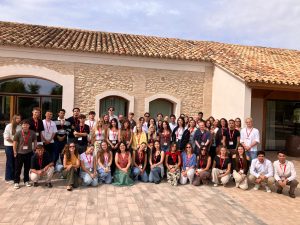
Between 4th and 5th of December Hochschule Offenburg hosted first official meetup of ChallengeEU Student Ambassadors Team. The first official gathering of the young people who represent the alliance across Europe was a great opportunity to strengthen relationships and develop the skills they need in their everyday work as ambassadors. “It was great to talk with my colleagues and learn about their cultures and different perspectives on studying. I really appreciate the fact that I could discover the differences between us,” says Marion Angsthelm, student ambassador from FHNW. “Through photography, social media, cultural intelligence and inclusion workshops, we learned how each tool can amplify our voices and help us create meaningful impact across Europe. But beyond the academic side, we realised that our stories, backgrounds and experiences are powerful — and when we unite, we can inspire real change. This meetup reminded us that each one of us has a voice that matters and that we are capable of shaping a better, more inclusive future for young people,” adds Jana Zaher Eddine from Universidad Europea de Valencia. “I come from Offenburg, so I was at home, but I really appreciate the fact I could get to know other ambassadors. I also learned a lot about the media, social media, how to use them to promote the ideas of our alliance,” says Hendrik Kirchoff, student ambassador from HSO. The student ambassador meeting focused on connecting our international student ambassadors from the nine universities together. The goal was to train them on how to carry out their responsibilities efficiently and deliver the alliance’s message accurately. The official agenda was full of interesting and engaging activities e.g. social media and photography training or communication exercises. Other workshops explored inclusivity and ODEI principles, complemented by practical strategies for intercultural communication skills that are particularly valuable for ambassadors when engaging on social media “We are committed to fostering collaboration, innovation, and intercultural exchange among students across Europe. Welcoming our ambassadors on campus allowed us to see this vision come to life: engaged students, motivated teams and inspiring sessions designed to help ambassadors to improve skills that will help them carry on with their mission within the alliance,” Hochschule Offenburg, host of the meetup and leader of the ChallengeEU alliance, writes on their social media. People who are responsible for the communication in the alliance have no doubts that the meeting was a success. “Ambassadors expressed a strong desire to connect with their peers in person and move beyond the limitations of virtual interaction, and this event provided the perfect opportunity to do so. They reported gaining a clearer understanding of ChallengeEU and their role within it,” says Lynn Summerfield from Universidad Europea de Valencia, who took part in the meeting. „Organizing the Student Ambassadors Meeting in Offenburg was an inspirational project. It was great to see how many students from different backgrounds and stories were able to relate to each other so closely and so fast. Seeing them work together proactively was merely a visual manifestation of what ChallengeEU is all about – centered around cooperation and cultural openness,” adds Zina Qabbani from HSO. Complementing the learning sessions were cultural experiences such as a visit to the local Christmas market and a dinner at a traditional restaurant renowned for its regional cuisine.
ChallengeEU Empowers Early-Career Researchers at SEEU

As part of the ChallengeEU Talent Academy, South East European University successfully organized (6th December) the “Meet the Researchers” training session, designed to inspire and empower early-career researchers. The goal of this session was to encourage socially relevant research and strengthen participants’ ability to effectively translate scientific findings into real-world impact. During the Meet the Researchers event with coffee in hand and plenty of motivation, attendees enjoyed a series of insightful presentations showcasing three socially impactful research case studies – along with valuable guidance on scientific writing and research design. The training session was opened by Pro-Rector for Planning, Research, and Entrepreneurship, Prof. Dr. Veland Ramadani, who shared practical strategies and key steps for navigating the publication process with confidence. The session was followed by the Director of the Max van der Stoel Institute, Prof. Veli Kreci, who provided clear guidance on crafting strong, testable hypotheses that lay the foundation for robust research. The three case studies that followed the session were mainly on topics aligned with the Challenge EU three Smart Specialisation Areas, that of Smart Digitalisation, Sustainable Futures, Health and Well-being. Fortesa Asani, a researcher at the Max van der Stoel Institute, presented findings on how social perceptions influence individual well-being, highlighting implications for policy and practice. Lejla Ademi Shaqiri, a researcher at the Max van der Stoel Institute, demonstrated methods for assessing indoor air quality and discussed its importance for public health. Lastly, Shqipe Salii, a teaching assistant at the Faculty of Contemporary Sciences and Technologies, introduced an innovative machine-learning approach that enhances accuracy while protecting patient data privacy. The event brought together curious minds, meaningful discussions, and inspiring ideas.
Talent Day at Universidad Europea de Valencia: Boosting Young Careers

European companies, students and universities come together for a day that promotes professional development and strengthens the ChallengeEU alliance. Universidad Europea de Valencia has successfully held a new edition of Talent Day, an event dedicated to connecting students with companies that are committed to young talent and work every day to promote their professional growth. Talent Day – a bridge between the university and the labour market During the event, students had the opportunity to participate in practical activities designed to strengthen key skills for their professional development, such as Adecco’s Escape Room and professional photography sessions to improve their image on social media and in selection processes. The event took place on the Valencia, Viveros and Turia campuses, as well as on the Alicante Campus, where job fairs were held with the participation of companies such as Domusvi, Ecura, Globalworking, NorasCare Talent , Preventium, Adecco, Fundación Adecco, Eures, Melt Group, Randstad and Eurofirms. In addition, the auditorium hosted an IBM Masterclass on artificial intelligence and career opportunities in Valencia, which brought together around 75 students from Valencia and Alicante, who attended both in person and online. The European dimension of the event thanks to the ChallengeEU Alliance One of the major new features of this edition was the Job Fair becoming much more European as it was organized in collaboration with the European ChallengeEU Alliance, which allowed member universities from 8 different countries to participate, offering more opportunities to students from the Alliance. In total, 116 registered users explored the offers of the 11 participating companies, including Adecco, Fundación Adecco, GlobalWorking, Melt Group, Ecura, Eurofirms, Vezë Sharri, Fecke Coaching, ECAM La Salle, OSYPKA and the Port Authority of Valencia. In addition, the virtual open lectures organized within the framework of ChallengeEU attracted a total of 541 listeners, reflecting the growing interest in professional opportunities at European level. The sessions were offered by institutions such as South East European University (SEEU) from North Macedonia, Latvia University of Life Sciences and Technology (LBTU), Eures France, Eures Switzerland and the Universidad Europea de Valencia itself, consolidating the international and collaborative nature of the event. Talent Day has proven to be an effective platform for bringing the academic world closer to the professional world, and has reinforced Universidad Europea de Valencia’s commitment to employability, innovation and internationalisation. It should be noted that, in this edition, the collaboration with ChallengeEU, the European alliance that promotes cooperation between universities, companies and students, has been key to expanding the impact of this event and offering real opportunities for professional development beyond our borders. During Talent Day, Jana and Rocío from Universidad Europea de Valencia, members of the ChallengeEU Student Ambassadors Team, were among those who spoke about the opportunities that come with the development of the alliance. Their involvement in the event underlined in a special way that the idea of cooperation within the European Universities initiative is very close to the hearts of young Europeans.
Alliance brings us closer: French students spent a semester in Sweden

This year, five students from the ECAM LaSalle are spending an academic semester at Mid Sweden University. It is the first French–Swedish university exchange carried out thanks to the ChallengeEU Alliance. Tom, Louis, Corentin, Juline and Victor left for Sweden at the beginning of September. “We’re delighted with the semester so far! Life in Sweden is very different from life in France, and we truly felt the change when we arrived. We’ve been warmly integrated into the community – the teaching staff, the exchange student office, and mentors who are themselves international students all look after us on campus. In short: we’re very happy in Östersund, and the balance between study and life outside the university is perfect,” the students say. As Caroline Henras, Director of International Relations at ECAM LaSalle, emphasises:“Establishing this academic partnership with a university in Sweden – a country particularly attractive to French students –demonstrates in practice the opportunities that ChallengeEU creates for our students.” ECAM LaSalle representatives note that the alliance is much more than an academic network: it is a chance to put the university’s values and educational mission into action. ChallengeEU opens new perspectives for students by fostering international mobility within a network of engaged European universities. This strategic partnership enables young Europeans to gain diverse academic and cultural experiences, significantly strengthening their employability in an increasingly international professional environment. Photo credit: Annacarin Aronsson
European Student Assembly 2026: Invitation for ChallengeEU Students

Would you like to co-create recommendations for Europe’s future, work in an international team, and speak at the European Parliament? Join the European Student Assembly (Strasbourg, 20–22 April 2026) — a flagship EUC Voices initiative that brings together around 250 students from European University Alliances each year to debate and produce concrete proposals for change. Why join? Work on real policy recommendations across eight topics crucial to the EU International collaboration and online training (January–April 2026) Plenary assembly in the European Parliament, Strasbourg (20–22 April 2026) Certificate of participation upon completion Who can apply? Students (from the 2nd year of Bachelor’s to PhD), up to 30 years old, from universities within the 65 European University Alliances — including ChallengeEU. You can apply as a participant or a panel coordinator (prior leadership experience is an asset for coordinators). On average, about five students per alliance are selected (numbers may vary). Timeline & application: Call for applications: 1 October – 2 November 2025, 23:59 CET How to apply: complete the application form on the ESA website (“Click here to apply”) and indicate your preferred panel. ESA 2026 panel themes: Strengthening democracy, engaging citizens Scaling the circular economy Aligning budget with impact Europe moving together Unlocking digital potential Educating without borders Enabling generational solidarity Europe’s strategic autonomy Costs & logistics Participation in ESA is free; organisers provide meals and three nights of accommodation in a hostel. The reimbursement of travel costs is at the discretion of the European Universities Alliances. What to expect? From January to April 2026, participants meet online (workshops, expert consultations, team work on recommendations). In Strasbourg, teams finalise their proposals and vote on all recommendations during the plenary session. After the event, dissemination activities with stakeholders follow. Ready to add your voice? Apply on the ESA website as a participant or panel coordinator. Applications close on 2 November 2025 at 23:59 CET. Click here >>> to download the handbook of ESA 2026 to learn all the information about ESA Photo: Freepik.com/mego-studio
Young Voices, Big Impact: ChallengeEU Student Ambassadors Team

Over the past few months, we have completed the formation of the ChallengeEU Student Ambassadors Team (SAT) and introduced it to the communities of our universities. The team brings together engaged, creative, and motivated students from all nine partner universities. More than just representatives, they are the voice of the student community, actively shaping a more open, inclusive, and innovative European higher education. As members of the alliance, our ambassadors take on a unique role. They promote mobility, encourage co-creation, and foster intercultural dialogue across campuses. By sharing their own experiences, they inspire others to explore new opportunities and act as a vital link between students and the broader ChallengeEU community. HSO Reimund Schmidt: I’m currently studying Applied Artificial Intelligence at Hochschule Offenburg. Learning different languages and about different cultures fascinates me a lot. I’m also curious about other topics like artificial intelligence (my career), economy, adventures, and sports. With my open, curious, and creative mind, I hope to bring ChallengeEU inside and outside HSO a step forward. Elias Folwaczny: I’m an Applied Artificial Intelligence student and have just completed my fourth semester at HSO. Outside of university, I love meeting new people and I’m very passionate about sports, especially MMA. My motivation to become a student ambassador comes from a deep desire to connect people from all over the world. I’m excited to work towards this goal with like-minded individuals and build a strong and inspiring community. Hendrik Kirchhoff: I’m 21 years old and come from a town near Cologne, Germany. I study Applied Artificial Intelligence. In my free time, I enjoy programming and playing chess. As a Student Ambassador, I take pride in supporting fellow students, sharing knowledge about AI, and contributing to a dynamic and inspiring community. I also place great value on international exchange, as it broadens my perspective, deepens cultural understanding, and opens up opportunities for meaningful collaboration across borders. These experiences are not only essential for my academic journey but also for my personal growth. UWM Temitope Francis: I’m a PhD student at the Institute of Journalism and Social Communication. I am a Nigerian. Being part of a community like ChallengeEU matters to me because it brings together students from different cultures in ways that are thoughtful and constructive. Europe gave me the space to study without borders, and now I want to help others feel welcome, supported, and confident that their voices are valued here.Julia Wysocka: I study Psychology and English Philology (yes, by choice!). I’m full of contrasts – organised and responsible, but also spontaneous and a bit scatterbrained. I love dancing, especially when something feels overwhelming. ChallengeEU is not just a project — it’s real opportunites! My goal is to share those opportunities with you and encourage you to take action.Rafał Pirsztuk: I’m a law student. I’m passionate about foreign languages, history, and international culture. I came across the ChallengeEU programme while looking for opportunities to go beyond traditional academic paths. I want to be a university ambassador who inspires others to engage and collaborate. I enjoy challenges – that’s why I set goals that require commitment and courage.Georden Shaw: I am a 2nd Year Medical Student (from the English Division) at the UWM. My home country is Jamaica I was inspired to join the SAT because I believe in representation, building alliances and growth. The alliance is also an opportunity to create bridges between universities, students, and ideas across Europe. Back home, there’s a saying, “Each one, teach one!”, and I believe the aim of the alliance embodies that. SEEU Mevlan Ademi: I am currently studying law at South East European University in North Macedonia. I am deeply passionate about European integration and believe that young people must play an active role in shaping the future of Europe. That is why the ChallengeEU strongly resonates with my vision and ambitions. Mirajete Selami: I am a student of International Relations. I believe that as a united society, we can make global progress only if we share our capacities and create common goals and a shared future. I am extremely happy and excited to begin this long, beautiful, and most importantly meaningful journey with great responsibility. Gajur Memeti: I am student of International Communication at South East European University (SEEU). My motivation to become part of the ChallengeEU initiative comes from a deep desire to contribute to cross-cultural dialogue and build bridges between students from different backgrounds. I see this opportunity as a way to represent not only my university but also the youth of my community on the broader European stage. FHNW Marion Angsthelm: I am studying for a diploma in International Business Management. This trilingual curriculum is taught in French, German and English, in partnership with the Université de Haute-Alsace in Colmar, the Duale Hochschule Baden-Württemberg in Lörrach and the Fachhochschule Nordwestschweiz FHNW. I want to be an active student who participates fully in their studies, to help others in their journey, and to contribute to creating a rewarding collective experience. Marija Kosovljanovic: I have just finished my second semester in Business Administration. I chose to become a student ambassador to connect with other universities and people, and also to grow personally through the knowledge and experiences I’ll gain in this role. I am also a member of the ChallengeEU Student Council and look forward to being actively involved in both capacities. MIUN Runa Ziegler: I grew up in Germany, but moved to Sweden for my Bachelor’s and have stayed there to study a Master’s in Media and Communication Sciences at Mid Sweden University. Along the way, I have met many fellow Europeans who also chose to study in a different European country – either for an Erasmus semester or for the whole programme.Having lived this experience, I am excited to find out how to deepen academic integration across European Universities through the Challenge EU Alliance. UEV Jana Zaher Eddine: I see ChallengeEU as a unique platform where students can exchange ideas, support one another, and drive positive impact beyond borders. I’m truly excited to be