ChallengeEU Empowers Early-Career Researchers at SEEU

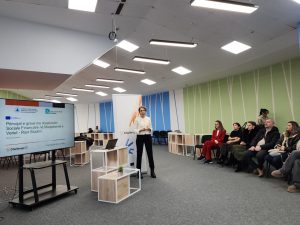
A presenter from SEEU stands next to a screen displaying a case study on the experiences of women using social assistance in North Macedonia; in front of her sits a group of participants attending the ChallengeEU seminar.

As part of the ChallengeEU Talent Academy, South East European University successfully organized (6th December) the “Meet the Researchers” training session, designed to inspire and empower early-career researchers. The goal of this session was to encourage socially relevant research and strengthen participants’ ability to effectively translate scientific findings into real-world impact. During the Meet the Researchers event with coffee in hand and plenty of motivation, attendees enjoyed a series of insightful presentations showcasing three socially impactful research case studies – along with valuable guidance on scientific writing and research design. The training session was opened by Pro-Rector for Planning, Research, and Entrepreneurship, Prof. Dr. Veland Ramadani, who shared practical strategies and key steps for navigating the publication process with confidence. The session was followed by the Director of the Max van der Stoel Institute, Prof. Veli Kreci, who provided clear guidance on crafting strong, testable hypotheses that lay the foundation for robust research. The three case studies that followed the session were mainly on topics aligned with the Challenge EU three Smart Specialisation Areas, that of Smart Digitalisation, Sustainable Futures, Health and Well-being. Fortesa Asani, a researcher at the Max van der Stoel Institute, presented findings on how social perceptions influence individual well-being, highlighting implications for policy and practice. Lejla Ademi Shaqiri, a researcher at the Max van der Stoel Institute, demonstrated methods for assessing indoor air quality and discussed its importance for public health. Lastly, Shqipe Salii, a teaching assistant at the Faculty of Contemporary Sciences and Technologies, introduced an innovative machine-learning approach that enhances accuracy while protecting patient data privacy. The event brought together curious minds, meaningful discussions, and inspiring ideas.

Student Voices Shaping the ChallengeEU Talent Academy

Staff and students of the Latvia University of Life Sciences and Technologies

In June, the Latvia University of Life Sciences and Technologies (LBTU) became a hub of dialogue and collaboration as staff and students came together for two dynamic focus group discussions organised within the framework of the ChallengeEU project. These meetings marked a key step in ensuring that the voices of students are at the heart of shaping future educational initiatives across the Alliance. The focus groups brought together doctoral and master’s students from a variety of disciplines, creating a safe and open space for them to share their experiences, challenges, and ideas for improvement related to their academic journey. The atmosphere was both reflective and constructive, with participants offering thoughtful feedback on many aspects of university life. What did they talk about?Discussions explored a wide range of topics, including: Each perspective shared during the sessions provided valuable insight into the lived experiences of early-career researchers and postgraduate students. Their suggestions and reflections are already proving to be essential in the development of one of ChallengeEU’s key initiatives — the Talent Academy. Why does it matter? The Talent Academy is being designed to support (early-career) researchers in acquiring both methodological capacities and entrepreneurial skills, enabling them to conduct socially relevant research and translate findings into real-world impact. The feedback collected during these sessions will directly inform its structure and priorities, helping to ensure that it reflects the true needs of students and young researchers. This type of participatory engagement is at the core of ChallengeEU’s values: building inclusive, challenge-driven, and impactful education and research ecosystems. By listening closely to students, the Alliance aims to co-create a more supportive and effective learning environment — one that empowers students to grow, thrive, and reach their full potential. These focus groups are just one of many ongoing efforts to build bridges between universities and their communities, and to ensure that the transformation of higher education in Europe is driven by collaboration, inclusion, and dialogue.

Paving the Way for the Talent Academy: ChallengeEU at ISCBE 2025

International Scientific Conference on Business and Economics (ISCBE)

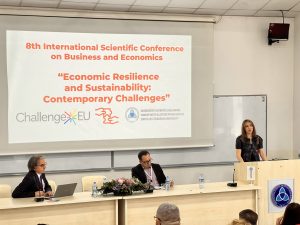
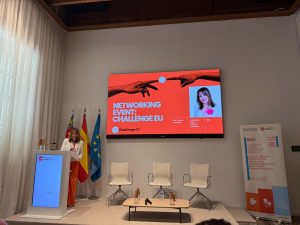
The 8th International Scientific Conference on Business and Economics (ISCBE), hosted by South East European University (SEEU), provided an excellent platform for international dialogue and innovation. As part of the event, a dedicated Networking Event brought together international students and industry experts to co-create the vision for the Talent Academy – one of the key initiatives within the ChallengeEU alliance. The session served as an inspiring forum for exchanging ideas and aligning academic ambition with practical realities. Participants emphasized the importance of strengthening the bridge between higher education and the labour market. Key outcomes included: 🔹 Aligning academic programs with real-world industry needs🔹 Focusing on hands-on learning, internships, and mentoring🔹 Enhancing cooperation between universities, businesses, and institutions🔹 Improving accessibility through flexible, inclusive learning opportunities – including online formats🔹 Promoting a culture of continuous improvement driven by feedback The insights gained during the event will play a crucial role in developing a future-ready Talent Academy that is inclusive, innovative, and closely connected to the evolving demands of the job market. The ChallengeEU Talent Academy will provide early-career researchers and lifelong learners with bothmethodological capacities and entrepreneurial skills, enabling them to undertake socially-relevant research and/oreffectively translate research findings. Reciprocal learning with and from stakeholders, as well as transdisciplinarylearning, will support and foster the open innovation processes within the Alliance.

This site uses cookies. Visit our cookies policy page or click the link in footer for more information and to change your preferences.