Mental Health at the Centre: M.A.R.K.E.T. MEET-UP at UEL

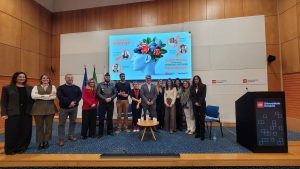
On 4 December, Quinta do Bom Nome, one of Universidade Europeia’s campuses in Carnide, hosted a vibrant gathering that brought together 50 participants: partners in the ChallengeEU Alliance, academia (academic staff, administrative staff and students), civil society, political decision-makers and economic actors. The group engaged in a frank, action-oriented conversation on mental health and psychological first aid (PFA). Opening remarks were delivered by Dr Rita Freitas, ChallengeEU Chief Implementation Officer at Universidade Europeia. She framed the Quadruple Helix model as a collaborative framework that brings together academia, government, civil society and the economy to reflect on shared challenges and design practical solutions across the initiative’s three Smart Specialisation Areas: Health & Well-Being, Smart Digitalisation and Sustainable Futures. Professor Dr Sofia Lopes hosted the event throughout the day, ensuring smooth transitions between segments and speakers. The roundtable was moderated by Professor Dr Lisa Roque, a member of the ChallengeEU community and a psychology faculty member, who placed PFA at the centre of the discussion and emphasised the need to build capacity to respond competently when someone experiences a critical event. Quadruple Helix in action The conversation gained depth as representatives from each “vertex” of the helix sat side by side. On behalf of academia, Prof Teresa Santos, Dean of the Faculty of Health Sciences, underscored the importance of mental-health literacy and transversal training – integrating competencies such as active listening, emotional regulation and crisis management into curricula and professional development programmes for students, faculty and staff. Representing civil society, Dr Inês Ribeiro of the Portuguese Red Cross highlighted the importance of timely responses and certified training in PFA, especially in crisis contexts, and the value of normalising these care practices as part of collective preparedness. From the local economy, Dr João Branco of Clínica Espaço Vida – Clínica Médica shared an integrated clinical perspective (general practice, psychiatry, nutrition and psychology), emphasising the link between prevention, triage and referral, as well as the value of accessible protocols connecting campus services, community support and specialised follow-up. The political dimension was represented by Fábio Sousa, Vice-President of the Carnide Parish Council, who explained how the council engages with local residents and stressed the importance of shared involvement – building proximity, networks and collective responsibility as pillars of an effective public response. Regional voices join the dialogue In a second round, the dialogue opened to regional stakeholders, reinforcing the reach of the model and the commitment to translate intentions into consistent practice. Firefighter Miguel Pereira, from the Sacavém Volunteer Firefighters, brought frontline experience, showing how early emotional and behavioural responses can make a tangible difference in mitigating harm and guiding decisions under pressure. Pedra Base – Consulting & Training, represented by Sara Carvalha and Daniela Guerreiro, presented first-aid training solutions for the corporate sector, advocating the implementation of internal protocols, response plans and ongoing team capacity-building. From expertise to practice: building mental-health literacy and response capacity A key takeaway resonated throughout the day: anyone can provide psychological first aid – provided they have the competence to do so. In many settings, equipping communities with PFA skills can help address shortages in resources and existing capacity, strengthening empathy, mutual support and immediate responses to critical events – alongside physical first aid when necessary. This shared vision turns the campus into a living laboratory of solutions, with impact both within and beyond the university. The closing segment opened the floor and turned the gathering into a productive brainstorming session, generating proposals that set direction and ambition: PFA modules embedded in curricula and continuous training; campus response plans and referral protocols aligned with local partnerships; mental-health literacy campaigns combined with hands-on skills training; and monitoring and impact-evaluation mechanisms grounded in data and continuous improvement. It became clear that Universidade Europeia and ChallengeEU are taking the concept off the page and into practice: when academia, civil society, political decision-makers and the economy sit at the same table – with informed moderation, careful hosting and shared objectives – the outcomes can be applicable, replicable and sustainable. More than a debate, this meet-up marked a turning point: empowering people to act with competence and care, precisely when it matters most.
Public Engagement and Volunteer Fair: applied science and civic participation

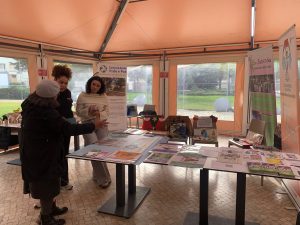
On 4th December, at the Universidade Europeia de Lisboa was held Public Engagement and Volunteer Fair event. Throughout the day, around 100 people moved through the university’s common space on the Carnide campus, engaging with stands, student‑led activities, and volunteer networks. The occasion included the launch of the Universidade Europeia’s Volunteer Scholarship and spotlighted the scientific poster presentation of results from the ODEI TRAINING COURSE – a pilot held from 23 to 27 June 2025. The poster was presented by Professor Rebeca Rocha and Dr. Rita Freitas, Chief Implementation Officer of Universidade Europeia in the ChallengeEU alliance. Universidade Europeia is the lead university for the ODEI theme and has been working in this area with the eight other universities that make up ChallengeEU. In the presentation of the poster “DEI Awareness – A Pilot Course Assessment,” Universidade Europeia placed applied science at the heart of the conversation, offering a clear, rigorous account of a pilot that is already transforming practice. The ODEI (Openness, Diversity, Equity & Inclusion) training has evolved into an annual offering for students and staff across the nine universities in the alliance. The poster succinctly and coherently outlined the course’s pedagogical architecture: six modules delivered over 12 hours, blending theoretical framing with practical applications and reflective activities. The modules cover the essential spectrum of DEI capacity‑building – Introduction to DEI, Self‑Awareness & Unconscious Bias, Intersectionality & Inclusion, Inclusive Communication, Neurodiversity & Accessibility, and From Awareness to Action – aligning concepts, skills, and transfer to real‑world contexts. The hybrid format (in‑person and online), with group/project work, was highlighted as a driver of accessibility and engagement, enabling 46 participants (staff and students) from partner institutions to experience the content in diverse, collaborative settings. “As a journalist specialized in scientific communication, I underscore the care taken with the learning objectives, clearly mapped to observable outcomes: understanding key concepts (such as unconscious bias, intersectionality, and neurodiversity), critically reflecting on personal bias and its impact on professional practice, demonstrating inclusive communication practices, and designing actionable strategies to strengthen institutional DEI. This taxonomy of objectives reveals a course aimed at behavioral and organizational change, moving beyond awareness into implementation,” says Dr. Rita Freitas. In the evaluation section, the poster presented a bar chart across six dimensions – Relevance, Engagement, Materials, Knowledge, Methods, and Overall – showing consistently high participant satisfaction in all metrics. While explicit numerical values were not displayed, the consistently high profile of the results suggests robust perceived quality and coherence between pedagogical design and classroom experience. This is a crucial indicator for decisions on scaling and institutionalization. Scientific rigor was equally evident in the continuous improvement section. Based on pilot data, the ChallengeEU DEI team – comprising the nine universities and led by Universidade Europeia – introduced specific adaptations: in Module 1, a stronger focus on key definitions to consolidate a shared language; in Module 2, the inclusion of more real cases, bringing content closer to everyday challenges; in Module 3, additional support materials to diversify learning strategies; in Module 4, adjustments to neurodiversity content for greater precision and breadth; in Module 5, the removal of the gender‑sensitive language topic – a technical decision reflecting careful scope curation; and, in Module 6, changes to activity duration to optimize the balance between practice and synthesis. Notes on timing (such as setting 1h30–2h for Module 1 and revising Module 2 from 3h to 2h30) reinforce that the course is iterative, attentive to cognitive load and the optimal learning pace. In summary, the poster’s narrative delivered what one expects from effective scientific communication: clarity of exposition, methodological transparency, evidence of results, and plans for improvement. By transforming a pilot into an annual program, Universidade Europeia and ChallengeEU signal a vision of ODEI as a practical competence – to learn, apply, measure, and improve – and offer a replicable model that brings knowledge and action closer together, both on campus and beyond. For those who attended the poster presentation, the takeaway was clear: ODEI Training is not just a course; it is an evidence‑based instrument of change, ready to impact people, teams, and institutions.
ChallengeEU Collaboration Powered by Lab IDEAS BIP

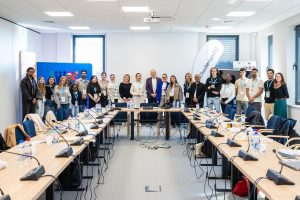
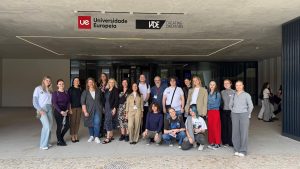
The ChallengeEU Alliance continues to promote collaboration and innovation through the Lab IDEAS: Impact-Driven Education for Action and Sustainability Blended Intensive Program (BIP), organized by IADE – Faculty of Design, Technology and Communication of Universidade Europeia, one of the founding institutions of the alliance in Lisbon, Portugal. The programme, held under Erasmus+, gathered 51 participants, including 36 international travelling participants from partner universities. Among them were students and professors from two ChallengeEU institutions, Latvia University of Life Sciences and Technologies and the University of Warmia and Mazury in Olsztyn, who joined multidisciplinary teams to co-create innovative solutions addressing digital behaviour and social responsibility. Under the theme “Designing Safe Digital Communities”, and in collaboration with the Portuguese Public Security Police (PSP), participants explored how social design can help prevent cyberbullying, foster empathy, and promote safer and more inclusive online environments. Students proposed a range of solutions, including ideas for board games for children and teenagers, creating a website to support victims, and developing informational materials for professionals involved in bullying prevention in cooperation with the police. They also drafted the idea of establishing an association that could later evolve into a social movement. As explained, this could help raise awareness of bullying in society and schools and contribute to creating a safe environment where victims can receive practical and psychological support. All of these solutions were presented to representatives of the police in Lisbon. “The concept of this programme really appeals to me. It was four days of intensive work with a tangible outcome at the end (presented to the client) — that’s exactly what we, students of Trend Analysis and Creation, enjoy. I’m very glad we have the opportunity to take part in initiatives like this. I’d happily do it again,” says Dominika Staniszewska, a student of Trend Analysis and Creation at University of Warmia and Mazury. Wiktor Kotarski, who also studies at UWM, adds:“I think the idea is excellent because it lets us look at what we’ll be doing professionally from a completely different perspective. Another advantage is that it allows you to test yourself in a new, international environment. In my view, the intensity is a plus – in a short time you can see whether this kind of work is for you. And if you decide it isn’t, you haven’t lost much time.” “Because we worked in mixed groups, we were able to experience intercultural exchange. Every student brought something new to the project — for example, a different way of thinking or acting. My colleague and I encouraged our teammates to use design-thinking methods, which is how we work at UWM. We exchanged knowledge, which was both pleasant and instructive,” says Dominika. The meeting in Lisbon was a valuable experience not only for the students but also for their accompanying supervisors. For example, Prof. Līga Paula (LBTU) noted that taking part in the mobility programme was an excellent opportunity to gain experience in organising BIPs, establish new contacts, and exchange insights with international colleagues. Through this initiative, the ChallengeEU Alliance reinforces its commitment to interdisciplinary learning, mobility, and social impact, empowering students and educators to transform real-world challenges into opportunities for positive change.
ODEI Programme in Action

From June 20 to 30, members of Work Package 5 from the ChallengeEU Alliance conducted an innovative pilot training on Openness, Diversity, Equity, and Inclusion. The immersive Blended Intensive Programme (BIP), hosted by Universidade Europeia, brought together participants from all partner universities, offering a unique opportunity to develop and refine their teaching skills on key ODEI topics. After several weeks of in-depth preparation, the training provided a dynamic platform to put their knowledge into practice. The training was structured into six interactive modules, each addressing key aspects of ODEI: A standout feature of the training was the ODEI simulation, where participants engaged in experiential learning by observing actors role-playing real-life scenarios involving discrimination and microaggressions. This powerful exercise sparked deep discussions, allowing attendees to analyze these situations and collaboratively explore solutions. While the opening and closing sessions were held online, the core of the training took place in a hybrid format, combining virtual participation with an in-person gathering in Lisbon, Portugal. This blended approach not only made the program accessible to a wider audience but also provided an invaluable opportunity for participants to network, exchange ideas, and strengthen cross-university partnerships. The training employed diverse, interactive methods – including experiential learning, Mentimeter polls, group discussions, and brainstorming sessions – to ensure active participation. The final evaluations reflected high satisfaction with the content, materials, and facilitation methods, demonstrating the program’s effectiveness in deepening ODEI competencies. Building on this successful pilot, the next phase will involve rolling out the training to students and staff across all ChallengeEU universities. This expansion will further embed ODEI principles into institutional cultures, empowering more individuals to champion inclusivity and equity in their communities. This initiative marks a significant step forward in creating more inclusive, aware, and collaborative academic environments – a testament to the power of shared learning and collective action.