A supply of knowledge and inspiration for the entire year. The 23rd Olsztyn Science and Art Days took place at the University of Warmia and Mazury

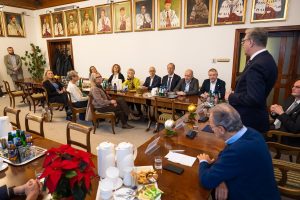
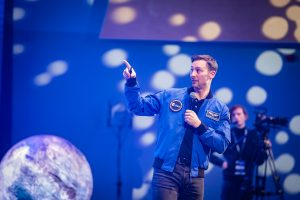
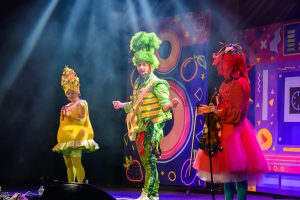
As every year, the University of Warmia and Mazury in Olsztyn has prepared a rich program of workshops, lectures, demonstrations, and other events proving that science is a great adventure and that there is an artist in all of us. The Olsztyn Science and Art Days began on September 25th and lasted three days. As every year, the University of Warmia and Mazury in Olsztyn has prepared a rich programme of workshops, lectures, demonstrations and other events showing that science is a great adventure and that there is an artist in all of us. The Olsztyn Days of Science and Art began on 25 September and lasted three days. For over 20 years, the arrival of crowds of young people in Kortowo (university campus) has been the surest sign that the Olsztyn Days of Science and Art are about to begin. This year was no different: on Thursday morning (25 September), the UWM campus was already hosting numerous groups of pre-schoolers as well as primary and secondary school students from Olsztyn and other towns in the region. Workshops: learning at your fingertips Representatives from the Faculty of Agriculture and Forestry, among others, invited participants into their classrooms, offering workshops where attendees learned how landscape architects choose colours, where they draw inspiration, and how they apply this knowledge when designing green spaces. During other workshops (‘Let’s Protect Our Weeds’), participants discovered that plants we usually uproot, ignore or eradicate can be guardians of biodiversity, natural habitats for insects and… inspiration for artists and scientists. Meanwhile, faculty from the Department of Chemistry argued that ‘Every acid has its base’, and offered a series of colourful experiments and demonstrations. On Friday, the Faculty of Animal Bioengineering, specifically the Department of Animal Genetics, hosted a workshop for students aged 16 and over entitled “Discover the Secrets Written in Your Genes”, during which participants had the opportunity to carry out a genetic test themselves. “We use a simplified genetic-material isolation procedure, similar to the one used when registering for the bone-marrow donor database. Participants scrape epithelial cells with a brush, transfer the collected material to a test tube with a special liquid, heat it for ten minutes, and in this way obtain genetic material for simple single- or double-gene tests. Secondary-school students take part in the workshops, so, unlike university students, they do not, for example, have to prepare reagent mixes; these are ready for them. They simply insert the material into the device, which performs the analysis automatically,’ explains Dr Kamil Oleński, who co-led the workshop. Dr hab. Paweł Brym, a professor at the University of Warmia and Mazury, adds: “Students take two types of tests, and behind each lie two “secrets”: one is colloquially called “Can you be infected with HIV?” and the other is “Do you have the gene for addiction?” As you might imagine, students’ reactions vary depending on the results [laughter].” Both lecturers assured the group that the results were kept confidential, so each participant could decide whether to share them with their peers. The Department of Beekeeping at the University highlighted how important and beneficial pollinators are. During the workshop ‘People for Bees – Bees for People, or Life Sweetened with Honey’, participants learned about the structure and organisation of a bee colony, observed worker bees at work and saw a queen bee. There were also hands-on activities: everyone could make their own beeswax candle and bake honey gingerbread biscuits. The organisers also planned a sweet tasting, with honey available for anyone interested. The Food Science Department also served up something sweet, with sessions on the secrets of chocolate, among other topics. During the workshops, young explorers saw how chocolate is made from cocoa beans. They also had the chance to make their own chocolates and decorate them as they wished. Scientists from the Faculty of Biology and Biotechnology discussed how to support the body, deliciously and effectively, in combating excessive oxidative stress. At the same faculty, participants also learned about brain function and the dangers of microplastics. The Faculty of Technical Sciences provided a true feast for science and technology enthusiasts. There were demonstrations of 3D printing, as well as experiments with electricity and chemical reactions. The workshop, titled ‘Idea Factory’, was led by Karolina Łabanowska, a graduate of two programmes at the Faculty of Technical Sciences, currently pursuing a third (logistics engineering) and a PhD candidate. Participants were immersed in the world of modern manufacturing technologies, learning how 3D printing works using FDM and SLA technologies, how precise laser engraving can be, and how three-dimensional forms can be created using a 3D pen. “We painted the engraved details with acrylic paints and coated the printed pendants with varnish. The children were very intrigued and said it was the best workshop they’d ever attended,” said Karolina Łabanowska. The Faculty of Economics encouraged young entrepreneurs to build their own company. Participants were tasked with devising a product, logo, name and mission, and pitching the idea to the group. There are no good ideas without a well-tuned brain. Representatives from the Faculty of Social Sciences had participants put theirs through a workout. While tackling the tasks, the children learned about the properties of the brain and how to take care of their ‘command centre’. On Thursday morning, the Faculty of Humanities offered, among other things, a lecture on Jan Kasprowicz’s “Dies irae”, while the Foreign Languages Centre invited students to learn about the superheroes of Antiquity. The Faculty of Veterinary Medicine invited anyone fascinated by the world of pharmacy to a session in the pharmacy. Workshop participants had the opportunity to make their own moisturising vitamin ointments and to familiarise themselves with pharmacy equipment used to prepare suppositories, emulsions, suspensions, solutions and prescription powders. Representatives from the Faculty of Law and Administration invited participants to take a closer look at crime. During forensic-science workshops, attendees assumed the role of experts, analysing traces and evidence and exploring how the human mind responds when confronted with criminal mysteries. The Faculty of
Branding, or building identity. Workshops in Poland

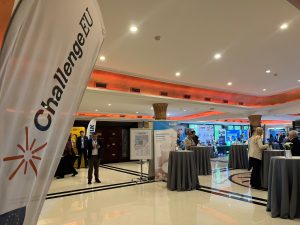
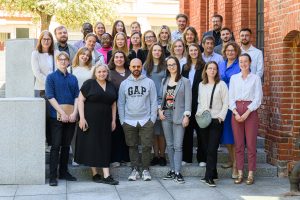
Representatives of the nine universities forming the ChallengeEU alliancemet at the University of Warmia and Mazury in Olsztyn (Poland) to discuss how to communicate and disseminate the alliance’s activities, which aim to open new opportunities for members of the academic community. To discuss the image of the ChallengeEU alliance and strategies for reaching various target audiences, representatives from all partner universities gathered in Olsztyn. Among them, the largest group consisted of those responsible for communication within the project. Also present were leaders of other work packages and the Secretary General of the alliance. All had the opportunity to connect with UWM staff involved in other parts of the project. The workshops were also attended by Prof. Paweł Wielgosz, UWM’s Representative for European Universities. Branding – Building the Identity of the Alliance The identity and future of ChallengeEU will be shaped by those who co-create it and seize the opportunities it offers. However, its image—especially in the eyes of individuals or companies potentially interested in collaborating with the universities—will also play a vital role and should be considered from the very beginning. Working on the alliance’s identity means also working on its visual communication and messaging—key elements that ChallengeEU will use to connect with others. Learning from One Another and Combining Our Strengths The second day was equally productive, featuring workshops and a working meeting held at the UWM Center for Marketing and Media. “A very important part of the visit was the opportunity for our guests to explore various units of UWM — including the editorial offices of the university media, the Office for International Cooperation, the Student Affairs Office, the Center for Cooperation with the Socio-Economic Environment, as well as selected faculties,” explains Dr. Marta Śliwa. “It was a great opportunity to present UWM’s educational offer and scientific potential, but also for our community to learn more about the ideas and objectives of the ChallengeEU alliance.” – “The meeting in Olsztyn was very highly rated by all participants, which is a great joy for us. We feel that thanks to this event, ChallengeEU has truly found its place within our university’s academic space.” Participants of the workshops in Kortowo also emphasized how meeting in person made them realize how strong their relationships have already become — and how positively this strengthens their collaboration. Together with all those involved in the project, they are gradually building the foundation for a shared, open, and inclusive campus.
LBTU hosts programme “Media Literacy for Future Leaders”

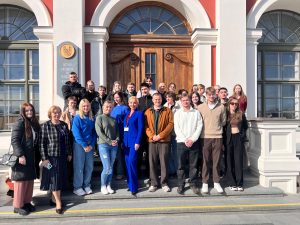
The Institute of Social and Humanitarian Sciences of the Faculty of Economics and Social Development (ESAF) at the Latvia University of Life Sciences and Technologies (LBTU) has successfully completed the Erasmus+ Blended Intensive Programme (BIP) project “Media Literacy for Future Leaders”. Among the participants were students and lecturers from ChallengeEU partner universities — Hochschule Offenburg, University of Warmia and Mazury in Olsztyn, and South East European University (SEEU) — joined by representatives of the Estonian University of Life Sciences. The program was led by an international team of lecturers, including five LBTU faculty members from ESAF and guest lecturers – professor Edlira Palloshi Disha from North Macedonia, media science professor Urszula Doliwa, and associate professor Magdalena Szydłowska from Poland. The programme focused on media literacy, critical thinking, and intercultural communication — equipping students with tools to analyze digital content, detect disinformation, and craft meaningful messages. Following an initial online seminar, participants gathered for a vibrant study week in Jelgava, featuring hands-on workshops, cultural visits to Riga and Rundāle Palace, and student presentations during the international conference “Students on Their Way to Science”. It was a great experience, as reflected in the words of one of the participants: “I would like to sincerely thank you for the wonderful experience during the Blended Intensive Programme in Latvia. It was an incredibly enriching opportunity, both academically and personally. I am truly grateful for the chance to participate, to meet inspiring peers, and to learn from outstanding professors. The organization and hospitality throughout the programme were exceptional. I truly appreciate all the efforts that made this an unforgettable experience”. >>> More information