Shoe insoles can significantly reduce strain. Two FHNW schools are developing innovative materials and manufacturing processes.
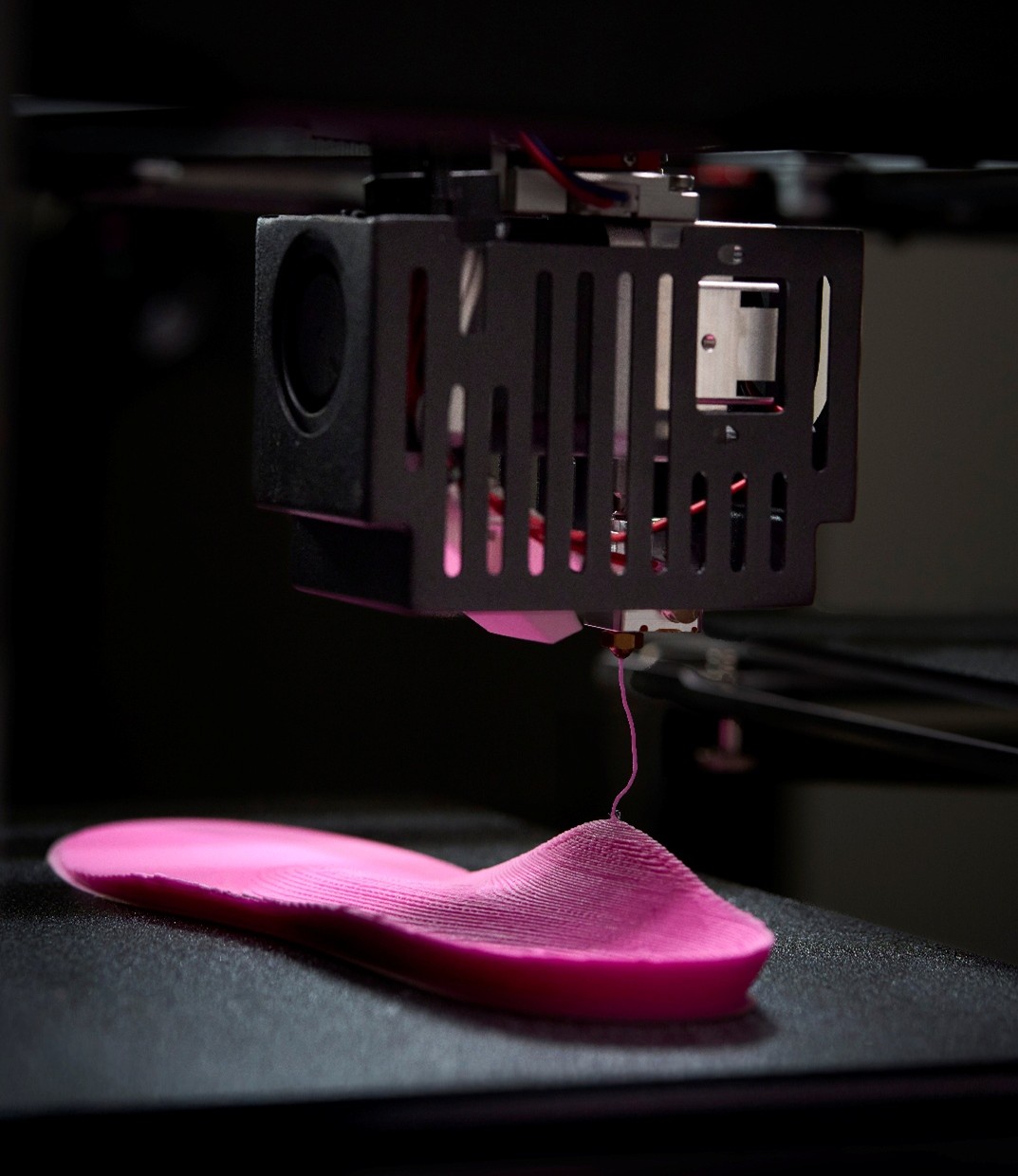
A new 3D-printing technology is transforming how custom shoe insoles are made. At orthopaedic footwear company Orthopodo Malgaroli, a printer rapidly builds a tailored insole from soft, multi-hardness filaments – ideal for a diabetes patient with reduced foot sensitivity. By precisely relieving pressure on vulnerable areas, the insole helps prevent unnoticed injuries and improves comfort.
This innovation is the result of close collaboration between theFHNW School of Life Sciences, theFHNW School of Engineering and Environment , Orthopodo Malgaroli, and funding partners including ChallengeEU associated partner Hightech Zentrum Aargauand Innosuisse, the Swiss Innovation Agency. Until now, producing insoles with varying hardness required complex CNC milling, which was noisy, wasteful and labour-intensive.
The FHNW team developed new print heads and an automated tool-changing system that enables the printer to combine different material hardnesses in a single insole. At the FHNW School of Engineering and Environment, researchers created sustainable, medically safe filaments made from castor beans: antibacterial, skin-friendly and recyclable.
“The shift to automated insole design and 3D printing is a major paradigm change,” says Daniel Seiler, Head of the Medical Additive Manufacturing Lab.
These precisely manufactured insoles aren’t just for people with diabetes. Under the brand moxxis, custom 3D-printed insoles can now be produced within an hour even in sports shops preventive, making personalised foot support accessible to everyone.