UWM: Sławosz Uznański-Wiśniewski visits the University of Warmia and Mazury
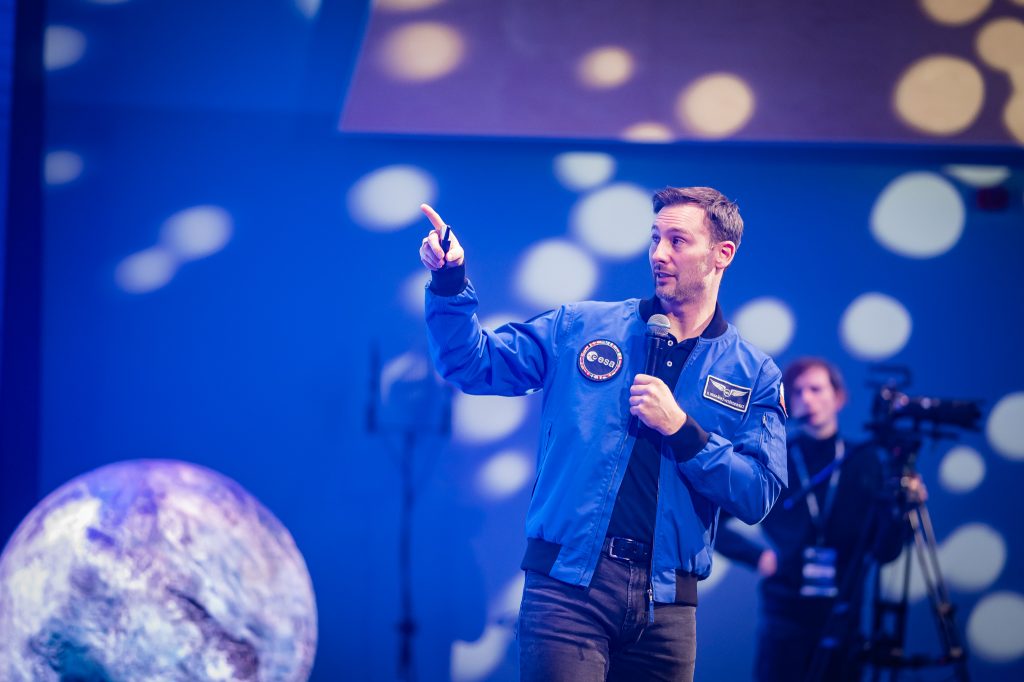
On Tuesday, 2 December, the University of Warmia and Mazury in Olsztyn (UWM) became part of the nationwide science-and-technology tour “IGNIS – Poland Reaches for the Stars.” The campus in Kortowo welcomed Dr. Sławosz Uznański-Wiśniewski an engineer and scientist and the second Pole to travel into space who came to Olsztyn on a mission to popularise science and share first-hand experience from an international spaceflight. “Exactly 160 days ago on 25 June at 8:51 a.m. the IGNIS mission launched from Cape Canaveral,” said Mariusz Korpoliński, who hosted the event at UWM’s Conference Centre as he introduced the guest he called a “superhero.” “Four astronauts set off on a long journey to the International Space Station. The flight carried out by Axiom Space in cooperation with SpaceX and NASA was followed by the entire country. We were all watching on TVs, tablets, smartphones and computers, living through those huge emotions together.” Beyond “sky is the limit” In an era when “sky is the limit” keeps expanding into new areas of everyday life, space is increasingly less a boundary and more a destination shaped by technology, research and imagination. Uznański-Wiśniewski’s visit to UWM was designed to make that world not only more accessible to science, but also more relatable to the public. Speaking in Kortowo, he outlined the course of his mission, described the work he carried out aboard the station and most importantly-argued that science is both a tool for understanding the world and a pathway to fulfilling personal ambitions. Drawing on his own story, he stressed that work can become a true passion-something worth pursuing wholeheartedly and encouraged students and researchers to follow their goals with consistency and courage. Don’t predict the future – build it Welcoming the astronaut to the university, UWM Rector Prof. Jerzy Przyborowski invoked Peter Drucker’s famous observation that the best way to predict the future is to create it. He argued that UWM is doing exactly that among other things through its engagement in research linked to space and radio astronomy. As the rector noted, on the same day Uznański-Wiśniewski flew into space, UWM together with partners launched Poland’s activity within the LOFAR-ERIC consortium at the Poznań Supercomputing and Networking Center. He also recalled that the university will co-create Poland’s consortium for the SKAO (Square Kilometer Array Observatory) project, which oversees two of the world’s largest radio telescopes located in Australia and Africa. UWM also coordinates the POLFAR initiative, while the university’s LOFAR station operates in Bałdy near Olsztyn. Prof. Przyborowski emphasised that Uznański-Wiśniewski’s participation in a space mission provided a rare boost for Polish science. “It proves that the most ambitious projects can be delivered and that it is worth working, and worth dreaming while you work,” he said, referring as well to the legacy of Nicolaus Copernicus, who worked in Olsztyn on ideas that would change the world. UWM’s community will also be reminded of the role that ambition and perseverance play in “reaching the stars” by two keepsakes displayed after the visit: a Polish flag and an IGNIS mission patch that travelled into space with the astronaut and spent several days in orbit. Uznański-Wiśniewski, in turn, left Olsztyn with a painting and a university hoodie. Look further, aim higher Uznański-Wiśniewski’s stop in Kortowo formed part of a series of events organised by Poland’s Ministry of Economic Development and Technology, the Ministry of Science and Higher Education and the Polish Space Agency, in cooperation with the European Space Agency. “We’ve already passed the halfway point of our science-and-technology route its purpose is to bring space closer and to discover talent,” said Dr. Marcin Kulasek, Minister of Science and Higher Education, welcoming the astronaut back to his alma mater. “Talent that might one day follow in Sławosz’s footsteps. His story shows that space isn’t as distant as it may seem. It takes passion, work and perseverance.” The minister noted that Olsztyn Copernicus’s city was an especially fitting setting for a meeting with someone who looks further than most. “Science can open doors that once seemed closed,” he said. Science supported from orbit During a special session for the academic community, Uznański-Wiśniewski spoke not only about the milestones that led him to the stars, but also about doubt, discipline and the constant need to improve. He devoted particular attention to research he helped conduct in space. “Right after going through the station, work began,” he said. “I carried out experiments from day one. One of them involved volcanic algae that we brought from Earth. We tested their survivability in space in microgravity, under radiation exposure and their efficiency in generating oxygen. Perhaps this will be used in bioreactors that enable long-range exploration of space or even terraforming other planets; or perhaps these solutions will return to Earth to help clean our atmosphere.” He added that the volume of work on board made it impossible to present every project during the meeting in Kortowo. “I had a high-computing-power computer on the station that tested artificial intelligence algorithms under space conditions,” he explained. “Among other things, we evaluated algorithms for autonomous decision-making and for the movement of lunar rovers before software like this is taken to the Moon.” Other speakers also addressed the experiments conducted during the mission particularly those who had approached ESA for support in developing their research. “I wanted to inspire the university community to seize the opportunity opening up for Poland and take the next step in space technology,” said Dr. Norbert Kapiński of Smarter Diagnostics. “We must find our niche something that sets us apart. The mission’s experiments point to directions. We have excellent engineers; we are leaders let’s not be afraid of the word in AI development, and this community strongly argues that this should become our specialty and a foundation for an innovative economy. Some of the experiments focused on AI algorithms how we can use them in space. The amount of data is growing, including in space technology, and AI is the best tool to analyse it.” The
The ChallengeEU Student Ambassadors Team gathers in Offenburg to build skills and connections
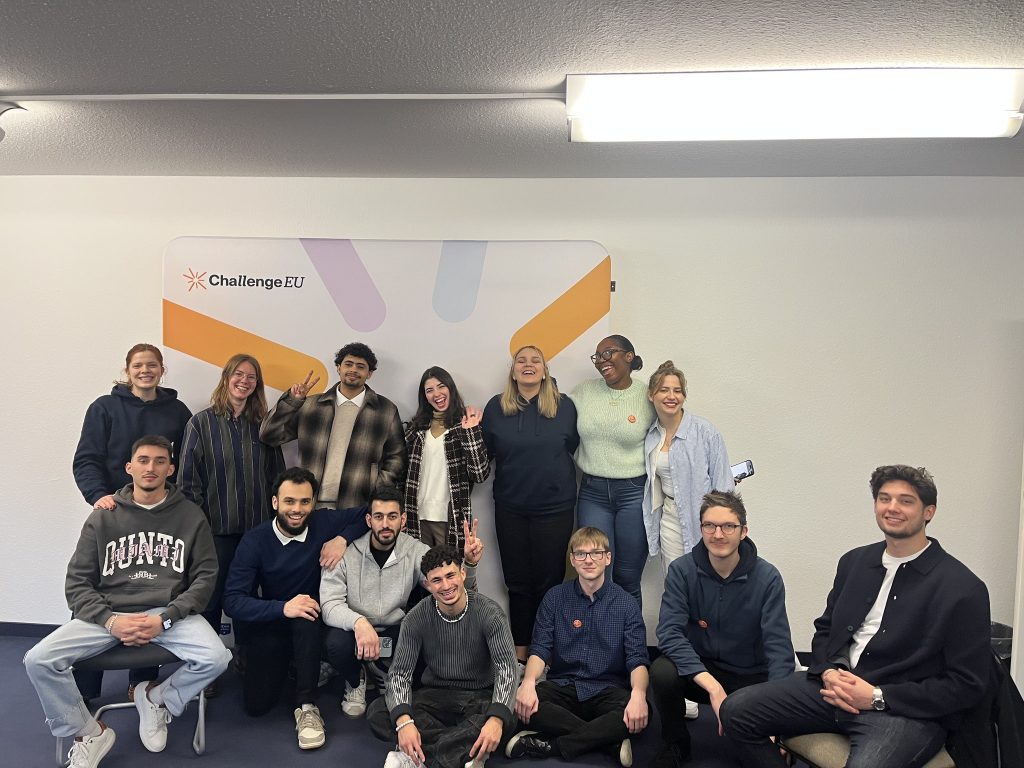
Between 4th and 5th of December Hochschule Offenburg hosted first official meetup of ChallengeEU Student Ambassadors Team. The first official gathering of the young people who represent the alliance across Europe was a great opportunity to strengthen relationships and develop the skills they need in their everyday work as ambassadors. “It was great to talk with my colleagues and learn about their cultures and different perspectives on studying. I really appreciate the fact that I could discover the differences between us,” says Marion Angsthelm, student ambassador from FHNW. “Through photography, social media, cultural intelligence and inclusion workshops, we learned how each tool can amplify our voices and help us create meaningful impact across Europe. But beyond the academic side, we realised that our stories, backgrounds and experiences are powerful — and when we unite, we can inspire real change. This meetup reminded us that each one of us has a voice that matters and that we are capable of shaping a better, more inclusive future for young people,” adds Jana Zaher Eddine from Universidad Europea de Valencia. “I come from Offenburg, so I was at home, but I really appreciate the fact I could get to know other ambassadors. I also learned a lot about the media, social media, how to use them to promote the ideas of our alliance,” says Hendrik Kirchoff, student ambassador from HSO. The student ambassador meeting focused on connecting our international student ambassadors from the nine universities together. The goal was to train them on how to carry out their responsibilities efficiently and deliver the alliance’s message accurately. The official agenda was full of interesting and engaging activities e.g. social media and photography training or communication exercises. Other workshops explored inclusivity and ODEI principles, complemented by practical strategies for intercultural communication skills that are particularly valuable for ambassadors when engaging on social media “We are committed to fostering collaboration, innovation, and intercultural exchange among students across Europe. Welcoming our ambassadors on campus allowed us to see this vision come to life: engaged students, motivated teams and inspiring sessions designed to help ambassadors to improve skills that will help them carry on with their mission within the alliance,” Hochschule Offenburg, host of the meetup and leader of the ChallengeEU alliance, writes on their social media. People who are responsible for the communication in the alliance have no doubts that the meeting was a success. “Ambassadors expressed a strong desire to connect with their peers in person and move beyond the limitations of virtual interaction, and this event provided the perfect opportunity to do so. They reported gaining a clearer understanding of ChallengeEU and their role within it,” says Lynn Summerfield from Universidad Europea de Valencia, who took part in the meeting. „Organizing the Student Ambassadors Meeting in Offenburg was an inspirational project. It was great to see how many students from different backgrounds and stories were able to relate to each other so closely and so fast. Seeing them work together proactively was merely a visual manifestation of what ChallengeEU is all about – centered around cooperation and cultural openness,” adds Zina Qabbani from HSO. Complementing the learning sessions were cultural experiences such as a visit to the local Christmas market and a dinner at a traditional restaurant renowned for its regional cuisine.
HSO: Aid convoy reaches partner university in Zaporizhzhia
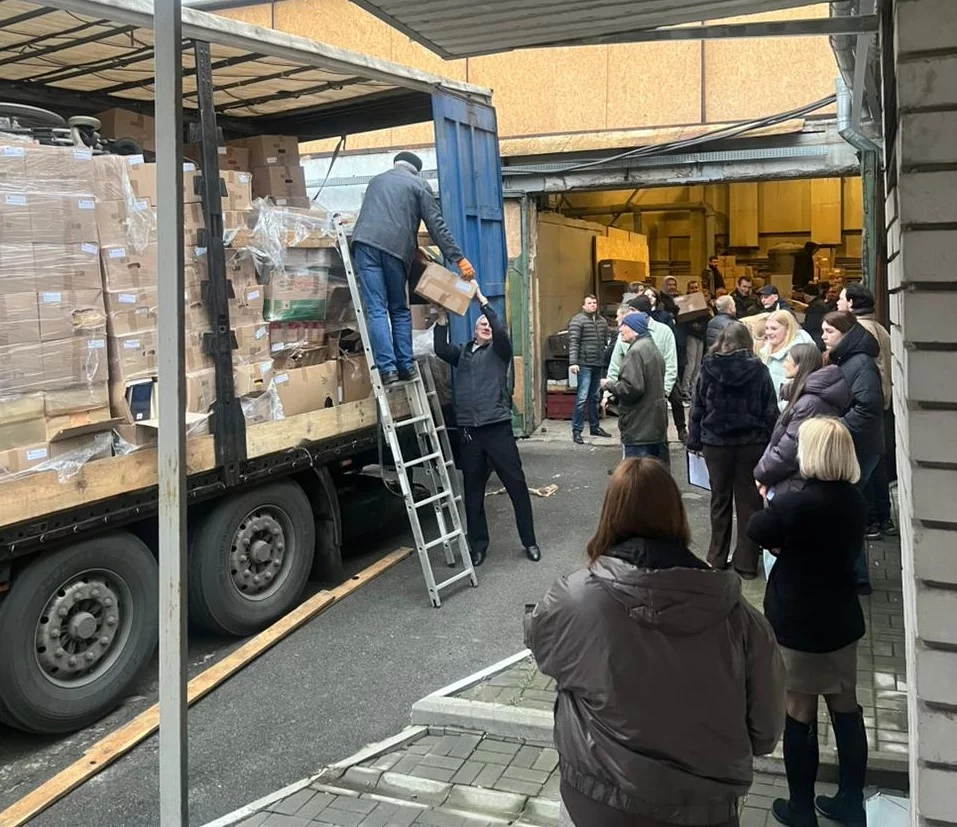
A large convoy of donations from Offenburg has arrived in Zaporizhzhia. The shipment will support the local university during a time of great uncertainty. Early December, Zaporizhzhia Polytechnic received a truck carrying 14 tons of aid supplies from the Offenburg university community. A total of 52 boxes and 14 bags of winter clothing, around 80 laptops, server technology, ten IT boxes, twelve wheelchairs, and protective nets, which serve as drone protection in Ukraine, were collected in advance. Companies such as HIWIN, Markant, Osypka, and WTO also supported the effort with donations. Additional goods were added at OTH Amberg-Weiden. Space-Eye also provided an emergency power generator. After sorting and loading, the shipment was handed over to the Ukrainian university. HSO received an emphatic thank you from the university, saying that the support gave them “hope and courage” in times of unreliable electricity, water, and heat supplies. More Info (in German only)
UEV: Talent Day at Universidad Europea de Valencia: Boosting Young Careers
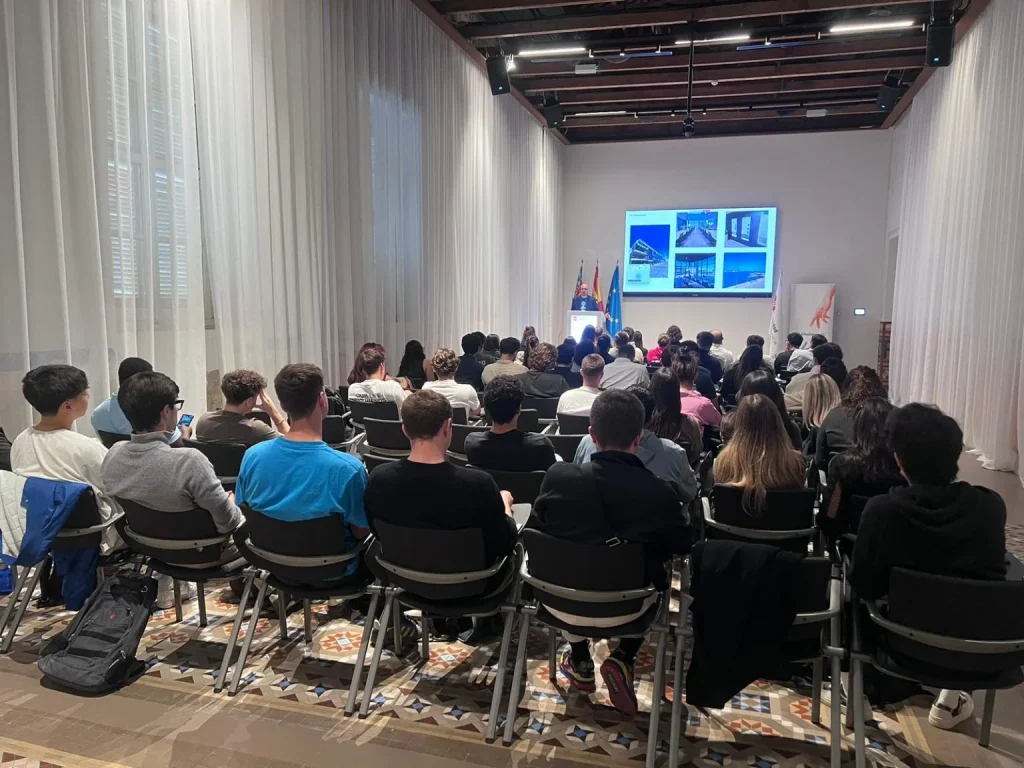
European companies, students and universities come together for a day that promotes professional development and strengthens the ChallengeEU alliance.
MIUN: The Tourism Program Attracts Students From All Over the World
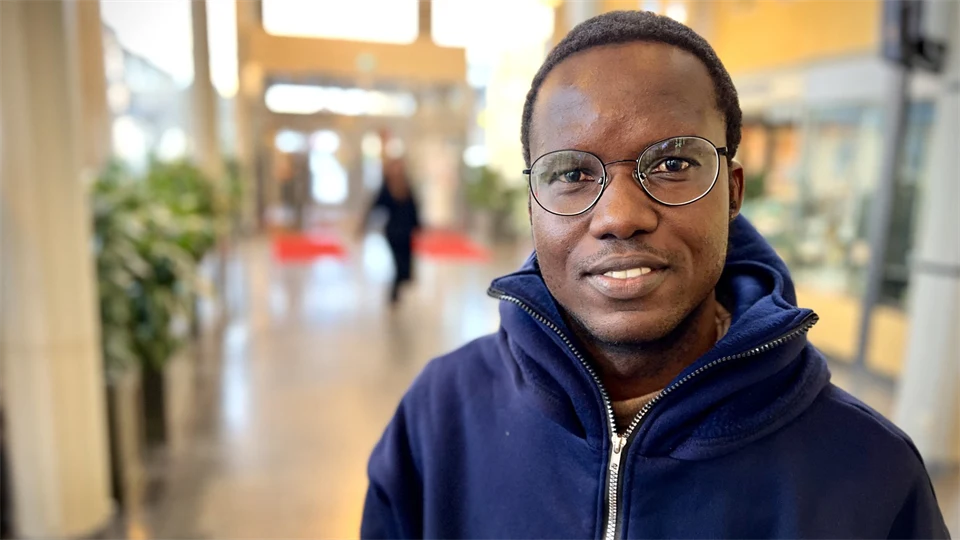
This year, the Master’s programme in Tourism Studies at Mid Sweden University in Östersund has students from all continents.
FHNW: Printing Comfort: The New Tech Behind Next-Gen Shoe Insoles
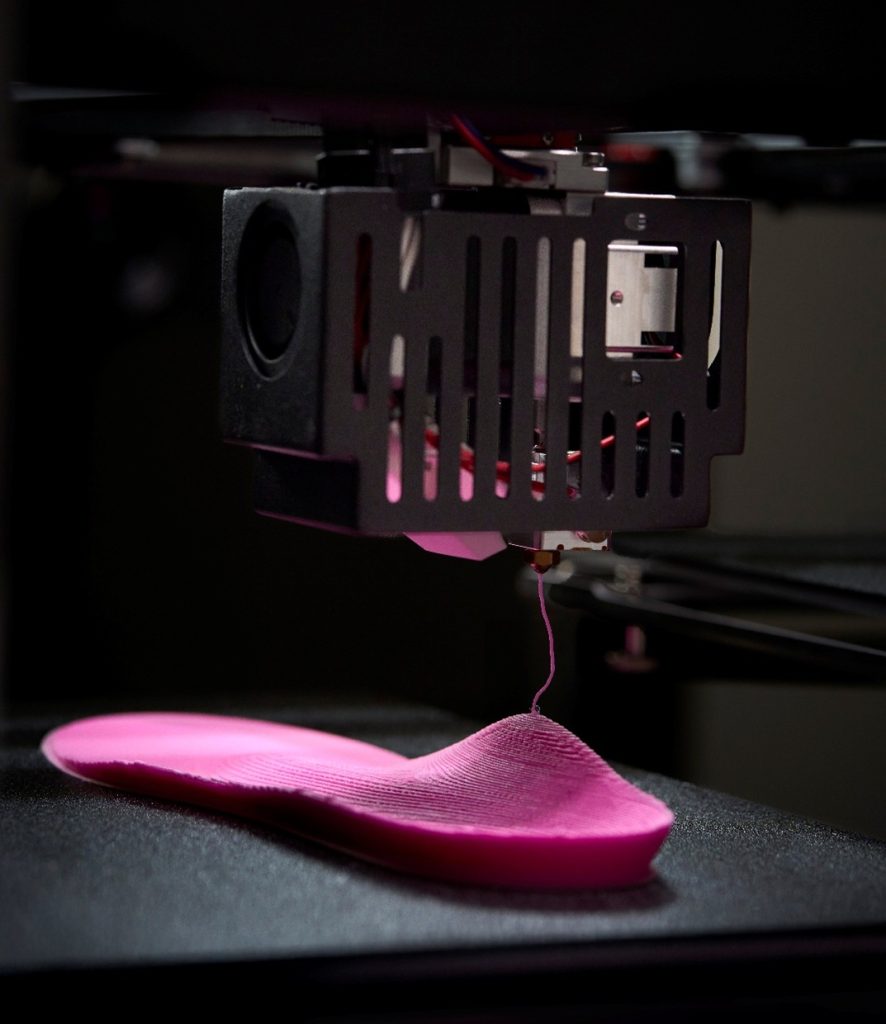
Shoe insoles can significantly reduce strain. Two FHNW schools are developing innovative materials and manufacturing processes. A new 3D-printing technology is transforming how custom shoe insoles are made. At orthopaedic footwear company Orthopodo Malgaroli, a printer rapidly builds a tailored insole from soft, multi-hardness filaments – ideal for a diabetes patient with reduced foot sensitivity. By precisely relieving pressure on vulnerable areas, the insole helps prevent unnoticed injuries and improves comfort. This innovation is the result of close collaboration between theFHNW School of Life Sciences, theFHNW School of Engineering and Environment , Orthopodo Malgaroli, and funding partners including ChallengeEU associated partner Hightech Zentrum Aargauand Innosuisse, the Swiss Innovation Agency. Until now, producing insoles with varying hardness required complex CNC milling, which was noisy, wasteful and labour-intensive. The FHNW team developed new print heads and an automated tool-changing system that enables the printer to combine different material hardnesses in a single insole. At the FHNW School of Engineering and Environment, researchers created sustainable, medically safe filaments made from castor beans: antibacterial, skin-friendly and recyclable. “The shift to automated insole design and 3D printing is a major paradigm change,” says Daniel Seiler, Head of the Medical Additive Manufacturing Lab. These precisely manufactured insoles aren’t just for people with diabetes. Under the brand moxxis, custom 3D-printed insoles can now be produced within an hour even in sports shops preventive, making personalised foot support accessible to everyone. Link: Auf diese Technik kann man stehen | FHNW