HSO PhD candidates visit MIUN: networking, mobility and research collaboration

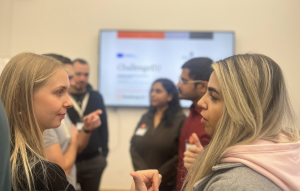
Two participants in conversation during the networking visit, with other attendees and a ChallengeEU slide blurred in the background.

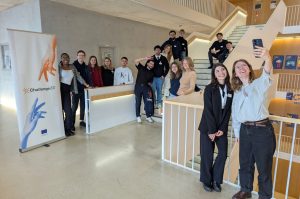
On 12 December, HSO PhD candidates demonstrated a strong commitment to scientific innovation by taking part in a networking visit to Mid Sweden University (MIUN) in Östersund. The event was arranged byDr. Carmen Kuhn (HSO) and Prof. Dr. Lars-Eric Rännar (MIUN) from the Graduate Academy, along withDr. Stefan Granlund from MIUN. The visit provided a valuable platform for strengthening international academic exchange and fostering long-term cooperation between the institutions. It also highlighted the importance of mobility and networking opportunities within doctoral education. Throughout the visit, the program concentrated on the candidates discussing their research, supported by training sessions on research ethics, AI usage, and planning different phases of doctoral work. These sessions encouraged critical reflection and offered practical tools to support the candidates in their individual research journeys. The interactive format allowed for in-depth discussions and peer-to-peer learning in an interdisciplinary setting. Participants benefited from exchanging perspectives and experiences across different research fields. The programme also included visits to the various MIUN laboratories, where exciting concepts on additive manufacturing and materials experimenting were put to the test. These lab tours provided hands-on insights into state-of-the-art research infrastructures and ongoing projects at MIUN. They also opened up opportunities to explore potential synergies for future research collaboration.
UWM–HSO meeting: Cooperation is a shield in difficult times

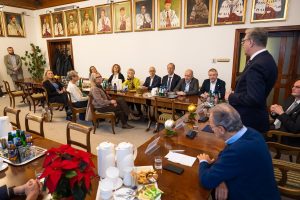
Wide view of the meeting room: a speaker addresses participants seated at U-shaped tables beneath portraits on the wall, with Christmas decorations and meeting materials visible.

On Monday, 8 December, the University of Warmia and Mazury was visited by guests from Hochschule Offenburg and the Maria and Georg Dietrich Foundation. The pre-Christmas meeting is a tradition that strengthens the ties between the two partner universities. It was, among other things, this friendship that gave rise to the ChallengeEU Alliance. The annual UWM–HSO meeting is a tradition. Professor Jerzy Przyborowski, Rector of the University of Warmia and Mazury (UWM), welcomed the delegation in the rector’s office building, saying: “I am very grateful that we can meet every year as part of the Christmas Bridge initiative, launched by Georg Dietrich. It is a true symbol of friendship between our institutions, but also between all the people involved.” Both the host and the guests emphasised that good relations between countries are more important than ever in the face of the ongoing war in Ukraine and many other geopolitical threats. “Thank you very much for this wonderful welcome during Advent. For us, this is not an official visit – it is a visit to friends. This friendship is a prerequisite for successful cooperation, because something good usually grows out of human relationships,” said Prof. Dr Stephan Trahasch, Rector of Hochschule Offenburg (HSO). Participants in the meeting underlined that what has particularly strengthened the friendship between the University of Warmia and Mazury and Hochschule Offenburg in recent times is the fact that both universities are members of the ChallengeEU European Universities Alliance. The ChallengeEU Alliance places strong emphasis on student mobility. “Exchange and cooperation among young people form the foundation of unity between nations, and thus of peace in Europe,” explained Stephan Trahasch. During the meeting, discussions on joint initiatives within the ChallengeEU Alliance were continued. Prof. Dr Tobias Hagen, Vice-Rector for Internationalisation at Hochschule Offenburg and Chair of the ChallengeEU Alliance, spoke, among others, with Professor Paweł Wielgosz, the UWM Rector’s Representative for European Universities, about new joint educational programmes and academic cooperation – especially in the field of research. “The project has only just started, but we already have our first results – our academic staff have taken part in joint training sessions, and in recent days students, including from our university, met in Offenburg,” said Prof. Paweł Wielgosz. “We are preparing to launch new joint study programmes – not only with HSO, but also with other partner universities. It is also very important to me that we can conduct scientific research together. From experience, I know that effective academic cooperation is often born precisely from joint research. I hope that our working meetings will lead to ideas for new study programmes and new areas of scientific collaboration.” As Prof. Dr Stephan Trahasch recalled, in addition to cooperation within the ChallengeEU Alliance and its other dimensions, what connects UWM and HSO is joint education. The universities run two programmes at the Faculty of Geoengineering (Environmental Engineering in the field of Process Engineering and Biotechnology) and one at the Faculty of Food Science (Food Technology and Human Nutrition in the field of Food Engineering). They also cooperate in programmes such as German Studies and Business Linguistics, in which students also learn German. Prof. Dr Tobias Hagen, who took part in several ChallengeEU working meetings during his stay at UWM (including one devoted to the conference planned for May to summarise the Alliance’s first year of activities), noted that discussions within the ChallengeEU team and with the Faculties of Economics, Geoengineering and Food Science were intensive, extremely fruitful and constructive, and took place in a very friendly atmosphere. He was convinced that this would enable us to further develop the long-standing partnership between our universities and that there would be many new ideas for the future. The HSO delegation also included Prof. Dr Jens Pfafferott (Dean of the Faculty of Mechanical Engineering and Process Engineering in Offenburg), who had the opportunity to meet with UWM representatives to discuss possibilities for further cooperation. Dr Wolfgang Bruder, Chairman of the Georg and Maria Dietrich Foundation, noted that over the years the foundation has awarded more than 200 scholarships to UWM students, contributing to broadening knowledge, creating better learning conditions, and deepening cooperation. In this way, it continues the ideas of Georg Dietrich, who already decades ago deeply understood the importance of Polish–German cooperation and was committed to ensuring that it also developed at university level.
The ChallengeEU Student Ambassadors Team gathers in Offenburg to build skills and connections

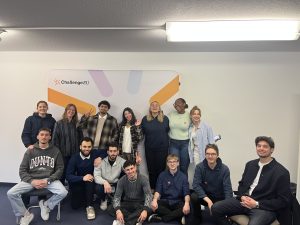
The group photo of Student Ambassadors Team of the ChallengeEU alliance

Between 4th and 5th of December Hochschule Offenburg hosted first official meetup of ChallengeEU Student Ambassadors Team. The first official gathering of the young people who represent the alliance across Europe was a great opportunity to strengthen relationships and develop the skills they need in their everyday work as ambassadors. “It was great to talk with my colleagues and learn about their cultures and different perspectives on studying. I really appreciate the fact that I could discover the differences between us,” says Marion Angsthelm, student ambassador from FHNW. “Through photography, social media, cultural intelligence and inclusion workshops, we learned how each tool can amplify our voices and help us create meaningful impact across Europe. But beyond the academic side, we realised that our stories, backgrounds and experiences are powerful — and when we unite, we can inspire real change. This meetup reminded us that each one of us has a voice that matters and that we are capable of shaping a better, more inclusive future for young people,” adds Jana Zaher Eddine from Universidad Europea de Valencia.   “I come from Offenburg, so I was at home, but I really appreciate the fact I could get to know other ambassadors. I also learned a lot about the media, social media, how to use them to promote the ideas of our alliance,” says Hendrik Kirchoff, student ambassador from HSO.   The student ambassador meeting focused on connecting our international student ambassadors from the nine universities together. The goal was to train them on how to carry out their responsibilities efficiently and deliver the alliance’s message accurately. The official agenda was full of interesting and engaging activities e.g. social media and photography training or communication exercises. Other workshops explored inclusivity and ODEI principles, complemented by practical strategies for intercultural communication skills that are particularly valuable for ambassadors when engaging on social media “We are committed to fostering collaboration, innovation, and intercultural exchange among students across Europe. Welcoming our ambassadors on campus allowed us to see this vision come to life: engaged students, motivated teams and inspiring sessions designed to help ambassadors to improve skills that will help them carry on with their mission within the alliance,” Hochschule Offenburg, host of the meetup and leader of the ChallengeEU alliance, writes on their social media. People who are responsible for the communication in the alliance have no doubts that the meeting was a success. “Ambassadors expressed a strong desire to connect with their peers in person and move beyond the limitations of virtual interaction, and this event provided the perfect opportunity to do so. They reported gaining a clearer understanding of ChallengeEU and their role within it,” says Lynn Summerfield from Universidad Europea de Valencia, who took part in the meeting. „Organizing the Student Ambassadors Meeting in Offenburg was an inspirational project. It was great to see how many students from different backgrounds and stories were able to relate to each other so closely and so fast. Seeing them work together proactively was merely a visual manifestation of what ChallengeEU is all about – centered around cooperation and cultural openness,” adds Zina Qabbani from HSO. Complementing the learning sessions were cultural experiences such as a visit to the local Christmas market and a dinner at a traditional restaurant renowned for its regional cuisine.
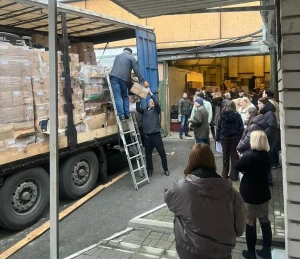
HSO: Aid convoy reaches partner university in Zaporizhzhia

A large convoy of donations from Offenburg has arrived in Zaporizhzhia. The shipment will support the local university during a time of great uncertainty. Early December, Zaporizhzhia Polytechnic received a truck carrying 14 tons of aid supplies from the Offenburg university community. A total of 52 boxes and 14 bags of winter clothing, around 80 laptops, server technology, ten IT boxes, twelve wheelchairs, and protective nets, which serve as drone protection in Ukraine, were collected in advance. Companies such as HIWIN, Markant, Osypka, and WTO also supported the effort with donations. Additional goods were added at OTH Amberg-Weiden. Space-Eye also provided an emergency power generator. After sorting and loading, the shipment was handed over to the Ukrainian university. HSO received an emphatic thank you from the university, saying that the support gave them “hope and courage” in times of unreliable electricity, water, and heat supplies. More Info (in German only)
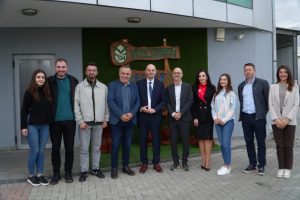
Strengthening University–Industry Cooperation: HSO and SEEU Delegations Visit Associated Partner

Group photo of representatives from Hochschule Offenburg, South East European University and Veze Sharri standing in front of the Veze Sharri company building and logo

Representatives from Hochschule Offenburg (HSO) visited South East European University (SEEU) in North Macedonia and the agrifood company Veze Sharri as part of the ChallengeEU Alliance. The visit strengthened university–industry cooperation and created new opportunities for students, research collaboration and regional development in the Polog region. A delegation from HSO led by Prof. Dr. Stephan Trahasch, Rector, and Prof. Dr. Tobias Hagen, Vice-Rector for Internationalization and Managing Director of ChallengeEU, visited South East European University (SEEU) in North Macedonia, where they met with Prof. Dr. Sadudin Ibraimi, Rector, SEEU’s high management, and the ChallengeEU teams. Connecting ChallengeEU with the Agrifood Sector As part of the ongoing efforts to advance university-industry partnerships within the ChallengeEU Alliance, they visited Veze Sharri, one of the project’s associated partners and a leading agrifood company in the Polog region. The visit was organized and led by the M.A.R.K.E.T. Officer of ChallengeEU, Assoc. Prof. Dr. Shpresa Alija from South East European University (SEEU). During the meeting, the owner of Veze Sharri, Arben Abdurahmani, welcomed the delegation and presented the company’s development, production processes, and strategic vision. The delegation emphasized that Veze Sharri plays an important role not only as a regional business leader but also as a contributor to local development, workforce capacity building, and knowledge transfer. Through its involvement in ChallengeEU, the company will provide SEEU students with meaningful opportunities for practical learning, professional growth, and exposure to real-sector challenges and future innovation initiatives.This visit marks an important step toward strengthening long-term collaboration within the ChallengeEU ecosystem and creating impactful pathways for students, academic staff, and the local community. Joint Pathways for Students and Research During their time in North Macedonia, the delegation led by SEEU Project Lead, Prof. Veli Kreci, met with staff from Max van der Stoel Institute and the ChallengeEU team, followed by a meeting with Rector Ibraimi and the university’s management team: Academician Prof. Abdylmenaf Bexheti, Prof. Veland Ramadani, Prof. Besa Arifi, and Prof. Florije Ismaili. The discussions centred on academic collaboration, digital initiatives, and areas of shared interest. The visit concluded with a meeting coordinated by Prof. Dr. Mennan Selimi and the SEEU deans to review possibilities for developing joint and double-degree study programmes in engineering, computer science/AI and business.
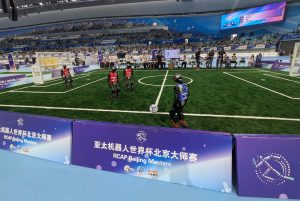
Team Sweaty wins silver medal in China

At the World Humanoid Robot Games in Beijing, before a crowd of 10,000 spectators, the HSO robot soccer team only had to concede in the final, losing by a narrow margin. Thirty teams from around the world competed in two contests, with their robots playing completely autonomously during the games, without any human interference. Team Sweaty is the HSO’s humanoid robotics group. Both students and faculty have been developing the soccer-playing robot and successfully participating in in international tournaments for many years now.
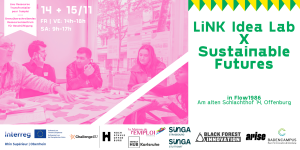
Regional Innovation Initiative – Co-Creation for a Sustainable Future

Graphics: Link Idea Lab x Sustainable Futures

As part of the Regional Innovation Initiative, a transdisciplinary 1.5-day Co-Creation Workshop will take place at the new Coworking Space Flow1986 (M.A.R.K.E.T. Square) in Offenburg, focusing on key questions of sustainability and future development. Students from Offenburg University, together with regional and interregional partners, freelancers and start-ups will collaboratively develop concrete approaches to local sustainability challenges designed to create impact well beyond the workshop itself.

This site uses cookies. Visit our cookies policy page or click the link in footer for more information and to change your preferences.