Blooming partnerships. A new season of M.A.R.K.E.T. Meet-Ups at SEEU
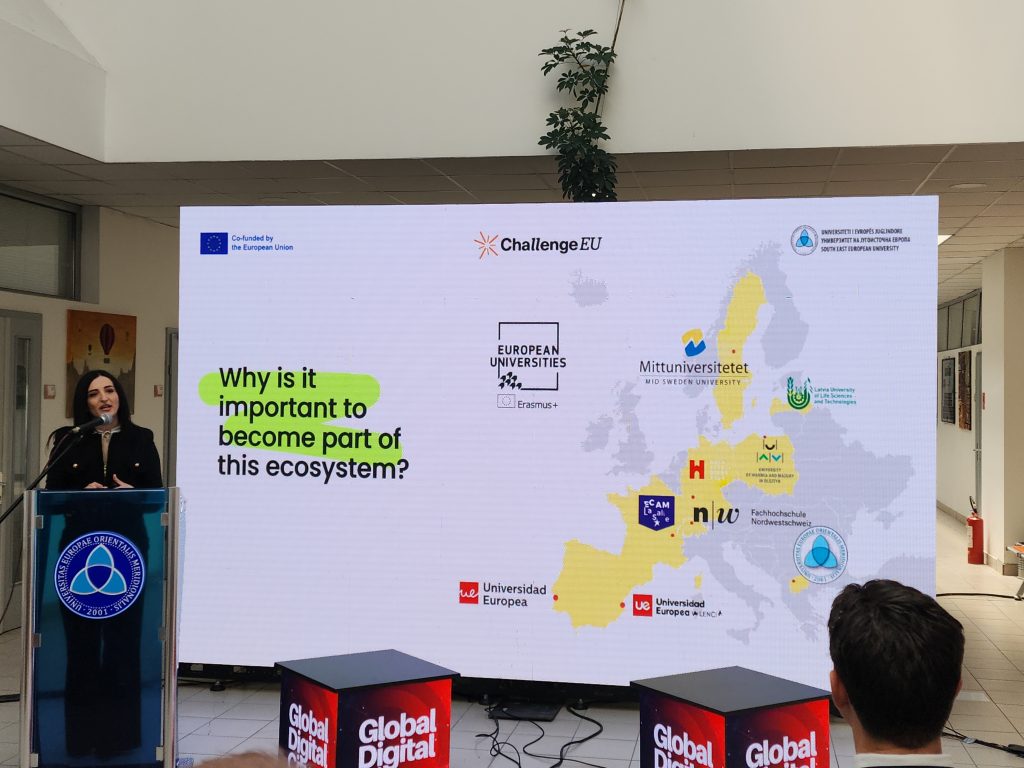
The second day of the Global Digital City event took place at South East European University (SEEU), with the support of ABSL North Macedonia, bringing together key representatives from academia, industry, the diplomatic community, and public institutions. The activities followed the M.A.R.K.E.T. Meet-Up approach of the ChallengeEU Alliance, creating an interactive environment where collaboration moved beyond dialogue toward practical engagement. The event strengthened connections between universities, businesses, policymakers, and young professionals, encouraging the co-creation of innovative solutions. During the keynote session, Assoc. Prof. Dr. Shpresa Alija, Market Officer of the ChallengeEU project, presented the initiative’s strategic vision for developing a digital collaboration platform and a sustainable innovation ecosystem. She highlighted how ChallengeEU bridges academia and industry by mobilising students, leveraging academic expertise, and engaging international partner universities to transform real-world challenges into concrete collaborative projects. Hamit Kamberi, designer of the first digital platform developed within the ChallengeEU framework – Impact Lab – then introduced the platform, outlining its key features, benefits, and the stakeholder registration process. He emphasised that Impact Lab serves as a new digital collaboration space connecting universities, industry, and partners at both regional and international levels. The programme concluded with practical workshops and training sessions focused on employability and industry readiness, providing participants with hands-on experience and direct interaction with experts and employers. The event clearly demonstrated how M.A.R.K.E.T. Meet-Ups generate tangible results by turning ideas into action and strengthening long-term partnerships across the broader European ChallengeEU alliance.
M.A.R.K.E.T. Meet-Up on Distance Campus strengthens regional collaboration for MIUN in Östersund
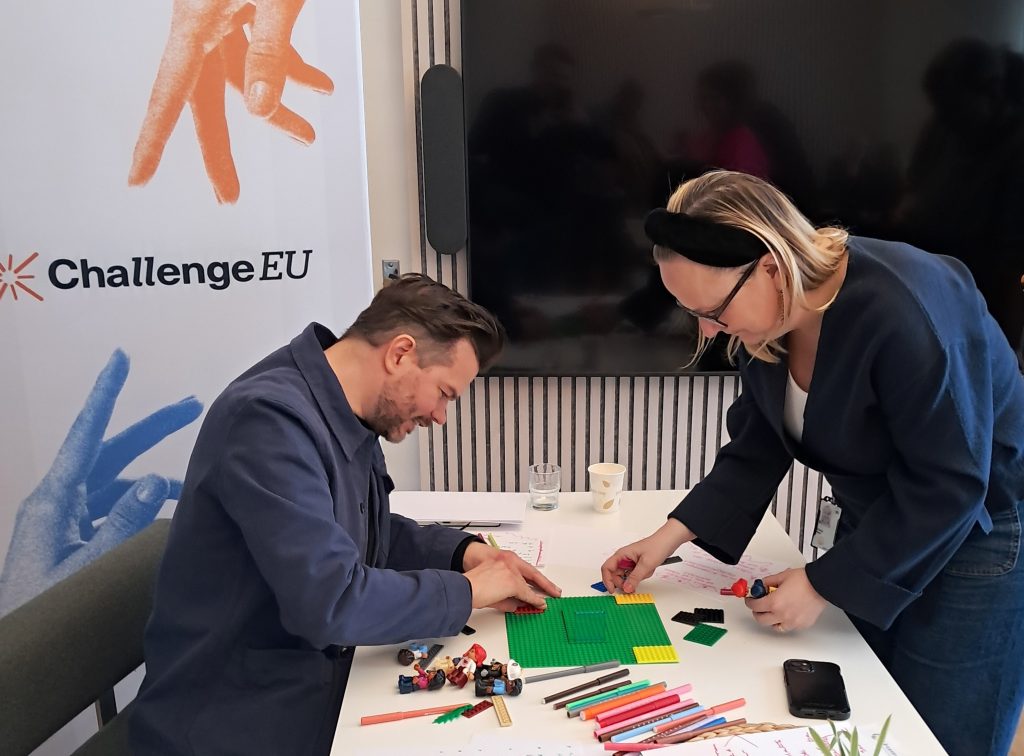
On 24 February 2026, Mid Sweden University and ChallengeEU hosted a M.A.R.K.E.T Meet-Up on the continued development of the distance campus together with Lärcentrum Östersund (Östersund Adult Education Centre). Around 20 participants gathered, representing the public sector, the business community, civil society, and academia. The Distance Campus is a physical space where distance students can study, connect with peers, and network with potential future employers. The meeting provided a valuable and up-to-date overview of the current status of the Distance Campus, which is hosted by Lärcentrum Östersund. Participants also had the opportunity to hear directly from distance students who actively use the facilities, offering important insights into their study conditions and everyday needs. During a well-received facilitated workshop, the group identified key challenges and areas for improvement related to the further development of the Distance Campus and the study environment for distance learners in the Jämtland/Härjedalen region. The discussions enabled participants to exchange ideas, experiences, and expertise, and to outline potential actions with clear regional relevance and impact. Distance students living in the region are increasingly recognised as an important part of the regional talent supply for both the business and public sectors. The event confirmed strong engagement among regional stakeholders and marked an important step forward in strengthening collaboration to create sustainable and supportive conditions for distance students.
Student Journal: “ChallengeEU did more than connect universities”
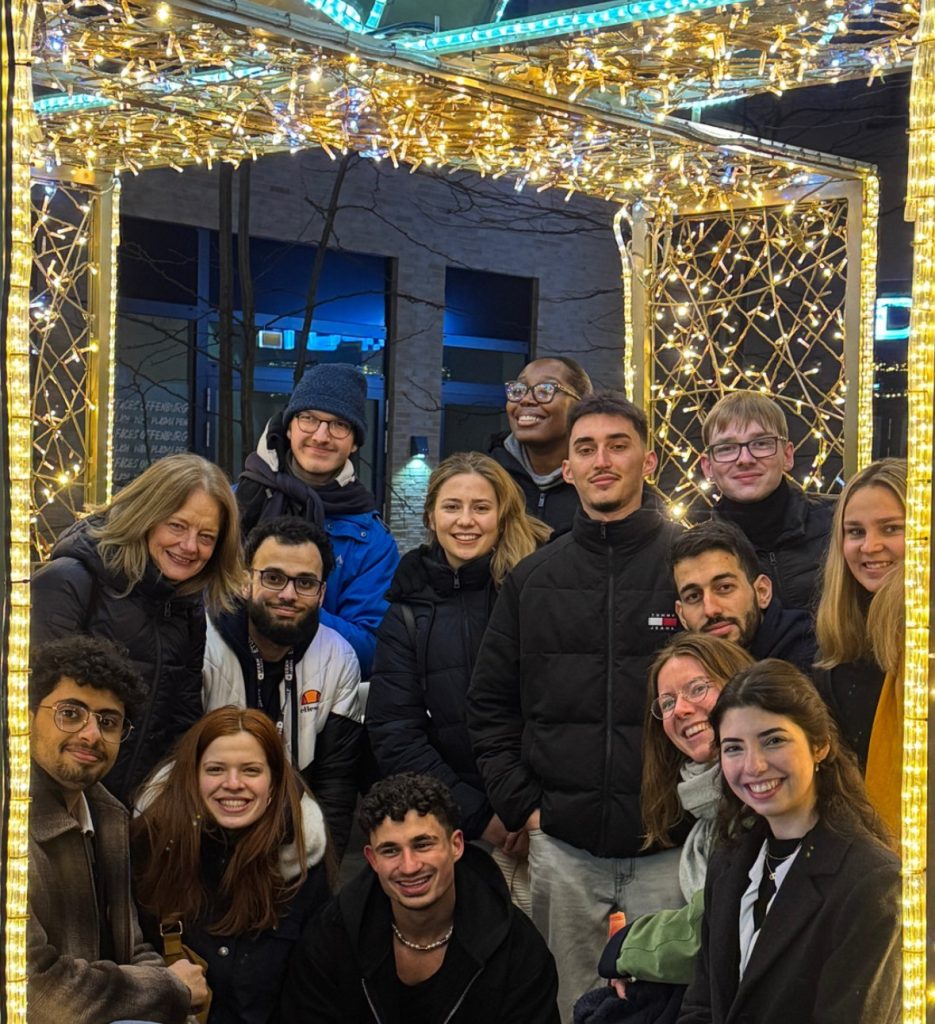
“Being part of this journey changed the way I see Europe” – writes Gajur Memeti from South East European University in North Macedonia, a member of the Student Ambassadors Team. Representing South East European University as a Student Ambassador for ChallengeEU honestly started as something that simply made me proud. I remember when I first got the role. It felt big. Not just because it was connected to Europe, but because I knew I was carrying the name of my university with me. That realization alone made it feel important. At the beginning, everything was online. We met through screens, squares with names and faces from different countries. Even though it was virtual, there was still this shared excitement. I would sit at my desk listening to students from different parts of Europe speaking about their ideas, their universities, and their expectations. It was strange in a good way, realizing how different we all were, but also how similar our goals sounded. Still, online meetings can only go so far. You connect, but it stays limited. Then December 2025 came, and we finally met in person in Offenburg. That is when everything felt real. Traveling there was not just about attending a meeting. It felt like stepping into something bigger. We had workshops on content creation, photography, and intercultural communication, and those sessions were genuinely useful. I learned practical things. How to communicate better. How to represent something visually. How to think more carefully about the way I share stories. But if I am being honest, the most important part was not inside the workshop rooms. It was the conversations in between. The small talks that slowly turned into deeper discussions. Sharing meals, laughing about cultural differences, explaining traditions, talking about our studies and our ambitions. In just a few days, the dynamic completely changed. We stopped feeling like representatives of nine separate universities and started feeling like one team. What surprised me the most was how fast the connections felt real. We arrived as ambassadors with a title. We left feeling like we had built something personal. Looking back now, I realize that ChallengeEU did more than connect universities. It connected perspectives. It challenged the way I think about borders, collaboration, and leadership. It showed me that real impact does not begin with institutions. It begins with people who are willing to listen, to share, and to grow together. Being part of this journey changed the way I see Europe. It is no longer just a map or a concept discussed in classrooms. It is people, conversations, shared goals, and mutual respect. What started as an honor became something deeper. A responsibility I carry with pride. A reminder that when young people come together with openness and purpose, the future does not feel uncertain. It feels ours to shape. Gajur Memeti
Smart Turn-Assist: Inclusive Innovation from an FHNW Student

How can swimming become more independent and safe for people with visual impairments? This question inspired Selina Przyjemski, graduate in Electrical and Information Technology. She developed a smart turn-assist system that helps blind and visually impaired swimmers orient themselves in the pool without needing a guide at the poolside. Her work has now been awarded the prize for Best Bachelor Thesis at the FHNW School of Engineering and School of Computer Science and is nominated for the Siemens Excellence Award 2026. For many visually impaired swimmers, reaching the end of the lane is a moment of uncertainty. Traditional support requires another person to signal when to turn. Professor Hanspeter Schmid from the Institute of Sensors and Electronics had long wondered whether technology could offer more autonomy and invited students to explore the idea. Selina Przyjemski took on the challenge. “I loved that the project was meaningful and that I could build something entirely new,” she says. Finding a reliable way to measure distance in water turned out to be tough. Cameras failed due to reflections and privacy issues; ultrasound and radar also proved unreliable. The breakthrough came with Ultra-Wideband (UWB) radio technology, normally used in indoor logistics to track goods. Przyjemski adapted UWB for use near water and achieved the precise distance measurements needed for swimmers. Her system works with: From gentle pulses over five metres away to continuous vibration under two metres: The system clearly signals when it’s time to turn. Trials with a blind test swimmer showed how easy the system is to use. More importantly, it increases autonomy and safety, supporting everything from relaxed training to competitive swimming. Program Director Prof. Sebastian Gaulocher praises the achievement: “What looks simple at the end is usually hard to achieve. Selina developed a user-friendly, practical tool grounded in complex technology and she pushed through every challenge with impressive perseverance.” More information (in German): Smart Turn-Assist
Visit of the Ministry of Foreign Affairs Delegation to the Latvia University of Life Sciences and Technologies
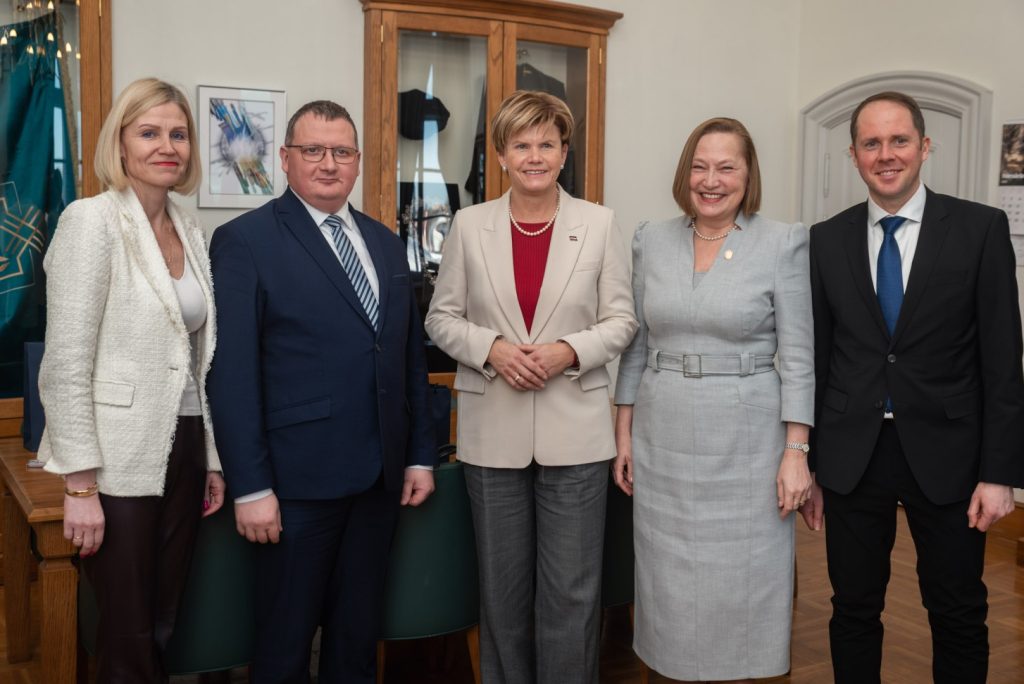
On 2 February, the Latvia University of Life Sciences and Technologies (LBTU) welcomed a delegation from the Ministry of Foreign Affairs of Latvia led by Minister of Foreign Affairs Baiba Braže. During the visit, the delegation ознакомed itself with the University’s research, innovation, and infrastructure potential and participated in discussions on future cooperation opportunities. A seminar on the European Union’s Multiannual Financial Framework for 2028–2034 was also held as part of the visit. The delegation met with LBTU Rector Irina Arhipova, Vice-Rector for Research Gatis Vītols, Vice-Rector for Finance Linards Sisenis, Vice-Rector for Studies Ilze Beitāne, as well as faculty deans and academic staff. The presentation highlighted LBTU’s role as a driver of innovation in Latvia’s economy and export sectors. The University focuses on life sciences, food technologies, forestry, and veterinary medicine, developing interdisciplinary solutions for sustainable bioeconomy, precision agriculture, and food innovation, as well as dual-use knowledge and technologies for health and defense sectors. During the visit, the delegation toured faculty laboratories, including a demonstration of dry ration meals developed by LBTU and used by the Latvian National Armed Forces. These rations are specially designed, hermetically sealed food products with balanced nutritional value and long shelf life, intended for use in field conditions for both military and civil protection needs in situations where freshly prepared food is not available. The delegation also visited the Faculty of Forest and Environmental Sciences, where they familiarized themselves with the renovated and equipped shelters in Jelgava. A discussion addressed bureaucratic challenges related to the establishment of shelters and the adaptation of premises for civil protection purposes, as well as opportunities for cooperation with industry in the areas of education, research, and infrastructure modernization. At the Faculty of Engineering and Information Technologies, the delegation toured the newly established Drone Laboratory. Discussions focused on the role of higher education institutions in strengthening national security, including the development of competencies in unmanned aerial vehicle (UAV) applications. State support opportunities for training instructors and pilots, as well as the practical application of unmanned technologies in security and crisis management contexts, were also highlighted. The visit concluded with a meeting with the University’s leadership at Jelgava Palace, where opportunities for further cooperation were discussed. A seminar and discussion on the European Union’s Multiannual Financial Framework for 2028–2034 was also held, with participation from representatives of non-governmental organizations, stakeholders, and other interested parties. The seminar addressed key challenges and opportunities for Latvia to maximize funding in the next EU budget period. Given that Latvia’s share of the budget is relatively small, attention was paid to securing additional funding within the national financing framework, particularly in light of security and defense considerations in border states. The main difficulties relate to convincing net contributor countries to increase their contributions to the EU budget and to allocate additional funding to other Member States. Various budget headings were also discussed, such as competitiveness programmes, under which Latvia may apply for additional EU funding outside the national allocation framework. It was emphasized that success will largely depend on cooperation with other Member States, negotiations, and proactive engagement.
Accreditation Board Held Its Regular Meeting at SEEU
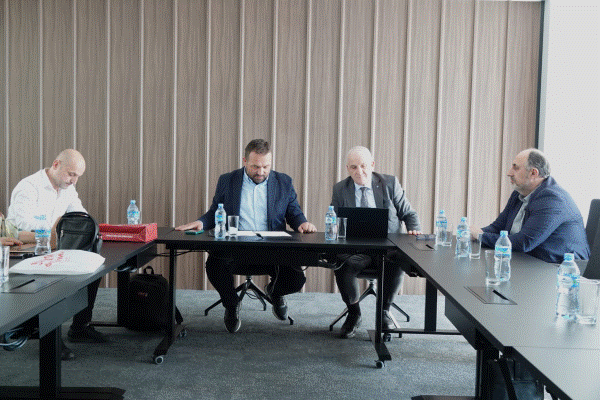
The Higher Education Accreditation Board, operating within the Agency for Quality in Higher Education (AQHE), held its regular meeting today at the premises of South East European University. Hosting this meeting represents an important recognition for our institution and confirms the University’s active role in national quality assurance processes and the development of higher education in the country. South East European University remains committed to the highest academic standards, institutional transparency, and the continuous enhancement of quality in teaching, research, and university governance.
Universidad Europea de Valencia hosts the meeting of the Strategy Board of the European alliance ChallengeEU
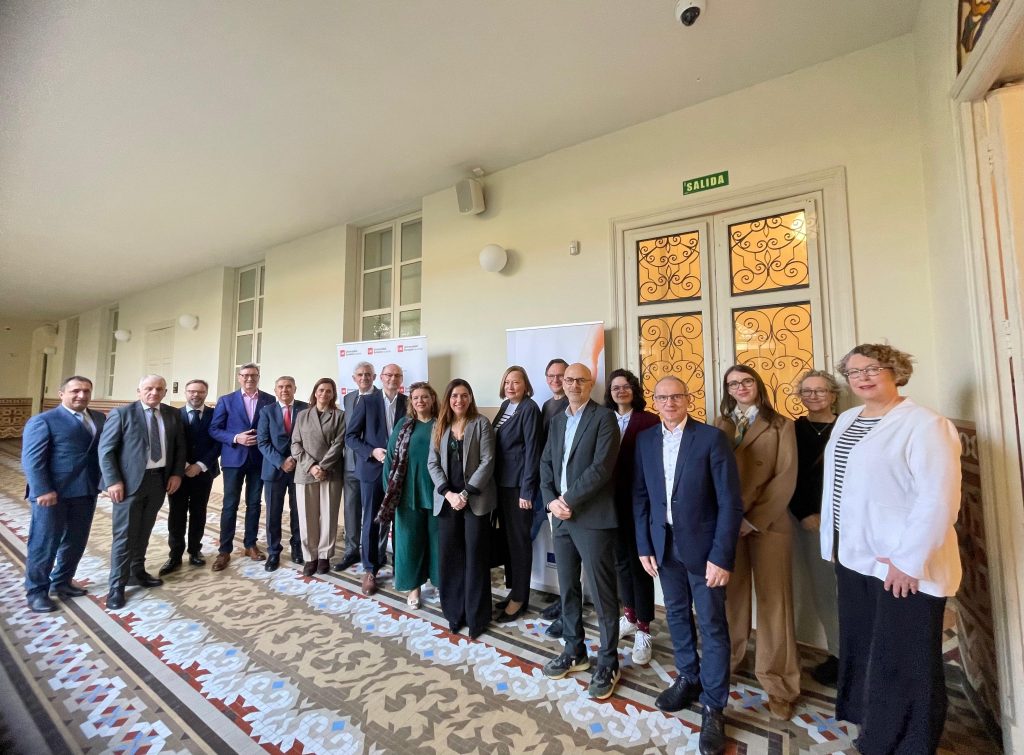
On Tuesday, Universidad Europea de Valencia hosted the meeting of the Strategy Board of ChallengeEU, the highest decision-making body of the European alliance of universities of which the Valencian institution is a member. This meeting brought together the rectors of the nine universities that make up the network alongside UEV at the Turia Campus: Offenburg University of Applied Sciences (Germany), University of Life Sciences and Technologies (Latvia), ECAM LaSalle (France), University of Warmia and Mazury (Poland), Mid Sweden University (Sweden), Southeast European University (Republic of North Macedonia), University of Applied Sciences and Arts Northwestern Switzerland (Switzerland) and Universidade Europeia de Lisboa (Portugal), in a working session focused on future directions, strategic challenges and the evolution of the project. The day began with a welcome coffee, during which Esther Gómez, Regional Secretary for Universities of the Generalitat Valenciana, gave a few words of institutional greeting to the Rectors of the alliance before starting the programme of activities. During the working session, the Strategy Board was presented with the results of the alliance’s first year of operation and analysed its medium- and long-term strategy, focusing on consolidating its vision and priorities for the coming years. The meeting also allowed progress to be made on the proposal to create double degrees between member universities, as well as exploring the possible incorporation of a Ukrainian polytechnic university as an associate member, in line with ChallengeEU’s commitment to broader and more diverse European cooperation. The meeting was chaired by Tobias Hagen, Director General of ChallengeEU, and Secretary General Sofiia Hecker, both from the University of Offenburg (Germany), the institution responsible for the overall coordination of the alliance. Annette Klinkert, director of city2science, the technical agency that has accompanied ChallengeEU in its application and development process, also participated in the proceedings. It was also agreed at the meeting that the Rector of Universidade Europeia de Lisboa, Helia Gonçalves, would take over the chairmanship of the Strategy Board during the alliance’s second year of operation, replacing Stephan Trahasch, Rector of the Offenburg University of Applied Sciences (Germany). Likewise, the rector of Mid Sweden University (Sweden), Anders Fallström, has been appointed as the new vice-president of the body.
Neurodiversity in focus: ChallengeEU workshop in Offenburg
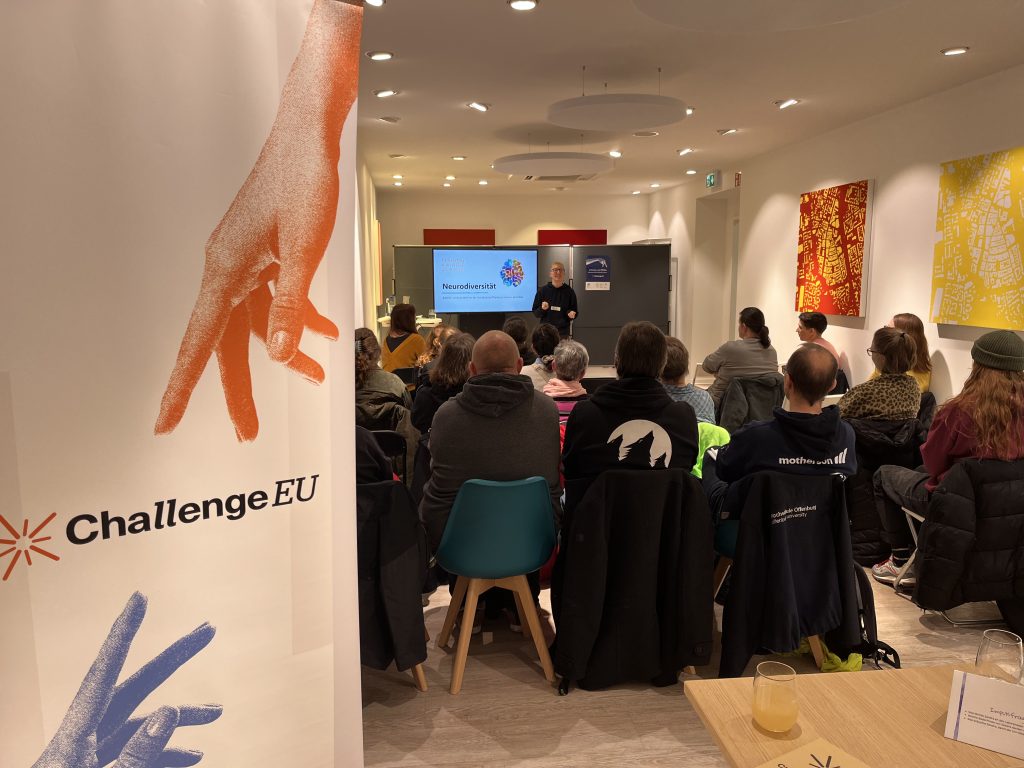
On 12 February, the first neurodiversity-focused workshop of the ChallengeEU alliance took place at Stadtraum Offenburg, bringing together the M.A.R.K.E.T. approach and ODEI principles (Openness, Diversity, Equity, Inclusion). The event became an inspiring platform for exchanging experiences among academics, students, institutional representatives, and external practitioners. The programme was led by neurodiversity expert Sylvia Drews. The workshop opened with an introduction to neurodivergence in the workplace, including how traits such as ADHD and autism spectrum conditions may present differently in individuals. Participants explored core patterns of neurodivergent functioning as well as the challenges neurodivergent people face in professional and educational environments. A strong emphasis was placed on interaction. Working in groups, participants collaboratively developed ideas for creating more inclusive spaces that genuinely support neurodivergent individuals. Discussions addressed both workplace settings and educational institutions, highlighting that inclusive solutions can – and should – be implemented at multiple levels. An important part of the meeting was reflection on practical steps that can be taken in organisational policies and everyday practices. The aim was to identify actions that help build safe environments where everyone can express themselves freely and confidently, without fear of judgment. The workshop demonstrated how ChallengeEU creates spaces where diverse perspectives meet: academic knowledge, student voices, institutional experience, and expert practice. Bringing these groups together in one room makes it possible to move beyond dialogue toward shared responsibility for inclusive transformation. Participants highlighted the inspiring atmosphere of the event and the value of meaningful exchange and collaboration. The workshop also provided an opportunity to connect these discussions with ChallengeEU’s mission – encouraging unconventional thinking, collective action, and challenging the now, in unity.
UWM Regional Meet-Up
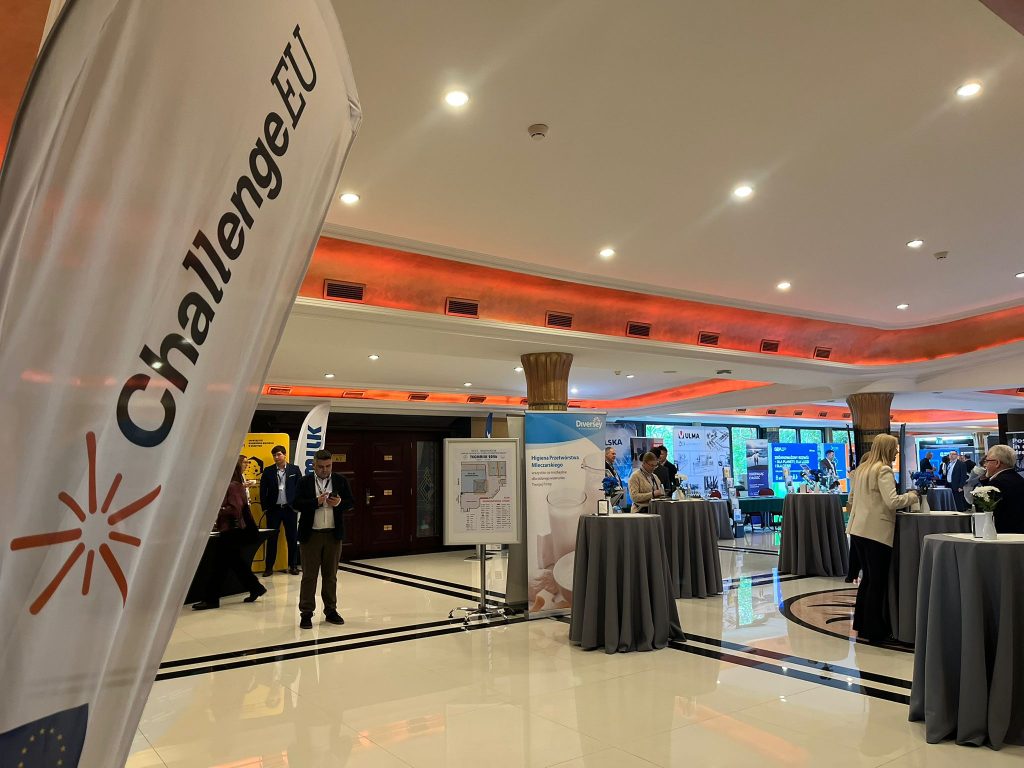
On 11–13 February, the 27th edition of the Techmilk seminar was organised by the University of Warmia and Mazury. The event is devoted to modern technological solutions in the dairy processing sector. During the seminar, science met industry. Techmilk brought together representatives of academia, business, local government authorities, and students – nearly 400 people attended the event in total. Through presentations, debates, and showcases of technical solutions, dialogue was established between scientists, representatives of dairy companies, and suppliers of modern industry solutions. “Techmilk was an excellent opportunity to promote the alliance’s ideas and establish new contacts. During the UWM Regional Meet-Up, we also met with our associated partners – including companies such as Mlekpol and Piątnica. We observed very strong interest in the ChallengeEU alliance, and many companies expressed their willingness to cooperate,” says Dr Adriana Łobacz, Market Officer in WP4. It is also worth noting that students from universities forming the ChallengeEU alliance were not forgotten during the event. Representatives of UWM’s Office for International Cooperation worked together with entrepreneurs to offer students opportunities for internships and traineeships.
M.A.R.K.E.T. Meet-Up on Events and Sustainability in the Region of Valencia
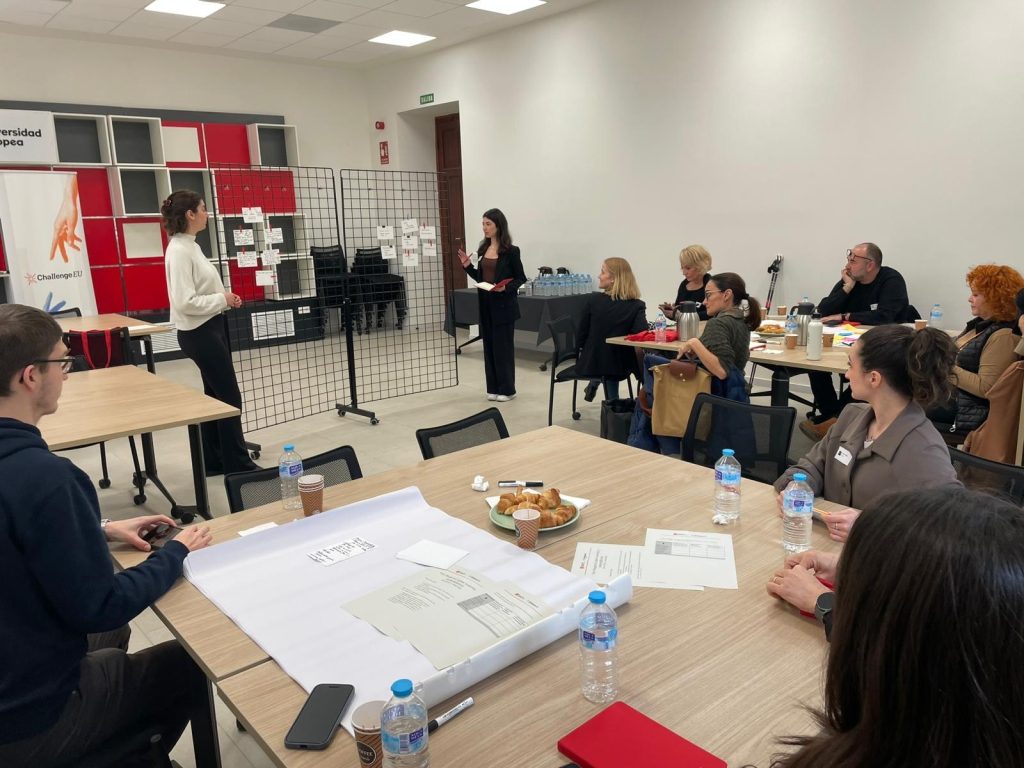
On Tuesday, February 10, 2026, Universidad Europea de Valencia hosted its first M.A.R.K.E.T. Meet-Up dedicated to Events and Sustainability in the Region of Valencia. Organized in collaboration with Meeting Professionals International (Iberian Chapter), this dynamic session brought together local experts representing the Quadruple Helix (Government, Industry, Academia and Civil Society) to explore how events can contribute to sustainability outcomes and create lasting legacies in destinations. This collaborative exercise featured insightful discussions on integrating sustainability into event planning and execution. It focused on identifying local challenges related to sustainable events and generating practical solutions to ensure that sustainability principles are embedded in future event strategies. Participants engaged in a lively exchange of ideas, emphasizing the importance of collaboration between event organizers, destinations, and stakeholders to achieve meaningful sustainability goals. The conversation highlighted actionable steps for reducing environmental impact, promoting local communities, and ensuring that events leave a legacy beyond the experience itself. Key Challenges Identified: Potential Solutions: “Thank you to all attendees and partners for making this event a success. Together, we are shaping a more sustainable future for the events industry in the region of Valencia and beyond,” said the organizers.