Delegation from the University of Applied Sciences and Arts Northwestern Switzerland (FHNW) Visited SEEU
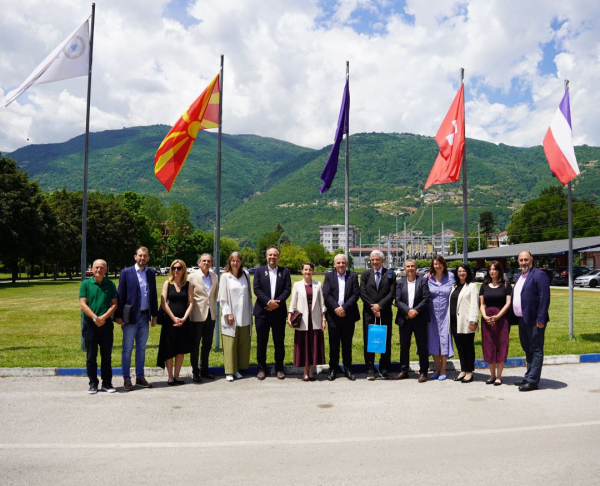
South East European University (SEEU) welcomed a delegation from the University of Applied Sciences and Arts Northwestern Switzerland (FHNW), led by its President (Rector), Prof. Dr. Crispino Bergamaschi. The delegation also included Anja Huovinen, Head of International Affairs at FHNW; Safak Korkut, lecturer at the Institute for Information Systems; and Prof. Dr. Nikolina Fuduric, lecturer at the Institute for Competitiveness and Communication. The delegation held a working meeting with the Rector of SEEU, Prof. Dr. Sadudin Ibraimi, the University’s management team, and representatives of the “Max van der Stoel” Institute at SEEU. The meeting was held within the framework of inter-institutional cooperation between the two universities and the activities of the ChallengeEU project. It focused on advancing academic partnerships, developing joint research projects, promoting student and staff mobility, and exchanging best practices in higher education and innovation. During the meeting, the interlocutors discussed opportunities to deepen cooperation in fields of mutual interest, emphasizing the vital role of international university networks in addressing contemporary challenges and creating new opportunities for students, researchers, and the academic community.
20 years of Applied Psychology: FHNW celebrates with interactive experience day
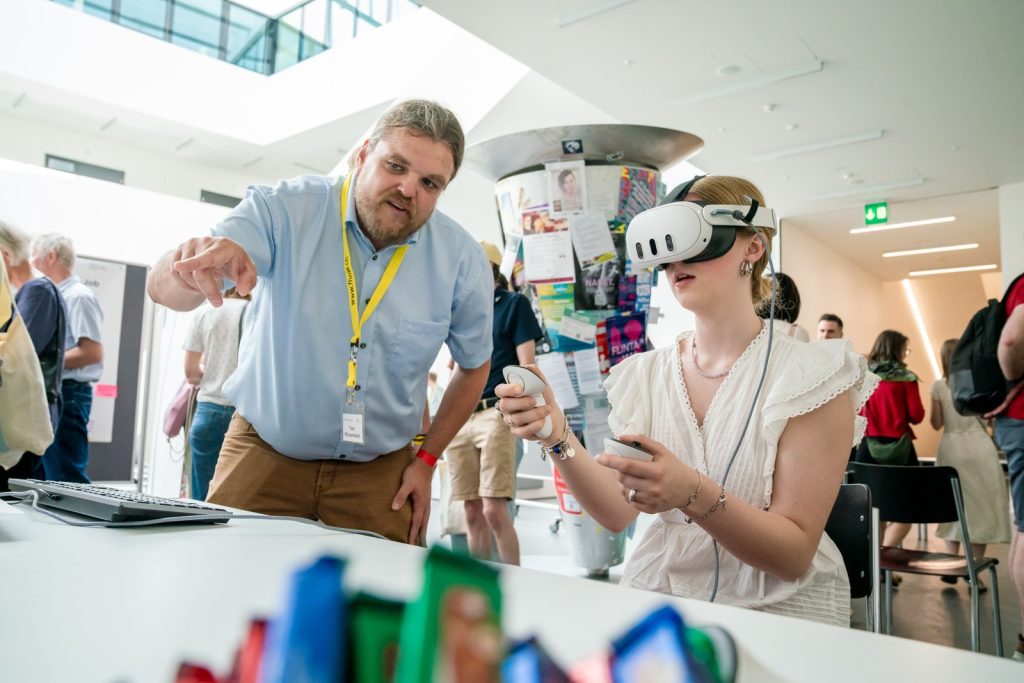
To mark its 20th anniversary, the FHNW School of Applied Psychology invited the public to an “Experience Saturday” on 13 June 2026 at the Olten campus, drawing large crowds eager to explore applied psychology firsthand. Visitors of all ages enjoyed interactive stations, short lectures, guided tours, and hands-on activities. The usually quiet campus turned into a lively space of discovery, while alumni gathered in a dedicated lounge to reconnect. Prof. Dr. Tanja Manser, Director of the FHNW School of Applied Psychology, highlighted the goal of the event: “We didn’t just want to celebrate our anniversary, but also make applied psychology accessible to a broad audience and show its relevance in everyday life, work, and society.” The celebrations began with an official ceremony attended by guests from business, politics, and academia. Together with alumni, students, and partners, Manser reflected on key milestones of the past 20 years and future perspectives. FHNW President Crispino Bergamaschi emphasized the school’s strong position, calling it “a key voice of applied psychology in the German-speaking world.” Around 70 staff members helped make the event possible, creating a welcoming and engaging atmosphere. Visitors also enjoyed food and summer treats with free ice cream proving especially popular in the warm weather. The event showcased not only the school’s achievements, but also its ongoing role as a bridge between research, education, and real-world impact. Full article (in German): https://www.fhnw.ch/de/psychologie/aktuelles/news-storys/alle/20-jahre-angewandte-psychologie-erlebnissamstag-rueckblick Foto: Aniela Lea Schafroth Photography Prof. Dr. Tanja Manser, Director FHNW School of Applied PsychologyFoto: Aniela Lea Schafroth Photography
SEEU Confirmed as the Highest-Ranked University from North Macedonia in the Times Higher Education Impact Rankings 2025
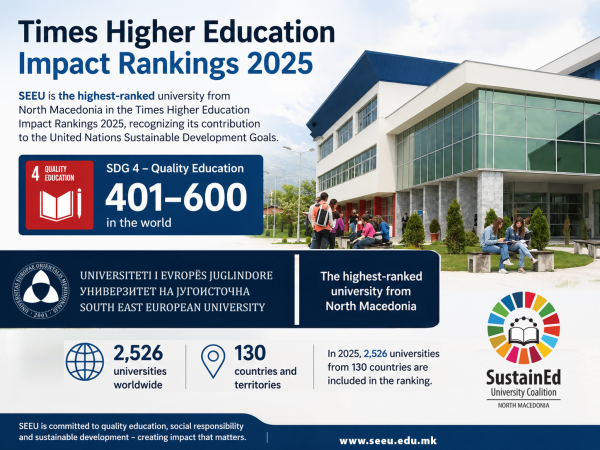
The South East European University (SEEU) continues to strengthen its international profile by ranking as the highest-rated university from North Macedonia in the Times Higher Education Impact Rankings 2025. This is one of the most prominent global rankings evaluating university contributions to the United Nations Sustainable Development Goals (SDGs). SEEU’s most significant achievement in this ranking was reached in the SDG 4 category – Quality Education, where the university placed in the 401–600 bracket of the world’s best universities. In this category, Times Higher Education assesses access to quality education, social inclusion, student support, lifelong learning, and the university’s impact on the education system. This positioning makes SEEU the highest-rated university from North Macedonia and the highest-ranking Albanian-language university in the region within this category. SEEU also recorded significant results in other sustainable development categories, including gender equality, reduced inequalities, climate action, peace, justice, and strong institutions. These results are part of the Times Higher Education Impact Rankings methodology, which evaluates universities not only through scientific publications but also through their community impact, student support, inclusivity, and contributions to the 17 UN Sustainable Development Goals. In this context, SEEU’s positioning demonstrates the university’s ongoing commitment to quality education, social responsibility, and sustainable development, confirming its role as an institution that connects its academic mission with real-world impact on society and the community. The importance of this result is amplified by growing global competition. The 2025 edition of this ranking featured 2,526 universities from 130 countries and territories, compared to 2,152 universities from 125 countries in 2024. SEEU’s commitment to Agenda 2030 and the Sustainable Development Goals is further evidenced by its inclusion in the SustainED University Coalition. This initiative is promoted by the Office of the United Nations Resident Coordinator in North Macedonia. The coalition aims to strengthen the role of universities in implementing sustainable development goals through education, scientific research, innovation, student engagement, and community collaboration. SEEU’s participation in this platform, along with the results achieved in the Times Higher Education Impact Rankings 2025, confirms the university’s strategic orientation toward quality education, sustainable development, and building a more inclusive society. Link:timeshighereducation.com/world-university-rankings/south-east-european-university
UWM Researchers Secure Prestigious National Science Centre Grants
Researchers from the University of Warmia and Mazury in Olsztyn have been awarded funding in Poland’s highly competitive National Science Centre (NCN) grant programmes OPUS 30 and SONATA 21. Six UWM scientists secured support for ambitious research projects spanning plant biology, medicine, environmental science, biotechnology and veterinary research, reinforcing the University’s strong position in interdisciplinary scientific excellence. Four projects received funding through the OPUS 30 programme. Prof. Jakub Sawicki will investigate the evolution of chemical communication in liverworts, exploring how these ancient plants use signalling mechanisms during reproduction. Dr Beata Plitta-Michalak will study DNA repair processes in short-lived seeds, aiming to develop innovative methods for preserving plant genetic resources and protecting biodiversity. Dr Kamil Dobrzyń will examine the role of metabolic hormones in the earliest stages of pregnancy, while Prof. Monika Harnisz will lead research on removing emerging contaminants and antibiotic-resistant bacteria from wastewater, supporting public health and the implementation of new European environmental regulations. Two additional UWM researchers were successful in the SONATA 21 competition. Dr Karol Mierzejewski will investigate how nano- and microplastics affect the cardiovascular system, addressing one of today’s most pressing environmental and health challenges. Dr Dominika Gołubczyk will focus on the inflammatory mechanisms involved in ischaemic stroke, using advanced translational research models to identify new therapeutic targets that could improve treatment outcomes for patients. The funded projects demonstrate the breadth of research conducted at UWM and its commitment to addressing global challenges through innovative science. From biodiversity conservation and sustainable environmental management to reproductive biology, cardiovascular health and neuroscience, these grants will strengthen international collaboration and contribute to scientific advances with real-world impact.
Three students from Universidad Europea de Valencia, recognised at the 9th Capitanía General Awards for their academic excellence
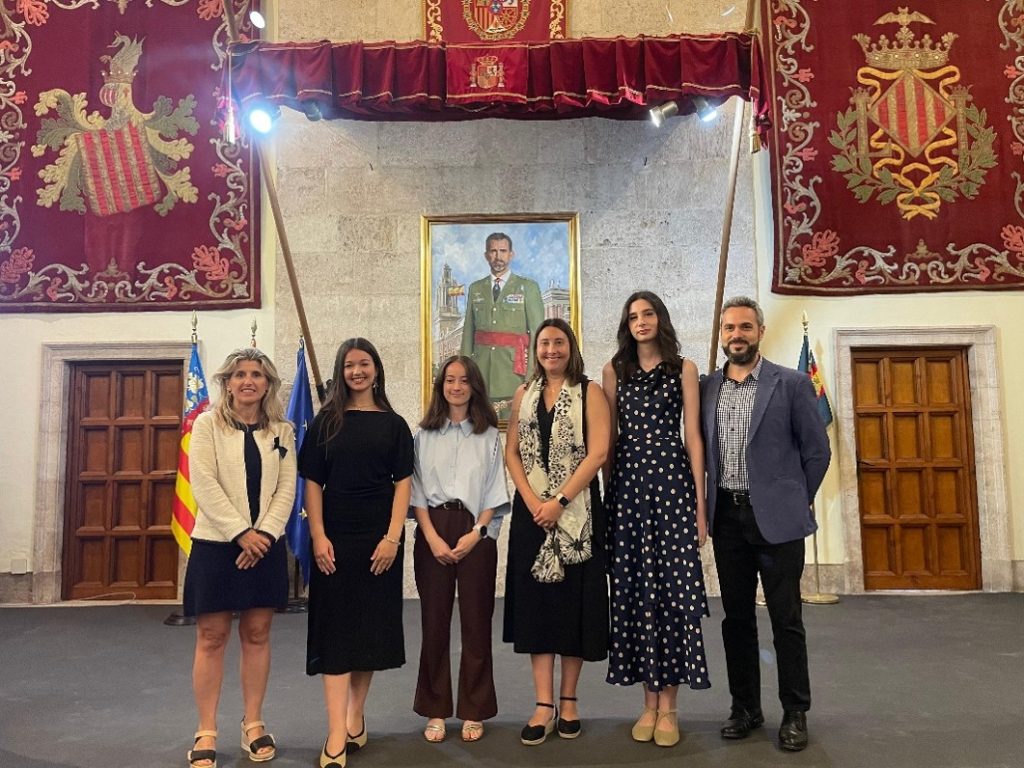
The students were honoured at a ceremony organised by the Army to recognise university talent and the training of future leaders. Three students from Universidad Europea de Valenciahave been recognised for their outstanding academic record at the 9th edition of the ‘Capitanía General de Valencia’ Awards, organised by the Spanish Army’s High Readiness Land Headquarters (CGTAD). This prestigious award honours students with the best academic records from Valencian universities across various fields of study. The award winners are Brenda Artagoitia Abellán, from the Bachelor’s Degree in Business Administration and Management with International Teaching (Global Bachelor’s Degree); Apolline Mélanie Marcelle Bonnefoy-A-L’Anne, from the Bachelor’s Degree in Physiotherapy; and María Minguela Sáez, from the Bachelor’s Degree in Physics. The ceremony, held on Tuesday 16 June at the Cuartel de Santo Domingo in Valencia, brought together 27 award-winning students, due to graduate in 2025, nominated by their respective universities in these three fields of study: Arts and Humanities/Social and Legal Sciences; Sciences and Health Sciences; and Engineering and Architecture. The students were accompanied by their families and by academic representatives from Universidad Europea de Valencia, including the Vice-Chancellor for Academic Organisation and Students, Silvia Trujillo; the Dean of the Faculty of Social Sciences, Carla de Paredes; and the Director of the School of Science, Engineering and Design, Vicent Gassó. In this context, Vice-Rector Silvia Trujillo highlighted “the value of initiatives such as these awards, which recognise academic achievement and strengthen the connection between the university and institutions, such as the Army, that share a commitment to education, values and the development of a better-prepared and more responsible society”. These awards, now well established in the city of Valencia, aim to recognise the best undergraduate academic records and strengthen the links between the Armed Forces and the university sector, emphasising the role of education in shaping the leaders of the future. During the ceremony, emphasis was placed not only on academic achievement, but also on humanity, discipline and commitment – key qualities for tackling the challenges of a society in constant transformation.
“Data matters most before the match”
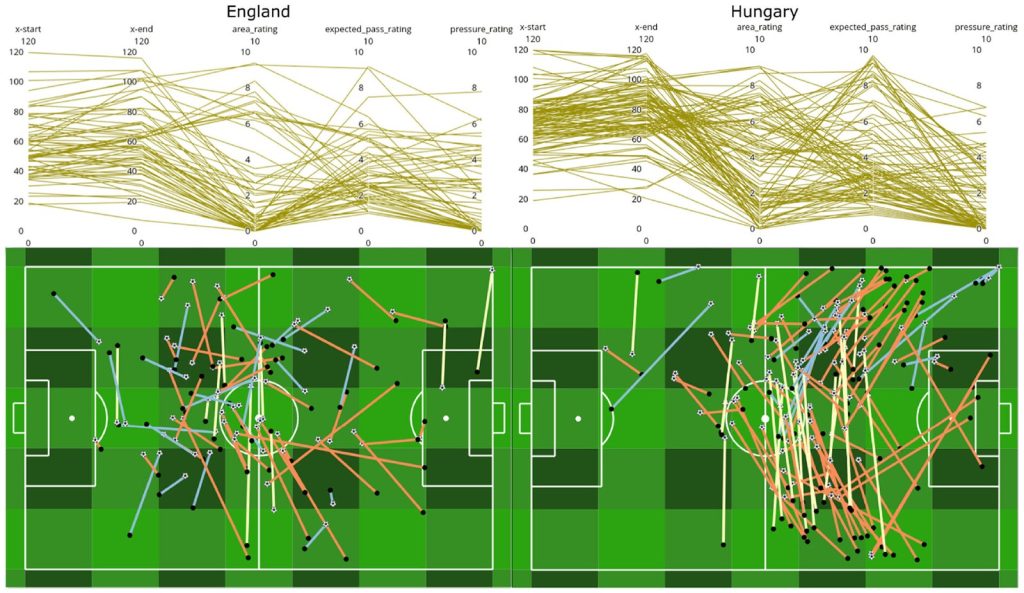
How do AI and data science change sports? The FHNW Data Science Study Track “Data Science & AI for Sports” explores exactly that. It is led by Martin Rumo (FHNW School of Computer Science) who researches how performance in sports can be measured and improved using data-driven methods. Major tournaments like the Football and Ice Hockey World Cups show how much happens behind the scenes. Today, games are carefully planned and intensively analyzed. Sensors and cameras generate vast amounts of data: tracking positions, passes, speed, and duels in real time. However, only a few teams have the tools and expertise to fully use this data during tournaments. Martin Rumo, how do you follow major sports events: more as a fan or a scientist?Both. Years of studying how to measure and improve performance have shaped my perspective. I watch games more analytically now, but that hasn’t reduced my enjoyment as a fan. Is AI already used by teams during tournaments like the World Cup?Yes. In every match, detailed data is collected and made available within seconds. Teams with the right tools analyze patterns such as running routes, passing decisions, or player workload. Still, data plays its most important role before the match. It helps identify talent early, develop players, and define team strategy: What type of players do we need? What are their strengths and weaknesses? How can they improve? What do students learn in “Data Science & AI for Sports”?They learn how to describe and measure performance, collect and process data, and build data pipelines. These skills can be applied across different sports, although deep sport-specific understanding remains essential. While performance and results can be quantified, not everything in sports can be captured in numbers. Can the essence of sport really be measured?Competition and results can be measured. But why one athlete outperforms another often depends on intuition, experience, and context. Coaches rely heavily on subjective judgment. That’s why qualitative data also matters. New tools like language models help analyze such data more systematically. Even so, sport will always include unpredictable moments, where intuition and human factors decide the outcome. Martin Rumo, study track lead Example of football data analysis: The passes of Toni Kroos during two matches at EURO 2020, source: Evers et al. (2024), https://doi.org/10.1177/14738716231220539 More information about the new study track here: https://www.fhnw.ch/en/computer-science/degree-programmes/offerings/programmes/data-science-ai-for-sports Full article (in German): https://www.fhnw.ch/de/aktuelles/news-storys/alle/ki-data-science-sport-wm
Universidade Europeia Awarded Great Place to Work® Certification
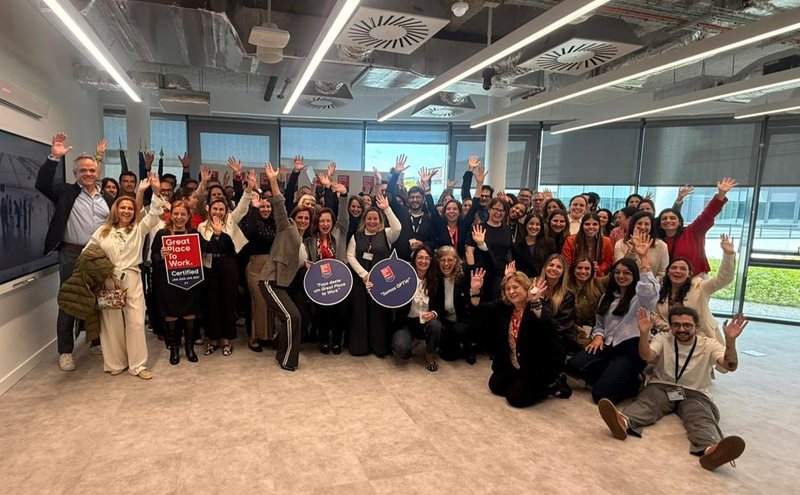
Universidade Europeia has been awarded the prestigious Great Place to Work® certification, an international recognition granted to organizations that foster workplace environments built on trust, respect, collaboration, and employee well-being. Alongside IPAM, from the same group, Universidade Europeia and IADE stand out as the only higher education institutions in Portugal to achieve this distinction. This recognition is based directly on employee feedback collected through a survey conducted in January, reflecting the positive perception of staff regarding the university’s organizational culture, management practices, and overall work environment. Participation in the survey saw a significant increase, rising to 79% compared to 65% in the previous year—an improvement of 14 percentage points. This higher engagement strengthens the reliability and representativeness of the results. The data also highlights strong progress across key indicators, including a 10-percentage-point increase in the Trust Index and a 12-percentage-point rise in the overall “Great Place to Work” score, alongside consistent improvement across all evaluated dimensions. The certification reflects a broader Iberian achievement, as Universidad Europea in Spain also secured recognition, renewing the certification it obtained the previous year. This reinforces a consistent and unified approach to people management across both markets. According to Joana Botelho, Human Resources Director at Universidade Europeia, “Being the only higher education institution in Portugal with this certification is, above all, a sign of consistency. This recognition is not the result of a one-off initiative, but rather a continuous commitment to best practices in people management, active listening, and the creation of a trust-based work environment. For Universidade Europeia and IPAM, this distinction reinforces the belief that academic quality begins with the quality of the professional experience of those who work here.” This milestone highlights the institution’s ongoing dedication to creating a positive workplace culture, recognizing that engaged and supported teams are fundamental to delivering excellence in education. Universidade Europeia obtém certificação Great Place to Work
SEEU Launches Its Proprietary Artificial Intelligence Platform: AI@SEEU
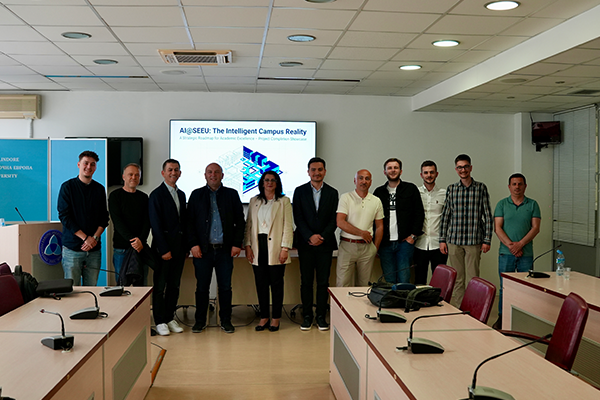
South East European University (SEEU) today hosted the launch of its proprietary artificial intelligence platform, AI@SEEU. This platform represents a significant step toward digital transformation and the integration of AI into higher education, reaffirming SEEU’s commitment to innovation and technological advancement. As a unique AI solution developed entirely in-house, AI@SEEU makes the university the first in the country and the region to implement its own proprietary artificial intelligence platform for academic and administrative use. During the opening remarks, speakers emphasized the importance of leveraging artificial intelligence in academic and administrative processes, highlighting the need for modern solutions that elevate the quality of higher education. Prof. Dr. Florije Ismaili, Head of the Working Group and Advisor for Academic Planning and Digitalization at SEEU, spoke about the institution’s vision for digitalization and the strategic importance of AI@SEEU. She noted that the platform is tailored specifically for students, academic and administrative staff, offering advanced capabilities for teaching, scientific research, and institutional workflows. The development team then demonstrated the platform’s core functionalities, deployment methods, and integration potential, while also outlining plans for future upgrades. Special recognition was given to students Ron Ismaili, Artir Daudi, Ali Salihi, Fehmi Havziu, and Nardi Etemi for their vital contributions to the development and presentation of the platform. Through this project, SEEU confirms its position as an innovative and leading university in the region in the field of digital transformation.
The dentistry of the future comes together at Universidad Europea de Valencia
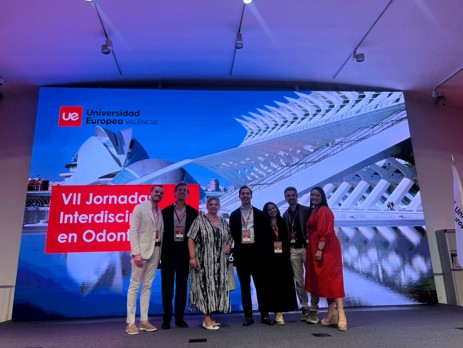
The 7th Interdisciplinary Conference brings together experts, alumni and students to discuss innovation, clinical practice and professional development in the sector. Universidad Europea de Valenciahas held the seventh edition of its Interdisciplinary Dentistry Conference at the Príncipe Felipe Museum, a well-established event that has brought together students, lecturers and specialists to reflect on the challenges and opportunities facing the profession. As is customary at this event, the expert presentations were led by alumni of the university itself, who are now leading professionals in their respective specialities, thereby reinforcing the link between academic training and clinical practice. Thus, Dr Gabriele Amelio (surgery and implants), Dr Lidiana Montero (orthodontics and RNO), Dr Federico Michelini (endodontics) and Dr Antonio Nobili (periodontics) shared their clinical experience, career paths and vision of modern dentistry with the students, offering a realistic perspective on practising the profession. The event concluded with the presentation of scientific papers in poster format and a networking session that enabled students and professionals to interact with representatives from 16 leading companies in the sector. Furthermore, awards were presented for the best final-year dissertations, thanks to the collaboration of the participating commercial organisations, which contributed to the University’s recognition of academic excellence and the commitment of future dental professionals. The Vice-Dean of Dentistry and Biosciences at Universidad Europea de Valencia, Dr Santiago Arias, opened the event by highlighting the value of having graduates serve as role models for students: “The greatest value of these conferences is that they allow our students to visualise the professionals they can become. Seeing how former students return to their university as leading clinicians, researchers and specialists demonstrates that effort, passion and continuous professional development have a real impact on the development of an outstanding professional career.” During the closing ceremony, the Vice-Chancellor of Universidad Europea de Valencia, Rosa Sanchidrián, emphasised the role of this conference as a reflection of the institution’s academic model: “This conference perfectly encapsulates who we are as a university: a space where knowledge is shared, scrutinised and projected out into society”. She also highlighted the students’ hard work and their involvement in research: “Behind every piece of work lie many hours of effort, rigour and learning. And that is precisely what sets your training apart.” The event also benefited from the collaboration of the Valencia Centre for Odontostomatological Studies, chaired by Dr Teresa Chofre, strengthening the link between the university and professional practice – a key element in the training of future dentists.
Campus Life Launches First Student Clubs to Boost Academic Engagement
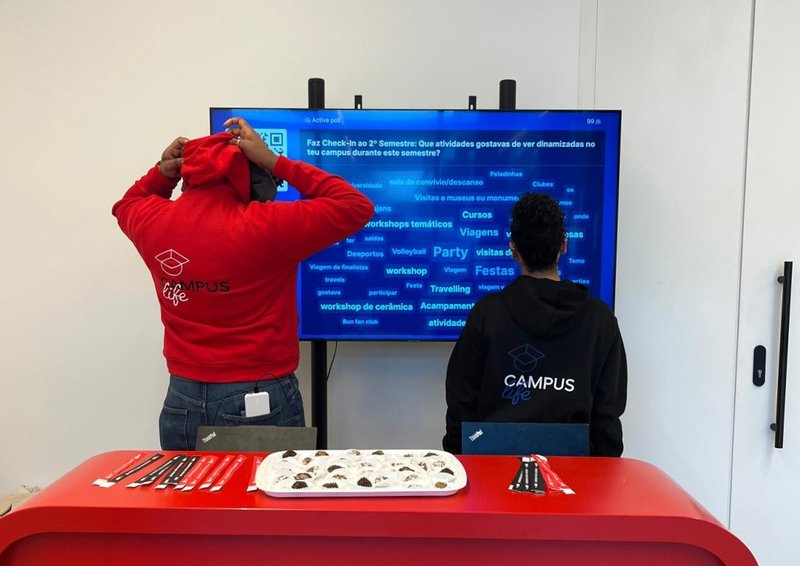
This month marked the launch of the first Student Clubs under the Campus Life initiative, reinforcing the university’s commitment to enhancing student engagement and enriching the overall academic experience. The initiative aims to encourage active student participation beyond the classroom, fostering a more dynamic and inclusive campus environment. Student Clubs are student-led projects designed to create spaces for collaboration, sharing, and personal development. These initiatives allow students to explore common interests while building essential transferable skills that support both their academic journeys and future professional paths. During this first phase, two clubs were officially approved and established: The clubs were founded by students Inês Pinto and Daniela Pereira, respectively, following a structured process that involved submitting their ideas to the Campus Life department. Institutional approval was supported by Vice-Rector Sara Sousa, IPAM Lisboa Director Marta Bicho, and IPAM Executive Director Daniel Sá, highlighting the shared commitment across academic units to support student-driven initiatives. Importantly, Student Clubs are open to students from Universidade Europeia, IADE, and IPAM, fostering an inclusive and collaborative community that transcends campuses and academic disciplines. According to Tomás Mourato, Campus Life Coordinator, “Student Clubs play a fundamental role in our academic community. In addition to promoting student engagement and strengthening interpersonal relationships, they provide valuable opportunities for developing transferable skills, collaboration, and networking among students from different fields.” The initiative is already gaining strong momentum, with eight additional clubs currently in development—demonstrating growing interest and participation across the academic community. Campus Life lança primeiros Clubes de Estudantes e reforça envolvimento académico