FHNW Rover Team Wins Award for Creative Rover Engineering
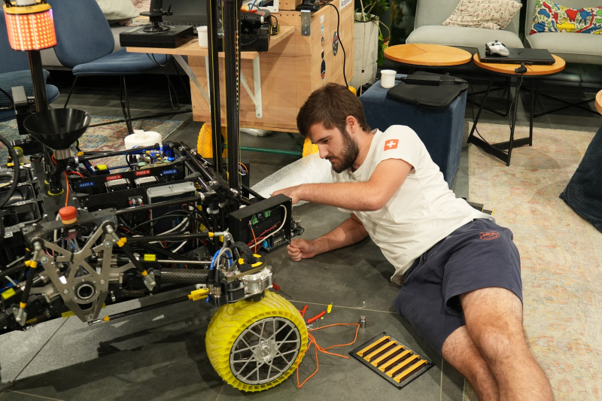
The FHNW Rover Team, consisting of students from the FHNW School of Engineering and Environment and the FHNW School of Computer Science, won 1st place in the “Creativity in Rover Design” category at the European Rover Challenge (ERC) 2026. The award, presented by Honda Research Institute Europe, recognizes innovative engineering solutions that make a tangible contribution to mission performance. Competing against international student teams with self-developed Mars rovers, the FHNW team impressed the jury with its creative technical concepts. The team is an interdisciplinary student project in which participants spend two semesters developing a Mars rover capable of navigating rough terrain, conducting scientific experiments, and carrying out technical maintenance tasks. The project brings together expertise from engineering, computer science, robotics, electronics, and software development. In the overall competition, the team narrowly missed the podium, finishing in 4th place after a technical issue with its drone camera affected its performance. Despite this setback, the students demonstrated strong engineering skills, creativity, and resilience, highlighting FHNW’s strength in hands-on, project-based learning. More information (in German): https://www.fhnw.ch/de/technik-umwelt/studium/rund-ums-studium/rover-team
FHNW opens a new campus housing the School of Computer Science and the School of Business
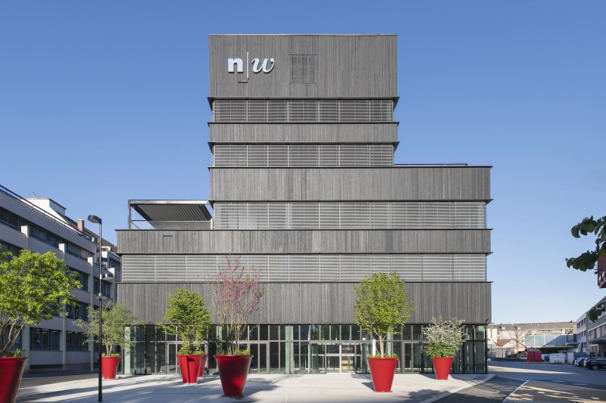
The FHNW School of Computer Science is expanding its presence in Northwestern Switzerland with a new location at Campus Dreispitz Basel. Building on the dynamic environment of the already established FHNW campus, which is also the new Basel location of the School of Business, the new site strengthens FHNW’s connections with students, companies, and research partners in the Basel region. From autumn 2026, the School of Computer Science will offer its new Bachelor’s specialization in Software Engineering & Intelligent Technologies in Basel, combining cutting-edge software development skills with artificial intelligence methods and applications. Additional study options will follow in 2027, supported by a new Learning Hub designed to foster collaborative and self-directed learning. By bringing research, education, and continuing professional development closer to the region’s innovation ecosystem, FHNW aims to strengthen collaboration with industry and contribute to addressing the growing demand for ICT talent. More information (in German): https://www.fhnw.ch/de/informatik/aktuelles/news-storys/alle/hochschule-fuer-informatik-fhnw-eroeffnet-neuen-standort-in-basel
The Max van der Stoel Institute at SEEU Co-Organizes International Conference “OFA 25+: Lessons, Legacies, Horizons”
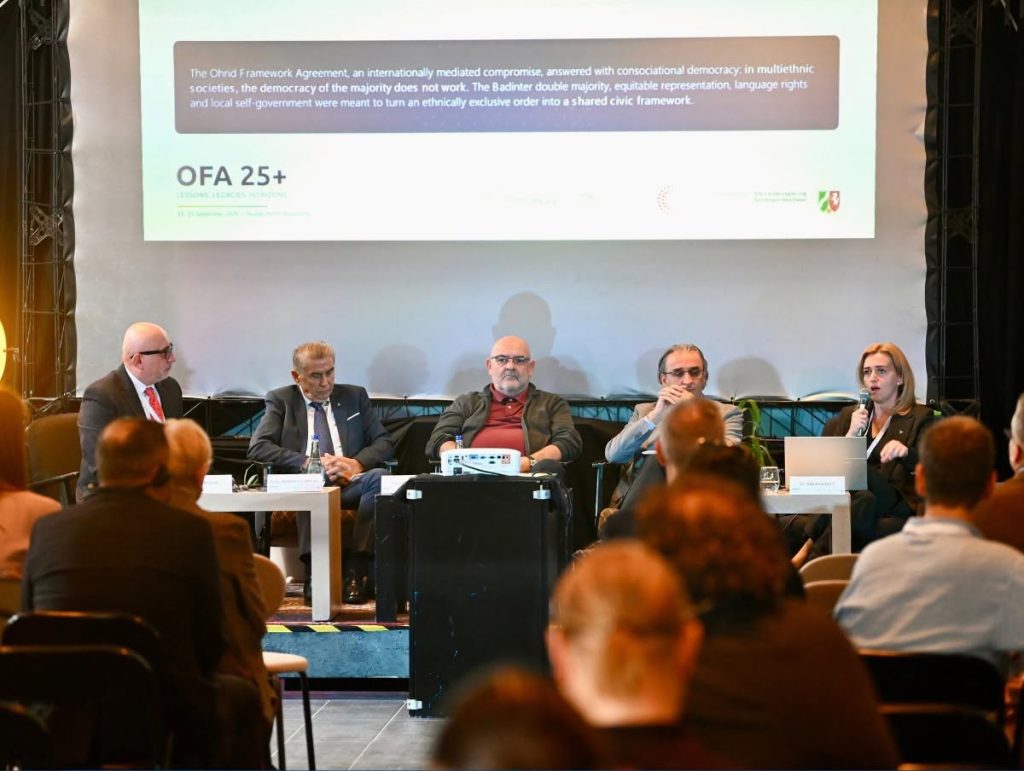
On 24 and 25 September 2026, the international conference “OFA 25+: Lessons, Legacies, Horizons” was held in Skopje. The event was organized by Pro Peace and the Max van der Stoel Institute of the South East European University (SEEU), with the support of the Government of North Rhine-Westphalia. The conference provided an important space for dialogue and reflection on developments over the past 25 years. It addressed critical topics related to dealing with the past, governance, political representation, social cohesion, and the role of art and culture in post-conflict transformation processes. On behalf of the South East European University, a welcoming address was delivered by Prof. Dr. Besa Arifi, Advisor for Community and International Relations. In her speech, she highlighted the unique symbolism of 2026, noting that SEEU marks the 25th anniversary of its establishment in the exact same year as the 25th anniversary of the signing of the Ohrid Framework Agreement. Prof. Dr. Arifi emphasized that SEEU represents an institutional model built on respect for diversity and coexistence among communities, describing diversity as one of the key strengths and defining characteristics of the University’s culture. SEEU representatives also made significant contributions to the panel titled “Governance, Representation, and the Political Context.” Participating as experts were Acad. Prof. Dr. Abdylmenaf Bexheti and Prof. Dr. Veli Kreci, Director of the Max van der Stoel Institute, while Dr. Albulena Halili, a Research Associate at the Max van der Stoel Institute, served as a keynote speaker. Furthermore, SEEU students from the Skopje Campus contributed to the smooth running of the conference. Their engagement in the technical organization of this international event once again demonstrated the active involvement of students in the University’s academic and institutional activities. Over the two-day event, participants from academia, public institutions, and civil society discussed the achievements, shortcomings, and challenges in implementing the Ohrid Framework Agreement, as well as future steps toward European integration and the development of a more cohesive, inclusive, and equitable society.
Successful Premiere: FHNW Exploration Week Brings People and Ideas Together
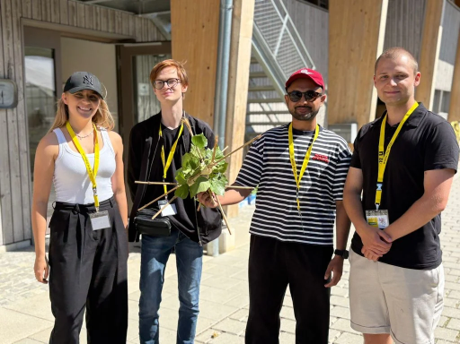
More than 400 participants, 22 modules, and a week of interdisciplinary learning: the first FHNW Exploration Week took place from 31 August to 4 September 2026 across the campuses in Brugg-Windisch, Olten, Muttenz, and Basel. Organised as part of FHNW’s 20th anniversary celebrations, the week offered 22 modules focused on the future fields of New Work, Future Health, and Zero Emission. Students, lecturers, researchers, and staff from across FHNW came together to collaborate, exchange ideas, and develop innovative solutions to societal challenges. For the first time, students from all FHNW schools, together with international participants, were able to join interdisciplinary modules. One of these modules was delivered as a ChallengeEU short-term mobility, bringing together students from FHNW, UWM, HSO and UEV and adding an international dimension to the programme. (More information here: https://challenge-eu.eu/2026/09/11/challengeeu-students-fhnw-exploration-week/) The pilot demonstrated the potential of cross-disciplinary and international collaboration, strengthening FHNW’s commitment to innovative education, future skills, and a culture of openness, co-creation, and exchange. More information (in German): https://www.fhnw.ch/de/aktuelles/news-storys/alle/gelungene-premiere-die-exploration-week-fhnw-bringt-menschen-und-ideen-zusammen
First student abroad on ChallengeEU exchange semester
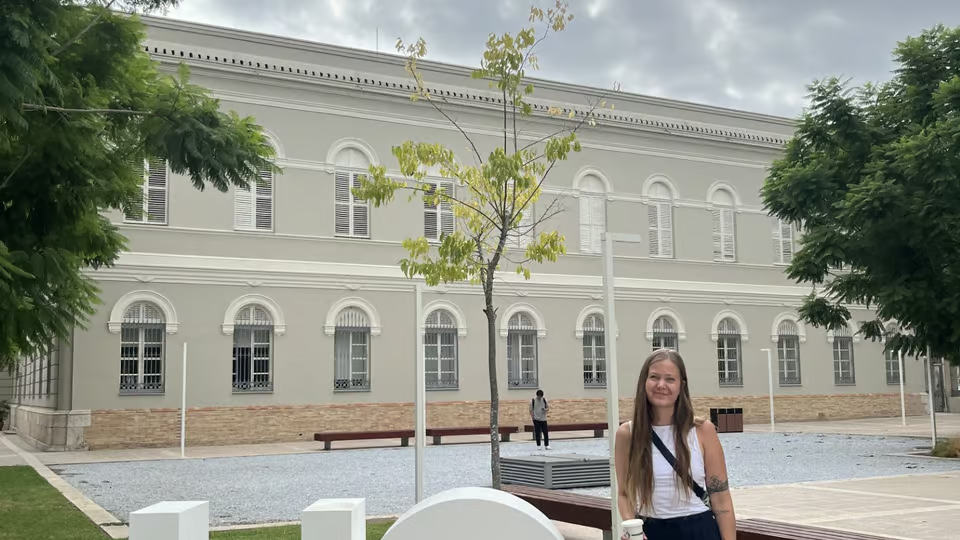
Jenny Bjärne, Tourism & Destination development, is the first student from MIUN studying abroad a full semester within our EUI alliance ChallengeEU. She is spending the autumn semester at Universidad de Europeia in Valencia, Spain.
Universidad Europea de Valencia receives the Manuel Broseta Forum Club Medal on its 40th Anniversary
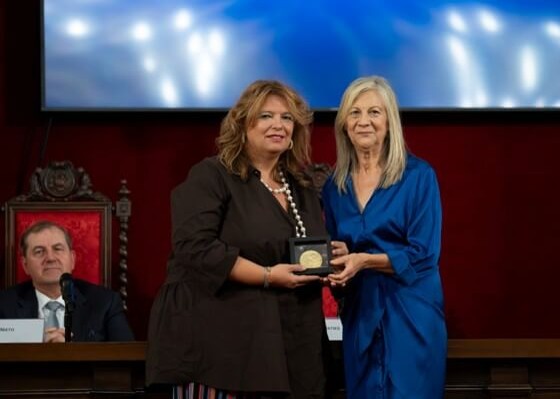
Universidad Europea de Valencia has been awarded the Manuel Broseta Forum Club Medal during the presentation ceremony of the commemorative book marking the organisation’s 40th anniversary, held at the La Nau Cultural Centre. The distinction recognises the contribution of Valencia’s universities to the publication of a work that chronicles four decades of history, dialogue, and service to Valencian society. The Rector of Universidad Europea de Valencia, Rosa Sanchidrián, received the Manuel Broseta Forum Club Medal from the organisation’s President, Amparo Matíes, on behalf of the entire university community. During her speech, the Rector expressed her gratitude for the distinction and highlighted the value of an initiative that helps preserve the collective memory and legacy of one of the most significant institutions within Valencian civil society. “It is a privilege for Universidad Europea de Valencia to collaborate in a work that preserves the memory and legacy of the Manuel Broseta Forum Club,” she stated. She also emphasised the importance of bringing the history and achievements of an institution that, for four decades, has fostered dialogue, reflection, and the exchange of ideas throughout the Valencian Community closer to younger generations. Sanchidrián also underscored the enduring relevance of Manuel Broseta’s legacy and the principles that guided his life and work. “His legacy continues to remind us of the importance of critical thinking, dialogue, and commitment to a freer, more pluralistic, and participatory society,” she said. The Rector further highlighted the strong connection between the trajectory of the Manuel Broseta Forum Club and the mission of Universidad Europea de Valencia, both united by a shared conviction: knowledge reaches its fullest value when it is placed at the service of others. In this regard, she noted that the University’s participation in this commemorative publication reflects a common commitment to education, reflection, the exchange of ideas, and the building of a society better prepared to face its challenges. The recognition was jointly awarded to the seven Valencian universities that collaborated in the publication of this commemorative work.
HSO Student Startup Wins ASAP Finals
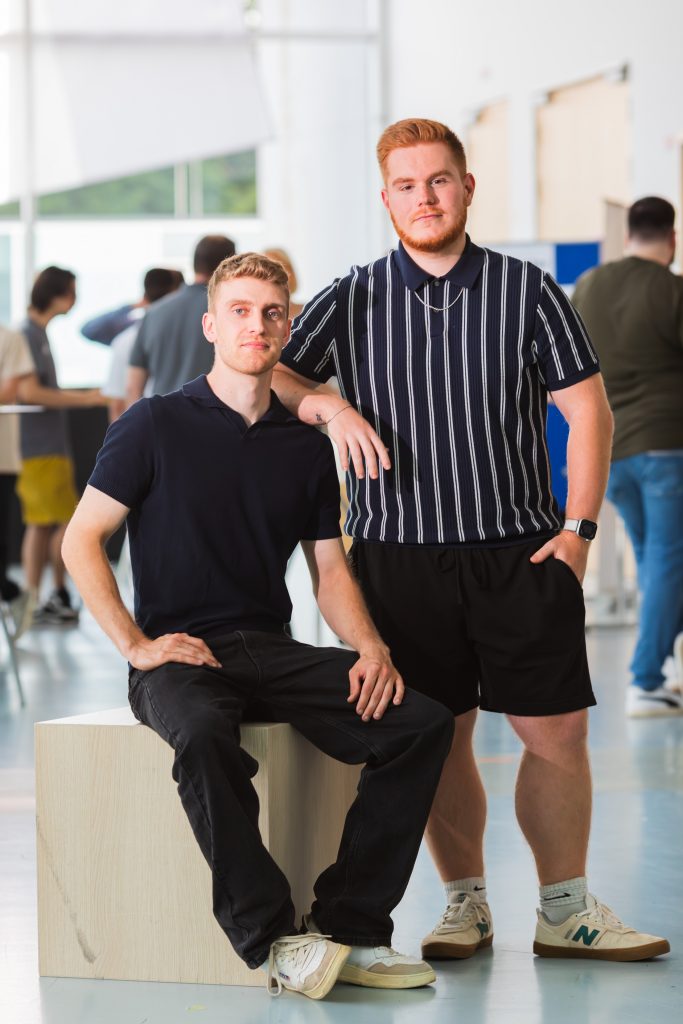
Pace Engineer impresses the jury at the state-wide university startup competition with coaching software for sim racers. At the 16th ASAP Finals hosted by the NXTGN innovation platform, 22 teams from 19 universities in Baden-Württemberg presented their startup ideas. The overall winner comes from Hochschule Offenburg: Nico Kollmer and Paul Müller impressed the jury with Pace Engineer, a digital coaching solution for the growing sim-racing market. The two business administration students developed the idea during the 2025–26 winter semester in the required elective course “Entrepreneurship.” Their approach: Software analyzes the simulator’s telemetry data in real time while the driver is racing and provides immediate, personalized feedback. With this, the founders aim to fill a gap: Around 150,000 people in Germany, Austria, and Switzerland participate in sim racing, yet there is a shortage of qualified coaches. Following a successful pitch in February 2026, software development began in March. An initial prototype is expected to be ready by the end of the year. To this end, the team is currently seeking additional support in development and coding. Later, Pace Engineer will be offered via a subscription model for less than one euro per day. Winning the ASAP final comes with a prize of 1,000 euros, mentoring from the Venture Mentoring Team, and additional startup support. The team is supported by the startup advisory service at Hochschule Offenburg and marketing professor Achim Burkhardt. More information: https://www.hs-offenburg.de/hochschule/news/artikel/startup-von-studierenden-der-hochschule-gewinnt-asap-finale
Universidad Europea de Valencia Celebrates its 2026 Graduation Ceremonies, Highlighting Lifelong Learning, Innovation and Social Impact
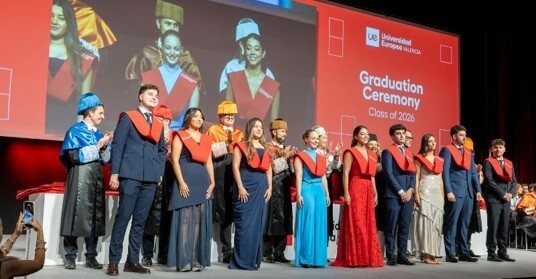
The academic ceremonies brought together undergraduate and postgraduate graduates from Social Sciences, STEAM and Health Sciences, alongside distinguished guests including Ezequiel Sánchez, Mara Garcés, Fran Silvestre, Natividad Alcón and Mario Medina, in an edition defined by academic excellence, research and lifelong learning. Universidad Europea de Valencia held its 2026 graduation ceremonies on 10 and 11 July at the Valencia Conference Centre. Across five ceremonies, undergraduate, postgraduate and vocational training students from the fields of Social Sciences, STEAM, and Health Sciences celebrated the completion of an important academic stage and the beginning of their professional careers. Throughout the ceremonies, Rector Rosa Sanchidrián Pardo delivered a message focused on lifelong learning, adaptability, and the importance of people in a context shaped by technological transformation. “The greatest professional strength is not knowing everything, but maintaining curiosity, critical thinking, and the ability to keep learning,” she remarked. The first ceremony brought together graduates from Social Sciences, STEAM, and Higher Vocational Education Programmes, with Ezequiel Sánchez, Executive President of PLD Space, serving as Patron of the Class. During his speech, he encouraged graduates to face future challenges with courage and an innovative mindset, reminding them that “professional life does not reward those who memorise answers, but those who know how to ask better questions.” Representing the students, Bruno Bozzo, Almudena Molina, and Evelyn Roldán highlighted the personal and academic growth achieved throughout their studies. During the ceremony, Universidad Europea de Valencia also presented the Honorary Distinction for Collaboration in Academic Excellence to the Intelligence Regiment No. 1, in recognition of its support for student development and its close collaboration with the University. The second ceremony was dedicated to graduates in Dentistry, Psychology, and Biotechnology, with Dr Mara Garcés, Deputy Director General for Health Prevention and Promotion at the Regional Ministry of Health, serving as Patron of the Ceremony. Garcés emphasised the importance of combining knowledge and humanity within healthcare professions and encouraged graduates to aspire not only to professional excellence but also to personal integrity. Speaking on behalf of the graduating class, Nicolás Villamil, a Dentistry graduate, reminded his peers that the true challenge begins after receiving their degree and that all professions ultimately share the common goal of improving people’s lives. The celebrations continued with the graduation of postgraduate students from the Faculty of Social Sciences and the STEAM School, accompanied by renowned architect Fran Silvestre as Patron of the Class. In his address, he highlighted curiosity, responsibility, and purpose as essential foundations for building meaningful professional careers. Students Pau Reig and Beatriz Real emphasised the value of the campus’s international diversity and the balance between innovation and humanity. On Saturday, the graduation ceremony for Nursing and Physiotherapy students took place, with Professor Emerita Natividad Alcón serving as Patron of the Ceremony. Alcón praised the students’ social commitment and involvement in charitable initiatives. Representing their classmates, Marcos Liébana and Salomé Barraud reflected on how their university experience had transformed them both personally and professionally. The graduation celebrations concluded with the ceremony for postgraduate programmes in Health Sciences, featuring Dr Mario Medina, Managing Director of the Vega Baja University Hospital, as Patron of the Class. Medina stressed that the future of healthcare depends on successfully integrating innovation, knowledge, and humanity, while reminding graduates that no technology can replace professional judgement, ethics, and vocation. As a common theme throughout all ceremonies, Rosa Sanchidrián encouraged the new graduates to embrace lifelong learning and face future changes with confidence and discernment. She concluded by reminding them that Universidad Europea de Valencia will continue to accompany them throughout their personal and professional journeys as a lasting network of support, connection, and growth.
Humanoid Robotics and Embodied AI Foundation Established
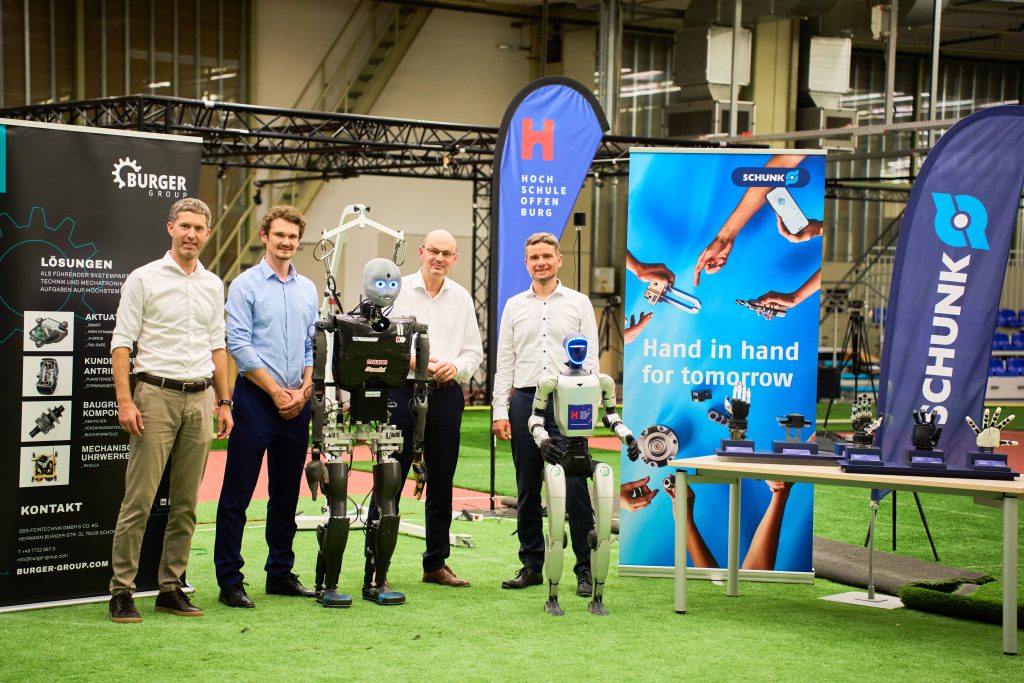
Hochschule Offenburg and companies are promoting research and technology transfer in the field of humanoid robotics “made in Baden-Württemberg.” At a time when humanoid robotics is becoming a crucial solution to the shortage of skilled workers and a key factor in competitiveness, Hochschule Offenburg, Schunk SE & Co. KG, and the Burger Group are setting the course for innovation and technological autonomy: Together, the university and the companies have established the nonprofit “Humanoid Robotics and Embodied AI” Foundation. The founders aim to support applied research and technology transfer projects focused on the development, testing, and deployment of sustainable, economically valuable solutions utilizing humanoid robotics and embodied AI. The goal is to create an innovation ecosystem that consolidates the entire value chain—from basic research to market-ready systems—within the region. This ranges from application-oriented basic research for innovative, AI-based subcomponents—such as intelligent sensor technology and anthropomorphic grasping systems—and software solutions to complete systems and their transfer to industry. In addition, a regional and supraregional network of experts from academia, industry, and society is to be established and maintained to address issues related to humanoid robotics and embodied AI. More information: https://www.hs-offenburg.de/hochschule/news/artikel/stiftung-humanoid-robotics-and-embodied-ai-gegruendet
Universidad Europea de Valencia Promotes International Training in Behavioural Economics through the Behavioral Bridge Summer School
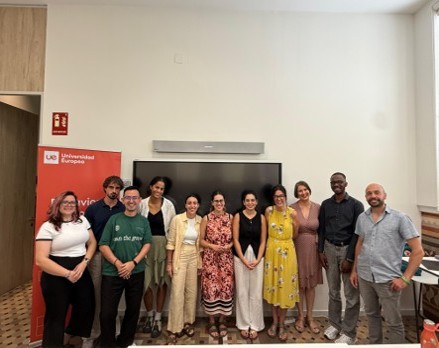
The programme, organised by the Behavioral Economics Institute and supported by the ChallengeEU Alliance, brought together students and researchers from Europe, Asia and Oceania to explore the impact of behavioural economics and artificial intelligence on decision-making. Universidad Europea de Valencia hosted the Behavioral Bridge Summer School from 13 to 18 July, an initiative organised by the Behavioral Economics Institute (BEI) with the support of the ChallengeEU Alliance. For one week, researchers, experts, and local and international students shared knowledge, methodologies, and experiences to deepen their understanding of the role of behavioural economics in analysing and improving decision-making in areas such as public policy, healthcare, consumer behaviour, and climate change. Behavioural economics examines how individuals make decisions in real-world environments, where factors such as uncertainty, social pressure, and limited information often play a significant role. With this perspective, Behavioral Bridge provided practical training focused on translating scientific knowledge into real-world applications, combining experimental methods, fieldwork, and artificial intelligence to better predict human behaviour. The academic programme featured internationally renowned specialists. Professor Nikolaos Georgantzis, from Burgundy School of Business, addressed the application of behavioural methods to consumer markets and the wine industry; Dr Tommaso Batistoni, from the University of Oxford, explored the use of artificial intelligence and digital twins to predict human behaviour; Professor Esther Blanco, from the University of Innsbruck, examined the contribution of behavioural economics to climate change policies; and Professor Paolo Crosetto, from INRAE-CNRS, analysed the impact of food labelling on healthy consumer choices. The Summer School combined conceptual and practical learning activities with individual mentoring sessions, during which participants received expert guidance from the faculty. The student cohort reflected the programme’s strong international reach, bringing together participants from leading institutions such as the University of Tsukuba (Japan), Ashoka University (India), University of Potsdam (Germany), University of Göttingen (Germany), and the University of Technology Sydney (Australia), among others, as well as doctoral students from the Valencian Community representing both Universidad Europea de Valencia and neighbouring universities.