UWM–HSO meeting: Cooperation is a shield in difficult times

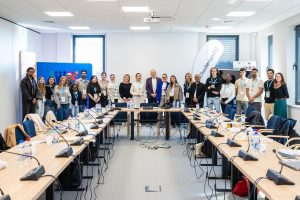
Wide view of the meeting room: a speaker addresses participants seated at U-shaped tables beneath portraits on the wall, with Christmas decorations and meeting materials visible.

On Monday, 8 December, the University of Warmia and Mazury was visited by guests from Hochschule Offenburg and the Maria and Georg Dietrich Foundation. The pre-Christmas meeting is a tradition that strengthens the ties between the two partner universities. It was, among other things, this friendship that gave rise to the ChallengeEU Alliance. The annual UWM–HSO meeting is a tradition. Professor Jerzy Przyborowski, Rector of the University of Warmia and Mazury (UWM), welcomed the delegation in the rector’s office building, saying: “I am very grateful that we can meet every year as part of the Christmas Bridge initiative, launched by Georg Dietrich. It is a true symbol of friendship between our institutions, but also between all the people involved.” Both the host and the guests emphasised that good relations between countries are more important than ever in the face of the ongoing war in Ukraine and many other geopolitical threats. “Thank you very much for this wonderful welcome during Advent. For us, this is not an official visit – it is a visit to friends. This friendship is a prerequisite for successful cooperation, because something good usually grows out of human relationships,” said Prof. Dr Stephan Trahasch, Rector of Hochschule Offenburg (HSO). Participants in the meeting underlined that what has particularly strengthened the friendship between the University of Warmia and Mazury and Hochschule Offenburg in recent times is the fact that both universities are members of the ChallengeEU European Universities Alliance. The ChallengeEU Alliance places strong emphasis on student mobility. “Exchange and cooperation among young people form the foundation of unity between nations, and thus of peace in Europe,” explained Stephan Trahasch. During the meeting, discussions on joint initiatives within the ChallengeEU Alliance were continued. Prof. Dr Tobias Hagen, Vice-Rector for Internationalisation at Hochschule Offenburg and Chair of the ChallengeEU Alliance, spoke, among others, with Professor Paweł Wielgosz, the UWM Rector’s Representative for European Universities, about new joint educational programmes and academic cooperation – especially in the field of research. “The project has only just started, but we already have our first results – our academic staff have taken part in joint training sessions, and in recent days students, including from our university, met in Offenburg,” said Prof. Paweł Wielgosz. “We are preparing to launch new joint study programmes – not only with HSO, but also with other partner universities. It is also very important to me that we can conduct scientific research together. From experience, I know that effective academic cooperation is often born precisely from joint research. I hope that our working meetings will lead to ideas for new study programmes and new areas of scientific collaboration.” As Prof. Dr Stephan Trahasch recalled, in addition to cooperation within the ChallengeEU Alliance and its other dimensions, what connects UWM and HSO is joint education. The universities run two programmes at the Faculty of Geoengineering (Environmental Engineering in the field of Process Engineering and Biotechnology) and one at the Faculty of Food Science (Food Technology and Human Nutrition in the field of Food Engineering). They also cooperate in programmes such as German Studies and Business Linguistics, in which students also learn German. Prof. Dr Tobias Hagen, who took part in several ChallengeEU working meetings during his stay at UWM (including one devoted to the conference planned for May to summarise the Alliance’s first year of activities), noted that discussions within the ChallengeEU team and with the Faculties of Economics, Geoengineering and Food Science were intensive, extremely fruitful and constructive, and took place in a very friendly atmosphere. He was convinced that this would enable us to further develop the long-standing partnership between our universities and that there would be many new ideas for the future. The HSO delegation also included Prof. Dr Jens Pfafferott (Dean of the Faculty of Mechanical Engineering and Process Engineering in Offenburg), who had the opportunity to meet with UWM representatives to discuss possibilities for further cooperation. Dr Wolfgang Bruder, Chairman of the Georg and Maria Dietrich Foundation, noted that over the years the foundation has awarded more than 200 scholarships to UWM students, contributing to broadening knowledge, creating better learning conditions, and deepening cooperation. In this way, it continues the ideas of Georg Dietrich, who already decades ago deeply understood the importance of Polish–German cooperation and was committed to ensuring that it also developed at university level.

Sustainable Idea Lab: Creative Minds Co-Create Solutions

Group photo of seven Sustainable Idealab team members and participants smiling on a wooden balcony with the city and hills in the background.

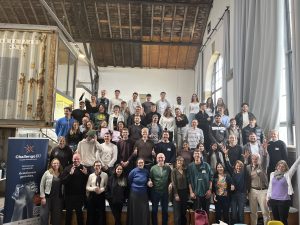
During a two-day (14–15 November) Sustainable Idea Lab workshop, 25 motivated participants came together to tackle five exciting real-world challenges. Divided into five dynamic teams, they worked side by side, sharing ideas in several languages and bringing together diverse perspectives, backgrounds, and experiences. The Sustainable Futures Idealab, held at Flow1986 in Offenburg, was organized by the Open Innovation Managers (M.A.R.K.E.T. Officers) of Sustainable Futures Idealab and the ChallengeEU Alliance. Their mission is to act as bridge builders between universities, students, industry, politics, and civil society – connecting people who want to collaboratively shape a sustainable future. The two-day workshop invited participants to bring their own sustainability-related challenges. These were consolidated into five problem statements addressing inclusive tourism, fair energy transition, inclusive collaboration, circular economy solutions, and the quality of scientific illustration. To strengthen regional cooperation, the team initiated dialogue with local partners such as Impact Hub, Link, La Maison de l’Emploi, SINGA, Interreg, Black Forest Innovation, and BadenCampus. Together, they co-created the concept for an open, participatory Sustainable Idealab. Interdisciplinary teams worked on these topics using design thinking, creative methods, and structured mentoring. Each group was guided by a team mentor who ensured both methodological clarity and space for innovation. The Idealab brought together a diverse group of participants from multiple countries and backgrounds, who collaborated intensively and produced early prototypes and solution concepts in just 1.5 days. This initiative started with fruitful discussions and ended with generated impact through:

Strengthening University–Industry Cooperation: HSO and SEEU Delegations Visit Associated Partner

Group photo of representatives from Hochschule Offenburg, South East European University and Veze Sharri standing in front of the Veze Sharri company building and logo

Representatives from Hochschule Offenburg (HSO) visited South East European University (SEEU) in North Macedonia and the agrifood company Veze Sharri as part of the ChallengeEU Alliance. The visit strengthened university–industry cooperation and created new opportunities for students, research collaboration and regional development in the Polog region. A delegation from HSO led by Prof. Dr. Stephan Trahasch, Rector, and Prof. Dr. Tobias Hagen, Vice-Rector for Internationalization and Managing Director of ChallengeEU, visited South East European University (SEEU) in North Macedonia, where they met with Prof. Dr. Sadudin Ibraimi, Rector, SEEU’s high management, and the ChallengeEU teams. Connecting ChallengeEU with the Agrifood Sector As part of the ongoing efforts to advance university-industry partnerships within the ChallengeEU Alliance, they visited Veze Sharri, one of the project’s associated partners and a leading agrifood company in the Polog region. The visit was organized and led by the M.A.R.K.E.T. Officer of ChallengeEU, Assoc. Prof. Dr. Shpresa Alija from South East European University (SEEU). During the meeting, the owner of Veze Sharri, Arben Abdurahmani, welcomed the delegation and presented the company’s development, production processes, and strategic vision. The delegation emphasized that Veze Sharri plays an important role not only as a regional business leader but also as a contributor to local development, workforce capacity building, and knowledge transfer. Through its involvement in ChallengeEU, the company will provide SEEU students with meaningful opportunities for practical learning, professional growth, and exposure to real-sector challenges and future innovation initiatives.This visit marks an important step toward strengthening long-term collaboration within the ChallengeEU ecosystem and creating impactful pathways for students, academic staff, and the local community. Joint Pathways for Students and Research During their time in North Macedonia, the delegation led by SEEU Project Lead, Prof. Veli Kreci, met with staff from Max van der Stoel Institute and the ChallengeEU team, followed by a meeting with Rector Ibraimi and the university’s management team: Academician Prof. Abdylmenaf Bexheti, Prof. Veland Ramadani, Prof. Besa Arifi, and Prof. Florije Ismaili. The discussions centred on academic collaboration, digital initiatives, and areas of shared interest. The visit concluded with a meeting coordinated by Prof. Dr. Mennan Selimi and the SEEU deans to review possibilities for developing joint and double-degree study programmes in engineering, computer science/AI and business.

Shaping ChallengeEU’s Digital Future in Offenburg

Group photo of WP2 representatives standing on the steps in front of a glass building at Hochschule Offenburg. About 15 people are posing together, smiling at the camera.

As part of the ChallengeEU university alliance, representatives from nine European universities, primarily IT leads involved in Work Package 2 (WP2), met at Hochschule Offenburg (Offenburg University of Applied Sciences) to advance discussions on the alliance’s digital infrastructure. WP2 plays a key role in creating the digital backbone of ChallengeEU, enabling collaboration, mobility, and data exchange across partner institutions. The meeting focused on shaping the platform’s architecture and core functionalities that will steer the alliance over the coming three to four years. Among the priorities are the development of a joint course and mobility catalogue, the launch of the DigitalHub (known as the Digital M.A.R.K.E.T Space) and the integration of AI-powered features. All modules will align with major European digital initiatives, including eduGAIN, Erasmus Without Papers (EWP), ECTS, and the European Student Card. WP2 is coordinated by South East European University (SEEU), led by Prof. Dr. Mennan Selimi, with co-leadership from Mid Sweden University under Prof. Dr. Niklas Brinkfeldt. SEEU’s IT team — Shefik Osmani, Ahmed Abdullai, and Hamit Kamberi — joined the Offenburg meeting to contribute their expertise to the design of ChallengeEU’s digital platform.

ChallengeEU at the European University Alliances Forum in Wrocław

Representatives of the ChallengeEU Alliance are taking part in the 3rd European University Alliances Forum, held in Wrocław, Poland. The event is organized under the Polish Presidency of the Council of the European Union and serves as an important platform for exchange, dialogue, and knowledge sharing among university alliances and key stakeholders. Our delegation (Prof. Dr. Tobias Hagen, HSO’s Vice-Rector for Internationalization and Managing Director of ChallengeEU, Prof. Dr. Paweł Wielgosz, Vice-Deputy Director of ChallengeEU and Rector’s UWM representative for EUI, Sofiia Hecker, Secretary General and Agata Głowacka-Gil, Project Office Coordinator) will gain valuable insights and inspiration through meetings with representatives from other alliances across Europe. The Forum opened with welcome speeches by: Already during the first panel, it was emphasized that European University Alliances are at the very top of the European political agenda Key topics of the Forum included: Participation in the Forum marks another important step in strengthening ChallengeEU’s position within the European academic landscape – and a new opportunity to shape the future of higher education in Europe. >>> 3rd European University Alliances Forum: Summary

Together for the European Cross-Border Region on the Upper Rhine

ChallengeEU Meetup Mission Workshop

Thanks to the ChallengeEU project, Hochschule Offenburg (Offenburg University of Applied Sciences) played a leading role in bringing together representatives from business, academia, civil society, and different generations from across the Upper Rhine region. In an open and appreciative atmosphere, participants took the time to jointly identify key issues – particularly in the context of reimagining tourism. The aim of the activities undertaken by the members of the ChallengeEU alliance is to closely link research and innovation with regional stakeholders and, as a first step in a creative process, to collaboratively identify regional challenges. These identified challenges are then categorized into key thematic areas: Health & Wellbeing, Smart Digitalisation, and Sustainable Development. The ideas and solutions developed are subsequently integrated into further research and innovation activities to create sustainable and practical outcomes for the region. Students benefit especially from this European network: they have the opportunity to connect internationally and collaborate on innovative solutions. In addition to exciting projects and win-win situations for both regional businesses and students, valuable partnerships and friendships are also formed across national borders. Together, we are committed to a strong, innovative Europe and a sustainable future for the Upper Rhine region. The first workshop in the ChallengeEU Meetup Mission series was made possible thanks to the collaboration with Black Forest Innovation, an associate partner of the alliance, who hosted the participants at their premises.

ChallengeEU Alliance Participates in High-Level Brussels Meeting on the Future of European Universities

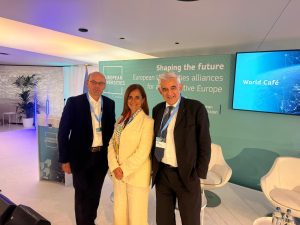
Prof. Stephan Trahasch and prof. Anne Najderek

The ChallengeEU Alliance proudly took part in the high-level event “Shaping the Future: European Universities Alliances for a Competitive Europe”, held this week in Brussels. The event brought together representatives from all 65 European University Alliances, along with Seal of Excellence holders, Members of the European Parliament, national and regional EU authorities, leading higher education stakeholders, student associations, and private-sector innovators. In a closed session dedicated to university leadership, the ChallengeEU Alliance was represented by Prof. Anne Najderek, Managing Director of ChallengeEU, and Prof. Stephan Trahasch, Rector of Hochschule Offenburg. The meeting serves as a platform to reflect on the progress of the European Universities Initiative, identify ongoing challenges, and explore strategies for its long-term success. Discussions also focus on the role of university alliances in strengthening Europe’s sustainable growth, global competitiveness, democratic resilience, and social justice. Participation in this forum is a valuable opportunity for ChallengeEU to exchange experiences, gain insights, and build lasting partnerships with other European alliances.

This site uses cookies. Visit our cookies policy page or click the link in footer for more information and to change your preferences.