LBTU and ECAM LaSalle Launch Extended Mobility Programme
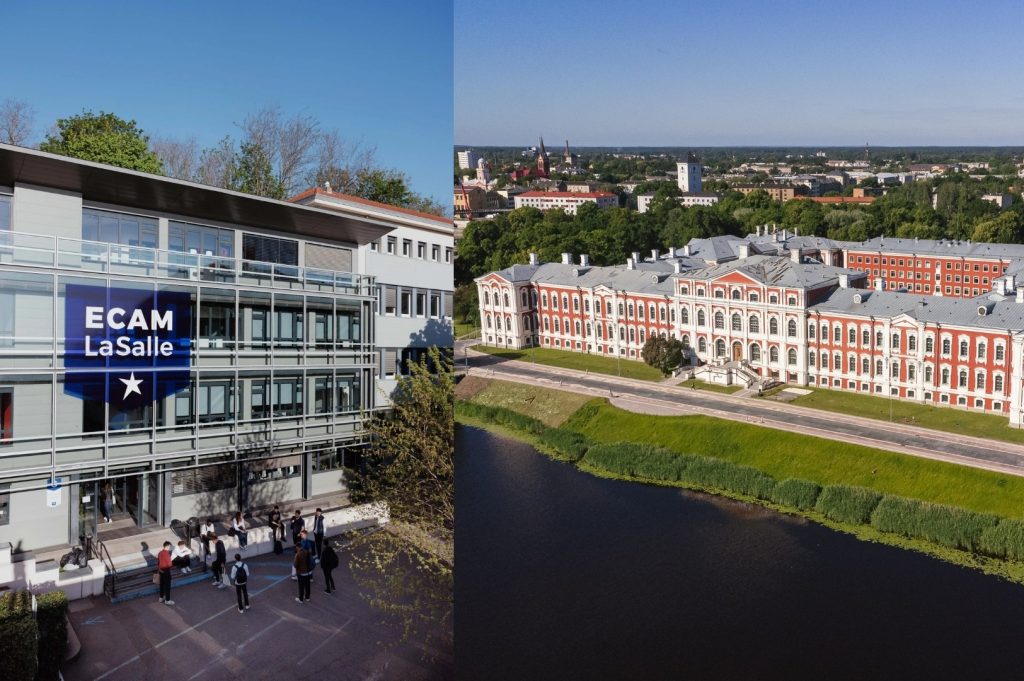
Latvia University of Life Sciences and Technologies (LBTU) and ECAM LaSalle have signed the first agreement on an extended mobility programme in the field of mechanical engineering. The agreement provides for student mobility and the coordinated delivery of study courses between the two higher education institutions. It was developed within the framework of the ChallengeEU, further expanding international cooperation and academic mobility. Under the agreement, LBTU will offer a set of study courses from the Biosystems Machinery and Technologies programme, delivered in the fifth semester, for students from ECAM LaSalle’s Master’s Degree in General Engineering programme, who will participate during their seventh semester. During the mobility period, students will be able to take courses such as Renewable Energy and Energy Economics, Mechatronics, Applied Mechanics, Applications of Unmanned Aerial Vehicles, and other elective courses. The study content provides advanced knowledge and practical skills in mechanical engineering and biosystems technologies. The programme ensures full academic recognition. During the mobility period, students will earn 30 ECTS credits, corresponding to a full semester workload at their home institution. This ensures continuity of studies and seamless integration into the study process, while also providing international experience and supporting the development of professional competencies. This initiative marks an important step in implementing the goals of the ChallengeEU alliance by strengthening academic cooperation and promoting the internationalisation of engineering studies within the European Higher Education Area. LBTU continues to develop international cooperation and expand student mobility.
ChallengeEU Participates in High-Level European Higher Education Meeting in Brussels
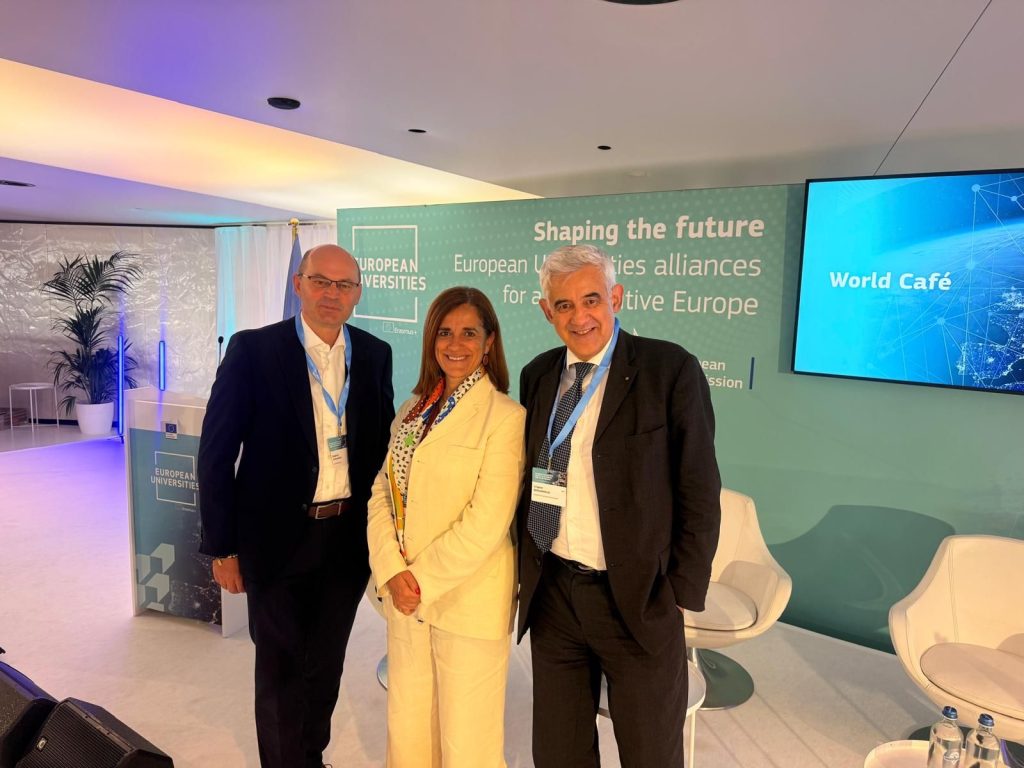
On 10 June 2026, the European Universities Rectors and Presidents High-Level Meeting took place in Brussels. The event provided an opportunity to discuss the future of the European Universities initiative, its role in completing the European Education Area, developing skills, and strengthening the competitiveness of the European Union. Three rectors representing ChallengeEU institutions took part in the meeting: Prof. Hélia Gonçalves Pereira from Universidade Europeia, Prof. Crispino Bergamaschi from Fachhochschule Nordwestschweiz FHNW, and Prof. Stephan Trahasch from Hochschule Offenburg. Their participation made the event an excellent opportunity to share good practices, exchange experiences, and build relationships with representatives of other European university alliances. It also highlighted ChallengeEU’s commitment to contributing to a more connected, innovative, and resilient European higher education landscape. The High-Level Meeting of Rectors and Presidents included a keynote address by Roxana Mînzatu, Executive Vice-President for Social Rights and Skills, Quality Jobs and Preparedness. “We need strong, independent universities, where academic freedom is protected. Where trust in science is encouraged. Where innovation and ingenuity lead to success, in Europe and globally. The European University Alliances can lead the way,” said Roxana Mînzatu. High-level meetings such as this one play an important role in shaping the future of cross-border academic cooperation and strengthening the voice of European universities in response to shared challenges.
Semester Hackathon Connects Hochschule Offenburg and Mid Sweden University
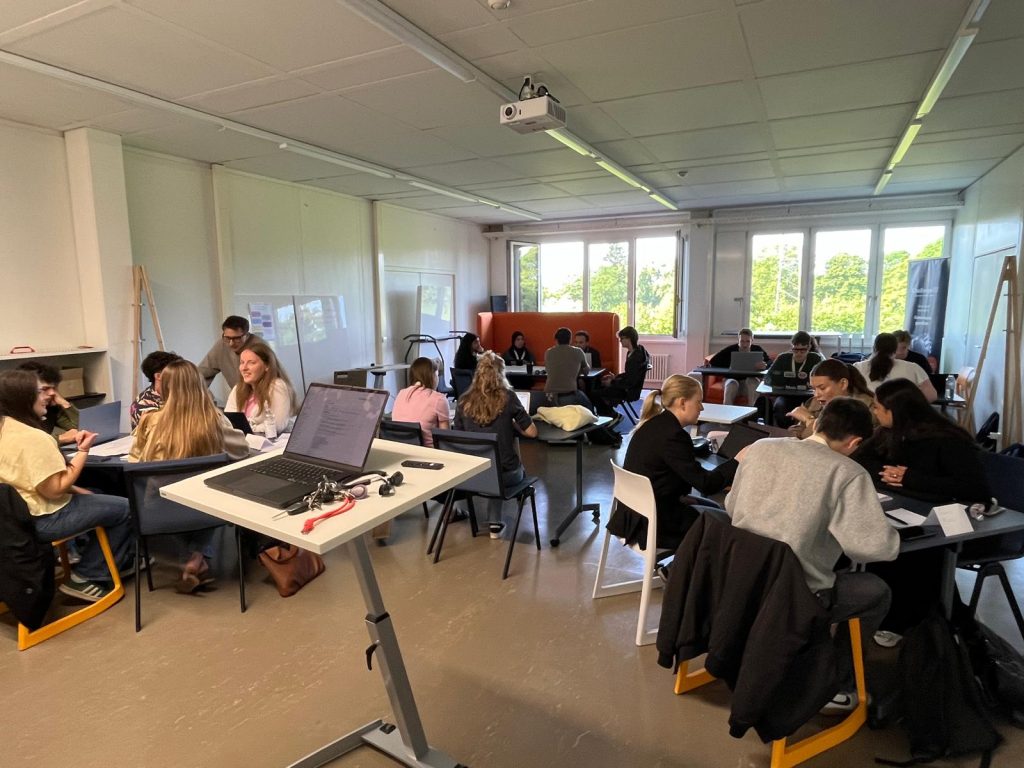
A recent joint hackathon connecting Mid Sweden University and Hochschule Offenburg showed what can happen when European cross-border collaboration meets open education, interdisciplinary learning and challenge-based innovation. Throughout an intensive week-long programme, students from both universities worked together to turn human-centred ideas into viable project concepts. Using machine learning and smart automation, they explored how digital tools can support creative problem-solving and respond to real-world needs. The hackathon brought together Business Administration students from Mid Sweden University and Media students from Hochschule Offenburg. This combination of different academic backgrounds encouraged a dynamic exchange of perspectives and created space for interdisciplinary collaboration. Students were able to combine business thinking, media expertise, technological solutions and creative approaches to innovation. The event also reflected the wider goals of European academic cooperation: building bridges between institutions, strengthening student engagement and creating learning environments that go beyond traditional classroom settings. By working in international teams, participants had the opportunity to develop not only project ideas, but also key skills such as communication, teamwork, intercultural understanding and entrepreneurial thinking. The programme was led by Prof. Dr Jürgen Seitz from Hochschule Offenburg, Dr Gözel Shakeri from the University of Strasbourg, Prof. Anna Sörensson from Mid Sweden University, and Annika Brand from Black Forest Innovation. Their expertise, insight and interactive approach supported students throughout the process and helped create an engaging environment for interdisciplinary learning and innovation. The hackathon proved to be a valuable example of how European universities can work together to support open education and challenge-based innovation, while giving students the opportunity to transform ideas into meaningful and future-oriented solutions.
ChallengeEU Joins Discussion on the Future of European Higher Education
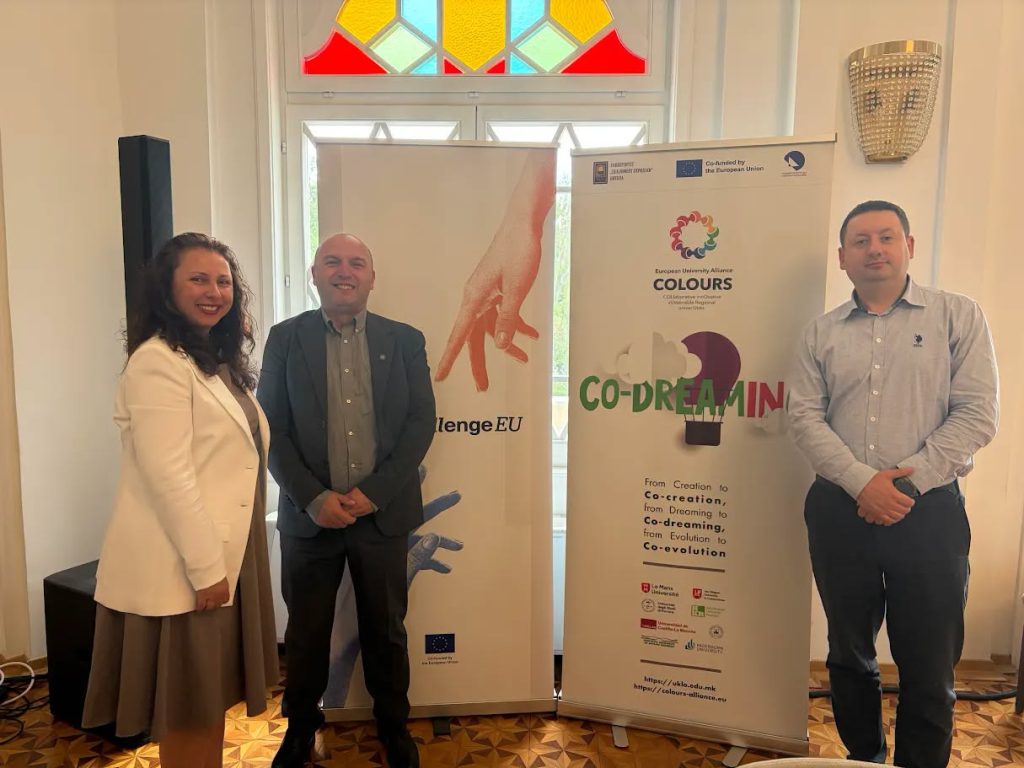
South East European University (SEEU) participated in the round table “Constructing the European University of the Future: Towards a Joint and European Degree”, organised by the COLOURS European University Alliance and hosted by St. Kliment Ohridski University – Bitola. The event brought together representatives of four European University Alliances, higher education institutions, ministries, and other stakeholders to discuss the future of European higher education, joint degrees, the European Degree, and cross-border academic cooperation. Representing SEEU and the ChallengeEU Alliance, Prof. Xhemal Zenuni, Dean of the Faculty of Contemporary Sciences and Technologies, contributed to the discussion by highlighting the importance of strengthening international academic cooperation and supporting the further alignment of higher education with European developments. The SEEU delegation also included Afrim Tresi, Head of the Project Coordination and Implementation Unit at the Max van der Stoel Institute and ChallengeEU Project Implementation Officer. He took part in discussions and networking activities with representatives of European university alliances, higher education institutions, and public authorities. Through its active involvement in the ChallengeEU Alliance, SEEU continues to contribute to initiatives that promote innovation, digital transformation, and closer integration within the European Higher Education Area.
ChallengeEU for Youth Wellbeing
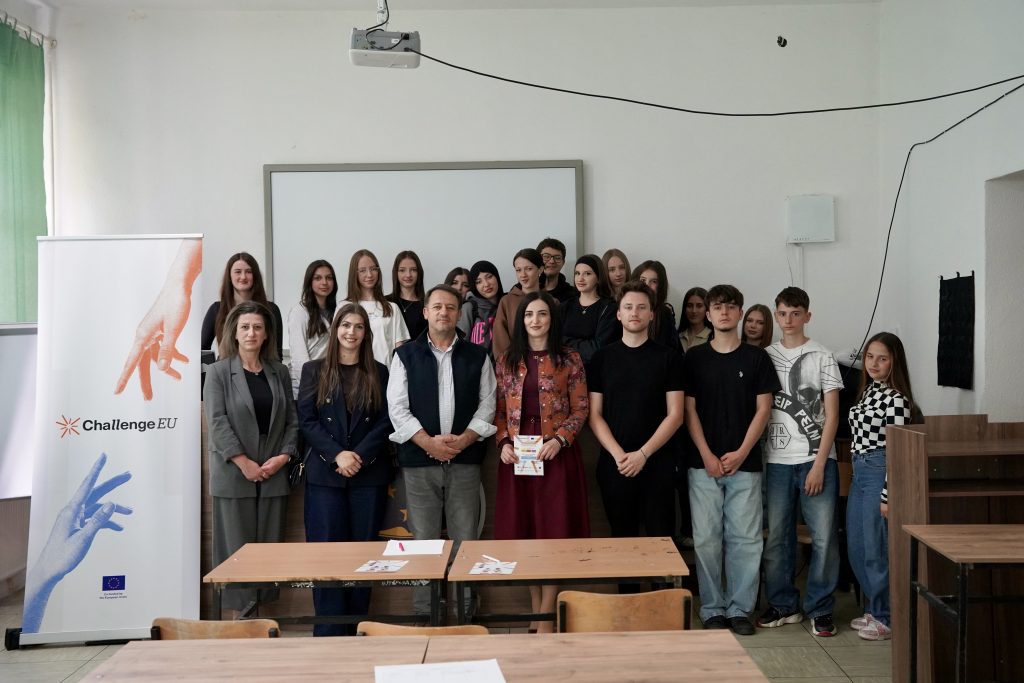
As part of the ongoing ChallengeEU initiative, South East European University, in cooperation with the Municipality of Gostivar as an Associate Partner of the ChallengeEU Alliance, successfully carried out a youth awareness campaign at the Economic High School and the Industrial High School in Gostivar. During the activities, Assoc. Prof. Dr Shpresa Alija, acting as a M.A.R.K.E.T. Officer, introduced students to the ChallengeEU project and its mission of fostering student engagement, wellbeing and social responsibility. Particular attention was given to the Alliance’s third pillar, Mental Health and Wellbeing, emphasising the importance of healthy lifestyles, emotional resilience and informed decision-making among young people. The educational sessions were enriched by the contribution of Prof. Dr Naser Durmishi, an expert in neuropsychiatry, who delivered an interactive lecture on the health risks associated with energy drinks and illegal substances. Through practical examples and open discussion, students were encouraged to reflect critically on the consequences of harmful habits and the importance of adopting healthier behaviours. Representatives of the Municipality of Gostivar also took an active part in the event, highlighting the significance of joint efforts between local authorities, educational institutions and universities in promoting youth wellbeing and preventive education. The students showed great interest in the topics presented, actively engaging through questions, comments and discussion. The activity further strengthened cooperation between the ChallengeEU Alliance, local stakeholders and secondary education institutions in fostering awareness, health and wellbeing among young people. The event marked the successful completion of the awareness campaign across all four secondary schools in Gostivar, contributing to the broader objectives of the ChallengeEU Alliance in supporting youth development and community engagement.
ChallengeEU Hackathon at SEEU Showcases Sustainable Student Solutions
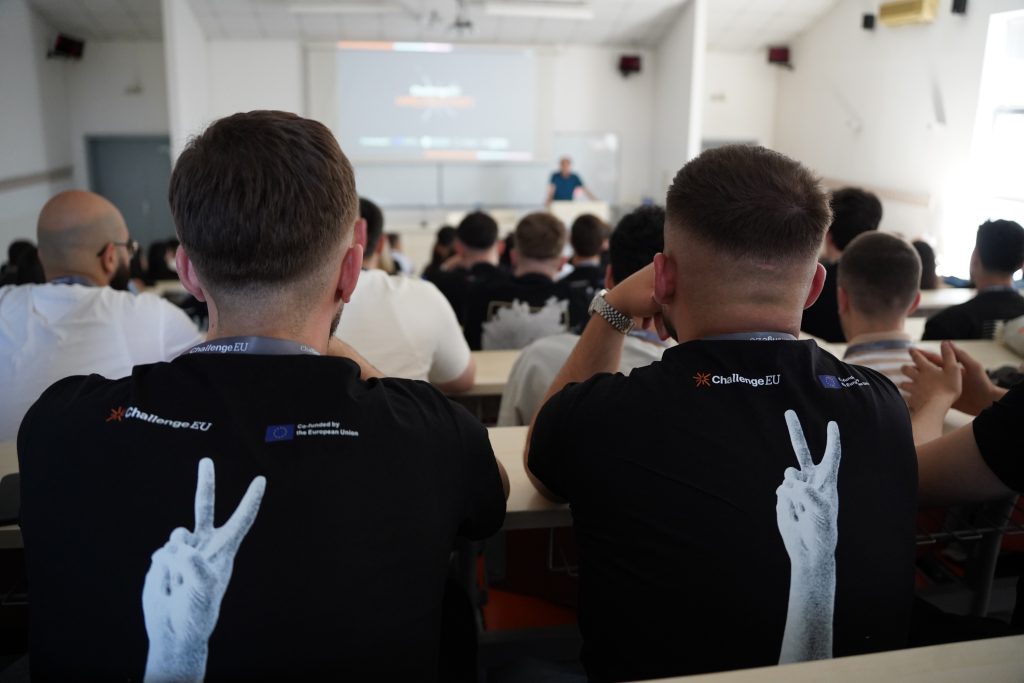
The Hackathon “Innovation Challenge: Turning Partnerships into Sustainable Solutions” (29-30 May) concluded successfully at South East European University (SEEU), in cooperation with the Business Innovation Center (BIC) and the Student Parliament and Association, marking the end of two intensive days of creativity, collaboration and innovation. During the second day, student teams focused on finalising their projects and preparing their presentations for evaluation by a five-member expert jury. The participants demonstrated exceptional dedication, presenting a diverse range of innovative solutions that addressed contemporary challenges through technology, sustainability, entrepreneurship and social impact. Following a highly competitive evaluation process, the jury awarded the top three teams: 1st place: ProtocolMinds2nd place: Predictors3rd place: LegacyLink Special awards also went to: Best Business Idea: Exchange for Less WasteBest Technical Idea: Quantum FiveBest Social Idea: Kitogo The Hackathon showcased the talent and innovative spirit of SEEU students, with many teams presenting solutions that have the potential to generate real-world impact. It concluded as a remarkable success, giving students a valuable opportunity to transform ideas into sustainable solutions while strengthening partnerships across disciplines and institutions.
Student Journal: “ChallengeEU is about people”
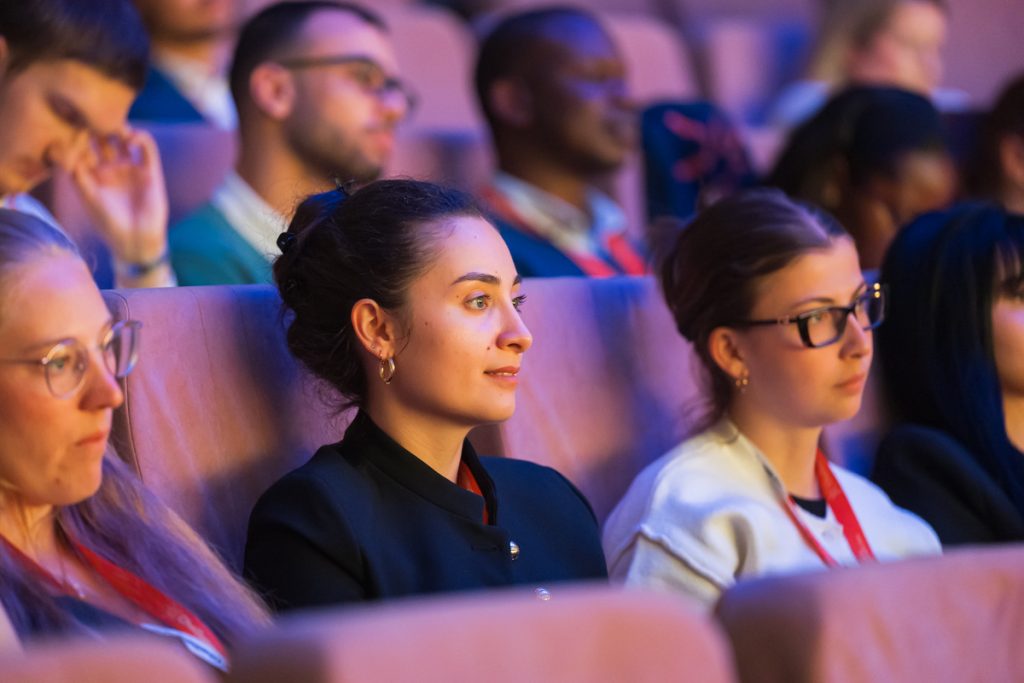
“What makes ChallengeEU even more special is that it doesn’t end with the conference. The friendships we built are real,” writes Marija Kosovljanovic from FHNW, Student Ambassador and member of the Student Council, reflecting on the ChallengeEU 1st Annual Conference. After almost a year as a member of the ChallengeEU Students’ Council and as a Student Ambassador, I had the great honour of travelling to Poland for the 1st Annual Conference of ChallengeEU. I had been looking forward to this trip for a long time, not only because it was an exciting international experience, but also because it marked an important step in my journey within the ChallengeEU alliance. One of the things I was most excited about was finally meeting my fellow FHNW student ambassador Marion face to face. Until then, we had mainly worked together through Microsoft Teams and phone calls while preparing different ChallengeEU tasks and projects. After so many online meetings, finally meeting in person made everything feel much more real and meaningful. Before this trip, I had never been to Poland, so everything felt new and exciting. Still, from the very beginning, I felt comfortable there. The atmosphere was welcoming, and I quickly had the feeling of being at home. When I arrived at the campus of the University of Warmia and Mazury, I immediately got a sense of what real student life on a big international campus feels like. Everything felt huge, open, and very different from what I know in Switzerland. The campus almost felt like a small city, full of life, activity, and modern spaces. This impression became even stronger during the opening ceremony. As we entered the amphitheatre, I was honestly impressed by how many people from so many different countries were gathered in one place. The atmosphere felt international, but also very warm and welcoming at the same time. What I really liked was that the event didn’t feel too formal or distant. There was live music, modern songs, and a positive energy in the room. People were singing, clapping, smiling, and just enjoying the moment together. It already felt like this conference would be something special. Throughout the conference, English was the main language, but what I found very interesting was hearing so many other languages every day. Polish, German, French, Spanish, and many more were all around us. As a student in Switzerland, I also had the chance to speak German with several participants, which made conversations even more natural. It was a nice reminder of how diverse Europe is, but also how easily people can connect when they are open to it. Some of the best moments happened outside the official programme. One evening, we had a traditional Polish dinner on campus near a lake. There was food, music, performances, and dancers in traditional clothing introducing us to Polish culture. What made the evening special was that, at some point, everyone started dancing together – students, professors, and staff all mixed. In that moment, it didn’t matter who was who anymore. It just felt like one big international group enjoying the evening together. Another highlight was visiting the university’s media studios. We got to explore the radio and podcast rooms, record short audio messages in groups, and learn how professional audio production works. Some even tried the recording booths while technicians showed us how editing is done. For most of us, including myself, this was completely new, and it was both fun and interesting. What surprised me most during the conference wasn’t one specific moment, but the overall atmosphere. I expected something quite formal and structured, but instead I found something very open, human, and easy-going. Even though we all came from different countries, study fields, and backgrounds, it was surprisingly easy to connect. Conversations felt natural, and it was interesting how quickly people opened to each other. It really showed me how fast barriers can disappear in the right environment. Another thing that surprised me was how normal it became to switch between languages and cultures all the time. Instead of being complicated, it made everything more interesting and connected. On a personal level, this experience also pushed me out of my comfort zone. Being part of ChallengeEU and representing my university in such an international setting challenged me in many ways: Speaking English more often, meeting new people constantly, and adapting to new situations. Looking back, I can honestly say it was an unforgettable experience that I really appreciated. I’m grateful that I got to be part of it through my studies, because it helped me grow a lot, not just academically but also personally. If I had to describe ChallengeEU, I would say it’s a intercultural family and very connected. But more than anything, it’s about people. It’s not just about conferences or workshops, but about sharing experiences, learning from each other, and growing together despite our differences. During this journey, I really felt that meaningful connections were created naturally. What makes ChallengeEU even more special is that it doesn’t end with the conference. The friendships we built are real, and we’re already planning to meet again in the summer. That shows that this is just the beginning, not the end, and that’s probably the most beautiful part of it. Marija Kosovljanovic
Media, Diversity and Resilience to Disinformation. ChallengeEU Students Take Part in a BIP at UWM
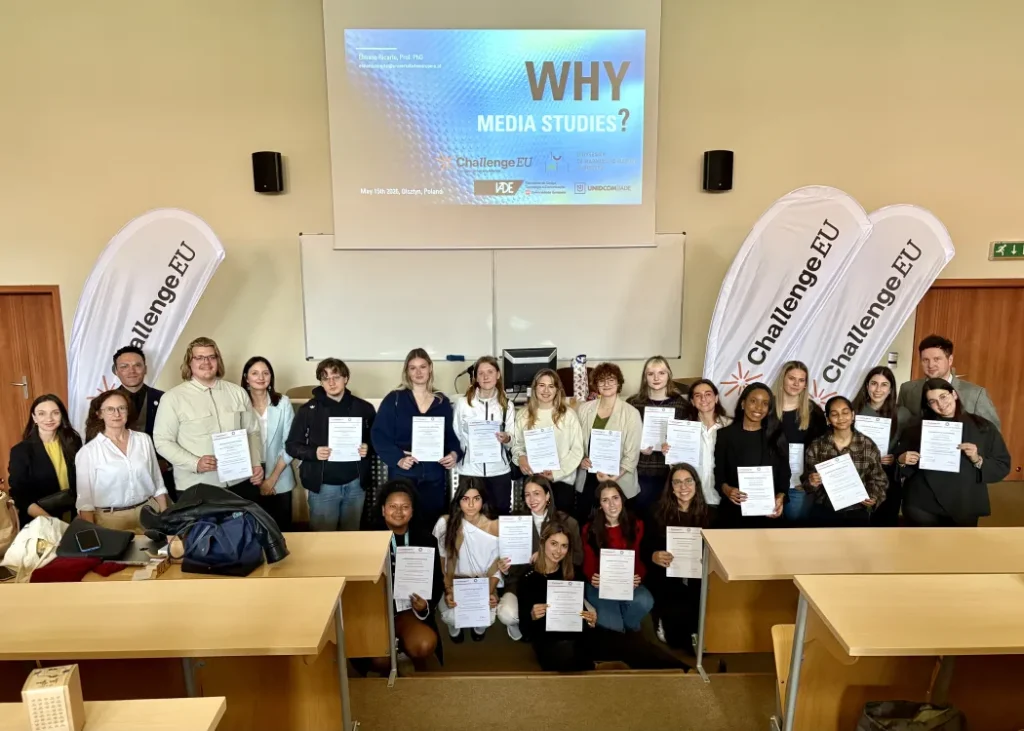
To avoid being misled by disinformation, we need to remain open to other cultures and understand that community can be found in diversity. The Erasmus+ Blended Intensive Programme “Resilience Lab: Media for Social Change”, organised by the UWM Institute of Journalism and Social Communication in cooperation with partner universities from the ChallengeEU Alliance, focused on how media can shape public opinion and support positive social change. From 11 to 15 May, UWM welcomed students and lecturers from Hochschule Offenburg, Universidade Europeia, and the Latvia University of Life Sciences and Technologies. The programme combined online learning with a short stay at a partner university, enabling international teamwork, the exchange of experiences, and the development of skills useful in modern communication. “The programme focused on how, through intercultural communication and the creation of social media content, we can raise young people’s awareness of disinformation. Without a doubt, they have the right skills and tools to tackle this problem,” explained Dr Marta Więckiewicz-Archacka from the Department of Journalism. She added: “When organising this BIP, we took advantage of the opportunities created by UWM’s membership in the ChallengeEU Alliance, as it makes cooperation with other European universities easier.” Breaking Stereotypes and Making Good Use of Media During the lectures, participants learned how intercultural communication can strengthen our resilience to disinformation. In practical classes, they learned, among other things, how to create educational content for social media, podcasts, and texts adapted for online publication. An important part of the programme was also a visit to the European Solidarity Centre in Gdańsk, which demonstrated how social movements can lead to real historical and political change. One of the lecturers from the ChallengeEU partner universities was Prof. Élmano Ricarte from Universidade Europeia in Lisbon, who delivered the lecture concluding the programme. His academic work focuses on intercultural communication and the role of media in building community and dialogue. “We live in a mediasphere, constantly communicating with one another and trying to understand each other. It is precisely this attempt at mutual understanding that interests me most, because we still do not do it well enough. However, I believe that in the future we will become a better society as a whole, because we will begin to recognise differences and stereotypes while also learning from one another. The German philosopher Martin Heidegger introduced the concept of ‘Dasein’, which means being in the world. It helps us understand culture and diversity, and Europe is an excellent example of this,” said Prof. Élmano Ricarte, also referring to the idea behind the ChallengeEU Alliance. “Today, unfortunately, we live in bubbles, including educational and scientific ones, which is why every opportunity to come together, share views, and exchange experiences becomes extremely valuable. Europe grew out of such values, and through this alliance we are trying to put them into practice — not only in theory, but also in reality. There is still a great deal of work ahead of us, but I hope that we will soon become better.” Getting to Know Different Points of View Students emphasised that taking part in the programme allowed them to look at media, communication, and society from an international perspective. For many of them, it was also an opportunity to develop practical skills and build relationships with people from other countries. “It is a really great opportunity to look at media from an international perspective, as well as to meet people representing other cultures. It teaches us that the world can be seen from many different points of view. I decided to take part in this programme because of my field of study — I want to learn how to use media in a way that allows me to influence others,” said Shelsea Arnaldo, a media communication student at Universidade Europeia. The practical dimension of the classes was also appreciated by Inês Costa, a communication and marketing student at Universidade Europeia. “I think the topic of this programme is very important for communication students. In class, we usually learn theory, but the practical dimension is often missing. Here, we can work with colleagues from other countries and learn what they have to say and how they see the world,” said Inês Costa. For Monta Paula Leitlante from the Latvia University of Life Sciences and Technologies (LBTU), taking part in the BIP was another opportunity to visit Poland, which she described as her second home. “I really enjoyed this BIP — the company, the opportunity to get to know other cultures — it was all very exciting. When you stay in your own country, you do not have the chance to experience this, but by taking part in programmes such as BIP or Erasmus+, you can change your perspective and learn a great deal,” said Monta, also praising the opportunities offered by the ChallengeEU Alliance. “It is a great initiative. At my university, I met students from Poland and thought that I simply had to take part in a course like this in Poland. I really appreciate the fact that we have the opportunity to participate in this kind of exchange.” The programme was also attended by Julia Wysocka, an English philology student and ChallengeEU Ambassador at the University of Warmia and Mazury. “I learned many different things, especially from the practical side — how to create a podcast, how to communicate with people, and how to combine social media with everyday work. I will certainly be able to use everything I learned in my role as an alliance ambassador, because one of our tasks is communication through social media. I applied for this programme because I wanted to gain new skills and meet people from other countries — I want to take every opportunity that comes my way,” said Julia Wysocka. “Resilience Lab: Media for Social Change” showed that international education can be not only an opportunity to gain knowledge, but also a space for building dialogue, community, and resilience to the challenges of the contemporary world.
Genius Hackathon at ECAM LaSalle: Students Design Responsible Solutions for Regional Transitions
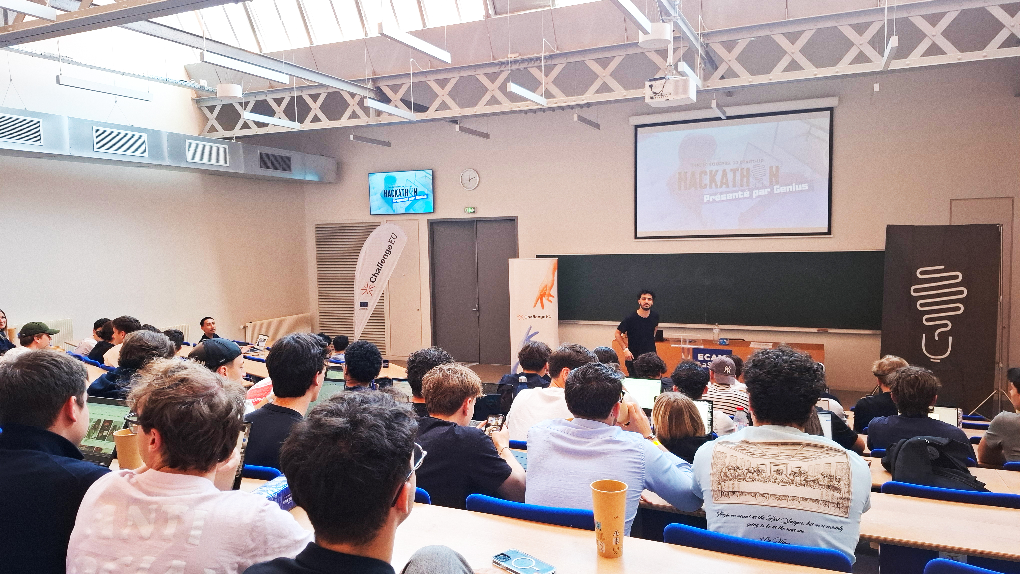
On 25 and 26 April, ECAM LaSalle hosted the 4th edition of the Genius Hackathon on its Lyon campus. During this 24-hour innovation marathon, 46 students from several higher education institutions worked together to develop responsible entrepreneurial concepts responding to some of the key challenges linked to the region’s digital, ecological and social transitions. This year’s edition was organised within the framework of the ChallengeEU European University Alliance, giving the event an even stronger regional, international and collaborative dimension. As part of ChallengeEU’s Regional Innovation Initiative, the hackathon offered a practical example of how universities can support innovation, entrepreneurship and knowledge transfer while engaging with real societal needs. ChallengeEU brings together nine European higher education institutions committed to developing interdisciplinary learning pathways and practical solutions in three priority areas: Smart Digitalisation, Health and Well-being, and Sustainable Futures. The Genius Hackathon reflected this approach by encouraging students to think beyond traditional academic boundaries and to design ideas with both business potential and positive social or environmental impact. Launched in 2023, the Genius Hackathon has become an important annual event at ECAM LaSalle. It is organised by the ECAM LaSalle Genius Club, a student association dedicated to innovation and entrepreneurship. The 2026 edition gathered students from ECAM LaSalle, EMLyon, ESDES, IAE de Lyon, INSEEC and MADEIn, who worked in nine multidisciplinary teams of four to six participants. Over the course of 24 hours, the teams were challenged to turn an initial idea into a start-up concept ready to be presented to the market. They were supported by expert-led talks designed to help them structure their projects, define their value propositions and prepare their final pitches. This intensive format encouraged creativity, teamwork, strategic thinking and the ability to respond quickly to complex challenges. At the end of the hackathon, each team presented its project to a jury of professionals in a demanding format: a five-minute pitch followed by five minutes of questions. The projects were assessed according to their level of innovation, economic viability, societal and environmental impact, and the quality of the final presentation. Three teams were awarded for their proposals. The first prize went to ECM, which developed a solution to optimise last-mile delivery within Low Emission Zones. O’FRAIS took second place with a project focused on creating a more reliable and secure cold chain. Third place went to EVERSTONE, whose concept explored the recycling of demolition rubble to give materials a second life and reduce environmental impact. With its fourth edition, the Genius Hackathon once again confirmed its role as a dynamic laboratory for ideas, talent and responsible entrepreneurship. By connecting students, universities and regional challenges, the event showed how innovation can become a collaborative process and how young people can actively contribute to more sustainable and resilient futures.
ChallengeEU in Action: GIS Mapping in Tetovo
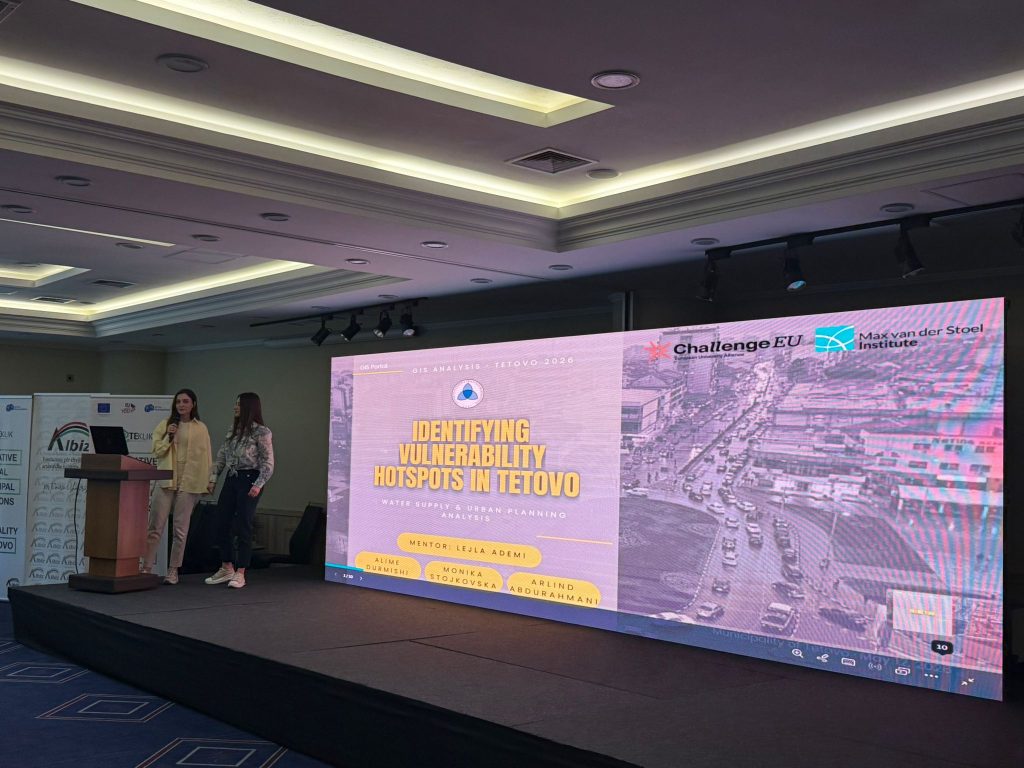
Students from South East European University used GIS tools to examine urban and infrastructure challenges in Tetovo. The activity, carried out as part of ChallengeEU initiatives supporting the digital and green transition, showed how spatial data can contribute to sustainable urban planning, environmental resilience and decision-making focused on local communities. Within the framework of the digital and green transition initiatives promoted by ChallengeEU, and in collaboration with the Center for Development of the Polog Region as an Associate Partner of the ChallengeEU Alliance, students from South East European University participated in a GIS-based activity focused on identifying urban and infrastructure vulnerability hotspots in the city of Tetovo. Following a GIS training session and the introduction to spatial data related to Tetovo’s urban planning and water supply infrastructure, students worked on analyzing GIS layers to identify areas with limited infrastructure coverage, lack of greenery, and spatial planning challenges, while proposing potential intervention zones based on observed spatial patterns. Under the mentorship of Lejla Ademi Shaqiri, the students Alime Durmishi, Monika Stojkovska, and Arlind Abdurahmani presented their findings and recommendations, demonstrating the potential of GIS tools and digital technologies in supporting sustainable urban planning, environmental resilience, and evidence-based local decision-making. The initiative also reflected the broader mission of ChallengeEU: to connect universities, regional stakeholders and local communities in addressing real-life challenges. By combining academic knowledge, digital skills and regional cooperation, the activity showed how students can actively contribute to the green and digital transformation of their cities and regions.