Smart Turn-Assist: Inclusive Innovation from an FHNW Student
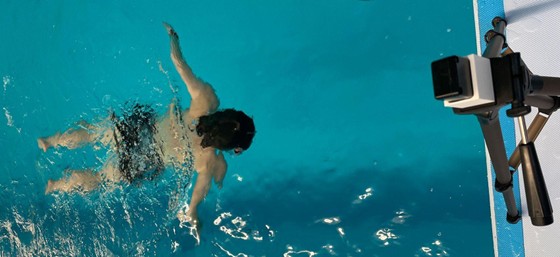
How can swimming become more independent and safe for people with visual impairments? This question inspired Selina Przyjemski, graduate in Electrical and Information Technology. She developed a smart turn-assist system that helps blind and visually impaired swimmers orient themselves in the pool without needing a guide at the poolside. Her work has now been awarded the prize for Best Bachelor Thesis at the FHNW School of Engineering and School of Computer Science and is nominated for the Siemens Excellence Award 2026. For many visually impaired swimmers, reaching the end of the lane is a moment of uncertainty. Traditional support requires another person to signal when to turn. Professor Hanspeter Schmid from the Institute of Sensors and Electronics had long wondered whether technology could offer more autonomy and invited students to explore the idea. Selina Przyjemski took on the challenge. “I loved that the project was meaningful and that I could build something entirely new,” she says. Finding a reliable way to measure distance in water turned out to be tough. Cameras failed due to reflections and privacy issues; ultrasound and radar also proved unreliable. The breakthrough came with Ultra-Wideband (UWB) radio technology, normally used in indoor logistics to track goods. Przyjemski adapted UWB for use near water and achieved the precise distance measurements needed for swimmers. Her system works with: From gentle pulses over five metres away to continuous vibration under two metres: The system clearly signals when it’s time to turn. Trials with a blind test swimmer showed how easy the system is to use. More importantly, it increases autonomy and safety, supporting everything from relaxed training to competitive swimming. Program Director Prof. Sebastian Gaulocher praises the achievement: “What looks simple at the end is usually hard to achieve. Selina developed a user-friendly, practical tool grounded in complex technology and she pushed through every challenge with impressive perseverance.” More information (in German): Smart Turn-Assist
Visit of the Ministry of Foreign Affairs Delegation to the Latvia University of Life Sciences and Technologies
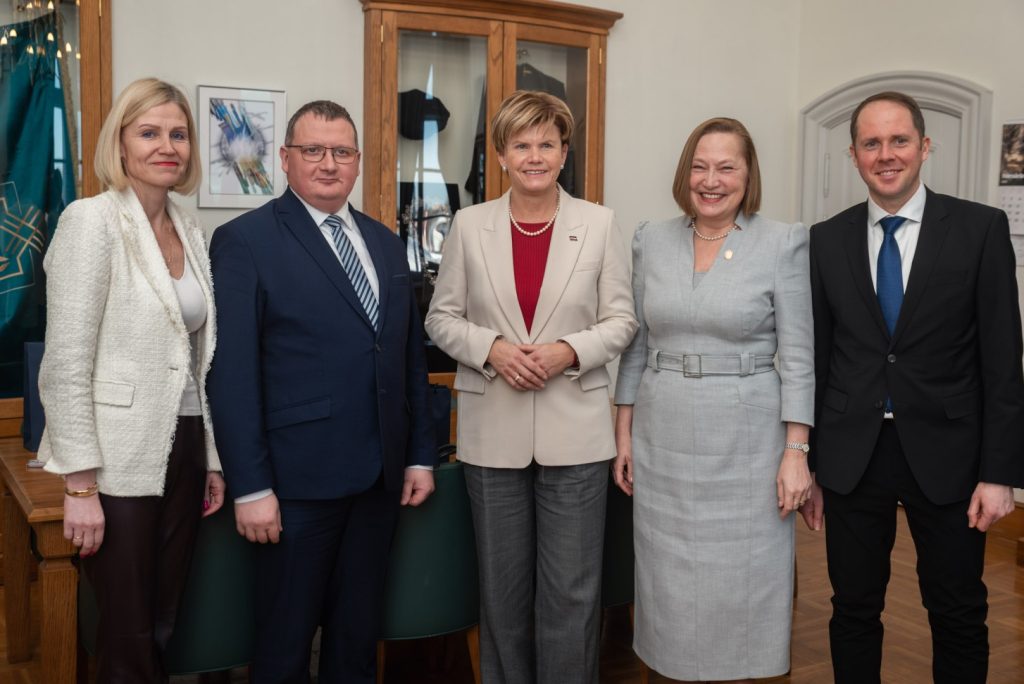
On 2 February, the Latvia University of Life Sciences and Technologies (LBTU) welcomed a delegation from the Ministry of Foreign Affairs of Latvia led by Minister of Foreign Affairs Baiba Braže. During the visit, the delegation ознакомed itself with the University’s research, innovation, and infrastructure potential and participated in discussions on future cooperation opportunities. A seminar on the European Union’s Multiannual Financial Framework for 2028–2034 was also held as part of the visit. The delegation met with LBTU Rector Irina Arhipova, Vice-Rector for Research Gatis Vītols, Vice-Rector for Finance Linards Sisenis, Vice-Rector for Studies Ilze Beitāne, as well as faculty deans and academic staff. The presentation highlighted LBTU’s role as a driver of innovation in Latvia’s economy and export sectors. The University focuses on life sciences, food technologies, forestry, and veterinary medicine, developing interdisciplinary solutions for sustainable bioeconomy, precision agriculture, and food innovation, as well as dual-use knowledge and technologies for health and defense sectors. During the visit, the delegation toured faculty laboratories, including a demonstration of dry ration meals developed by LBTU and used by the Latvian National Armed Forces. These rations are specially designed, hermetically sealed food products with balanced nutritional value and long shelf life, intended for use in field conditions for both military and civil protection needs in situations where freshly prepared food is not available. The delegation also visited the Faculty of Forest and Environmental Sciences, where they familiarized themselves with the renovated and equipped shelters in Jelgava. A discussion addressed bureaucratic challenges related to the establishment of shelters and the adaptation of premises for civil protection purposes, as well as opportunities for cooperation with industry in the areas of education, research, and infrastructure modernization. At the Faculty of Engineering and Information Technologies, the delegation toured the newly established Drone Laboratory. Discussions focused on the role of higher education institutions in strengthening national security, including the development of competencies in unmanned aerial vehicle (UAV) applications. State support opportunities for training instructors and pilots, as well as the practical application of unmanned technologies in security and crisis management contexts, were also highlighted. The visit concluded with a meeting with the University’s leadership at Jelgava Palace, where opportunities for further cooperation were discussed. A seminar and discussion on the European Union’s Multiannual Financial Framework for 2028–2034 was also held, with participation from representatives of non-governmental organizations, stakeholders, and other interested parties. The seminar addressed key challenges and opportunities for Latvia to maximize funding in the next EU budget period. Given that Latvia’s share of the budget is relatively small, attention was paid to securing additional funding within the national financing framework, particularly in light of security and defense considerations in border states. The main difficulties relate to convincing net contributor countries to increase their contributions to the EU budget and to allocate additional funding to other Member States. Various budget headings were also discussed, such as competitiveness programmes, under which Latvia may apply for additional EU funding outside the national allocation framework. It was emphasized that success will largely depend on cooperation with other Member States, negotiations, and proactive engagement.
Accreditation Board Held Its Regular Meeting at SEEU
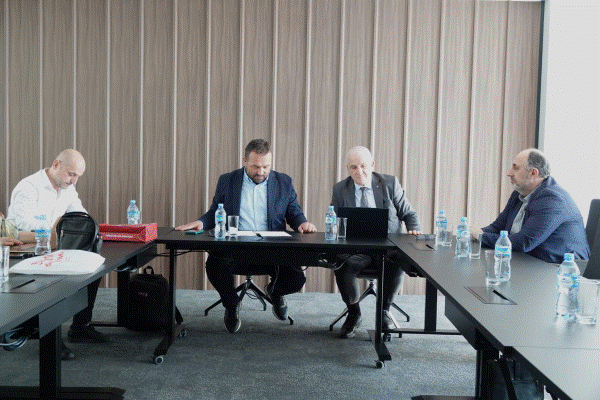
The Higher Education Accreditation Board, operating within the Agency for Quality in Higher Education (AQHE), held its regular meeting today at the premises of South East European University. Hosting this meeting represents an important recognition for our institution and confirms the University’s active role in national quality assurance processes and the development of higher education in the country. South East European University remains committed to the highest academic standards, institutional transparency, and the continuous enhancement of quality in teaching, research, and university governance.
Universidad Europea de Valencia hosts the meeting of the Strategy Board of the European alliance ChallengeEU
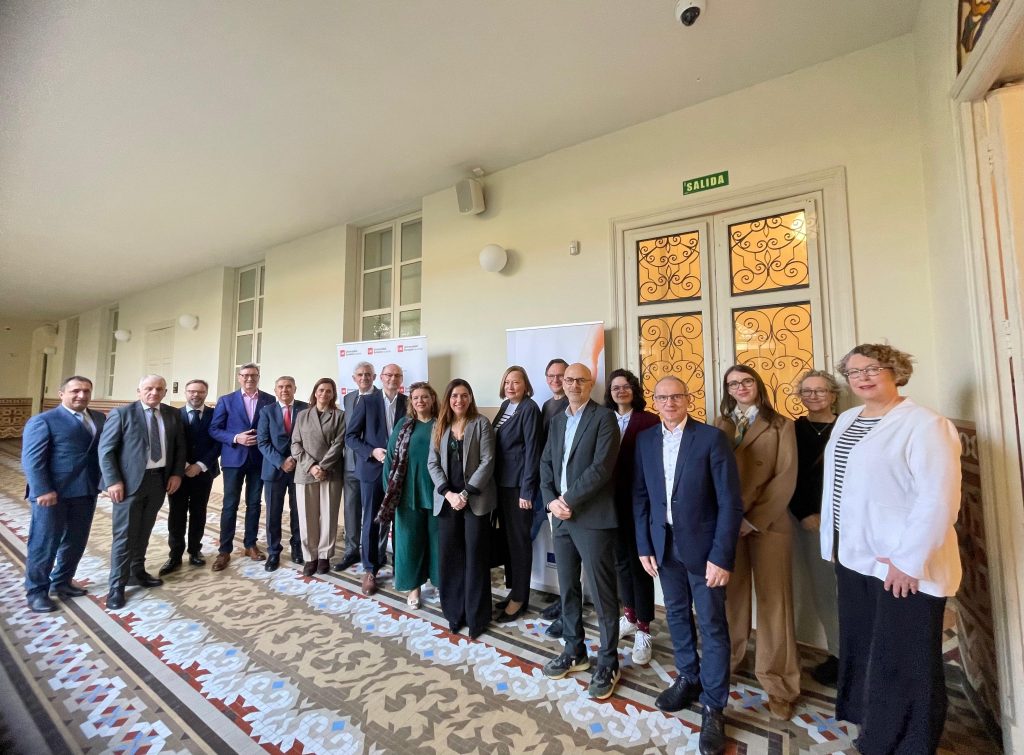
On Tuesday, Universidad Europea de Valencia hosted the meeting of the Strategy Board of ChallengeEU, the highest decision-making body of the European alliance of universities of which the Valencian institution is a member. This meeting brought together the rectors of the nine universities that make up the network alongside UEV at the Turia Campus: Offenburg University of Applied Sciences (Germany), University of Life Sciences and Technologies (Latvia), ECAM LaSalle (France), University of Warmia and Mazury (Poland), Mid Sweden University (Sweden), Southeast European University (Republic of North Macedonia), University of Applied Sciences and Arts Northwestern Switzerland (Switzerland) and Universidade Europeia de Lisboa (Portugal), in a working session focused on future directions, strategic challenges and the evolution of the project. The day began with a welcome coffee, during which Esther Gómez, Regional Secretary for Universities of the Generalitat Valenciana, gave a few words of institutional greeting to the Rectors of the alliance before starting the programme of activities. During the working session, the Strategy Board was presented with the results of the alliance’s first year of operation and analysed its medium- and long-term strategy, focusing on consolidating its vision and priorities for the coming years. The meeting also allowed progress to be made on the proposal to create double degrees between member universities, as well as exploring the possible incorporation of a Ukrainian polytechnic university as an associate member, in line with ChallengeEU’s commitment to broader and more diverse European cooperation. The meeting was chaired by Tobias Hagen, Director General of ChallengeEU, and Secretary General Sofiia Hecker, both from the University of Offenburg (Germany), the institution responsible for the overall coordination of the alliance. Annette Klinkert, director of city2science, the technical agency that has accompanied ChallengeEU in its application and development process, also participated in the proceedings. It was also agreed at the meeting that the Rector of Universidade Europeia de Lisboa, Helia Gonçalves, would take over the chairmanship of the Strategy Board during the alliance’s second year of operation, replacing Stephan Trahasch, Rector of the Offenburg University of Applied Sciences (Germany). Likewise, the rector of Mid Sweden University (Sweden), Anders Fallström, has been appointed as the new vice-president of the body.
ECAM: An International Partnership Supporting Innovation and Entrepreneurship
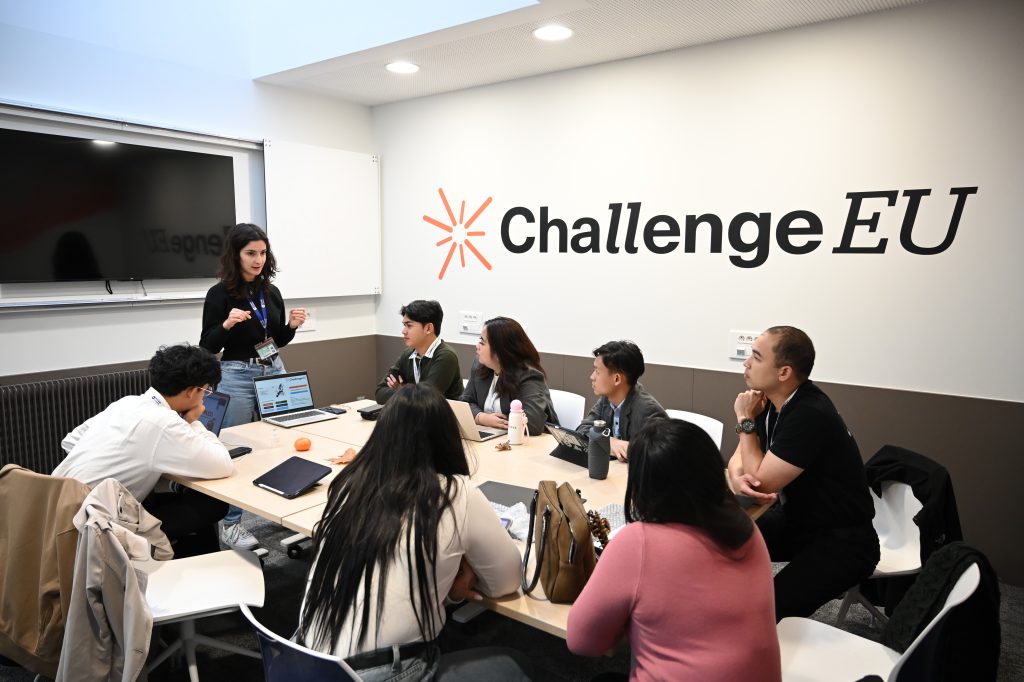
ECAM LaSalle and the Science and Technology Park (STeP) of Chiang Mai University are continuing their collaboration with a shared objective: to promote innovation, entrepreneurship, and international openness. At the heart of this partnership, an ambitious exchange program strengthens the ties between the two institutions. THE ELP PROGRAM: AN INCUBATOR FOR EXPERIENCE AND INITIATIVES Signed at the end of 2023, the partnership centers around the ELP (Experiential Learning Program) incubation initiative. Over the course of 10 months, student entrepreneurs from across Thailand test and develop their projects while strengthening their entrepreneurial mindset. At the end of the program, selected project leaders spend two weeks in one of STeP’s partner institutions, including ECAM LaSalle, to explore an international market and broaden their vision. The program also hosts staff members from partner universities, fostering a cross-exchange of practices and expertise. AN ENTREPRENEURIAL IMMERSION AT THE HEART OF ECAM LASALLE For the third consecutive year, ECAM LaSalle welcomed a delegation of seven Thai student entrepreneurs, accompanied by their coordinator. Each participant brought an innovative project: sustainable skin cream, intelligent orchard management, a wellness drink made from black rice, precision Thai craftsmanship, a secure device for opening medical ampoules, a solution for preserving cut flowers, and an AI-personalized learning platform. During their stay, participants took part in workshops, visits, and professional meetings, including: The European alliance ChallengeEU was also presented, illustrating ECAM LaSalle’s commitment to innovative educational practices and international mobility. The two-week stay concluded with a presentation of the work carried out, presented before a jury. This dynamic cooperation fully embodies the shared ambition of ECAM LaSalle and STeP to support international entrepreneurship and connect their innovation ecosystems on a global scale.
SEEU Marks the 24th Anniversary with a Solemn Ceremony: Broad Participation and Messages of Vision for the Future
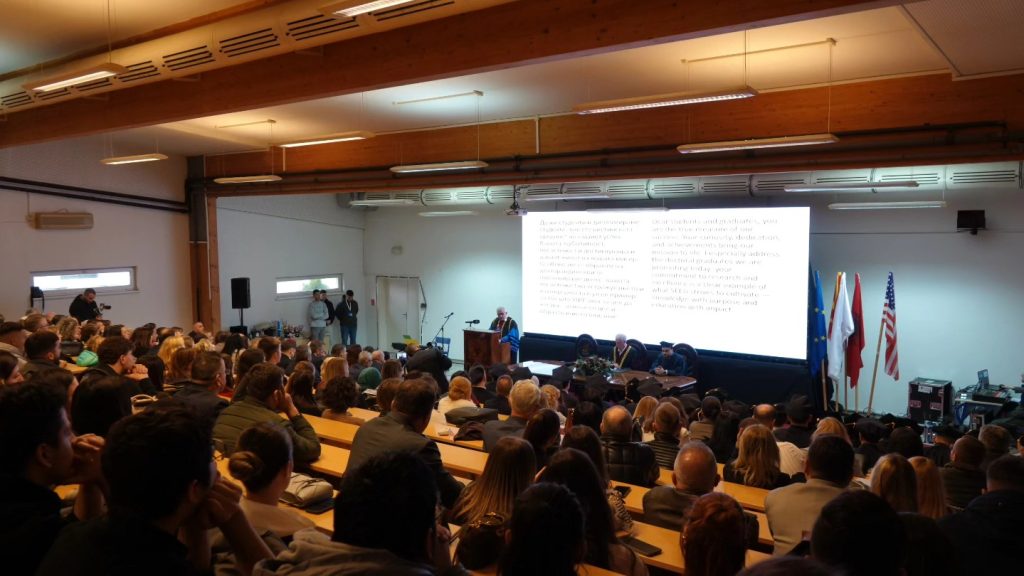
The South East European University today held the central ceremony marking the 24th anniversary of its establishment, a solemn event that brought together rectors of public universities from the country and the region, representatives of the diplomatic corps, the business community, accreditation and quality assurance bodies in education, as well as many other distinguished guests. SEEU Rector, Prof. Dr. Sadudin Ibraimi, addressed the attendees, emphasizing the historical importance of the University’s founding date and the key role SEEU plays in advancing education, innovation, and inclusion. He highlighted the development of the seven faculties, including the two newest ones — the Faculty of Technical Sciences and the Faculty of Health Sciences — as clear evidence of the institution’s dynamism and strategic vision. Rector Ibraimi also spoke about some of the year’s most significant achievements, such as the launch of the Preparatory Year for international students, the innovative initiative “AI at SEEU”, and SEEU’s active participation in the European Alliance “ChallengeEU”, where the university is recognized as one of the driving forces of the project. The Chairman of the University Board, Prof. Dr. Klaus Tochterman, offered a symbolic perspective on the number 24, connecting it with continuity, stability, and achievement — values that, according to him, have defined SEEU since its creation. He expressed special gratitude to the PhD candidates, university staff, and international partners whose contributions have helped shape SEEU into a modern, resilient, and socially impactful institution. As part of the anniversary, SEEU promoted its PhD candidates, while staff members with 20 and 10 years of service were awarded recognitions and gifts for their long-term contribution to the institution’s development. The artistic program of the ceremony featured performances by the well-known opera artist from Tetovo, Besarta Murtezani, pianist Shkelzen Baftiari, and the Tetovo Choir led by maestro Jeton Pustina, giving the event a refined cultural atmosphere. The ceremony was masterfully moderated by Arbra Sulejmani. In conclusion, the ceremony served as a moment of reflection and return to the University’s core values — inclusion, innovation, and integrity — reaffirming SEEU’s commitment to its mission of educating and empowering future generations.
LBTU: From Idea to Prototype: LBTU Launches First Innovation Grant Program for Students
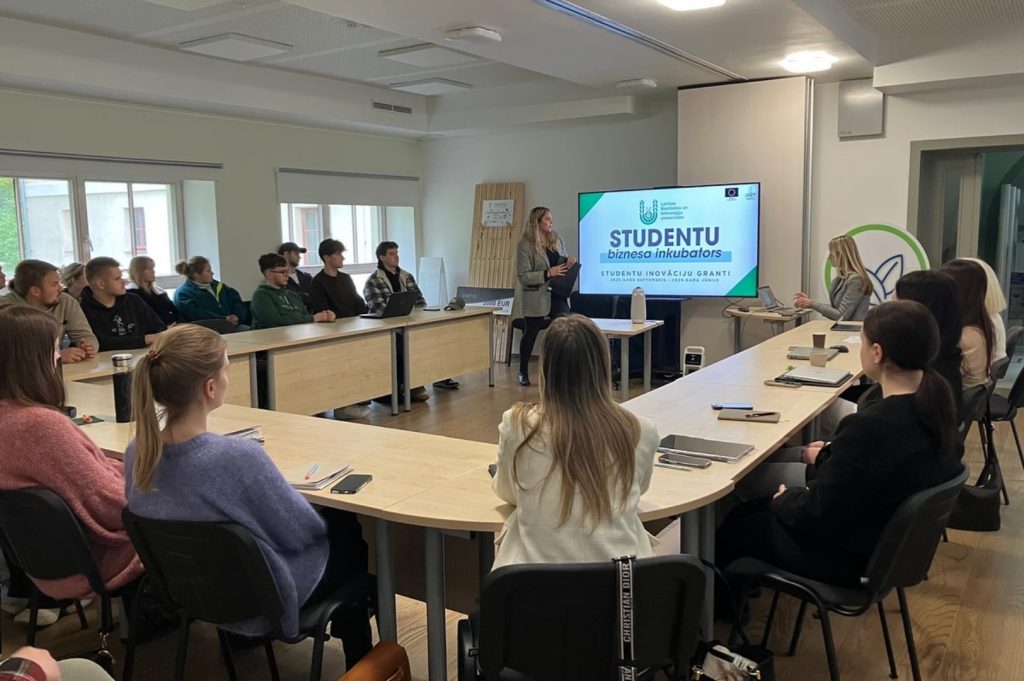
The Latvia University of Life Sciences and Technologies (LBTU) has launched the first cycle of the program “LBTU Innovation Grants for Students“. The initiative aims to foster the development of innovative student ideas by providing financial support, practical training, mentorship, and collaboration opportunities with industry professionals. The program offers students access to the knowledge and tools needed to create prototypes, test ideas in practice, and prepare for further development and commercialization. A total of 15 student teams have been admitted to this cycle, each working on diverse and socially meaningful solutions – ranging from digital platforms and neuro games to sustainable beverages, biotechnologies, and smart devices. Every team is supported in their daily work by experienced supervisors who provide guidance and advice throughout the project development process. Student Teams, Ideas, and Supervisors Program participants will take part in workshops, training sessions, and networking events designed to enhance their skills in project management, communication, entrepreneurship, and specialized technical areas. These events are also accessible to other students and academic staff, fostering knowledge sharing, collaboration, and a vibrant learning community. The first training session already took place on November 24 at the LBTU Technology and Knowledge Transfer Centre (TEPEK) with the main topic “Practical Problem-Solving: Behavior, Structure, and Decision-Making Under Stress Conditions.“ Participants learned how stress may affect quality of decision making, explored practical applications of the CATWOE method, 5 Whys, RCA, CPS, and the Pareto principle, and developed structured thinking and teamwork strategies for complex situations. To contribute as a mentor or stay updated on upcoming activities, events, and opportunities, you are invited to join the LBTU Student Business Incubator community. Interested individuals can fill out the form available at this link.
UWM: Sławosz Uznański-Wiśniewski visits the University of Warmia and Mazury
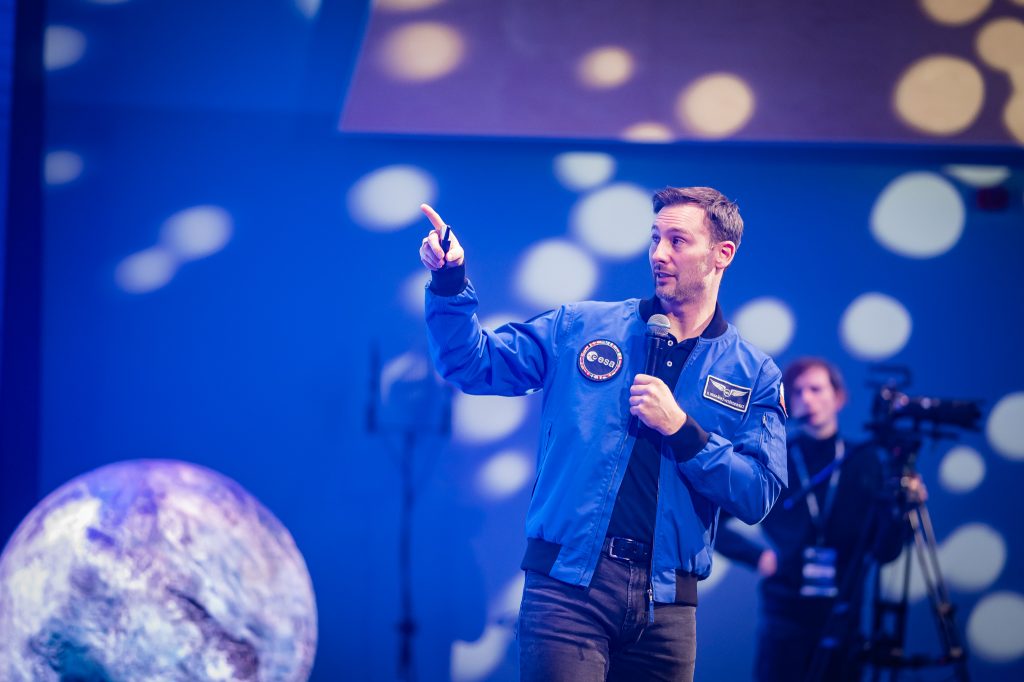
On Tuesday, 2 December, the University of Warmia and Mazury in Olsztyn (UWM) became part of the nationwide science-and-technology tour “IGNIS – Poland Reaches for the Stars.” The campus in Kortowo welcomed Dr. Sławosz Uznański-Wiśniewski an engineer and scientist and the second Pole to travel into space who came to Olsztyn on a mission to popularise science and share first-hand experience from an international spaceflight. “Exactly 160 days ago on 25 June at 8:51 a.m. the IGNIS mission launched from Cape Canaveral,” said Mariusz Korpoliński, who hosted the event at UWM’s Conference Centre as he introduced the guest he called a “superhero.” “Four astronauts set off on a long journey to the International Space Station. The flight carried out by Axiom Space in cooperation with SpaceX and NASA was followed by the entire country. We were all watching on TVs, tablets, smartphones and computers, living through those huge emotions together.” Beyond “sky is the limit” In an era when “sky is the limit” keeps expanding into new areas of everyday life, space is increasingly less a boundary and more a destination shaped by technology, research and imagination. Uznański-Wiśniewski’s visit to UWM was designed to make that world not only more accessible to science, but also more relatable to the public. Speaking in Kortowo, he outlined the course of his mission, described the work he carried out aboard the station and most importantly-argued that science is both a tool for understanding the world and a pathway to fulfilling personal ambitions. Drawing on his own story, he stressed that work can become a true passion-something worth pursuing wholeheartedly and encouraged students and researchers to follow their goals with consistency and courage. Don’t predict the future – build it Welcoming the astronaut to the university, UWM Rector Prof. Jerzy Przyborowski invoked Peter Drucker’s famous observation that the best way to predict the future is to create it. He argued that UWM is doing exactly that among other things through its engagement in research linked to space and radio astronomy. As the rector noted, on the same day Uznański-Wiśniewski flew into space, UWM together with partners launched Poland’s activity within the LOFAR-ERIC consortium at the Poznań Supercomputing and Networking Center. He also recalled that the university will co-create Poland’s consortium for the SKAO (Square Kilometer Array Observatory) project, which oversees two of the world’s largest radio telescopes located in Australia and Africa. UWM also coordinates the POLFAR initiative, while the university’s LOFAR station operates in Bałdy near Olsztyn. Prof. Przyborowski emphasised that Uznański-Wiśniewski’s participation in a space mission provided a rare boost for Polish science. “It proves that the most ambitious projects can be delivered and that it is worth working, and worth dreaming while you work,” he said, referring as well to the legacy of Nicolaus Copernicus, who worked in Olsztyn on ideas that would change the world. UWM’s community will also be reminded of the role that ambition and perseverance play in “reaching the stars” by two keepsakes displayed after the visit: a Polish flag and an IGNIS mission patch that travelled into space with the astronaut and spent several days in orbit. Uznański-Wiśniewski, in turn, left Olsztyn with a painting and a university hoodie. Look further, aim higher Uznański-Wiśniewski’s stop in Kortowo formed part of a series of events organised by Poland’s Ministry of Economic Development and Technology, the Ministry of Science and Higher Education and the Polish Space Agency, in cooperation with the European Space Agency. “We’ve already passed the halfway point of our science-and-technology route its purpose is to bring space closer and to discover talent,” said Dr. Marcin Kulasek, Minister of Science and Higher Education, welcoming the astronaut back to his alma mater. “Talent that might one day follow in Sławosz’s footsteps. His story shows that space isn’t as distant as it may seem. It takes passion, work and perseverance.” The minister noted that Olsztyn Copernicus’s city was an especially fitting setting for a meeting with someone who looks further than most. “Science can open doors that once seemed closed,” he said. Science supported from orbit During a special session for the academic community, Uznański-Wiśniewski spoke not only about the milestones that led him to the stars, but also about doubt, discipline and the constant need to improve. He devoted particular attention to research he helped conduct in space. “Right after going through the station, work began,” he said. “I carried out experiments from day one. One of them involved volcanic algae that we brought from Earth. We tested their survivability in space in microgravity, under radiation exposure and their efficiency in generating oxygen. Perhaps this will be used in bioreactors that enable long-range exploration of space or even terraforming other planets; or perhaps these solutions will return to Earth to help clean our atmosphere.” He added that the volume of work on board made it impossible to present every project during the meeting in Kortowo. “I had a high-computing-power computer on the station that tested artificial intelligence algorithms under space conditions,” he explained. “Among other things, we evaluated algorithms for autonomous decision-making and for the movement of lunar rovers before software like this is taken to the Moon.” Other speakers also addressed the experiments conducted during the mission particularly those who had approached ESA for support in developing their research. “I wanted to inspire the university community to seize the opportunity opening up for Poland and take the next step in space technology,” said Dr. Norbert Kapiński of Smarter Diagnostics. “We must find our niche something that sets us apart. The mission’s experiments point to directions. We have excellent engineers; we are leaders let’s not be afraid of the word in AI development, and this community strongly argues that this should become our specialty and a foundation for an innovative economy. Some of the experiments focused on AI algorithms how we can use them in space. The amount of data is growing, including in space technology, and AI is the best tool to analyse it.” The
HSO: Aid convoy reaches partner university in Zaporizhzhia
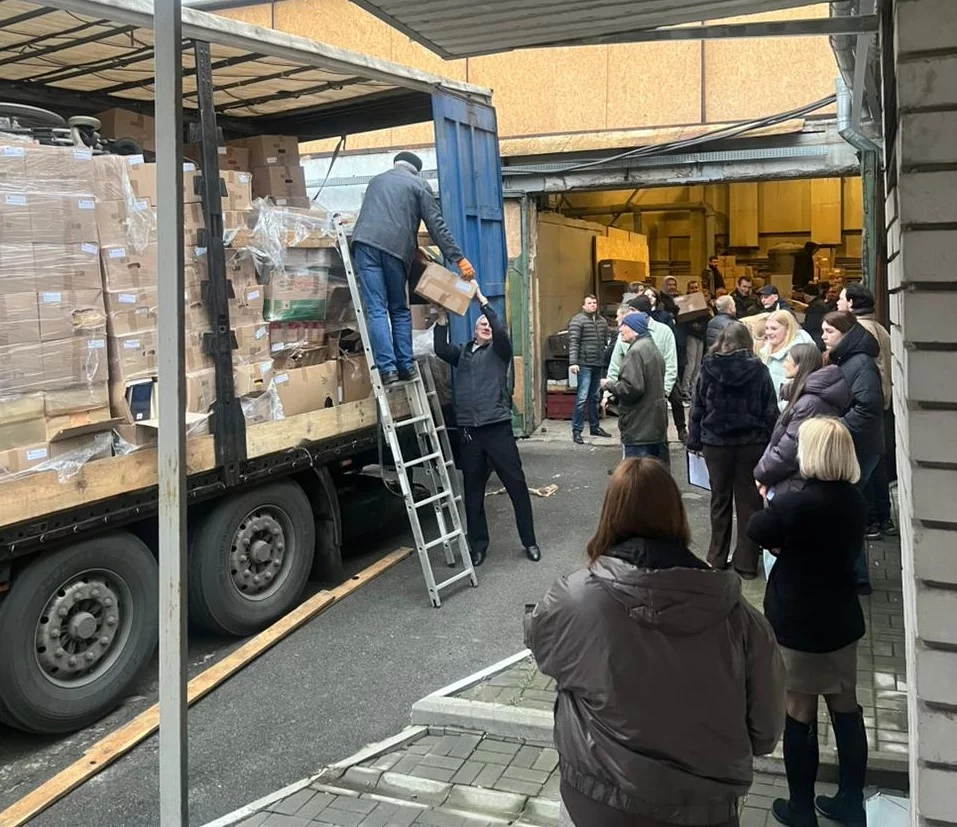
A large convoy of donations from Offenburg has arrived in Zaporizhzhia. The shipment will support the local university during a time of great uncertainty. Early December, Zaporizhzhia Polytechnic received a truck carrying 14 tons of aid supplies from the Offenburg university community. A total of 52 boxes and 14 bags of winter clothing, around 80 laptops, server technology, ten IT boxes, twelve wheelchairs, and protective nets, which serve as drone protection in Ukraine, were collected in advance. Companies such as HIWIN, Markant, Osypka, and WTO also supported the effort with donations. Additional goods were added at OTH Amberg-Weiden. Space-Eye also provided an emergency power generator. After sorting and loading, the shipment was handed over to the Ukrainian university. HSO received an emphatic thank you from the university, saying that the support gave them “hope and courage” in times of unreliable electricity, water, and heat supplies. More Info (in German only)
UEV: Talent Day at Universidad Europea de Valencia: Boosting Young Careers
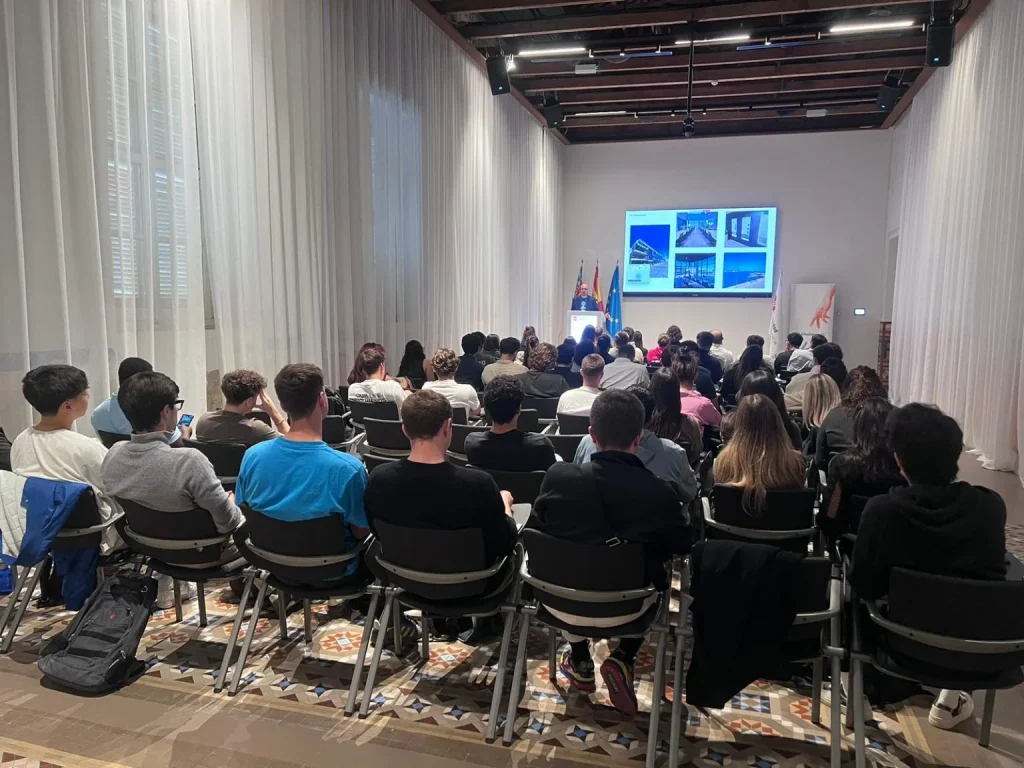
European companies, students and universities come together for a day that promotes professional development and strengthens the ChallengeEU alliance.